What Happens When a Customer Files a Chargeback?
- October 8, 2026
- Soham Guchait
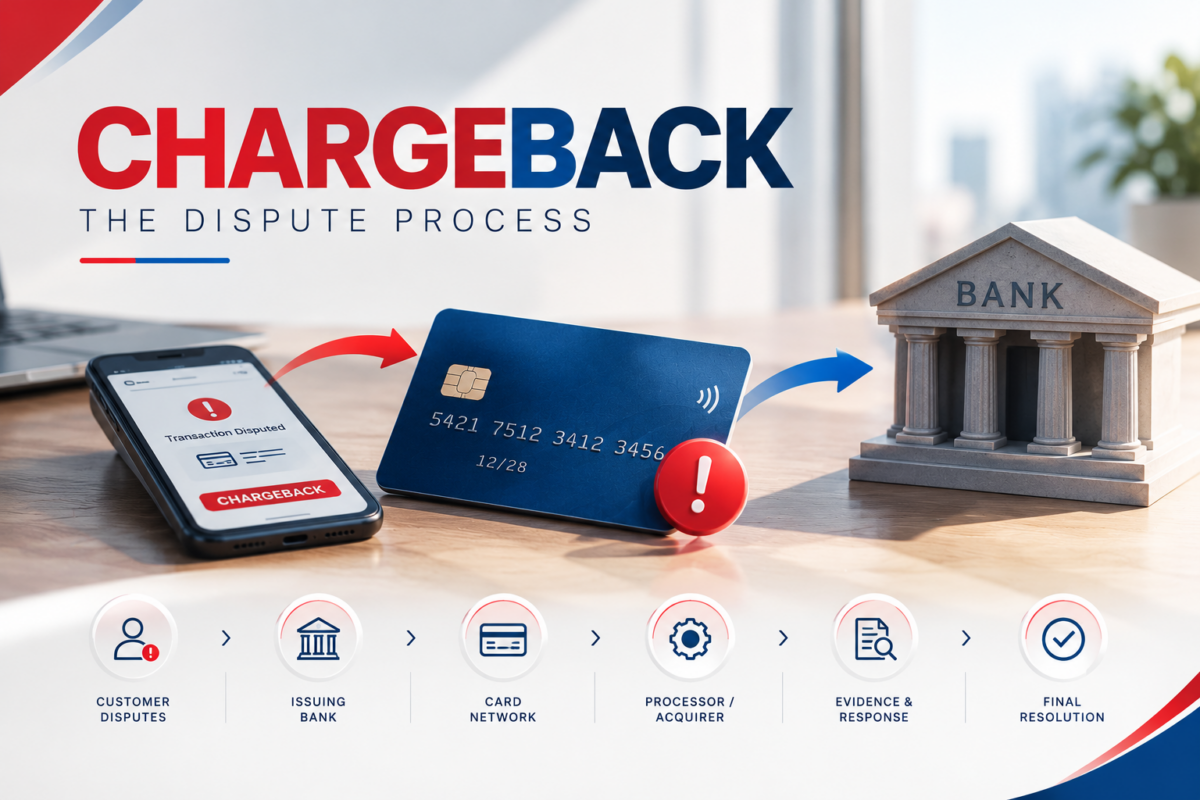
When a customer files a chargeback, the merchant is not simply dealing with a customer asking for a refund. The transaction enters a formal payment dispute process involving the customer’s issuing bank, the card network, and the merchant’s payment-processing side.
For an online business, that can mean the disputed amount is debited, evidence must be gathered, and a response may need to be submitted within a specific timeframe. The exact process varies by card network, dispute type, country, processor, and merchant agreement. But the basic flow is similar across many card-payment disputes. If you are starting with the basics, understanding what a chargeback is and how it works makes the steps below easier to follow.
Step 1: The Customer Disputes the Transaction
The process usually starts with the cardholder contacting the bank that issued their card. The customer explains why they believe the transaction is incorrect, unauthorized, or otherwise should not have been charged. Common claims include:
- The customer did not authorize the transaction.
- The product never arrived.
- The service was not provided.
- The transaction was duplicated.
- The customer was charged incorrectly.
- A recurring payment continued after the customer believed they had canceled.
The issuing bank reviews the customer’s claim and determines how to proceed under the applicable dispute rules. Importantly, a customer filing a dispute does not automatically mean the merchant did something wrong. Some claims are legitimate, while others may result from misunderstandings or friendly fraud.
Step 2: The Dispute Is Passed Through the Payment Network
Once the issuing bank accepts the dispute for processing, it moves through the relevant card-network process. The card network acts as the framework connecting the issuing side of the transaction with the merchant’s acquiring side. The merchant’s acquirer or payment processor then receives information about the dispute.
At this point, the merchant may learn the reason for the dispute and the amount being challenged. The terminology and exact sequence can differ between networks, but the merchant generally needs to review the dispute and decide how to respond.
Step 3: The Disputed Amount May Be Debited
A chargeback can affect the merchant’s funds before the dispute is finally resolved. Depending on the merchant’s payment arrangement and the stage of the dispute, the disputed transaction amount may be debited from the merchant’s account or otherwise withheld while the case is being handled.
For example, an online retailer receives a $250 chargeback after a customer claims an order was never delivered. The merchant may see the $250 removed from its available funds while the dispute is processed. That does not necessarily mean the merchant has permanently lost the $250. The outcome depends on how the dispute is resolved.
There may also be a chargeback fee, depending on the processor and merchant agreement. This is one reason understanding the true cost of a chargeback matters. The financial impact can include more than the original transaction.
Step 4: The Merchant Reviews the Chargeback
The merchant should examine the dispute as soon as possible. The reason for the chargeback matters because it determines what evidence may be relevant.
Suppose a customer claims that a $400 order was never received. The merchant might check the order record, shipping information, tracking number, delivery confirmation, and customer communications. If the customer claims that the transaction was unauthorized, the merchant may need to review authentication information, transaction details, account activity, and other relevant records.
This is also where good recordkeeping becomes valuable. A merchant that keeps transaction and fulfillment information organized can investigate a dispute much faster than one that has to reconstruct what happened from scattered systems.
Step 5: The Merchant Can Accept or Challenge the Dispute
After reviewing the claim, the merchant may decide to accept the chargeback or challenge it where the applicable process allows. If the merchant accepts the dispute, the case generally ends without the merchant attempting to recover the transaction. If the merchant believes the claim is incorrect, it can submit evidence through the applicable dispute process. This is commonly known as representment.
The evidence should address the customer’s specific claim rather than simply demonstrate that a payment occurred.
For example, if the customer says a physical product was never delivered, a copy of the original receipt by itself may not be very persuasive. Shipping and delivery records are more directly relevant. The same principle applies to digital businesses. If a customer disputes a software subscription, records showing account access or service usage may help establish what happened.
Step 6: The Merchant Submits Evidence
When challenging an eligible dispute, the merchant typically provides supporting documentation through its processor, acquirer, or relevant payment system. Evidence might include:
- Order and transaction details
- Customer communications
- Shipping and delivery records
- Refund or cancellation information
- Terms accepted during checkout
- Account activity
- Authentication or verification information
The evidence needed depends on the dispute category.
For example, a claim involving why customers file chargebacks and the common reasons behind them can require very different evidence depending on whether the issue involves fraud, non-delivery, duplicate billing, or a subscription cancellation. Merchants should also pay close attention to submission deadlines. Missing the applicable deadline can affect the merchant’s ability to challenge the dispute.
Step 7: The Issuing Bank Reviews the Response
Once the merchant submits its response, the evidence is reviewed through the applicable dispute process. The customer may also have an opportunity to respond in some dispute processes.
The outcome is not necessarily based on which side simply provides more information. The evidence needs to address the dispute and satisfy the applicable rules.
If the merchant provides sufficient evidence, the disputed transaction may be returned; otherwise, the chargeback may remain in place. The exact terminology and stages can vary by network and dispute type.
Step 8: The Dispute Is Resolved
Eventually, the dispute reaches a final outcome. If the merchant wins, the disputed amount may be returned or any provisional debit may be reversed, depending on the applicable process. If the customer wins, the merchant generally bears the disputed amount. In certain cases, additional review or escalation may be available, depending on the circumstances and applicable network rules. The merchant should retain the final outcome as part of its transaction records.
What Should a Merchant Do After Receiving a Chargeback?
The first priority is to understand why the customer disputed the transaction. Do not treat every chargeback in exactly the same way. A practical review can include:
- Identify the dispute reason and amount.
- Check the original transaction.
- Review customer communications.
- Gather relevant fulfillment, billing, or authentication records.
- Check the response deadline.
- Decide whether accepting or challenging the dispute makes sense.
- Record the final outcome.
The merchant should also look beyond the individual transaction. If several disputes involve the same product, billing process, or customer complaint, there may be an underlying business problem.
For example, repeated subscription disputes could indicate unclear renewal terms or a difficult cancellation process. Repeated fraud disputes may indicate weaknesses in transaction screening. That is where how to prevent chargebacks through better billing, fraud controls, fulfillment, and customer service becomes relevant. Prevention is usually more valuable than trying to win every dispute after it occurs.
The Bottom Line
When a customer files a chargeback, the transaction moves into a formal dispute process rather than simply becoming a normal refund.
The issuing bank reviews the customer’s claim, the dispute moves through the applicable payment network and merchant-processing channels, and the merchant gets an opportunity to review the claim and provide evidence where appropriate. For merchants, the most important steps are straightforward: understand the dispute reason, protect the relevant records, meet the response deadline, and look for patterns across disputes.
A chargeback should not only answer the question, “Can we win this dispute?” It should also prompt a second question: “Why did this happen, and what can we change so it happens less often?”

Categories
- ACH Payments (10)
- adult payment processing (11)
- AI (9)
- Altcoins (10)
- Banking (10)
- Bitcoin (133)
- Bitcoin ETF (11)
- Bitcoin Price (30)
- Blockchain (50)
- Brokering World Hunger Away (16)
- Business (17)
- card payment processing (10)
- CBD (11)
- CBDC (11)
- Chargeback (8)
- coaching business (11)
- COVID-19 (3)
- Crypto ATMs (1)
- Crypto Banking (17)
- Crypto Bill (1)
- Crypto business owner platform (31)
- Crypto Investment (3)
- Crypto Markets (5)
- Crypto Payment (35)
- Crypto Payment Processor (4)
- Crypto Prices (1)
- Crypto Trading (92)
- Cryptocurrency (402)
- Cryptocurrency Exchange (108)
- Data Visualization (2)
- dating platforms (11)
- debt collection payment processing (10)
- Decentralized Finance (7)
- DeFi Payment (9)
- DEX (3)
- Digital Currency (23)
- dropshipping payment processing (12)
- Ethereum (2)
- FAQ (7)
- file sharing payment processing (11)
- Finance (25)
- Financial Equality (4)
- Financial Freedom (8)
- Forex (35)
- hemp (1)
- ICO (2)
- Investment (11)
- IPTV (11)
- Merchant Account (10)
- Mining (3)
- News (66)
- NFTs (2)
- online gambling (11)
- P2P (1)
- Paybito (139)
- PayBitoPro (693)
- PayBitoPro Coin Listing (6)
- PayBitoPro Exchange (2)
- Payment Gateway (40)
- peptide (10)
- Post COVID Digital Transformation (1)
- Press Release (130)
- Privacy & Security (3)
- Real Estate (1)
- Stablecoin (5)
- Technology (15)
- Travel (11)
- Uncategorized (9)
- US Presidential Election (2)
- Utility Coin (1)
- Web3 business (4)
- Web3 Wallets (2)
- White Label Crypto Exchange (8)