Chargeback vs. Refund: What’s the Difference for Merchants?
- October 8, 2026
- Soham Guchait
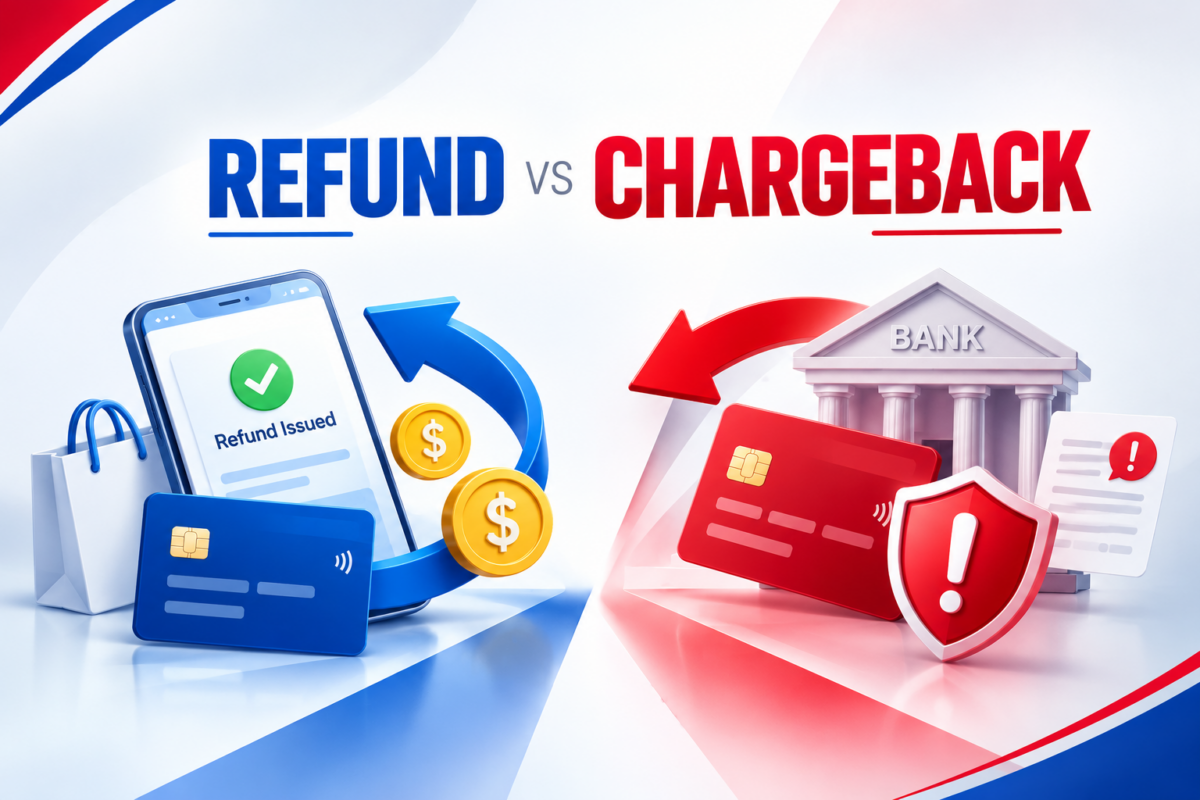
A chargeback and a refund can both result in a customer getting money back, but they are not the same thing. Refund is initiated by the merchant, while chargeback begins when the cardholder disputes a transaction through their issuing bank.
That difference matters to online businesses because the two processes can have very different financial and operational consequences. A merchant issuing a refund is usually resolving a customer request directly. A chargeback can involve the issuing bank, card network, acquiring bank, payment processor, evidence requirements, and dispute deadlines.
If you are unfamiliar with the wider process, understanding what a chargeback is and how it works for online businesses provides the foundation for comparing it with a refund.
What Is a Refund?
A refund happens when a merchant returns money from a completed transaction to the customer. The merchant normally initiates the refund through its payment-processing system. The money is then sent back through the payment system to the customer’s original payment method, subject to the applicable processing rules.
There are many reasons a merchant might issue a refund. A customer may return an item, cancel an order, receive a damaged product, or decide that a service is no longer suitable.
For example, an online clothing store sells a $120 jacket. The customer receives it, decides it does not fit, and returns it according to the store’s return policy. The merchant approves the return and issues a $120 refund.
There is no need for the customer to ask their bank to intervene. That is the key characteristic of a refund: The merchant agrees to reverse the payment.
What Is a Chargeback?
A chargeback starts differently.
The customer contacts the bank that issued their card and disputes a transaction. The issuing bank may then initiate a dispute through the applicable card network.
The merchant may have the disputed amount debited while the case is handled, depending on the payment arrangement and dispute stage. The merchant can generally respond to an eligible dispute by submitting evidence that addresses the customer’s claim.
For example, imagine a customer buys a $120 jacket but says it never arrived. Instead of contacting the retailer, the customer contacts their bank.
The bank may initiate a chargeback. The merchant then has to review the dispute and determine whether it should accept the claim or provide evidence showing that the order was fulfilled. The exact process, deadlines, and terminology vary by card network, region, dispute type, and merchant agreement. This is why what happens when a customer files a chargeback can be quite different from the straightforward process of issuing a merchant-initiated refund.
Chargeback vs. Refund: The Main Difference
The simplest distinction is who starts the process.
| Refund | Chargeback | |
|---|---|---|
| Who initiates it? | Merchant | Cardholder through issuing bank |
| Why does it happen? | Merchant agrees to return the money | Customer disputes the transaction |
| Bank involvement | Usually limited | Issuing bank and payment network are involved |
| Merchant response | Usually no dispute response is required | Merchant may need to submit evidence |
| Additional fees | Depends on the payment arrangement | Chargeback fees may apply |
| Outcome | Merchant voluntarily returns funds | Outcome is determined through the dispute process |
The table gives the basic distinction, but the practical difference becomes clearer when looking at what happens to the merchant.
A Refund Is Usually a Direct Customer-Service Resolution
A refund gives the merchant an opportunity to resolve a problem directly.
Suppose a customer receives the wrong size of clothing. They contact the store, explain the problem, and request a return. The merchant can approve the return and issue the refund. The customer receives their money back through the normal payment process, and the merchant controls the decision. This can be useful because it allows the business to resolve the underlying complaint without involving a bank dispute.
It also gives the merchant an opportunity to understand why the customer wants their money back. If customers are repeatedly asking for refunds for the same reason, the pattern may point to a product, fulfillment, or customer-experience problem. The same kind of pattern analysis is useful when looking at why customers file chargebacks and the common reasons behind disputes.
A Chargeback Is a Formal Payment Dispute
A chargeback is different because the merchant is no longer dealing only with the customer. The cardholder has involved their issuing bank. The merchant may have to respond through the payment provider or acquiring side of the payment system. The dispute may be assigned a reason code or category, and the merchant may have a limited period in which to submit evidence.
For example, a customer claims that a $500 online purchase was unauthorized. The merchant may need to provide relevant transaction and authentication information to challenge the claim. Whether that evidence is sufficient depends on the dispute circumstances and applicable rules.
The merchant does not simply decide whether the customer’s money should be returned. The dispute is handled through the applicable card-network process.
A Refund Does Not Automatically Cancel a Chargeback
Merchants should also understand that a refund and a chargeback can sometimes overlap.
For example, a customer may request a refund and then separately dispute the same transaction with their bank. If the merchant has already issued a refund, the business needs to handle the situation carefully to avoid an unintended duplicate payment.
Payment providers and card networks have procedures for dealing with these situations, so merchants should follow the applicable process rather than assuming that issuing a refund automatically closes every related dispute. Keeping clear refund records is therefore important. Useful records may include:
- The original transaction details
- The date and amount of the refund
- The reason for the refund
- Customer communications
- Refund confirmation or processing information
Good records can help the merchant establish what happened if the transaction is later disputed.
When Should a Merchant Offer a Refund?
A refund is generally appropriate when the merchant has agreed that the customer should receive their money back. Common situations include:
- The customer returns an eligible product.
- The merchant cannot fulfill the order.
- The customer was charged incorrectly.
- The business agrees that a service was not delivered as promised.
- A duplicate payment was made.
- The merchant’s refund policy covers the customer’s situation.
The merchant should apply its policies consistently and communicate clearly about when the refund was issued.
A refund is not necessarily the right response to every complaint, however. If a customer is making an unsupported fraud claim or disputing a legitimate transaction, the business may need to handle the issue through the appropriate dispute process.
Refunds and Chargebacks Require Different Records
The information a merchant needs can vary depending on the situation. For refunds, the important records may include the original transaction, customer request, refund approval, and refund processing details.
While for chargebacks, the merchant may need evidence that directly addresses the dispute reason.
For example:
If the customer says the product never arrived:
- Shipping records
- Tracking information
- Delivery confirmation
- Customer communications
If the customer says the payment was unauthorized:
- Transaction information
- Authentication data, where available
- Relevant account or customer records
- Other evidence applicable to the dispute
The goal is not to submit as much information as possible. It is to provide relevant evidence that addresses the actual claim.
How Should Merchants Think About Refunds and Chargebacks?
The easiest way to think about the two is this:
A refund is a merchant-controlled resolution. A chargeback is a bank-mediated dispute.
If a customer has a legitimate problem and the business can resolve it directly, a refund may be the simplest solution. If the customer disputes the payment through their bank, the merchant is dealing with a formal chargeback process and may need to provide evidence.
Neither process should be treated as merely an accounting adjustment. Both can reveal problems in the customer journey. A high number of refunds might point to poor product descriptions or fulfillment issues. A high number of chargebacks could indicate fraud, billing confusion, subscription problems, or customers bypassing the merchant’s support process.
The Bottom Line
The difference between a chargeback and a refund comes down to how the payment reversal starts and who controls the process.
A refund is initiated by the merchant, usually to resolve a customer issue directly. A chargeback is initiated by the cardholder through their issuing bank and follows a formal dispute process. For merchants, the practical goal is not to avoid refunds at all costs. A reasonable refund can resolve a legitimate problem before it becomes a more complicated dispute.
At the same time, recurring chargebacks should never be ignored. Track why they happen, keep useful transaction records, and look for patterns. When the same type of dispute keeps appearing, the underlying problem is often somewhere in the payment, billing, fulfillment, fraud, or customer-service process.

Categories
- ACH Payments (10)
- adult payment processing (11)
- AI (9)
- Altcoins (10)
- Banking (10)
- Bitcoin (133)
- Bitcoin ETF (11)
- Bitcoin Price (30)
- Blockchain (50)
- Brokering World Hunger Away (16)
- Business (17)
- card payment processing (10)
- CBD (11)
- CBDC (11)
- Chargeback (8)
- coaching business (11)
- COVID-19 (3)
- Crypto ATMs (1)
- Crypto Banking (17)
- Crypto Bill (1)
- Crypto business owner platform (31)
- Crypto Investment (3)
- Crypto Markets (5)
- Crypto Payment (35)
- Crypto Payment Processor (4)
- Crypto Prices (1)
- Crypto Trading (92)
- Cryptocurrency (402)
- Cryptocurrency Exchange (108)
- Data Visualization (2)
- dating platforms (11)
- debt collection payment processing (10)
- Decentralized Finance (7)
- DeFi Payment (9)
- DEX (3)
- Digital Currency (23)
- dropshipping payment processing (12)
- Ethereum (2)
- FAQ (7)
- file sharing payment processing (11)
- Finance (25)
- Financial Equality (4)
- Financial Freedom (8)
- Forex (35)
- hemp (1)
- ICO (2)
- Investment (11)
- IPTV (11)
- Merchant Account (10)
- Mining (3)
- News (66)
- NFTs (2)
- online gambling (11)
- P2P (1)
- Paybito (139)
- PayBitoPro (693)
- PayBitoPro Coin Listing (6)
- PayBitoPro Exchange (2)
- Payment Gateway (40)
- peptide (10)
- Post COVID Digital Transformation (1)
- Press Release (130)
- Privacy & Security (3)
- Real Estate (1)
- Stablecoin (5)
- Technology (15)
- Travel (11)
- Uncategorized (9)
- US Presidential Election (2)
- Utility Coin (1)
- Web3 business (4)
- Web3 Wallets (2)
- White Label Crypto Exchange (8)