How Much Does a Chargeback Cost a Business?
- October 8, 2026
- Soham Guchait
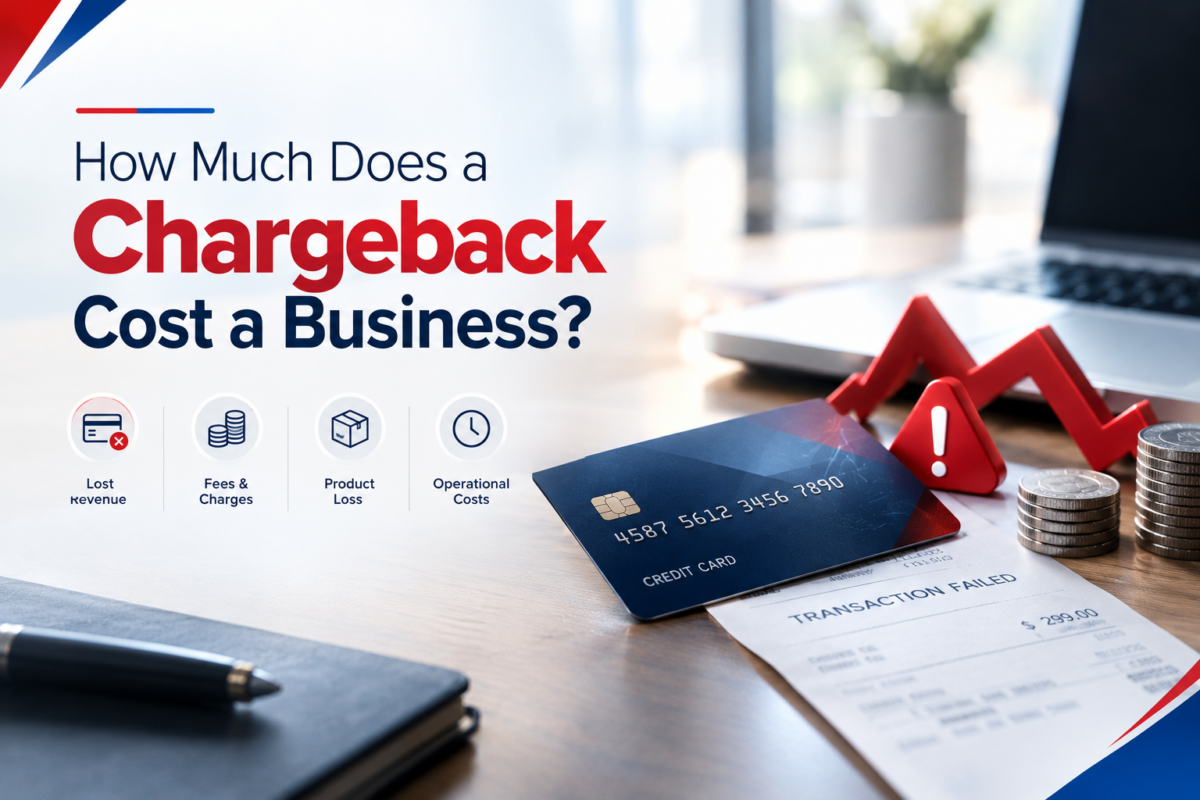
A chargeback does more than reverse a payment. For a business, one disputed transaction can create several costs at the same time. The original sale may be lost, a chargeback fee may apply, staff may spend time handling the dispute, and the business may also lose the product or service already provided.
The exact cost varies by payment processor, card network, merchant agreement, transaction value, and the reason for the dispute. So there is no single chargeback cost that applies to every business. To understand the real impact, it helps to look beyond the fee itself.
What Is the Basic Cost of a Chargeback?
The most obvious cost is the disputed transaction amount.
Suppose an online store sells a $150 product. The customer later disputes the payment and the chargeback is upheld. The merchant can lose the $150 sale while also dealing with any applicable chargeback fee.
If the product has already been shipped, the loss can be even greater because the business may not recover the goods. This is one reason understanding what a chargeback is and how the process works matters. The financial impact depends not only on the transaction being reversed but also on what happens around that transaction.
Chargeback Fees Add to the Cost
Many payment providers or acquiring arrangements charge merchants a fee when a chargeback is processed. The amount depends on the provider and the merchant’s agreement.
For example, imagine a merchant receives a $100 chargeback and is charged a $20 dispute fee. If the chargeback is lost, the direct financial impact could be at least $120, before considering the product, shipping, employee time, or other costs connected to the transaction.
The fee may sometimes still apply when a merchant challenges a chargeback, depending on the provider’s terms. Because fees vary, merchants should check their own processing agreement rather than assume that every chargeback carries the same cost.
The Product or Service Can Become a Second Loss
The transaction amount is only part of the problem. Consider an online retailer that sells a $200 electronic device. The customer receives the device and later files a chargeback claiming the transaction was unauthorized. If the merchant cannot successfully challenge the dispute, the payment may be reversed. The merchant could end up losing:
- The $200 transaction
- The product itself
- Shipping and fulfillment costs
- Any applicable chargeback fee
- Time spent investigating and responding
This is especially important for physical products because the merchant may not get the merchandise back. For digital businesses, the situation can look different. A subscription or digital service may already have been used before the dispute is filed. That makes the reasons customers file chargebacks particularly important when assessing financial risk.
There Is Also an Operational Cost
Chargebacks require work. Someone has to identify the transaction, check the customer’s account, review order information, gather records, and decide whether the dispute should be accepted or challenged.
For a small business, that work may fall on the owner. For a larger company, it may involve customer support, finance, fraud teams, and payment operations. The cost becomes more noticeable when chargebacks occur frequently.
For example, a merchant dealing with two disputes a month may handle them manually without much disruption. A merchant receiving hundreds of disputes may need dedicated processes and staff. This is where chargeback prevention becomes more than a fraud-control issue. Preventing avoidable disputes can also reduce the amount of operational work required to resolve them.
What Does It Cost to Fight a Chargeback?
Challenging a chargeback does not necessarily require paying an outside service. In many cases, the merchant can submit evidence through its payment processor or acquiring bank. But preparing that evidence takes time. A merchant may need to collect:
- Order and payment details
- Delivery or fulfillment records
- Customer communications
- Refund information
- Login or usage records for digital products
- Proof that the transaction followed the merchant’s normal process
The stronger the documentation, the easier it is to evaluate whether challenging the dispute makes sense. This also shows why knowing what happens when a customer files a chargeback is useful. A merchant needs to understand the process before deciding what evidence to provide and when to provide it.
Chargebacks Can Affect Future Payment Costs
Frequent chargebacks can create another financial concern: The merchant’s overall dispute activity.
Payment providers and acquiring institutions may monitor a merchant’s chargeback levels. Depending on the circumstances and applicable rules, consistently high dispute activity can lead to additional scrutiny or changes to the merchant’s processing arrangements.
That is why merchants often track their chargeback ratio, rather than looking only at individual disputes. A single chargeback may have a small effect. A pattern of chargebacks can create a much larger business problem.
A Simple Example of the Total Cost
Imagine a merchant sells a $300 product. A customer disputes the transaction, and the merchant loses the dispute. The merchant also has a $25 chargeback fee. The direct loss is already $325.
Now add $40 in shipping and fulfillment costs, plus the cost of the product itself. If the product is not recovered, the merchant’s actual loss could be significantly higher than the original $300 transaction.
This is why the question is not simply, “How much is the chargeback fee?”
The better question is, “How much does this disputed transaction cost the business from beginning to end?”
How Can Businesses Reduce Chargeback Costs?
Businesses cannot eliminate every legitimate chargeback. Customers sometimes dispute transactions for valid reasons. But many preventable disputes can be reduced through clearer billing information, reliable fulfillment, responsive customer support, accurate transaction records, and sensible fraud controls.
It also helps to understand the difference between a chargeback and a voluntary refund. A refund is initiated by the merchant, while a chargeback is generally initiated through the customer’s card-issuing bank. Understanding chargeback vs. refund can help merchants choose the right response when a customer has a problem with a transaction.
For merchants already seeing a high dispute rate, reducing the underlying causes is usually more useful than simply dealing with each chargeback individually. That may involve improving customer communication, reviewing recurring billing practices, or identifying transaction patterns that frequently lead to disputes.
The Real Cost of a Chargeback
A chargeback can cost a business far more than the fee attached to the dispute. The total impact can include the reversed transaction, lost goods or services, processing fees, employee time, shipping costs, and potential long-term payment-processing consequences.
The exact amount depends on the business and the transaction. But the basic lesson is simple: A chargeback should be measured as a total business loss, not just a chargeback fee.
For that reason, merchants should track both the direct cost of individual disputes and the broader patterns behind them. A business that understands where its chargebacks come from is in a much better position to prevent avoidable losses.

Categories
- ACH Payments (10)
- adult payment processing (11)
- AI (9)
- Altcoins (10)
- Banking (10)
- Bitcoin (133)
- Bitcoin ETF (11)
- Bitcoin Price (30)
- Blockchain (50)
- Brokering World Hunger Away (16)
- Business (17)
- card payment processing (10)
- CBD (11)
- CBDC (11)
- Chargeback (8)
- coaching business (11)
- COVID-19 (3)
- Crypto ATMs (1)
- Crypto Banking (17)
- Crypto Bill (1)
- Crypto business owner platform (31)
- Crypto Investment (3)
- Crypto Markets (5)
- Crypto Payment (35)
- Crypto Payment Processor (4)
- Crypto Prices (1)
- Crypto Trading (92)
- Cryptocurrency (402)
- Cryptocurrency Exchange (108)
- Data Visualization (2)
- dating platforms (11)
- debt collection payment processing (10)
- Decentralized Finance (7)
- DeFi Payment (9)
- DEX (3)
- Digital Currency (23)
- dropshipping payment processing (12)
- Ethereum (2)
- FAQ (7)
- file sharing payment processing (11)
- Finance (25)
- Financial Equality (4)
- Financial Freedom (8)
- Forex (35)
- hemp (1)
- ICO (2)
- Investment (11)
- IPTV (11)
- Merchant Account (10)
- Mining (3)
- News (66)
- NFTs (2)
- online gambling (11)
- P2P (1)
- Paybito (139)
- PayBitoPro (693)
- PayBitoPro Coin Listing (6)
- PayBitoPro Exchange (2)
- Payment Gateway (40)
- peptide (10)
- Post COVID Digital Transformation (1)
- Press Release (130)
- Privacy & Security (3)
- Real Estate (1)
- Stablecoin (5)
- Technology (15)
- Travel (11)
- Uncategorized (9)
- US Presidential Election (2)
- Utility Coin (1)
- Web3 business (4)
- Web3 Wallets (2)
- White Label Crypto Exchange (8)