Chargeback Prevention Tools: What Actually Works for Online Merchants?
- October 8, 2026
- Soham Guchait
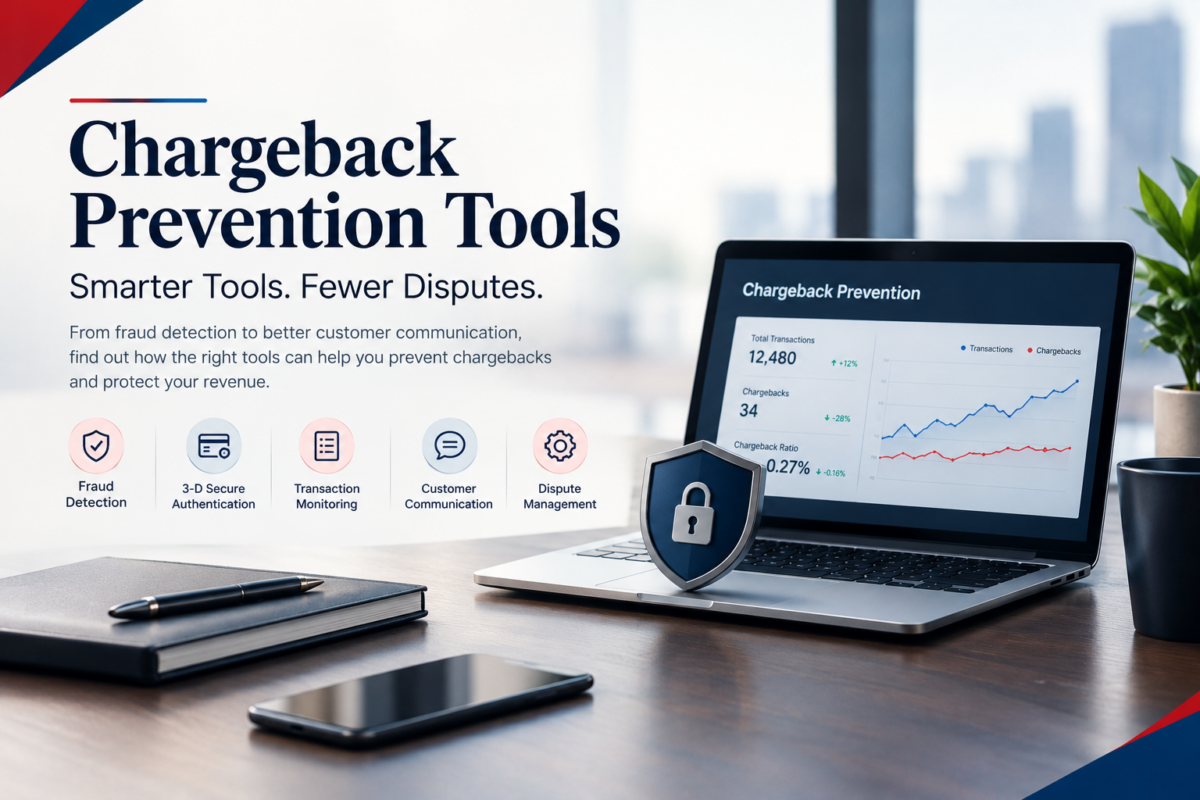
Chargebacks are not always caused by fraud. A customer may dispute a transaction because they do not recognize the billing name, never received the order, were charged after trying to cancel a subscription, or simply could not resolve a problem with the merchant.
That makes chargeback prevention less about finding one perfect tool and more about using the right combination of systems and processes.
For an online merchant, the useful question is not just which chargeback prevention tool is available. It is what problem does the tool solve, and does it actually reduce preventable disputes?
What Are Chargeback Prevention Tools?
Chargeback prevention tools are technologies or services that help merchants identify suspicious transactions, resolve customer issues, provide transaction evidence, or stop certain disputes before they become formal chargebacks. They can operate at different stages of the payment process.
Some tools work before a transaction is approved. Others monitor transactions after payment, while some focus on identifying disputes and helping merchants respond. This matters because what a chargeback actually is involves a formal dispute process. Once a customer has gone through their card issuer, the merchant may have limited options compared with resolving the issue directly beforehand.
1. Fraud Detection and Risk Scoring
Fraud detection tools are among the most common forms of chargeback prevention. They examine transaction signals and assign a risk level to payments. Depending on the system, those signals can include things such as:
- IP address and device information
- Transaction history
- Unusual purchasing behavior
- Geographic inconsistencies
- Multiple payment attempts
- Velocity of transactions
For example, a customer account that suddenly attempts several high-value purchases from different locations may deserve additional review. These systems can help reduce unauthorized transaction disputes, but they are not perfect. Blocking too many legitimate transactions can create false declines and cause customers to abandon purchases.
The goal is therefore not to reject every transaction that looks unusual. It is to identify genuinely risky behavior while allowing legitimate customers to pay.
2. 3-D Secure Authentication
3-D Secure adds an additional authentication step to certain online card payments. Depending on the issuer and transaction, the customer may be asked to verify the payment through their bank or another authentication method. This can be useful for reducing certain types of card-not-present fraud. In some situations, successful authentication may also affect how liability is handled under the applicable card-network rules.
However, 3-D Secure is not a solution for every type of chargeback. It will not necessarily prevent disputes caused by delivery problems, subscription confusion, duplicate charges, or a customer claiming that the product was not as described. That distinction matters because customers can file chargebacks for many different reasons, and fraud is only one part of the picture.
3. Transaction and Order Monitoring
Good transaction records are one of the simplest forms of chargeback protection. A merchant should be able to connect a payment with the relevant order, customer account, delivery information, and communication history.
For digital businesses, useful records may include login activity, IP information, timestamps, and evidence that the customer accessed or used the service.
For physical products, shipping and delivery information can be particularly important. These records become valuable when a customer files a chargeback and the merchant has to respond. Without organized evidence, even a legitimate transaction can be difficult to defend.
4. Billing Descriptor and Customer Communication Tools
Not every chargeback requires sophisticated fraud technology. Sometimes customers simply do not recognize a transaction on their card statement.
A clear billing descriptor can reduce this type of confusion. So can order confirmations, shipping updates, renewal notices, and cancellation confirmations.
For example, a customer who sees an unfamiliar company name on their statement may assume a transaction is fraudulent. A recognizable billing name combined with a clear receipt can make the payment easier to identify. This is a good example of prevention through communication rather than technology.
5. Subscription Management Tools
Recurring billing creates a specific set of chargeback risks. Customers may forget about a subscription, misunderstand the renewal date, or believe that cancelling a service automatically stops a payment that has already been processed.
Subscription management tools can help merchants manage renewal reminders, cancellation requests, billing dates, and customer account status. Clear cancellation processes are especially important because a customer who cannot easily resolve a billing issue may turn to their card issuer instead. In this situation, understanding the difference between a chargeback and a refund helps merchants choose the appropriate way to resolve a customer’s request.
6. Dispute Management and Evidence Tools
Some tools focus on what happens after a dispute has already been received. They can help merchants organize transaction information, collect supporting documents, track deadlines, and submit evidence through the relevant payment-processing system.
The value here is efficiency and consistency.
A merchant processing a small number of transactions may be able to handle disputes manually. A larger merchant may have hundreds or thousands of transactions to review, making organized dispute management much more important.
The potential financial impact also becomes clearer when considering how much a chargeback can cost a business. Losing the transaction is only one part of the cost; operational time, fees, products, and fulfillment expenses can also add up.
7. Customer Service and Case Management
Customer service is not usually described as a chargeback prevention tool, but it can have a direct effect on dispute levels. A customer who can quickly contact the merchant about a missing order or unexpected charge has an opportunity to resolve the problem without involving the card issuer.
Hence, a case-management system can help businesses track these complaints and make sure they do not disappear between departments. This becomes particularly useful when merchants monitor their chargeback ratio. A rising ratio can be a sign that customer complaints or operational problems are not being resolved effectively.
Which Tools Actually Work Best?
There is no universal combination that works for every merchant. A practical setup might include:
- Fraud screening for suspicious transactions
- Authentication for higher-risk card payments
- Clear billing and customer communication
- Reliable order and delivery records
- Subscription controls for recurring payments
- Organized dispute management
- Responsive customer support
The important part is matching each tool to the type of chargebacks the business actually receives. A merchant with mostly unauthorized transaction disputes may benefit from stronger fraud controls. A subscription business with frequent renewal disputes may get more value from better billing communication and cancellation management.
What Tools Cannot Prevent
No prevention system can eliminate every chargeback.
A legitimate customer may still dispute a transaction. A product can still be delayed. A customer can still misunderstand a service. Fraud detection can also make mistakes. That is why merchants should review their actual dispute data rather than assuming that installing a prevention tool solves the entire problem.
The strongest approach combines technology with clear policies, accurate records, good customer communication, and a process for handling disputes quickly.
The Practical Takeaway
Chargeback prevention tools work best when they address a specific source of disputes.
Fraud detection can help with suspicious transactions. Authentication can add another layer of payment verification. Subscription tools can reduce recurring billing confusion. Good records and dispute-management systems can make legitimate transactions easier to defend.
But technology alone is rarely enough. The most effective prevention strategy starts with understanding why chargebacks are happening, then choosing tools that address those causes without creating unnecessary friction for legitimate customers.

Categories
- ACH Payments (10)
- adult payment processing (11)
- AI (9)
- Altcoins (10)
- Banking (10)
- Bitcoin (133)
- Bitcoin ETF (11)
- Bitcoin Price (30)
- Blockchain (50)
- Brokering World Hunger Away (16)
- Business (17)
- card payment processing (10)
- CBD (11)
- CBDC (11)
- Chargeback (8)
- coaching business (11)
- COVID-19 (3)
- Crypto ATMs (1)
- Crypto Banking (17)
- Crypto Bill (1)
- Crypto business owner platform (31)
- Crypto Investment (3)
- Crypto Markets (5)
- Crypto Payment (35)
- Crypto Payment Processor (4)
- Crypto Prices (1)
- Crypto Trading (92)
- Cryptocurrency (402)
- Cryptocurrency Exchange (108)
- Data Visualization (2)
- dating platforms (11)
- debt collection payment processing (10)
- Decentralized Finance (7)
- DeFi Payment (9)
- DEX (3)
- Digital Currency (23)
- dropshipping payment processing (12)
- Ethereum (2)
- FAQ (7)
- file sharing payment processing (11)
- Finance (25)
- Financial Equality (4)
- Financial Freedom (8)
- Forex (35)
- hemp (1)
- ICO (2)
- Investment (11)
- IPTV (11)
- Merchant Account (10)
- Mining (3)
- News (66)
- NFTs (2)
- online gambling (11)
- P2P (1)
- Paybito (139)
- PayBitoPro (693)
- PayBitoPro Coin Listing (6)
- PayBitoPro Exchange (2)
- Payment Gateway (40)
- peptide (10)
- Post COVID Digital Transformation (1)
- Press Release (130)
- Privacy & Security (3)
- Real Estate (1)
- Stablecoin (5)
- Technology (15)
- Travel (11)
- Uncategorized (9)
- US Presidential Election (2)
- Utility Coin (1)
- Web3 business (4)
- Web3 Wallets (2)
- White Label Crypto Exchange (8)