Fraud Prevention for Dropshipping Stores: How Online Businesses Protect Ecommerce Payments?
- August 7, 2026
- Soham Guchait
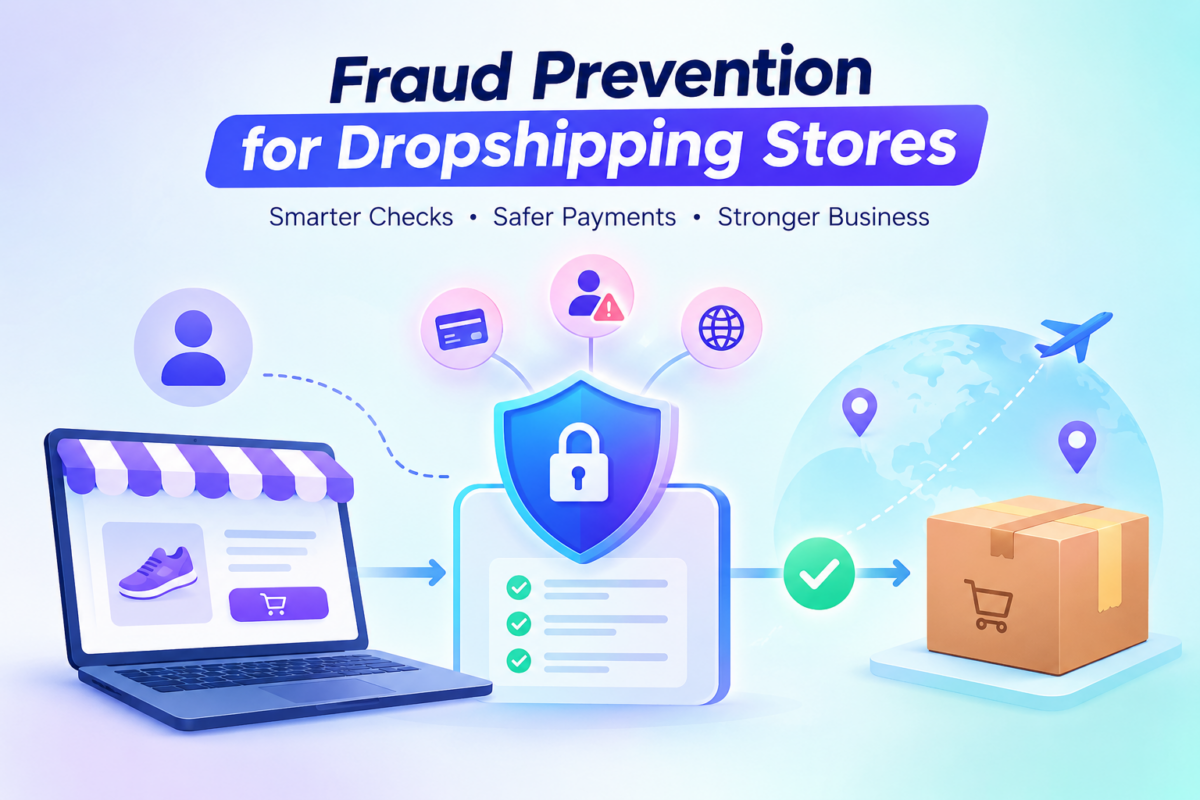
Running a successful dropshipping store requires more than attracting customers and processing orders. Since transactions happen entirely online, businesses must also protect themselves from fraudulent purchases that can result in lost revenue, chargebacks, product losses, and damaged payment performance.
Unlike physical retail stores where customers and products interact directly, ecommerce businesses rely on digital information to determine whether a transaction is legitimate. This makes fraud prevention a critical part of managing online payments.
For dropshipping businesses, fraud can be especially challenging because merchants often sell internationally, work with third-party suppliers, and ship products to customers they may never interact with directly. Understanding fraud prevention for dropshipping stores helps merchants identify suspicious activity, reduce unnecessary losses, and create a safer payment environment for both customers and businesses.
Why Fraud Prevention Matters for Dropshipping Businesses?
Every online transaction involves a level of risk. When a customer places an order, the merchant must determine whether the purchase is genuine before fulfilling it.
A fraudulent order may appear identical to a legitimate purchase at first glance. The customer may provide valid payment information, complete checkout successfully, and request delivery. However, the payment details may have been stolen or obtained through unauthorized access.
Consider a dropshipping store selling premium electronics accessories. A customer places a large order using a credit card and requests urgent shipping. The payment is approved, so the merchant sends the order to the supplier. Several days later, the actual cardholder reports the transaction as unauthorized.
The merchant may lose the product cost, shipping expenses, and the original payment amount. Fraud prevention helps identify these situations before they create financial damage.
How Payment Fraud Happens in Ecommerce?
Payment fraud can occur in several ways, and understanding these methods helps merchants recognize potential risks.
One common type is stolen card fraud, where criminals use payment information obtained through data breaches or illegal sources to make purchases online. Another challenge is account takeover, where attackers gain access to existing customer accounts and use saved payment information to place unauthorized orders. Dropshipping stores may also experience friendly fraud, where customers make legitimate purchases but later dispute transactions because they do not recognize the charge, regret the purchase, or claim they did not receive the product.
Some common fraud risks include:
- Stolen payment credentials.
- Fake customer identities.
- Suspicious international transactions.
- Multiple purchases using different cards.
- Automated bot-generated orders.
Each type of fraud requires different prevention methods because not every unusual transaction is fraudulent.
Why Dropshipping Stores Can Attract Fraudulent Orders?
Dropshipping businesses often operate globally, making them accessible to customers from many locations. While this creates growth opportunities, it can also increase exposure to fraudulent activity. Several factors can contribute to higher fraud risk:
International Customer Base
Selling internationally means receiving orders from different countries, currencies, and payment environments. A transaction that appears unusual may require additional verification.
For example, a customer located in one country using a payment card issued in another country and requesting delivery to a third location may trigger security concerns. This does not automatically mean the transaction is fraudulent, but it requires careful evaluation.
Digital-Only Customer Interaction
Traditional retailers often have physical interactions with customers. Dropshipping businesses usually rely entirely on digital communication. Merchants may never meet customers personally, making transaction data and online behavior the primary indicators of legitimacy.
Fast Business Scaling
Many dropshipping stores experience rapid growth after successful advertising campaigns. Sudden increases in order volume can make it more difficult to manually review every transaction. A store receiving ten orders per day may easily review unusual purchases. A store receiving hundreds of orders daily requires automated systems and structured fraud management processes.
Common Signs of Suspicious Orders
Fraud prevention begins with recognizing patterns that differ from normal customer behavior. A single unusual factor does not always indicate fraud. However, multiple warning signs together may require additional review.
Examples of suspicious activity include:
- Orders with unusually high values compared with normal purchases.
- Multiple failed payment attempts before a successful transaction.
- Shipping addresses that differ significantly from billing information.
- Customers purchase large quantities of the same product.
- Repeated orders using different payment cards.
For example, a dropshipping store selling fashion products normally receives individual customer purchases. Suddenly, one customer places ten large orders using different cards and requests delivery to the same address. This pattern may require additional verification before fulfillment.
Using Transaction Monitoring to Reduce Fraud
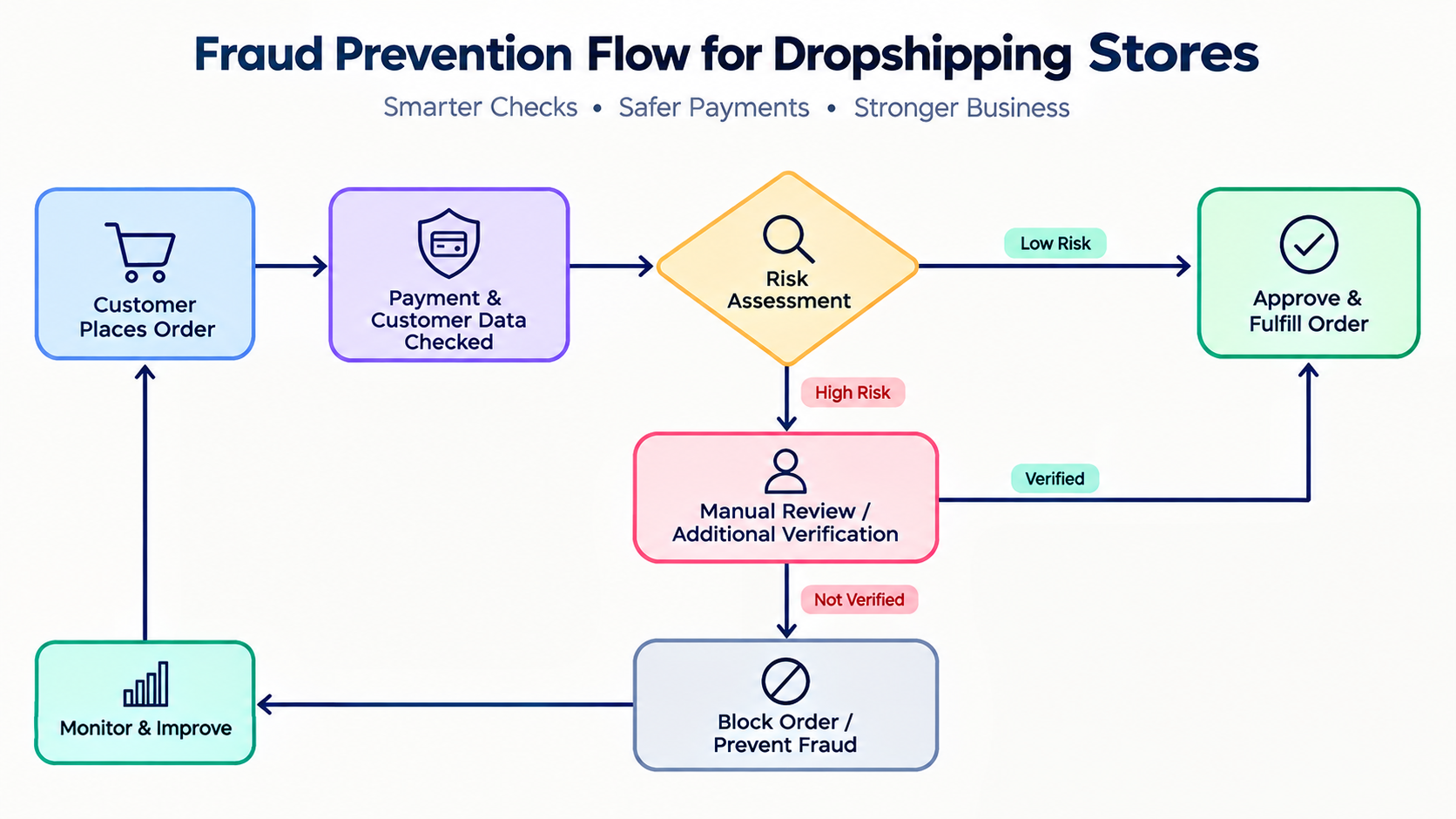
Modern ecommerce payment systems use transaction monitoring tools to analyze payment behavior and identify potential risks. These systems evaluate different factors during checkout, including transaction amount, customer location, purchase history, device information, and payment patterns.
For businesses operating multiple dropshipping stores or managing larger ecommerce ecosystems, having greater control over payment infrastructure can help streamline transaction monitoring and risk management. A white label payment platform for dropshipping businesses allows merchants to build a more customized payment environment while managing payment operations at scale.
The purpose is not to block every unusual transaction. Instead, effective fraud prevention aims to separate legitimate customers from potentially harmful activity.
A genuine customer purchasing an expensive product for a special occasion may look unusual compared with regular shoppers. However, additional information can help determine whether the transaction should be approved. The goal is maintaining a balance between security and customer convenience.
Customer Verification and Order Review
While automated systems handle many transactions, some situations require manual review.
For higher-value purchases or unusual orders, merchants may verify additional information before fulfilling the order. This may include confirming customer details, reviewing order history, or requesting additional verification where appropriate.
For example, a customer purchasing multiple expensive products from a newly created account may require additional review before the merchant ships the order. Although additional verification adds a small amount of friction, it can prevent much larger losses caused by fraudulent transactions.
Preventing Friendly Fraud
Not all fraud comes from criminals. Friendly fraud occurs when customers dispute legitimate transactions. This often happens because customers forget a purchase, do not recognize the business name on their bank statement, or become dissatisfied after receiving the product. Dropshipping businesses can reduce friendly fraud by improving communication throughout the customer journey.
Important practices include:
- Using clear billing descriptions.
- Sending order confirmations.
- Providing tracking updates.
- Responding quickly to customer concerns.
- Maintaining transparent refund policies.
A customer who understands where their order is and how to contact the business is less likely to immediately file a payment dispute.
Balancing Fraud Prevention and Customer Experience
One of the biggest challenges in ecommerce fraud prevention is avoiding excessive restrictions. If security systems block too many legitimate customers, businesses lose sales and create frustrating checkout experiences.
For example, a customer traveling internationally may legitimately purchase from a dropshipping store while their location appears different from normal activity. Automatically rejecting the transaction could result in losing a valuable customer. Effective fraud prevention focuses on identifying genuine risks while allowing legitimate buyers to complete purchases smoothly.
Building a Long-Term Fraud Prevention Strategy
Fraud prevention should not be treated as a one-time setup. As a dropshipping business grows, fraud patterns change and new risks emerge. Merchants should regularly review transaction data, analyze disputes, monitor payment trends, and improve internal processes.
A small store beginning with domestic customers may eventually expand internationally and face completely different fraud challenges. Building adaptable payment processes early creates stronger protection as the business scales.
Fraud prevention also works together with other payment areas, including chargeback management, payment failures, merchant account stability, and international payment processing.
Final Thoughts
Fraud prevention for dropshipping stores is essential for protecting revenue, maintaining payment stability, and creating a trustworthy ecommerce experience. Because dropshipping businesses operate online and often serve international customers, they must carefully balance transaction security with customer convenience. Understanding fraud patterns, monitoring suspicious activity, improving customer communication, and using appropriate verification processes can significantly reduce payment risks.
Fraud cannot be eliminated completely, but businesses that actively manage payment security are better prepared to scale operations, protect customers, and build a reliable ecommerce payment system.

Categories
- ACH Payments (10)
- adult payment processing (11)
- AI (9)
- Altcoins (10)
- Banking (10)
- Bitcoin (133)
- Bitcoin ETF (11)
- Bitcoin Price (30)
- Blockchain (50)
- Brokering World Hunger Away (16)
- Business (17)
- card payment processing (10)
- CBD (11)
- CBDC (11)
- Chargeback (8)
- coaching business (11)
- COVID-19 (3)
- Crypto ATMs (1)
- Crypto Banking (17)
- Crypto Bill (1)
- Crypto business owner platform (31)
- Crypto Investment (3)
- Crypto Markets (5)
- Crypto Payment (35)
- Crypto Payment Processor (4)
- Crypto Prices (1)
- Crypto Trading (92)
- Cryptocurrency (402)
- Cryptocurrency Exchange (108)
- Data Visualization (2)
- dating platforms (11)
- debt collection payment processing (10)
- Decentralized Finance (7)
- DeFi Payment (9)
- DEX (3)
- Digital Currency (23)
- dropshipping payment processing (12)
- Ethereum (2)
- FAQ (7)
- file sharing payment processing (11)
- Finance (25)
- Financial Equality (4)
- Financial Freedom (8)
- Forex (35)
- hemp (1)
- ICO (2)
- Investment (11)
- IPTV (11)
- Merchant Account (10)
- Mining (3)
- News (66)
- NFTs (2)
- online gambling (11)
- P2P (1)
- Paybito (147)
- PayBitoPro (693)
- PayBitoPro Coin Listing (6)
- PayBitoPro Exchange (2)
- Payment Gateway (48)
- peptide (10)
- Post COVID Digital Transformation (1)
- Press Release (130)
- Privacy & Security (3)
- Real Estate (1)
- Stablecoin (5)
- Technology (15)
- Travel (11)
- Uncategorized (10)
- US Presidential Election (2)
- Utility Coin (1)
- Web3 business (4)
- Web3 Wallets (2)
- White Label Crypto Exchange (8)
Recent Posts
- Payment Gateway vs. Payment Orchestration: What’s the Difference?
- What Is Smart Payment Routing? Strategies to Optimize Payment Performance
- How to Improve Payment Approval Rates for High-Risk Businesses?
- Why Are Online Payments Failing? Common Causes and How to Fix Them
- How to Use Multiple Payment Processors to Reduce Business Disruptions?