Why Chargebacks Are a Major Threat to Forex Brokers?
- June 26, 2026
- Soham Guchait
The global Forex market processes trillions of dollars in trading volume every day, making it one of the largest and most active financial markets in the world. Yet behind every successful brokerage lies an operational challenge that many traders never see: PAYMENT RISK. While attracting traders and facilitating transactions are often the primary focus, managing chargebacks has become one of the biggest threats to a Forex broker’s profitability and long-term stability.
As competition intensifies and regulatory scrutiny increases, brokers are investing more heavily in secure payment infrastructure and specialized solutions such as dedicated Forex payment gateways and merchant accounts. Many firms are now exploring platforms like PayBito’s Forex payment processing solutions to improve payment reliability while reducing exposure to disputes and payment interruptions.
What Is a Chargeback?
A chargeback occurs when a customer disputes a payment with their card issuer instead of requesting a refund directly from the merchant. If the issuing bank determines that the dispute is valid, the transaction amount is reversed and returned to the customer.
Chargebacks were originally designed to protect consumers from unauthorized transactions and fraud. However, in high-risk industries such as Forex trading, the system is frequently abused through what is known as “friendly fraud.”
In many cases, a trader deposits funds, executes trades, incurs losses, and then disputes the original deposit by claiming the transaction was unauthorized or misleading. The broker not only loses the disputed deposit amount but may also incur additional chargeback fees and administrative costs.
Why Forex Brokers Face Higher Chargeback Rates
Unlike traditional eCommerce businesses, Forex brokers operate in an environment where customers are actively risking money to generate profits. When trading outcomes are unfavorable, some traders attempt to recover losses through the chargeback process.
Several factors contribute to elevated dispute rates:
1. Trading Losses Create Emotional Reactions
A customer who loses money on a purchased product generally understands the transaction outcome. Forex trading is different. Market volatility can result in substantial losses within a short period, causing frustrated traders to seek alternative ways to recover funds.
2. Cross-Border Transactions
Most Forex brokers serve an international customer base. Cross-border transactions often involve different banking systems, currencies, and regulatory environments, increasing the likelihood of payment disputes and misunderstandings.
3. Subscription and Recurring Fees
Many brokers offer premium trading tools, signal services, managed accounts, or educational subscriptions. Customers may forget recurring charges or misunderstand billing terms, leading to disputes.
4. Regulatory Complexity
Financial services operate under stricter compliance requirements than most online businesses. Inadequate documentation, unclear disclosures, or incomplete verification procedures can significantly increase chargeback risk.
The Real Cost of a Chargeback
Many brokers underestimate the financial impact of a dispute.
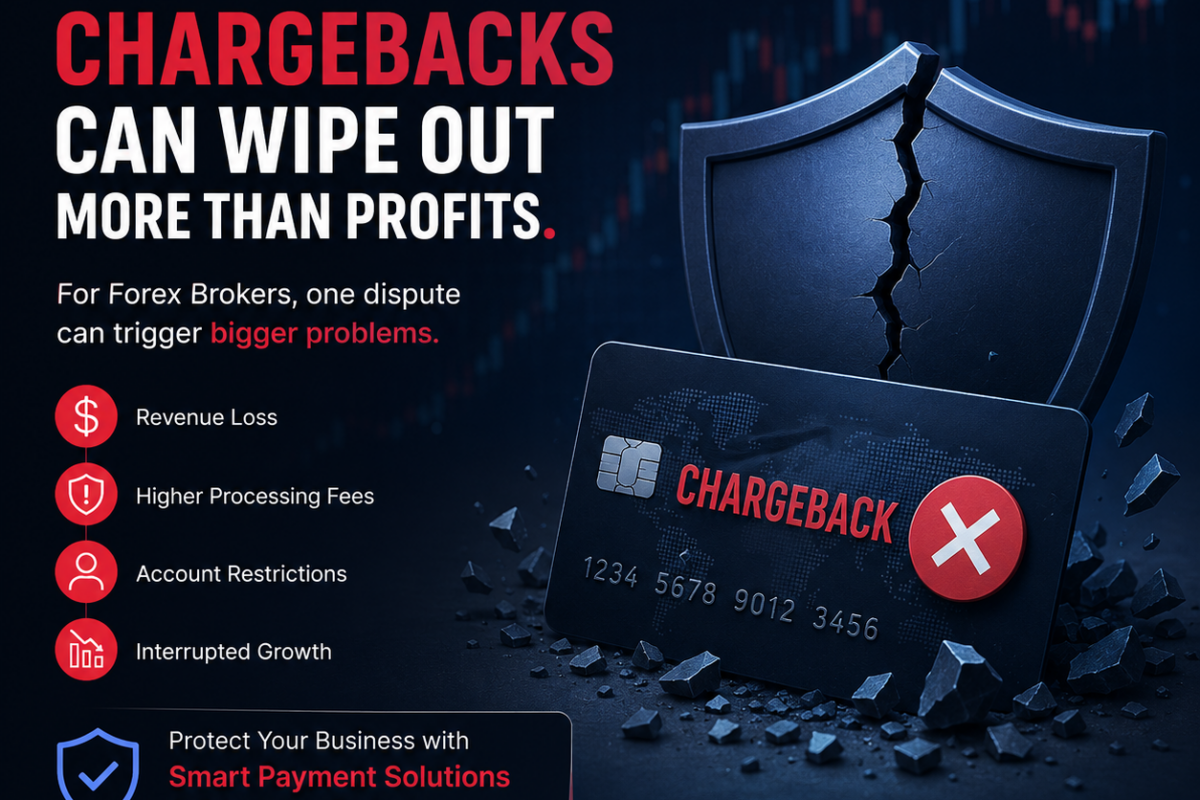
The actual cost extends far beyond the original transaction amount and may include:
- Chargeback processing fees
- Administrative investigation costs
- Loss of acquired customers
- Increased payment processing fees
- Merchant account monitoring programs
- Potential account termination
Card networks closely monitor dispute ratios. Excessive chargebacks can place merchants into monitoring programs that lead to higher costs and operational restrictions. According to guidance published by the National Futures Association (NFA), Forex firms must maintain strong compliance, recordkeeping, and customer communication standards to reduce operational and regulatory risks. Maintaining proper documentation can also be critical when responding to payment disputes.
How Chargebacks Affect Growth
Chargebacks are not simply a payment department problem. They directly impact business growth.
When payment providers view a broker as high risk, they may impose:
- Rolling reserves
- Higher transaction fees
- Lower processing limits
- Delayed settlements
- Account freezes
These restrictions can reduce cash flow and create significant operational challenges, particularly for growing brokerages that depend on steady deposit volumes.
Many Forex startups discover that scaling payment operations becomes more difficult than acquiring traders. This challenge is one reason why specialized payment infrastructure has become increasingly important for the industry.
Strategies Forex Brokers Use to Reduce Chargebacks
Successful brokers typically combine several risk-management practices to minimize disputes.
Strong KYC and AML Procedures
Verifying customer identity before allowing deposits helps prevent fraudulent account activity and creates a stronger evidentiary record if disputes arise.
Transparent Communication
Clear risk disclosures, withdrawal policies, and trading terms reduce misunderstandings that often lead to disputes.
Transaction Monitoring
Advanced fraud detection tools can identify suspicious behavior before a dispute occurs.
Multi-Channel Payment Acceptance
Diversifying payment methods can reduce dependence on card transactions alone. Many brokers now support bank transfers, e-wallets, and cryptocurrency payments to create a more resilient payment ecosystem.
Mid-sized and enterprise brokers increasingly rely on specialized payment platforms that support multiple payment methods, automated compliance workflows, and Forex-specific risk controls. Solutions such as PayBito’s high-risk payment infrastructure are designed to address many of the payment challenges commonly faced by financial services businesses.
The Growing Role of Alternative Payments
One notable trend in the Forex industry is the increasing adoption of cryptocurrency deposits and alternative payment methods.
Unlike traditional card payments, blockchain-based transactions are generally irreversible once confirmed. While brokers must still comply with applicable regulations and verification requirements, alternative payment methods can significantly reduce exposure to traditional chargeback mechanisms.
This does not eliminate risk entirely, but it provides brokers with additional flexibility when designing payment strategies for global customers.
Looking Ahead
As the Forex industry continues to evolve, payment infrastructure is becoming a competitive advantage rather than merely an operational necessity. Brokers that invest in secure payment systems, compliance processes, and dispute prevention tools are better positioned to maintain stable growth and build long-term trust with traders.
Chargebacks will likely remain a challenge for Forex businesses, but they do not have to become a barrier to success. By understanding the root causes of disputes and implementing proactive risk-management strategies, brokers can protect revenue, improve payment acceptance rates, and create a better overall trading experience.
For firms seeking a more specialized approach to Forex and high-risk payment processing, platforms such as PayBito provide infrastructure designed specifically for industries where traditional processors often struggle to deliver long-term stability.

Categories
- AI (9)
- Altcoins (10)
- Banking (11)
- Bitcoin (134)
- Bitcoin ETF (11)
- Bitcoin Price (30)
- Blockchain (50)
- Brokering World Hunger Away (16)
- Business (13)
- CBDC (11)
- COVID-19 (3)
- Crypto ATMs (1)
- Crypto Banking (18)
- Crypto Bill (1)
- Crypto business owner platform (31)
- Crypto Investment (3)
- Crypto Markets (5)
- Crypto Payment (37)
- Crypto Payment Processor (4)
- Crypto Prices (1)
- Crypto Trading (92)
- Cryptocurrency (402)
- Cryptocurrency Exchange (108)
- Data Visualization (2)
- Decentralized Finance (7)
- DeFi Payment (9)
- DEX (3)
- Digital Currency (23)
- Ethereum (2)
- FAQ (7)
- Finance (29)
- Financial Equality (4)
- Financial Freedom (8)
- Forex (25)
- ICO (2)
- Investment (11)
- Mining (3)
- News (66)
- NFTs (2)
- P2P (1)
- PayBitoPro (698)
- PayBitoPro Coin Listing (6)
- PayBitoPro Exchange (2)
- Payment Gateway (22)
- Post COVID Digital Transformation (1)
- Press Release (130)
- Privacy & Security (3)
- Real Estate (1)
- Stablecoin (6)
- Technology (16)
- Uncategorized (3)
- US Presidential Election (2)
- Utility Coin (1)
- Web3 business (4)
- Web3 Wallets (2)
- White Label Crypto Exchange (8)
Recent Posts
- Organizing the World’s Value – Why the Future of the Digital Economy Needs an Operating System?
- Why Chargebacks Are a Major Threat to Forex Brokers?
- From Dream Vacation to Abandoned Cart: The Payment Mistakes That Drive Travelers Away in 2026
- The Gamer’s Regret: Why Video Game Studios Are Labeled “High-Risk”
- Why Businesses Get Labeled “High-Risk” – And Why Most Merchants Don’t Understand the Payment Industry’s Hidden Risk Model