White-Label Payment Platform: A Complete Guide for Growing Peptide Businesses
- July 29, 2026
- Soham Guchait
As peptide businesses grow, their payment requirements often become more sophisticated. A company that starts with a simple online checkout may eventually expand into wholesale distribution, subscription services, international sales, or multi-brand operations. As this happens, managing payments through a basic checkout solution may no longer be enough.
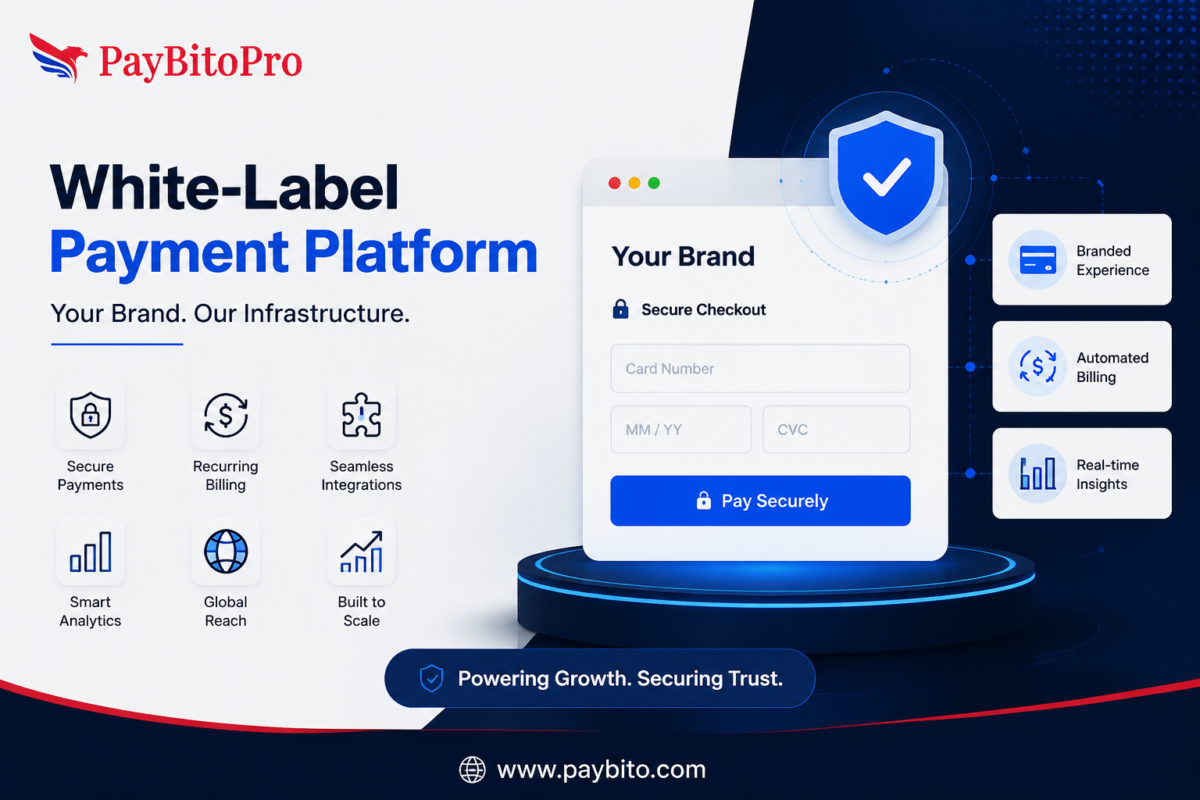
A white-label payment platform allows businesses to deliver a branded payment experience while using established payment infrastructure behind the scenes. Instead of building payment technology from scratch, companies can focus on growing their business while maintaining greater control over customer experience, integrations, and payment operations.
This guide explains what a white-label payment platform is, how it works, when businesses should consider using one, and the key features that support long-term growth.
What is a White-Label Payment Platform?
A white-label payment platform is a payment solution that businesses can customize with their own branding while using a third-party provider’s payment infrastructure.
Customers interact with the business’s website, checkout page, and branding throughout the payment process, even though the underlying payment technology is provided by a specialized payment company.
Many white-label platforms also include tools for recurring billing, payment reporting, API integrations, settlement management, customer management, and payment analytics.
Example:
A peptide supplier launches an online portal for universities and research laboratories. Instead of redirecting customers to an external payment page, the company offers a checkout experience that matches its own website and branding. Customers complete their purchases without feeling like they’ve left the business’s platform.
How Does a White-Label Payment Platform Work?
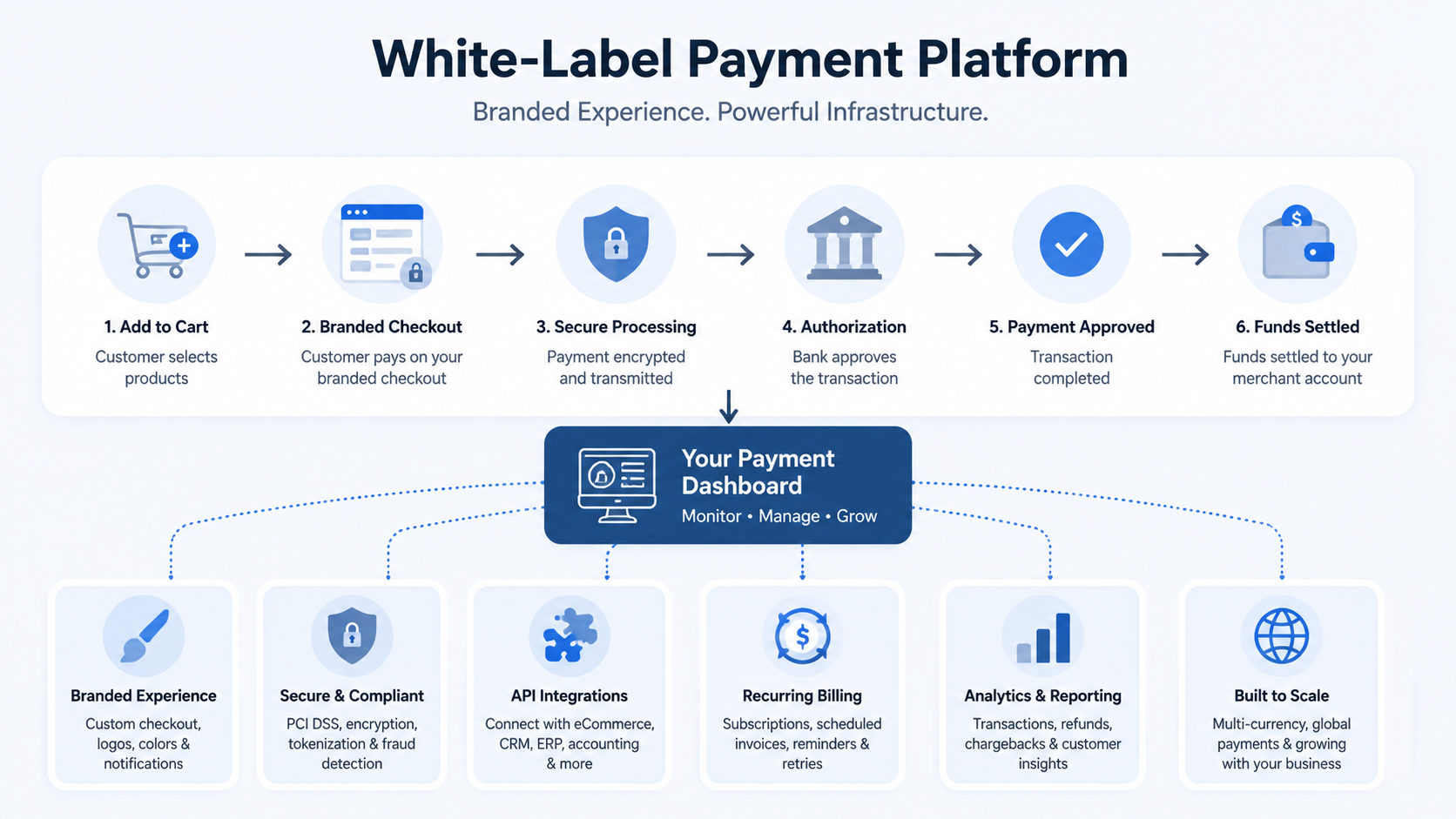
Although every provider is different, the process typically follows these steps:
- A customer adds products to the shopping cart.
- The customer proceeds to the business’s branded checkout.
- Payment information is encrypted and securely transmitted.
- The payment processor requests authorization from the customer’s financial institution.
- Once approved, the transaction is completed.
- Funds are settled according to the merchant’s payment schedule.
- The business monitors transactions, refunds, reporting, and customer activity through its payment dashboard.
The customer experiences a seamless payment journey while the business benefits from enterprise-grade payment infrastructure and a properly established merchant account supported by the required documentation.
When Does a Business Need a White-Label Payment Platform?
Not every business needs a white-label payment platform from day one. However, as operations become more complex, it can provide capabilities that go beyond basic payment acceptance.
A business may benefit from a white-label payment platform if it plans to:
- Launch recurring subscription services
- Expand into international markets
- Operate multiple brands under one organization
- Manage wholesale and retail customers simultaneously
- Integrate payments with ERP, CRM, or inventory systems
- Build a marketplace or supplier portal or a community
- Deliver a consistent branded customer experience
For many growing peptide businesses, these operational requirements emerge naturally as sales increase and new customer segments are added.
Key Features to Look For
Branded Checkout
A consistent checkout experience reinforces customer confidence. Look for platforms that allow businesses to customize:
- Checkout pages
- Logos
- Brand colors
- Customer notifications
- Payment confirmations
Keeping customers within the same branded environment helps create a more professional purchasing experience.
Secure Payment Processing
Payment security is essential for protecting customer information. A reliable platform should support:
- PCI DSS compliance
- Tokenization
- End-to-end encryption
- Secure customer authentication
- Fraud detection tools
These technologies help reduce payment risk while protecting sensitive financial information.
Flexible API Integrations
Modern businesses rely on multiple software systems. Payment APIs allow businesses to connect payment operations with:
- eCommerce platforms
- Accounting software
- CRM systems
- ERP platforms
- Inventory management tools
Example:
A peptide distributor receives an online order.
Once payment is approved, the platform automatically updates inventory, generates an invoice, sends an order confirmation, and records the transaction in the accounting system—all without manual data entry.
Recurring Billing
Many peptide businesses serve customers who order products on a regular schedule. Recurring billing features help automate:
- Subscription payments
- Scheduled invoices
- Payment reminders
- Failed payment retries
- Customer billing management
Automation improves operational efficiency while creating a smoother customer experience.
Reporting and Analytics
Payment reporting provides valuable business insights.
Useful analytics include:
- Transaction history
- Payment approval rates
- Refund activity
- Chargeback trends
- Settlement reports
- Customer purchasing patterns
Businesses can use this information to improve operational performance and identify opportunities for growth.
Scalability
A payment solution should support the business as it grows. Scalable platforms typically accommodate:
- Higher transaction volumes
- Multiple currencies
- International customers
- New payment methods
- Additional sales channels
Selecting scalable technology early helps avoid disruptive system migrations later.
Real-World Example
Consider two peptide companies experiencing rapid growth.
The first business uses a basic payment solution designed for a small online store. As it expands into wholesale sales and subscription services, employees spend increasing amounts of time reconciling payments, updating customer records, and managing separate software systems.
The second business implements a white-label payment platform that integrates with its existing business applications. Payment processing, recurring billing, reporting, and customer management are handled through one centralized environment, allowing the business to scale more efficiently as transaction volume increases.
The difference is not simply branding—it is having payment infrastructure that supports operational growth.
Best Practices for Choosing a White-Label Payment Platform
Before selecting a solution, businesses should evaluate whether it offers:
- Secure payment processing
- Flexible API integrations
- Mobile-friendly checkout
- PCI DSS compliance
- Recurring billing capabilities
- Fraud prevention tools
- Detailed payment analytics
- International payment support
- Responsive technical support
- Scalable infrastructure
Looking beyond transaction fees and evaluating long-term functionality often leads to a better investment.
Frequently Asked Questions
Can a white-label payment platform support subscription businesses?
Yes. Many platforms include recurring billing tools that automate scheduled payments, subscription renewals, and payment reminders.
Is a white-label payment platform suitable for small businesses?
It depends on the business’s growth plans. Companies expecting to expand into subscriptions, international sales, or integrated payment workflows may benefit from adopting a scalable platform earlier.
Does a white-label payment platform improve customer experience?
A branded checkout experience can create a more consistent purchasing journey by allowing customers to complete transactions without feeling redirected to an unfamiliar payment page.
Conclusion
A white-label payment platform helps growing peptide businesses create a professional, branded payment experience while simplifying day-to-day payment operations. Beyond processing transactions, these platforms can support recurring billing, API integrations, reporting, fraud prevention, and scalable payment management.
For businesses planning to expand into wholesale distribution, subscriptions, international commerce, or more complex sales models, understanding how white-label payment platforms work is an important step toward building payment infrastructure that can grow alongside the business.

Categories
- ACH Payments (10)
- adult payment processing (11)
- AI (9)
- Altcoins (10)
- Banking (10)
- Bitcoin (133)
- Bitcoin ETF (11)
- Bitcoin Price (30)
- Blockchain (50)
- Brokering World Hunger Away (16)
- Business (17)
- card payment processing (10)
- CBD (11)
- CBDC (11)
- coaching business (11)
- COVID-19 (3)
- Crypto ATMs (1)
- Crypto Banking (17)
- Crypto Bill (1)
- Crypto business owner platform (31)
- Crypto Investment (3)
- Crypto Markets (5)
- Crypto Payment (35)
- Crypto Payment Processor (4)
- Crypto Prices (1)
- Crypto Trading (92)
- Cryptocurrency (402)
- Cryptocurrency Exchange (108)
- Data Visualization (2)
- dating platforms (11)
- debt collection payment processing (10)
- Decentralized Finance (7)
- DeFi Payment (9)
- DEX (3)
- Digital Currency (23)
- dropshipping payment processing (12)
- Ethereum (2)
- FAQ (7)
- file sharing payment processing (11)
- Finance (25)
- Financial Equality (4)
- Financial Freedom (8)
- Forex (35)
- hemp (1)
- ICO (2)
- Investment (11)
- IPTV (11)
- Merchant Account (10)
- Mining (3)
- News (66)
- NFTs (2)
- online gambling (11)
- P2P (1)
- Paybito (139)
- PayBitoPro (693)
- PayBitoPro Coin Listing (6)
- PayBitoPro Exchange (2)
- Payment Gateway (40)
- peptide (10)
- Post COVID Digital Transformation (1)
- Press Release (130)
- Privacy & Security (3)
- Real Estate (1)
- Stablecoin (5)
- Technology (15)
- Travel (11)
- Uncategorized (9)
- US Presidential Election (2)
- Utility Coin (1)
- Web3 business (4)
- Web3 Wallets (2)
- White Label Crypto Exchange (8)
Recent Posts
- ACH vs Wire Transfer: Which Payment Method Is Better for Businesses?
- ACH Fraud Prevention: How Businesses Can Secure Bank Account Payments?
- ACH Credit vs ACH Debit: What’s the Difference? With Real Examples
- ACH vs Credit Card: Which Payment Method Is Better for Businesses?
- How Long Do ACH Payments Take? Processing Times, Settlement, and Same Day ACH