Recurring Billing for Peptide Businesses: How Subscription Payments Drive Long-Term Growth
- July 29, 2026
- Soham Guchait

Subscription-based business models have become increasingly popular across many industries, including the peptide market. Whether supplying research laboratories, healthcare organizations, or repeat customers, many peptide businesses rely on recurring orders to generate predictable revenue.
Implementing an effective recurring billing system allows businesses to automate payments, improve customer retention, and reduce administrative work. Instead of manually collecting payments every month, companies can create a seamless billing experience that benefits both the business and its customers.
Understanding how recurring billing works and the features to look for can help peptide businesses build a more reliable payment operation.
What Is Recurring Billing?
Recurring billing is a payment process that automatically charges customers at predetermined intervals for ongoing products or services.
Depending on the business model, payments may occur:
- Weekly
- Monthly
- Quarterly
- Annually
Once a customer authorizes recurring payments, future transactions are processed automatically according to the agreed schedule.
Example:
A biotechnology research company orders peptide products every month for ongoing laboratory projects.
Instead of placing a new order each time, the customer enrolls in a recurring billing program. Payments are processed automatically on the first day of every month, reducing manual work for both the customer and the supplier.
How Does Recurring Billing Work?
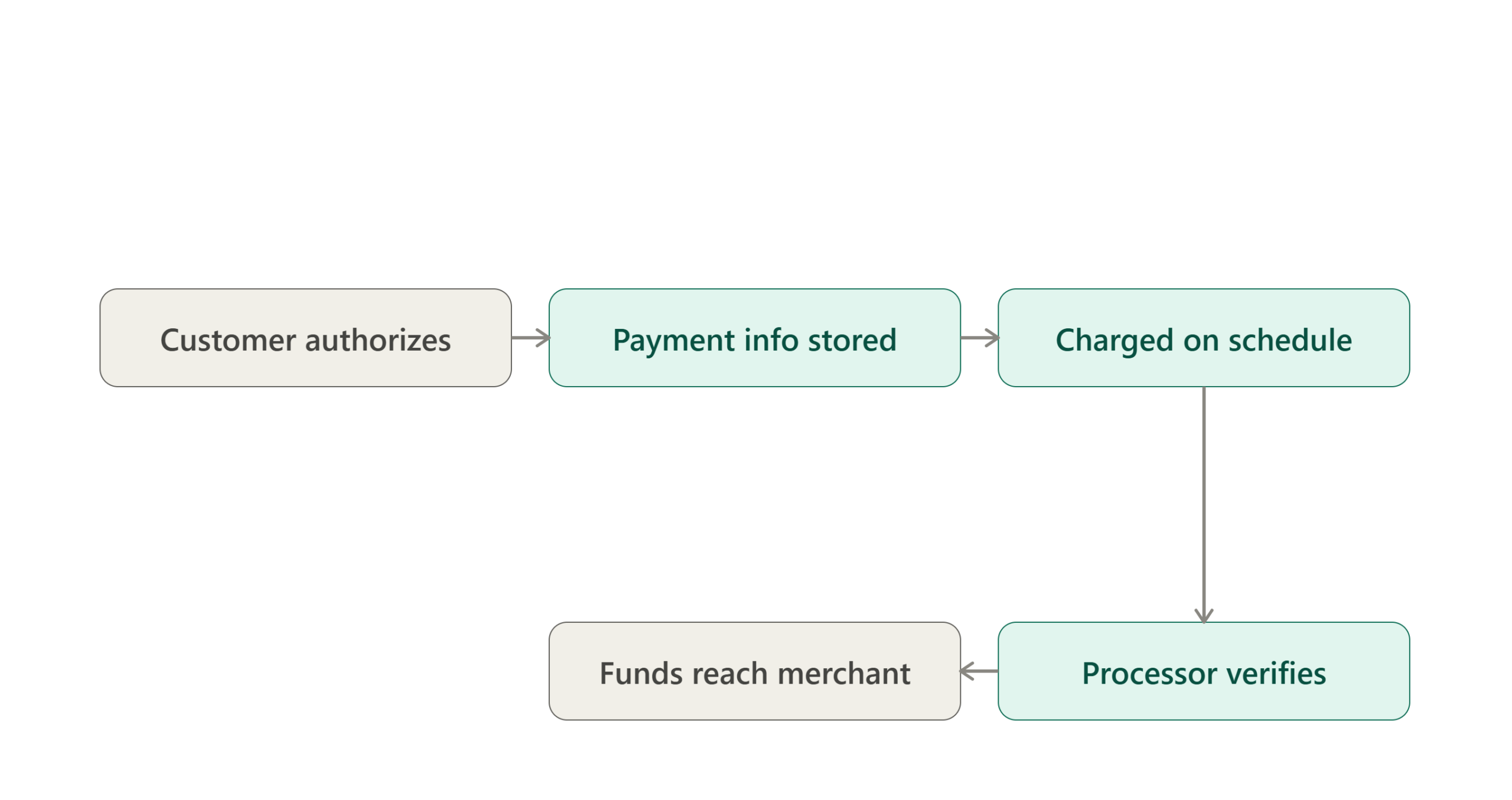
A recurring payment system generally follows these steps:
- The customer agrees to a recurring payment plan.
- Payment information is securely stored.
- The billing system automatically charges the customer on the scheduled date.
- The payment processor authorizes the transaction.
- Approved payments are settled into the merchant account.
The entire process happens automatically while maintaining secure payment handling.
Why Are Recurring Payments Valuable for Peptide Businesses?
Many peptide businesses serve customers who purchase products regularly.
Examples include:
- Research laboratories
- Universities
- Pharmaceutical companies
- Biotechnology firms
- Wholesale distributors
Recurring billing eliminates the need for customers to manually complete every purchase. This convenience often leads to stronger customer relationships and more predictable revenue.
Benefits of Recurring Billing
1. Predictable Revenue
As recurring revenue models grow, businesses often require more advanced payment infrastructure to manage increasing transaction volumes, reporting needs, and customer billing operations. A white label payment platform can help businesses create a more scalable payment environment. Instead of depending entirely on one-time purchases, businesses receive scheduled payments throughout the month.
Example:
A peptide supplier with 300 monthly subscription customers can estimate future revenue more accurately than a business relying only on individual orders.
2. Better Customer Experience
Customers appreciate convenience.
Automated billing removes the need to repeatedly enter payment information, making repeat purchases faster and easier. A smooth payment experience encourages long-term business relationships.
3. Reduced Administrative Work
Without recurring billing, businesses must:
- Send invoices
- Track payment deadlines
- Follow up on unpaid balances
- Process manual payments
Automation significantly reduces these repetitive tasks.
4. Higher Customer Retention
Subscription customers are more likely to continue purchasing when payments happen automatically.
Businesses can focus on delivering consistent service instead of repeatedly encouraging customers to reorder.
Common Challenges With Recurring Billing
Although recurring billing offers many advantages, businesses should also prepare for common challenges.
Failed Payments
Recurring transactions may fail because of:
- Expired payment cards
- Insufficient funds
- Bank restrictions
- Payment authorization failures
Businesses should have automated payment retry processes and notify customers when a payment cannot be completed.
Customer Cancellations
Customers should always have a clear process for managing or canceling subscriptions. Transparent billing practices help build trust and reduce payment disputes.
Payment Security
Recurring billing systems store payment credentials securely using encryption and tokenization technologies. Protecting customer payment information is essential for maintaining confidence and reducing fraud risks.
Features to Look for in a Recurring Billing Solution
When evaluating a recurring billing platform, businesses should consider features such as:
Automated Billing Schedules
The ability to customize billing cycles based on customer agreements.
Secure Payment Storage
Payment credentials should be stored using industry-standard security practices rather than plain text.
Payment Retry Automation
Failed payments should trigger automatic retry attempts according to predefined rules.
Multiple Payment Methods
Customers should have flexibility to pay using:
- Credit cards
- Debit cards
- ACH transfers
- Alternative payment methods
For businesses serving customers across different regions, supporting international payments can help simplify cross-border transactions and make recurring billing more accessible for global customers.
Reporting and Analytics
Businesses should be able to monitor:
- Active subscriptions
- Successful payments
- Failed payments
- Revenue trends
- Customer retention
These insights help improve operational efficiency.
Example: One-Time Orders vs. Recurring Billing
Consider two peptide suppliers.
Business A
Accepts only one-time purchases.
Customers must manually reorder products every month.
Some customers forget to reorder, leading to inconsistent revenue.
Business B
Offers recurring billing for repeat customers.
Payments are processed automatically every month, resulting in more consistent sales and fewer missed orders.
Although both companies sell similar products, Business B creates a smoother purchasing experience while improving revenue predictability.
Best Practices for Subscription Payment Processing
To improve recurring payment performance, businesses should adopt these processing norms:
- Clearly explain subscription terms before enrollment.
- Send billing reminders before scheduled payments.
- Notify customers immediately if a payment fails.
- Provide easy access to billing history.
- Make cancellation policies transparent.
- Review payment performance regularly.
Following these practices reduces customer confusion and helps minimize payment disputes.
Conclusion
A well-designed recurring billing system helps peptide businesses simplify payment collection while improving customer convenience and operational efficiency.
By automating subscription payments, reducing manual invoicing, and providing a secure payment experience, businesses can build stronger customer relationships and generate more predictable revenue.
As the peptide industry continues to grow, recurring billing will remain an important part of creating scalable and sustainable payment operations.

Categories
- ACH Payments (10)
- adult payment processing (11)
- AI (9)
- Altcoins (10)
- Banking (10)
- Bitcoin (133)
- Bitcoin ETF (11)
- Bitcoin Price (30)
- Blockchain (50)
- Brokering World Hunger Away (16)
- Business (17)
- card payment processing (10)
- CBD (11)
- CBDC (11)
- Chargeback (8)
- coaching business (11)
- COVID-19 (3)
- Crypto ATMs (1)
- Crypto Banking (17)
- Crypto Bill (1)
- Crypto business owner platform (31)
- Crypto Investment (3)
- Crypto Markets (5)
- Crypto Payment (35)
- Crypto Payment Processor (4)
- Crypto Prices (1)
- Crypto Trading (92)
- Cryptocurrency (402)
- Cryptocurrency Exchange (108)
- Data Visualization (2)
- dating platforms (11)
- debt collection payment processing (10)
- Decentralized Finance (7)
- DeFi Payment (9)
- DEX (3)
- Digital Currency (23)
- dropshipping payment processing (12)
- Ethereum (2)
- FAQ (7)
- file sharing payment processing (11)
- Finance (25)
- Financial Equality (4)
- Financial Freedom (8)
- Forex (35)
- hemp (1)
- ICO (2)
- Investment (11)
- IPTV (11)
- Merchant Account (10)
- Mining (3)
- News (66)
- NFTs (2)
- online gambling (11)
- P2P (1)
- Paybito (147)
- PayBitoPro (693)
- PayBitoPro Coin Listing (6)
- PayBitoPro Exchange (2)
- Payment Gateway (48)
- peptide (10)
- Post COVID Digital Transformation (1)
- Press Release (130)
- Privacy & Security (3)
- Real Estate (1)
- Stablecoin (5)
- Technology (15)
- Travel (11)
- Uncategorized (10)
- US Presidential Election (2)
- Utility Coin (1)
- Web3 business (4)
- Web3 Wallets (2)
- White Label Crypto Exchange (8)
Recent Posts
- Payment Gateway vs. Payment Orchestration: What’s the Difference?
- What Is Smart Payment Routing? Strategies to Optimize Payment Performance
- How to Improve Payment Approval Rates for High-Risk Businesses?
- Why Are Online Payments Failing? Common Causes and How to Fix Them
- How to Use Multiple Payment Processors to Reduce Business Disruptions?