Payment Gateway for Travel Businesses: Features to Look For
- July 30, 2026
- Soham Guchait
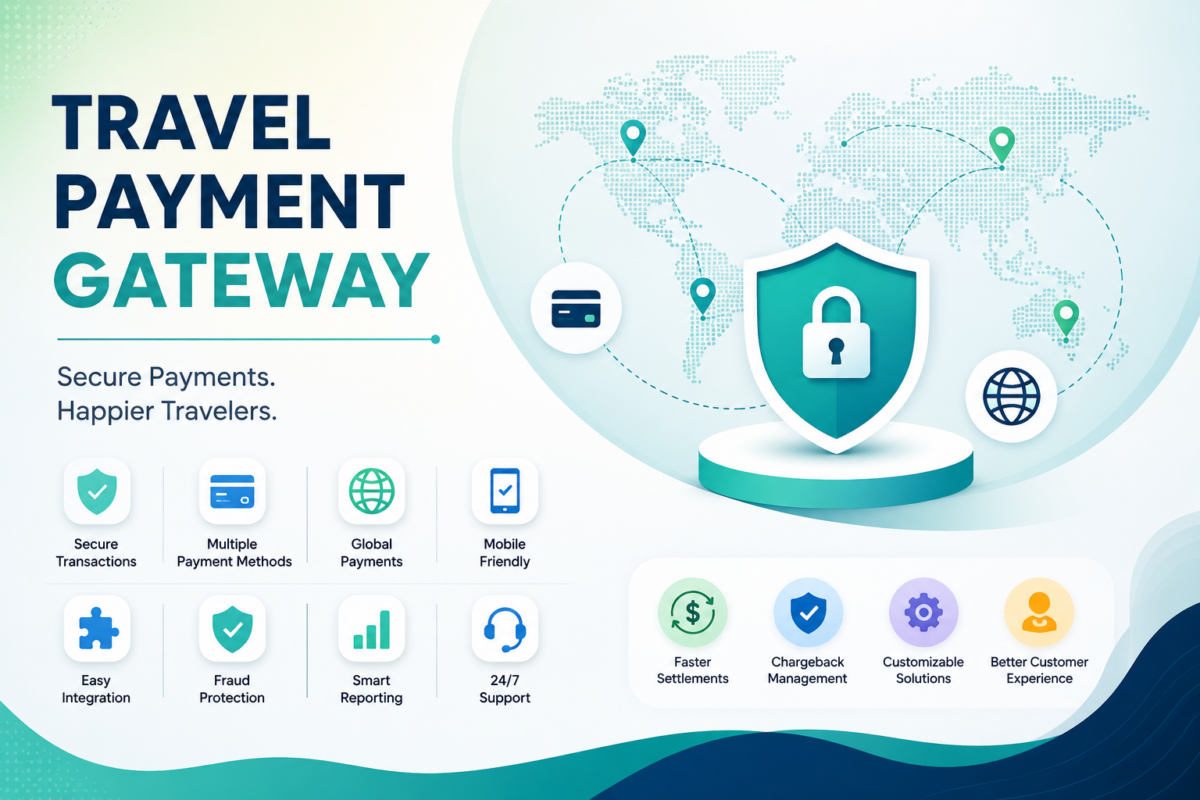
A smooth booking experience doesn’t end when a customer chooses a travel package – it also depends on how easily they can complete the payment. Whether someone is booking a guided tour, reserving a hotel, or purchasing a holiday package, the checkout process should be fast, secure, and reliable.
This is where a travel payment gateway plays an important role. It securely transfers payment information, helps authorize transactions, and connects your booking system with the payment processor. Choosing the right payment gateway can improve customer experience, reduce abandoned bookings, and support long-term business growth.
What Is a Travel Payment Gateway?
A payment gateway is the technology that securely captures a customer’s payment information and sends it for authorization.
When a traveler enters their card details during checkout, the payment gateway encrypts the information and forwards it through the payment network. If the transaction is approved, the booking can be completed. Although customers only see the payment page, several systems work together behind the scenes, including the payment gateway, payment processor, card networks, and banks.
If you’re new to accepting online payments, understanding travel payment processing can help explain how these systems work together.
Why Is a Payment Gateway Important for Travel Businesses?
Travel businesses often process:
- High-value bookings
- Advance payments
- International transactions
- Seasonal sales
- Online reservations
Because of these factors, travel businesses are frequently considered higher-risk by payment providers. A reliable payment gateway helps manage these transactions securely while giving customers confidence during checkout.
For example, a customer booking a $3,500 international vacation package expects the payment process to be quick and secure. A slow or unreliable checkout experience may result in an abandoned booking.
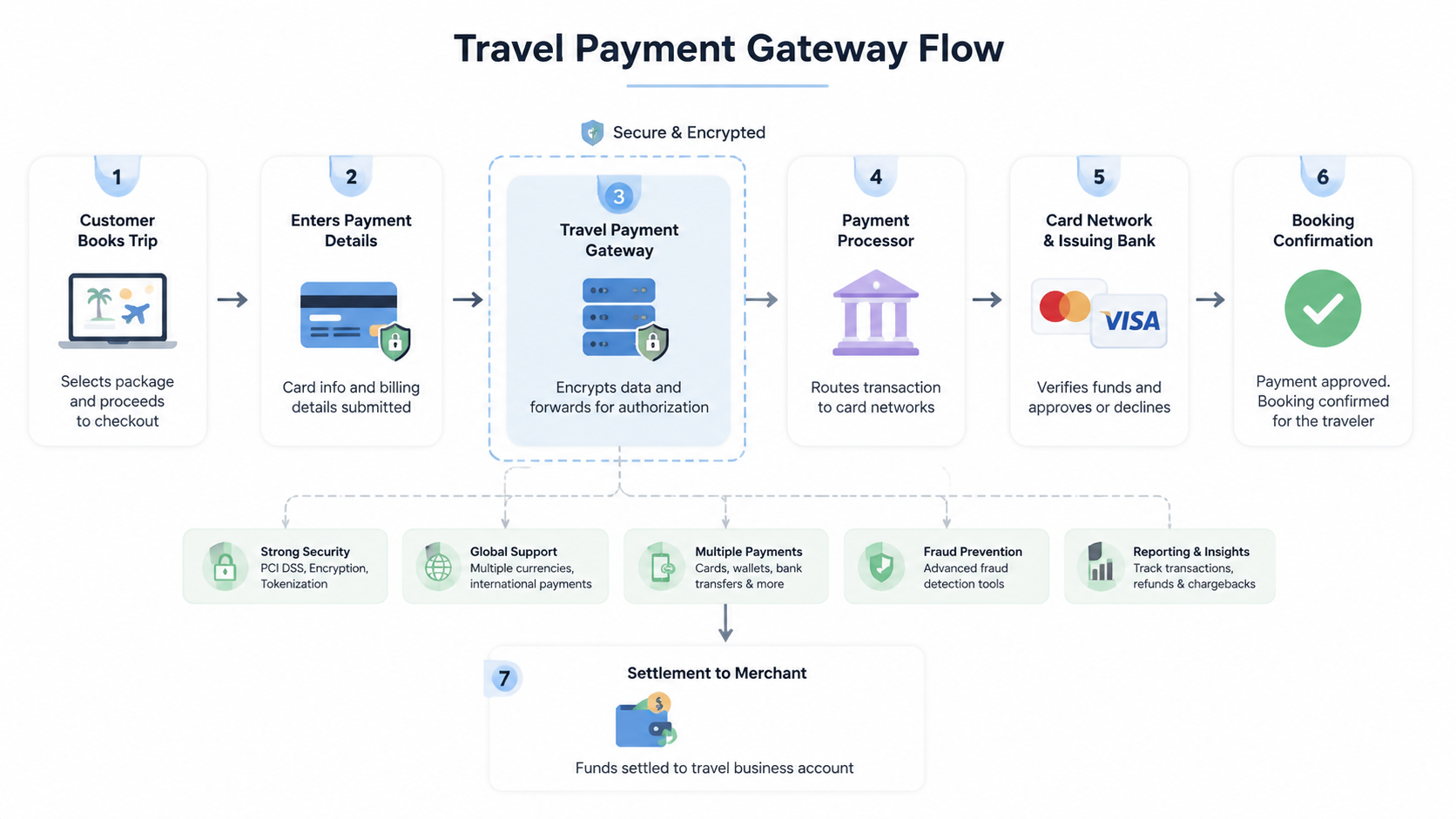
Features to Look for in a Travel Payment Gateway
1. Strong Security
Security should be one of the first considerations when selecting a payment gateway.
Look for features such as:
- Data encryption
- PCI DSS compliance
- Tokenization
- Fraud detection tools
These measures help protect customer payment information and reduce the risk of fraudulent transactions.
2. Multiple Payment Methods
Travel businesses often serve customers with different payment preferences.
A payment gateway should support multiple payment methods, including:
- Credit cards
- Debit cards
- Digital wallets
- Bank transfers (where available)
- Alternative payment methods
Offering more payment options can improve conversion rates, particularly for international customers.
3. International Payment Support
Many travel businesses attract customers from different countries.
A suitable payment gateway should support:
- International card acceptance
- Cross-border payments
- Multiple currencies
- Global payment networks
For example, a traveler in Germany should be able to book a tour in Thailand without unnecessary payment barriers.
Businesses expanding globally should also understand international payment processing for travel businesses to better manage cross-border transactions.
4. Easy Integration
A payment gateway should integrate smoothly with your existing booking platform or website.
Common integration options include:
- Website plugins
- APIs
- Hosted checkout pages
- Payment links
For example, a small tour operator may choose a hosted checkout solution that requires minimal technical knowledge, while a larger booking platform may prefer API integration for greater customization.
Hosted Checkout vs API Integration
There are two common ways to accept online payments.
Hosted Checkout
Customers are redirected to a secure payment page managed by the payment provider.
Advantages include:
- Faster setup
- Reduced technical requirements
- Built-in security management
This option is often suitable for small travel businesses.
API Integration
Payments are completed directly on the business website or booking platform.
Advantages include:
- Greater control over the customer experience
- More customization
- Seamless branding
However, API integrations usually require technical development and ongoing maintenance.
Mobile-Friendly Payments
Many travelers research and book trips using smartphones. A payment gateway should provide:
- Responsive checkout pages
- Fast loading times
- Simple payment forms
- Easy navigation
A complicated mobile checkout can lead to abandoned bookings, particularly when customers are making last-minute travel arrangements.
Reporting and Transaction Management
A good payment gateway should help businesses monitor payment activity.
Useful reporting features include:
- Successful payments
- Failed transactions
- Refund history
- Settlement reports
- Chargeback notifications
Reviewing this information regularly can help businesses identify payment trends and improve operations.
Fraud Prevention Features
Because travel businesses often handle advance bookings and international customers, fraud prevention is especially important.
Useful tools include:
- Address verification
- CVV verification
- Velocity checks
- Risk scoring
- Suspicious activity monitoring
These features help reduce fraudulent transactions while allowing legitimate customers to complete bookings more easily.
Example: Choosing the Right Travel Payment Gateway
A growing travel agency wants to expand from serving local customers to accepting bookings from international travelers.
Instead of focusing only on transaction fees, the agency evaluates several payment gateways based on:
- International payment support
- Mobile-friendly checkout
- Multiple payment methods
- Fraud prevention tools
- Reporting capabilities
- Integration with its booking platform
By choosing a gateway that meets both current and future needs, the agency creates a more reliable payment experience for customers.
Common Mistakes When Choosing a Payment Gateway
Travel businesses should avoid selecting a payment gateway based on a single factor. Common mistakes include:
- Ignoring international payment capabilities
- Overlooking security features
- Choosing a gateway that doesn’t integrate with the booking system
- Offering only one payment method
- Not reviewing reporting and fraud management tools
Evaluating these features before implementation can prevent operational challenges later.
Conclusion
Choosing the right travel payment gateway is about more than simply accepting online payments. The right solution should provide secure transactions, support multiple payment methods, integrate with your booking platform, and deliver a smooth checkout experience for travelers.
As your business grows, a payment gateway that supports international payments, fraud prevention, and detailed reporting can help improve payment reliability and customer satisfaction. Selecting a solution that aligns with your business needs creates a stronger foundation for efficient travel payment operations.

Categories
- ACH Payments (10)
- adult payment processing (11)
- AI (9)
- Altcoins (10)
- Banking (10)
- Bitcoin (133)
- Bitcoin ETF (11)
- Bitcoin Price (30)
- Blockchain (50)
- Brokering World Hunger Away (16)
- Business (17)
- card payment processing (10)
- CBD (11)
- CBDC (11)
- coaching business (11)
- COVID-19 (3)
- Crypto ATMs (1)
- Crypto Banking (17)
- Crypto Bill (1)
- Crypto business owner platform (31)
- Crypto Investment (3)
- Crypto Markets (5)
- Crypto Payment (35)
- Crypto Payment Processor (4)
- Crypto Prices (1)
- Crypto Trading (92)
- Cryptocurrency (402)
- Cryptocurrency Exchange (108)
- Data Visualization (2)
- dating platforms (11)
- debt collection payment processing (10)
- Decentralized Finance (7)
- DeFi Payment (9)
- DEX (3)
- Digital Currency (23)
- dropshipping payment processing (12)
- Ethereum (2)
- FAQ (7)
- file sharing payment processing (11)
- Finance (25)
- Financial Equality (4)
- Financial Freedom (8)
- Forex (35)
- hemp (1)
- ICO (2)
- Investment (11)
- IPTV (11)
- Merchant Account (10)
- Mining (3)
- News (66)
- NFTs (2)
- online gambling (11)
- P2P (1)
- Paybito (139)
- PayBitoPro (693)
- PayBitoPro Coin Listing (6)
- PayBitoPro Exchange (2)
- Payment Gateway (40)
- peptide (10)
- Post COVID Digital Transformation (1)
- Press Release (130)
- Privacy & Security (3)
- Real Estate (1)
- Stablecoin (5)
- Technology (15)
- Travel (11)
- Uncategorized (9)
- US Presidential Election (2)
- Utility Coin (1)
- Web3 business (4)
- Web3 Wallets (2)
- White Label Crypto Exchange (8)
Recent Posts
- ACH vs Wire Transfer: Which Payment Method Is Better for Businesses?
- ACH Fraud Prevention: How Businesses Can Secure Bank Account Payments?
- ACH Credit vs ACH Debit: What’s the Difference? With Real Examples
- ACH vs Credit Card: Which Payment Method Is Better for Businesses?
- How Long Do ACH Payments Take? Processing Times, Settlement, and Same Day ACH