Dating App Monetization Payments: How Dating Platforms Process Premium Revenue?
- August 4, 2026
- Soham Guchait
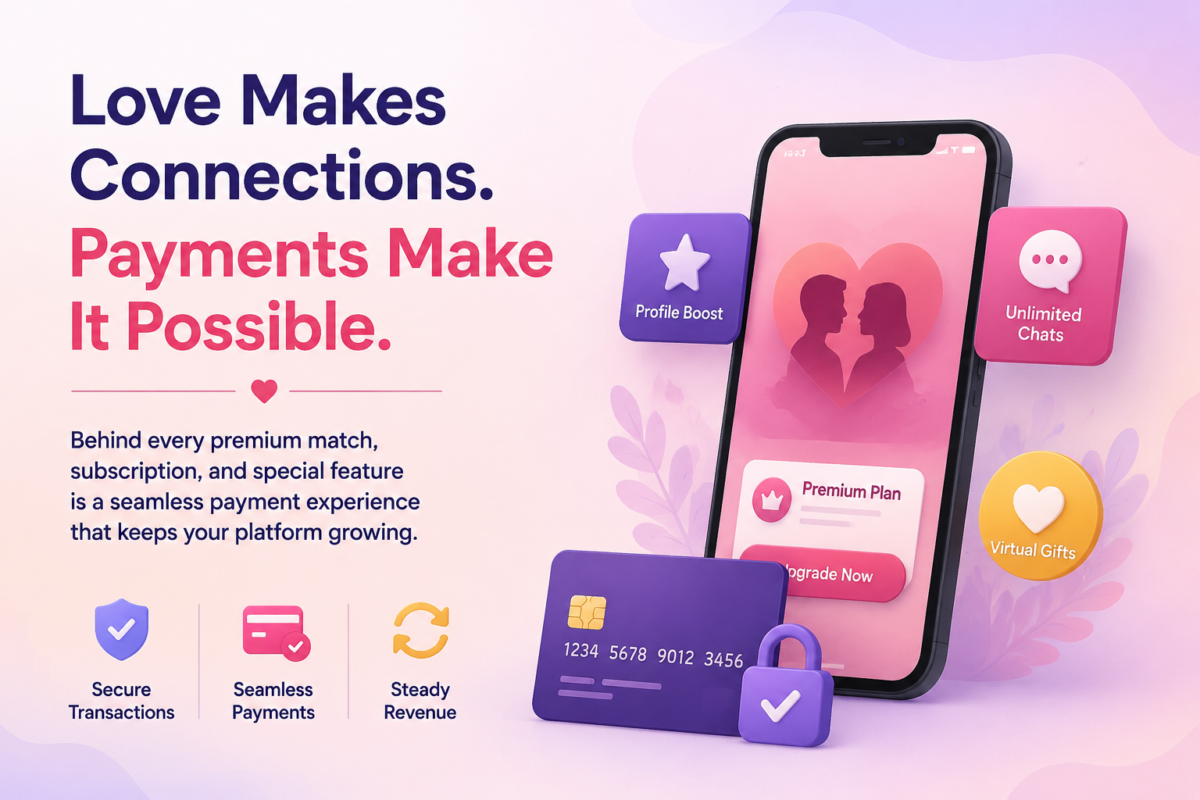
Dating app monetization has evolved far beyond simple paid memberships. Modern dating platforms generate revenue through a combination of premium subscriptions, paid features, virtual credits, profile enhancements, and personalized experiences.
While attracting users is the foundation of any dating business, converting those users into paying customers requires a reliable payment infrastructure. Every premium upgrade, subscription renewal, virtual purchase, or paid interaction depends on a payment system that can process transactions smoothly while maintaining user trust.
Understanding dating app monetization payments helps platform owners design better revenue models, reduce payment friction, and create sustainable income streams.
How Dating Apps Generate Revenue Through Payments?
Most successful dating platforms use a combination of free access and paid features. This approach allows businesses to attract a large user base while creating opportunities for users who want additional functionality.
Unlike traditional ecommerce businesses where customers usually make individual purchases, dating platforms often rely on continuous engagement and recurring revenue.
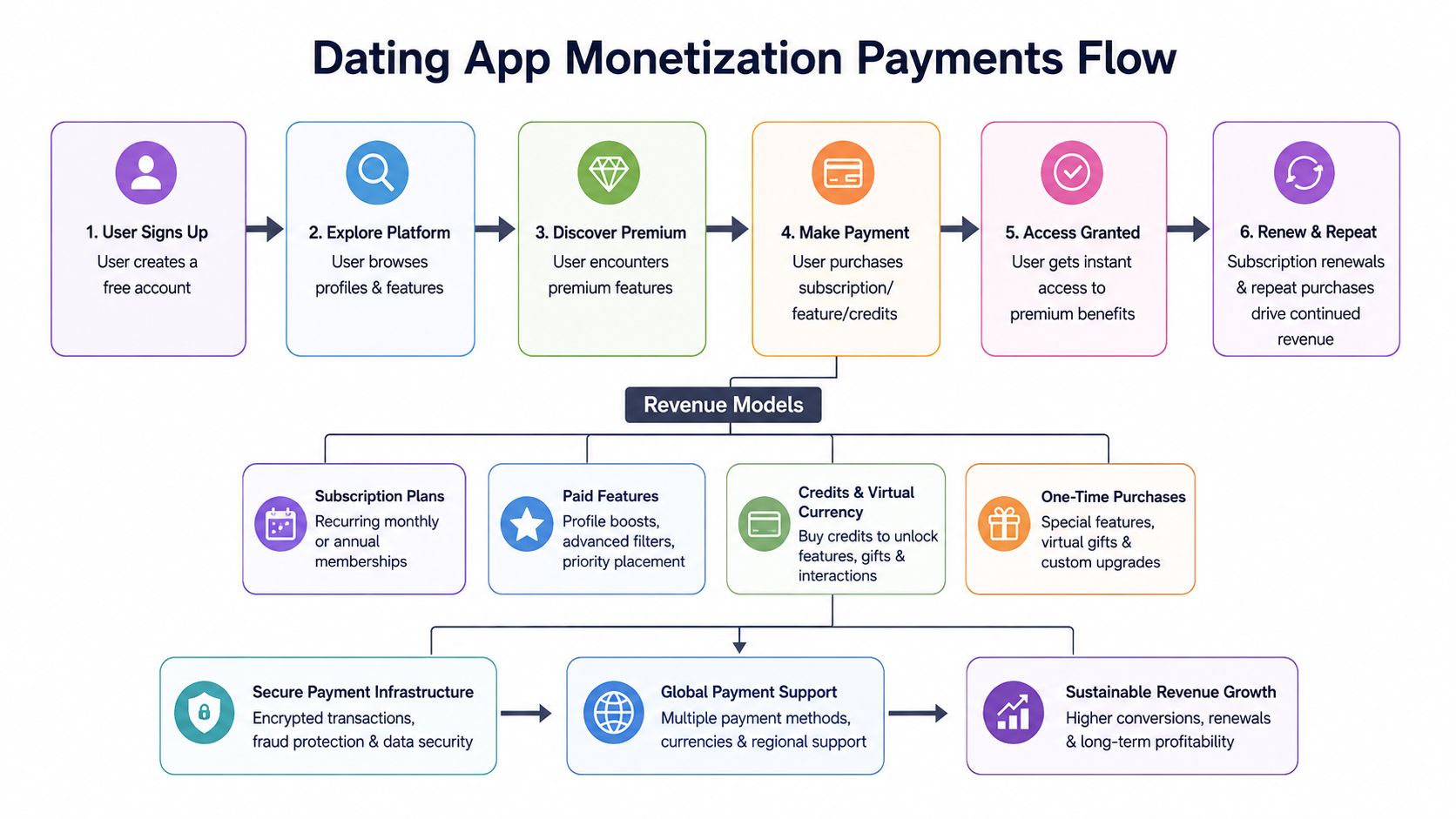
A typical dating app monetization journey looks like this:
A user creates a free account → explores the platform → discovers premium features → purchases access → renews membership or buys additional features.
The payment system must support every stage of this journey.
Common Payment Models Used by Dating Platforms
Subscription-Based Memberships
Subscriptions are one of the most widely used monetization methods in the dating industry. Users pay a recurring amount to access premium benefits such as:
- Unlimited messaging
- Advanced search filters
- Increased profile visibility
- More matching options
- Additional discovery features
For example, a dating platform may allow users to browse profiles for free but require a monthly subscription to view additional matches or access advanced communication tools.
The challenge with subscription payments is that the platform must manage more than the first transaction. It also needs to handle renewals, payment updates, failed transactions, cancellations, and customer notifications. A strong subscription payment system helps businesses maintain predictable revenue while reducing interruptions for users.
Paid Features and Profile Enhancements
Many dating platforms monetize individual actions instead of relying only on subscriptions. These features allow users to pay for temporary advantages or additional functionality.
Examples include:
- Profile boosts that increase visibility
- Additional match requests
- Priority placement in discovery results
- Special interaction options
This model works well because users can pay only when they want a specific benefit.
For example, a user who does not want a monthly subscription may still purchase a one-time profile boost to increase their chances of being discovered. From a payment perspective, these transactions require fast processing because users expect immediate access after purchase.
Credits and Virtual Currency Systems
Some dating platforms use credit-based systems where users purchase digital credits and spend them on different activities. Instead of charging separately for every feature, the platform creates an internal payment system where users buy credits in advance.
Examples include:
- Sending virtual gifts
- Unlocking premium conversations
- Accessing special matchmaking features
- Purchasing additional interactions
Credit systems provide flexibility because users can choose how much they want to spend and which features they want to access. However, they also require careful payment tracking because businesses must accurately manage credit purchases, usage, balances, and transaction history.
Why Payment Infrastructure Matters for Dating App Monetization?
A monetization model is only effective when users can complete payments easily. A dating app may have attractive premium features, but payment problems can directly reduce revenue.
For example, imagine a user decides to upgrade after finding a promising match. If the payment fails because of a declined card, poor checkout experience, or limited payment options, the platform may lose that conversion opportunity. Payment infrastructure affects several important areas:
User Conversion
A smooth payment experience increases the likelihood that users complete purchases.
Complex checkout processes, limited payment options, or repeated payment failures can cause users to abandon upgrades.
Recurring Revenue Stability
For subscription-based dating apps, successful renewals are critical. Payment systems must support:
- Automatic recurring billing
- Subscription updates
- Failed payment recovery
- Account status changes
A missed renewal is not just a failed transaction. It can become lost long-term revenue if the user leaves the platform.
Global User Support
Many dating platforms serve users across multiple countries. Different markets may have different payment preferences, currencies, and banking systems. As digital commerce continues expanding, businesses need payment experiences that match changing consumer preferences, including convenience, speed, and flexibility across different markets.
For example, a dating platform expanding internationally may need to support users who prefer different payment methods instead of relying only on traditional card payments.
Choosing Monetization Models Based on User Behavior
The best dating app monetization strategy depends on how users interact with the platform. A premium matchmaking service may focus more on subscriptions because users are paying for ongoing access and personalized experiences. A social discovery platform may generate more revenue from profile boosts, credits, or virtual interactions. Understanding user behavior helps businesses decide which payment models create the most value.
For example, a niche dating platform targeting a specific community may find that dedicated premium memberships work better than small individual purchases because users are looking for long-term connections.
A broader social discovery app may benefit from flexible paid features because users have different engagement levels.
The Role of Security in Dating App Monetization Payments
As dating platforms process more transactions, payment security becomes increasingly important. Businesses must protect users from:
- Unauthorized transactions
- Stolen payment methods
- Account takeover attempts
- Fraudulent activity
Trust plays a major role in dating because users are already sharing personal information and building relationships on the platform. A secure payment experience supports both revenue growth and user confidence.
Clear pricing, transparent subscription terms, and secure checkout processes help reduce confusion and payment disputes.
Building a Scalable Payment Model for Dating Platforms
Successful dating app monetization is not based on one payment method or one revenue stream. Growing platforms usually combine multiple models to serve different user preferences.
A scalable payment approach allows businesses to support:
- Premium memberships
- One-time purchases
- Virtual credits
- Global transactions
- Subscription management
As a dating platform grows, payment systems become an important part of the overall user experience. The goal is not simply to collect payments but to create a system where users can easily access valuable features while the business maintains predictable and sustainable revenue.
Frequently Asked Questions
What is the most common monetization model for dating apps?
Subscription memberships are one of the most common models because they create recurring revenue through monthly or annual plans. Many platforms also combine subscriptions with paid features and virtual purchases.
Do dating apps make money from premium features?
Yes. Many dating platforms generate revenue through features such as profile boosts, advanced filters, additional visibility, and premium interactions.
Why are payment systems important for dating app monetization?
Payment systems allow dating platforms to convert users into paying customers while managing subscriptions, renewals, transactions, and security requirements.
Can dating apps use multiple payment models?
Yes. Many successful dating platforms combine subscriptions, credits, virtual purchases, and one-time feature payments depending on user behavior.
Conclusion
Dating app monetization depends on more than creating premium features. The payment experience behind those features determines whether users successfully convert, renew subscriptions, and continue engaging with the platform.
From recurring memberships to virtual credits and paid upgrades, dating platforms need payment systems that support flexibility, reliability, and user trust. As dating businesses continue evolving, understanding how monetization payments work becomes essential for building scalable and sustainable platforms.
Categories
- ACH Payments (10)
- adult payment processing (11)
- AI (9)
- Altcoins (10)
- Banking (10)
- Bitcoin (133)
- Bitcoin ETF (11)
- Bitcoin Price (30)
- Blockchain (50)
- Brokering World Hunger Away (16)
- Business (17)
- card payment processing (10)
- CBD (11)
- CBDC (11)
- coaching business (11)
- COVID-19 (3)
- Crypto ATMs (1)
- Crypto Banking (17)
- Crypto Bill (1)
- Crypto business owner platform (31)
- Crypto Investment (3)
- Crypto Markets (5)
- Crypto Payment (35)
- Crypto Payment Processor (4)
- Crypto Prices (1)
- Crypto Trading (92)
- Cryptocurrency (402)
- Cryptocurrency Exchange (108)
- Data Visualization (2)
- dating platforms (11)
- debt collection payment processing (10)
- Decentralized Finance (7)
- DeFi Payment (9)
- DEX (3)
- Digital Currency (23)
- dropshipping payment processing (12)
- Ethereum (2)
- FAQ (7)
- file sharing payment processing (11)
- Finance (25)
- Financial Equality (4)
- Financial Freedom (8)
- Forex (35)
- hemp (1)
- ICO (2)
- Investment (11)
- IPTV (11)
- Merchant Account (10)
- Mining (3)
- News (66)
- NFTs (2)
- online gambling (11)
- P2P (1)
- Paybito (139)
- PayBitoPro (693)
- PayBitoPro Coin Listing (6)
- PayBitoPro Exchange (2)
- Payment Gateway (40)
- peptide (10)
- Post COVID Digital Transformation (1)
- Press Release (130)
- Privacy & Security (3)
- Real Estate (1)
- Stablecoin (5)
- Technology (15)
- Travel (11)
- Uncategorized (9)
- US Presidential Election (2)
- Utility Coin (1)
- Web3 business (4)
- Web3 Wallets (2)
- White Label Crypto Exchange (8)
Recent Posts
- ACH vs Wire Transfer: Which Payment Method Is Better for Businesses?
- ACH Fraud Prevention: How Businesses Can Secure Bank Account Payments?
- ACH Credit vs ACH Debit: What’s the Difference? With Real Examples
- ACH vs Credit Card: Which Payment Method Is Better for Businesses?
- How Long Do ACH Payments Take? Processing Times, Settlement, and Same Day ACH