Dating App Payment Failures: Why Payments Get Declined and How to Fix Them?
- August 5, 2026
- Soham Guchait
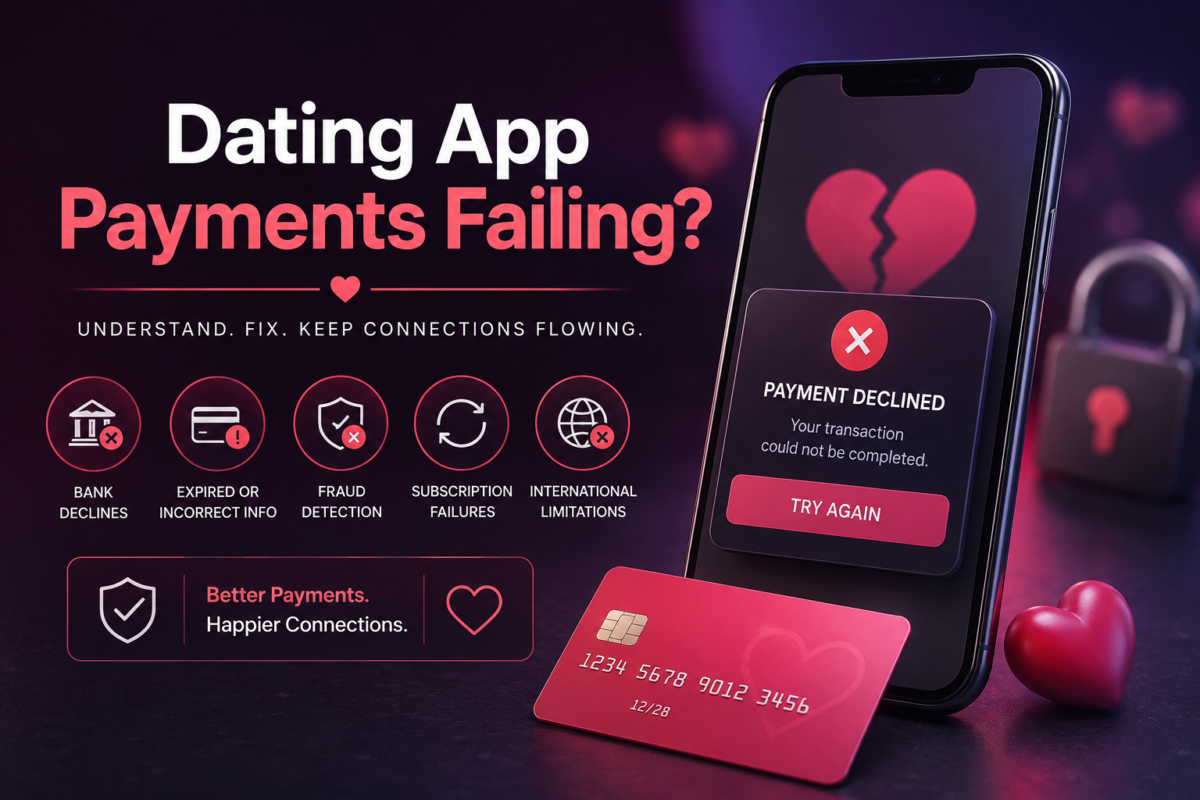
A user decides to upgrade their dating profile, unlock premium features, or purchase a subscription. They enter their payment details, click confirm, and expect instant access. Instead, the transaction fails.
For dating platforms, payment declines are more than a technical inconvenience. They directly impact revenue, user experience, and subscription growth. Understanding why dating app payments get declined requires looking beyond the checkout page. A payment can fail because of banking restrictions, security systems, incorrect payment information, subscription issues, or international payment limitations.
Since many dating businesses depend on recurring memberships and premium features, reducing unnecessary payment failures is an important part of building a reliable payment system.
How Payment Declines Happen on Dating Platforms?
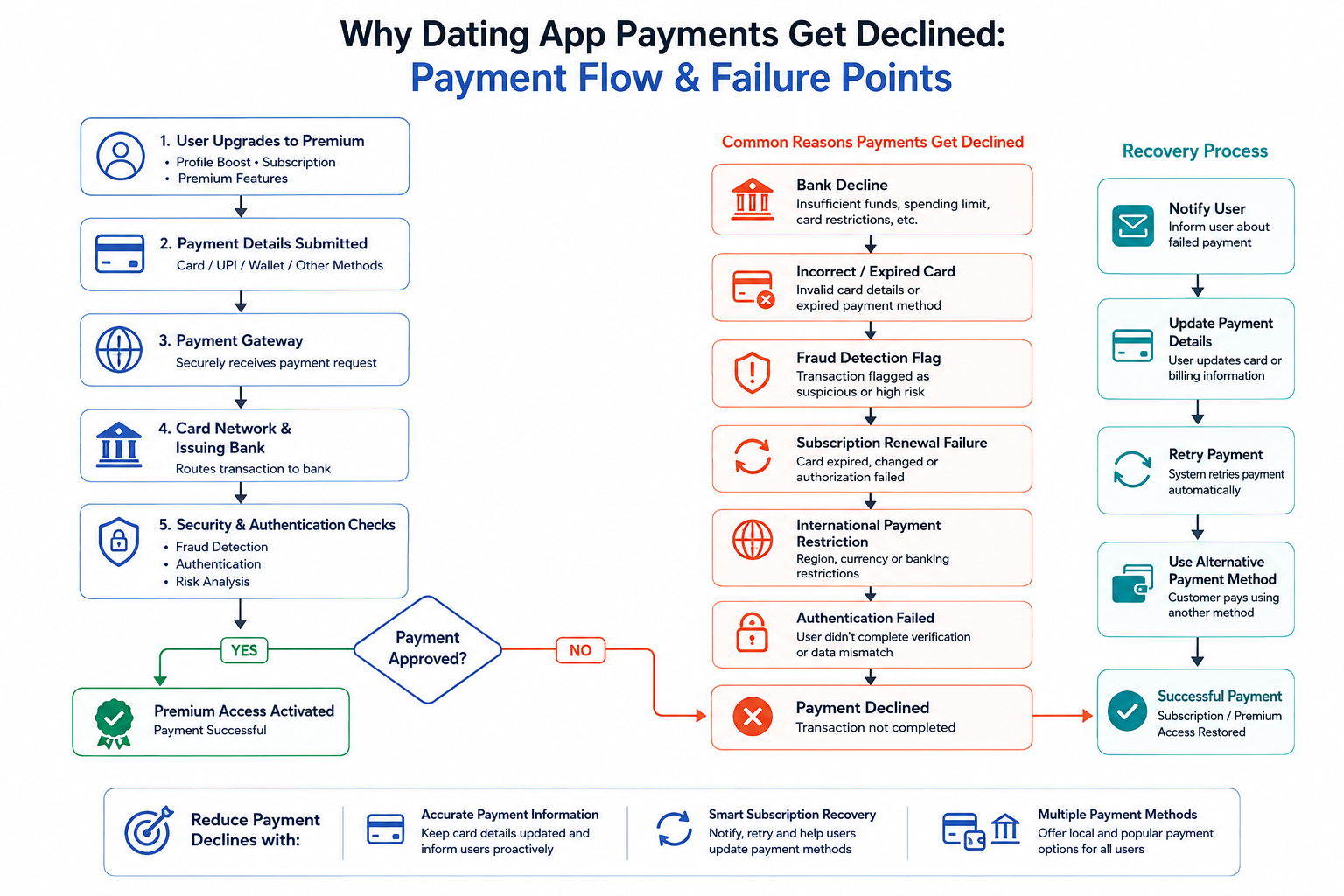
When a user makes a payment on a dating app, the transaction passes through several systems before it is approved. The payment request moves from the dating platform to the payment gateway, then through payment networks and financial institutions before reaching the customer’s bank. At each stage, different checks are performed.
For example, when a user purchases a premium membership, the system may verify:
- Whether the card details are valid?
- Whether sufficient funds are available?
- Whether the transaction appears suspicious?
- Whether additional authentication is required?
If any part of this process identifies a problem, the payment may be declined.
A decline does not always mean the customer does not want to pay. Many legitimate users experience failed payments because of issues unrelated to their willingness to purchase.
Common Reasons Dating App Payments Get Declined
Bank Declines and Payment Restrictions
One of the most common reasons for failed dating app payments is a decline from the customer’s bank. Banks monitor transactions to protect customers from unauthorized activity. Sometimes legitimate purchases are declined because the transaction does not match the user’s usual spending patterns.
For example, a user who normally makes small local purchases may suddenly attempt to buy a premium dating subscription from an international company. The bank may temporarily block the transaction as a precaution.
Other bank-related reasons include:
- Insufficient funds
- Spending limits
- Card restrictions
- International transaction blocks
In many cases, the payment itself is valid, but the issuing bank prevents completion.
Expired or Incorrect Payment Information
Simple payment information errors can also cause failed transactions.
Users may enter incorrect card numbers, outdated billing information, or attempt to use expired payment methods. This becomes especially important for subscription-based dating apps because payment information can become outdated over time.
For example, a user may subscribe to a premium membership and replace their card months later without updating their account. When the next renewal occurs, the payment fails automatically. Dating platforms can reduce these failures by providing easy ways for users to update payment details and manage their subscriptions.
Fraud Detection Systems Blocking Legitimate Users
Modern payment systems use fraud detection tools to identify suspicious activity. These systems analyze transaction patterns, device information, location, payment behavior, and other signals before approving payments.
While fraud prevention is important, sometimes legitimate users can be incorrectly flagged.
For example, a user traveling internationally may attempt to purchase a subscription from a new location. The transaction may appear unusual even though it is genuine.
The challenge for dating platforms is finding the right balance between preventing fraud and allowing legitimate customers to complete purchases.
Failed Recurring Subscription Payments
Recurring billing creates a unique challenge for dating apps. A user may successfully purchase a premium plan initially, but future renewal payments can fail for different reasons.
Common subscription payment failures include:
- Expired cards
- Changed payment methods
- Bank restrictions
- Insufficient funds
- Authorization failures
For a dating platform, a failed renewal can result in lost recurring revenue even when the customer still wants to use premium features. A strong subscription payment system should help businesses recover these failed payments through customer notifications, payment updates, and retry processes.
International Payment Limitations
Many dating apps serve users across different countries, making international payments more complex. A transaction that works in one region may fail in another because of differences in banking systems, regulations, currencies, or payment preferences.
For example, a dating platform expanding into a new market may discover that users prefer different payment methods than those used by its original audience. Supporting regional payment preferences and understanding international payment behavior can help reduce unnecessary declines.
Authentication and Security Requirements
Payment security standards are designed to protect customers and businesses from fraudulent transactions. However, additional verification steps can sometimes interrupt the payment experience.
A transaction may fail because:
- The user does not complete authentication
- Verification information does not match
- Security checks identify unusual activity
For example, a customer may abandon a payment if additional verification steps are unclear or difficult to complete. Dating platforms need to create payment experiences that maintain security while remaining simple for users.
How Dating Platforms Can Reduce Payment Failures?
Reducing payment declines requires understanding why transactions fail and improving the entire payment experience.
Improve Payment Information Accuracy
Businesses can reduce avoidable failures by helping users maintain accurate payment information.
This includes:
- Clear payment forms
- Easy card updates
- Subscription management tools
- Payment reminders
Small improvements can prevent many unnecessary failed transactions.
Create Better Subscription Recovery Processes
Subscription businesses should not immediately lose customers after a failed renewal. A recovery process may include notifying users about failed payments, allowing payment updates, and attempting the transaction again at appropriate intervals.
For example, a customer whose card expired may simply need a reminder to update their payment method.
Offer Multiple Payment Options
Different users prefer different ways to pay. Supporting additional payment methods can improve successful transactions, especially for international audiences. A user who cannot complete a payment using one method may successfully complete it using another option.
The Impact of Payment Declines on Dating Businesses
Payment failures affect more than immediate revenue. Frequent declines can lead to:
- Lower subscription conversions
- Reduced customer satisfaction
- Lost recurring revenue
- Increased support requests
For example, a user who repeatedly experiences failed payments may assume the platform is unreliable and stop attempting to upgrade.
Reliable payment processing helps dating businesses create a smoother experience where users can access premium features without unnecessary obstacles.
Frequently Asked Questions
Why do dating app payments decline?
Dating app payments may fail because of bank restrictions, expired cards, fraud checks, incorrect payment details, authentication issues, or international payment limitations.
Can dating apps reduce payment failures?
Yes. Businesses can reduce failed payments by improving subscription management, supporting multiple payment methods, and creating better payment recovery processes.
Why do subscription payments fail on dating apps?
Recurring payments often fail because cards expire, users change payment methods, banks decline renewals, or payment authorization requirements change.
Are declined payments always caused by customers?
No. Payment declines can happen because of banking systems, fraud prevention tools, technical issues, or payment restrictions.
Conclusion
Understanding why dating app payments get declined is essential for any platform that relies on subscriptions and premium features.
Payment failures are often caused by factors beyond the user’s control, including banking restrictions, security checks, and recurring billing problems.
By improving payment processes, supporting different payment methods, and creating better recovery systems, dating platforms can reduce failed transactions and provide a smoother experience for users. Reliable payment performance is not only about increasing revenue. It is about creating trust and making sure customers can access the features they value without unnecessary friction.
Categories
- ACH Payments (10)
- adult payment processing (11)
- AI (9)
- Altcoins (10)
- Banking (10)
- Bitcoin (133)
- Bitcoin ETF (11)
- Bitcoin Price (30)
- Blockchain (50)
- Brokering World Hunger Away (16)
- Business (17)
- card payment processing (10)
- CBD (11)
- CBDC (11)
- coaching business (11)
- COVID-19 (3)
- Crypto ATMs (1)
- Crypto Banking (17)
- Crypto Bill (1)
- Crypto business owner platform (31)
- Crypto Investment (3)
- Crypto Markets (5)
- Crypto Payment (35)
- Crypto Payment Processor (4)
- Crypto Prices (1)
- Crypto Trading (92)
- Cryptocurrency (402)
- Cryptocurrency Exchange (108)
- Data Visualization (2)
- dating platforms (11)
- debt collection payment processing (10)
- Decentralized Finance (7)
- DeFi Payment (9)
- DEX (3)
- Digital Currency (23)
- dropshipping payment processing (12)
- Ethereum (2)
- FAQ (7)
- file sharing payment processing (11)
- Finance (25)
- Financial Equality (4)
- Financial Freedom (8)
- Forex (35)
- hemp (1)
- ICO (2)
- Investment (11)
- IPTV (11)
- Merchant Account (10)
- Mining (3)
- News (66)
- NFTs (2)
- online gambling (11)
- P2P (1)
- Paybito (139)
- PayBitoPro (693)
- PayBitoPro Coin Listing (6)
- PayBitoPro Exchange (2)
- Payment Gateway (40)
- peptide (10)
- Post COVID Digital Transformation (1)
- Press Release (130)
- Privacy & Security (3)
- Real Estate (1)
- Stablecoin (5)
- Technology (15)
- Travel (11)
- Uncategorized (9)
- US Presidential Election (2)
- Utility Coin (1)
- Web3 business (4)
- Web3 Wallets (2)
- White Label Crypto Exchange (8)
Recent Posts
- ACH vs Wire Transfer: Which Payment Method Is Better for Businesses?
- ACH Fraud Prevention: How Businesses Can Secure Bank Account Payments?
- ACH Credit vs ACH Debit: What’s the Difference? With Real Examples
- ACH vs Credit Card: Which Payment Method Is Better for Businesses?
- How Long Do ACH Payments Take? Processing Times, Settlement, and Same Day ACH