Mixing Reversible and Irreversible Payment Rails in Crypto: The Hidden Risk Every Merchant Should Understand
- June 8, 2026
- Soham Guchait
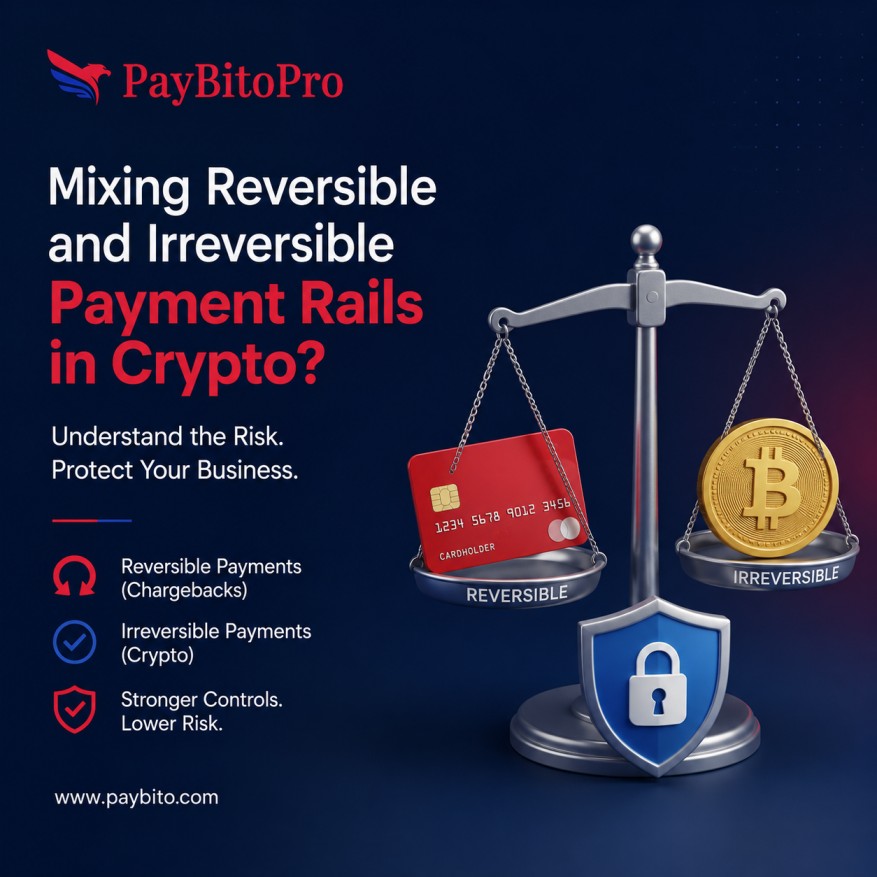
Crypto’s evolving into a cornerstone of finance, and firms are operating across two payment landscapes. On one side, you’ve got the familiar stuff – credit cards, debit cards, bank transfers. On the other, there’s the land of blockchain: crypto payments and digital assets zipping around the globe.
For merchants, this mashup opens all kinds of doors. You can reach customers you never would’ve met, add payment options, and jump into the expanding world of digital assets. But there’s a catch – one a lot of businesses don’t see coming. Mixing payment systems with different rules brings real risks, especially when it comes to combining reversible and irreversible transactions.
It all sounds technical, but the truth is pretty simple. Traditional payments? You can often reverse them. Think chargebacks – if there’s a problem, the transaction can get unwound. Crypto? Not so much. Once it’s done, it’s done. Blend these two in your business, and you’re opening yourself up to losing money, getting hit by chargeback fraud, and running into all sorts of operational headaches.
If you’re a crypto exchange, fintech platform, gaming site, forex operation – really, any high-risk merchant – this is a topic you can’t afford to ignore. Grasping how these systems work (and how they can trip you up) is vital for keeping your payments secure.
Companies like PayBito design and allow you to accept payments online and aslo help with any problems that comes along with it. But before we get to solutions, let’s pin down the problem.
What Are Payment Rails and Why Do They Matter?
“Payment rails” basically means the wiring behind payments – the network that transfers money from person to person. Whether you’re swiping a card, making a bank transfer, or sending crypto, there’s some kind of payment rail doing the heavy lifting.
Most people never think about these rails because, for them, payments are just a click and a confirmation. But behind that button press, the rails determine how transactions get processed, how fast the money lands, and what kind of protection you and your customers get.
Credit card systems, debit cards, ACH transfers, wires – these are the old-school payment rails. Then you’ve got the crypto world: Bitcoin, Ethereum, stablecoins. That’s a whole new set of rails, carrying value, just like the traditional ones. But just because they both move money doesn’t mean they’re built to do the same thing. Traditional rails put a big focus on consumer protection and solving disputes. Blockchains are built around finality and decentralization – once a payment’s gone through, it can’t be easily pulled back. That one core difference shapes everything: how the payments act after they’re made, and where the real risks pop up.
If you’re taking crypto payments, it’s critical to know what you’re dealing with. The way money moves defines your exposure to fraud, your responsibilities for compliance, the kind of experience you offer customers, and, honestly, the basic way your business functions.
Reversible vs. Irreversible Transactions: The Heart of the Issue
Here’s the big divide. Can the payment be reversed after it looks like it’s done?
With traditional payments, the answer’s usually yes. Credit cards are the prime example – you buy something, and if you spot a problem or smell something fishy, you can go back to your bank and file a dispute. The bank investigates and, if they agree with you, they will yank the money back from the merchant.
For buyers, that’s a safety net. You can shop with some confidence, knowing you’re protected if something goes wrong. But for merchants, it means a payment that looked “settled” can come back out of your account days or even weeks later
Cryptocurrency doesn’t work that way. Most blockchains are built to make transactions final. You send Bitcoin or USDT? Once the network confirms, it’s locked. No bank or central authority can swoop in and undo it. That’s a big selling point for a lot of businesses – faster payments, no go-betweens, and when a deal is done, it stays done. The problem is, these two systems aren’t made to fit together. Traditional rails expect to deal with disputes and reversals. Blockchain rails don’t. Start mixing them in the same workflow and you create a loophole – one that fraudsters love.
The Real Risk: How Mixing Payment Systems Gets You Burned
Let’s put this in black and white. A customer swings by your platform and buys Bitcoin with a credit card. The card payment clears, you deposit the BTC into their account, and life looks good. Then, they move the Bitcoin out to their private wallet.
A few days later, the customer disputes the card charge—maybe they claim it wasn’t them, their card got stolen, or they just “don’t remember” making the purchase. The bank launches a chargeback. If the bank sides with the customer, you lose the money from the card transaction.
But Bitcoin? It’s gone. Irreversible. There’s no way to claw it back from the blockchain.
So now, you’re out the funds and the asset. Not great. This is the danger zone for businesses that bridge traditional and crypto rails. Cards can reverse. Blockchains can’t. The gap in the middle is where merchants are most vulnerable.
People running scams see this and go all-in. Some will purchase crypto with stolen credit cards, drain the assets, and vanish. Others pull “friendly fraud”—they bought the asset, they’re happy, but they dispute the charge anyway, forcing you to eat the loss. Even a handful of these can really mess with your bottom line. And beyond just losing money, you could get hit with chargeback fees, damage your relationships with your payment providers, and attract the wrong kind of regulatory attention.
Why High-Risk Businesses Need to Worry (A Lot)
If you’re in a high-risk space – crypto exchanges, gaming, forex trading, digital asset marketplaces – you live in this world daily.
Your business is usually international, moves a ton of value, and sits right in the crosshairs of both regulators and fraudsters. The more your payment flows mix (old and new), the more opportunities there are for people to exploit weak spots.
Rampant chargebacks can hurt more than your cash flow. Too many, and you start paying higher processing fees – or even losing access to payment partners altogether. Nobody wants their account frozen or their business blacklisted. For high-risk players, locking down your payment rails isn’t just good practice – it’s about staying open for business.
Practical Ways To Lower Your Risk
The risks associated with combining traditional payment methods with cryptocurrency transactions are very real. However, these risks can be effectively managed when merchants put the right safeguards in place. Here are the key measures that help reduce exposure and protect operations:
- Implement strong KYC procedures: Verify customer identities, collect the necessary documentation, and screen users before allowing them to transact. This helps prevent bad actors from entering the system in the first place.
- Monitor for AML risks: Keep a close watch on transaction activity to identify unusual patterns, suspicious fund movements, or behaviors that may indicate money laundering. Investigate transactions that raise concerns.
- Introduce withdrawal controls: When customers purchase crypto using reversible payment methods such as cards or bank transfers, apply temporary holding periods before releasing digital assets. This provides time to detect fraud or payment disputes.
- Deploy advanced fraud detection tools: Modern fraud prevention solutions analyze device information, user behavior, location data, and transaction history to identify potentially fraudulent activity before losses occur.
- Adopt a risk-based review process: Not every transaction carries the same level of risk. High-risk transactions should receive additional scrutiny, while lower-risk transactions can be processed more efficiently.
- Work with an experienced payment infrastructure provider: A capable partner can provide integrated compliance checks, fraud prevention capabilities, and scalable technology to help manage these risks effectively.
Conclusion
As crypto matures, more merchants are fusing old and new payments – and that’s fine, as long as you’re awake to the risks. The real trouble comes when you accept a reversible payment (like a card), deliver an irreversible asset (like Bitcoin), and get stuck in the middle if the payment bounces. This isn’t some edge-case risk; it’s a core headache you need to account for.
But with solid fraud controls, real compliance, smart transaction monitoring, and the right infrastructure, you can cut down your exposure and still ride the crypto wave. At this point, understanding payment rails isn’t just a tech conversation, it’s one of the foundations of building a smart, secure payments business that’ll last.
Frequently Asked Questions
What is a payment rail?
It’s the system behind the scenes that lets money flow from one person to another – could be card networks, bank wires, ACH, or blockchains.
Why are crypto transactions irreversible?
Blockchains settle for finality. Once the network confirms a transaction, there’s no authority to reverse it.
What’s a chargeback?
It’s when a bank pulls back a card payment after a customer disputes a charge – usually to protect the buyer.
Why Do Crypto Businesses Face Higher Fraud Risks?
They often allow customers to buy irreversible assets (like crypto) with reversible payments (like cards), giving fraudsters a way to game the system.
How can merchants cut payment fraud?
Strong KYC, smart AML tools, effective fraud detection, control over withdrawals, and solid risk management all add up to safer payments.

Categories
- AI (9)
- Altcoins (10)
- Banking (11)
- Bitcoin (134)
- Bitcoin ETF (11)
- Bitcoin Price (30)
- Blockchain (50)
- Brokering World Hunger Away (16)
- Business (13)
- CBDC (11)
- COVID-19 (3)
- Crypto ATMs (1)
- Crypto Banking (18)
- Crypto Bill (1)
- Crypto business owner platform (31)
- Crypto Investment (3)
- Crypto Markets (5)
- Crypto Payment (37)
- Crypto Payment Processor (4)
- Crypto Prices (1)
- Crypto Trading (92)
- Cryptocurrency (402)
- Cryptocurrency Exchange (108)
- Data Visualization (2)
- Decentralized Finance (7)
- DeFi Payment (9)
- DEX (3)
- Digital Currency (23)
- Ethereum (2)
- FAQ (7)
- Finance (29)
- Financial Equality (4)
- Financial Freedom (8)
- Forex (25)
- ICO (2)
- Investment (11)
- Mining (3)
- News (66)
- NFTs (2)
- P2P (1)
- PayBitoPro (698)
- PayBitoPro Coin Listing (6)
- PayBitoPro Exchange (2)
- Payment Gateway (22)
- Post COVID Digital Transformation (1)
- Press Release (130)
- Privacy & Security (3)
- Real Estate (1)
- Stablecoin (6)
- Technology (16)
- Uncategorized (3)
- US Presidential Election (2)
- Utility Coin (1)
- Web3 business (4)
- Web3 Wallets (2)
- White Label Crypto Exchange (8)
Recent Posts
- Organizing the World’s Value – Why the Future of the Digital Economy Needs an Operating System?
- Why Chargebacks Are a Major Threat to Forex Brokers?
- From Dream Vacation to Abandoned Cart: The Payment Mistakes That Drive Travelers Away in 2026
- The Gamer’s Regret: Why Video Game Studios Are Labeled “High-Risk”
- Why Businesses Get Labeled “High-Risk” – And Why Most Merchants Don’t Understand the Payment Industry’s Hidden Risk Model