White Label Payment Platform for Dating Apps: How Dating Businesses Build Scalable Payment Infrastructure?
- August 5, 2026
- Soham Guchait
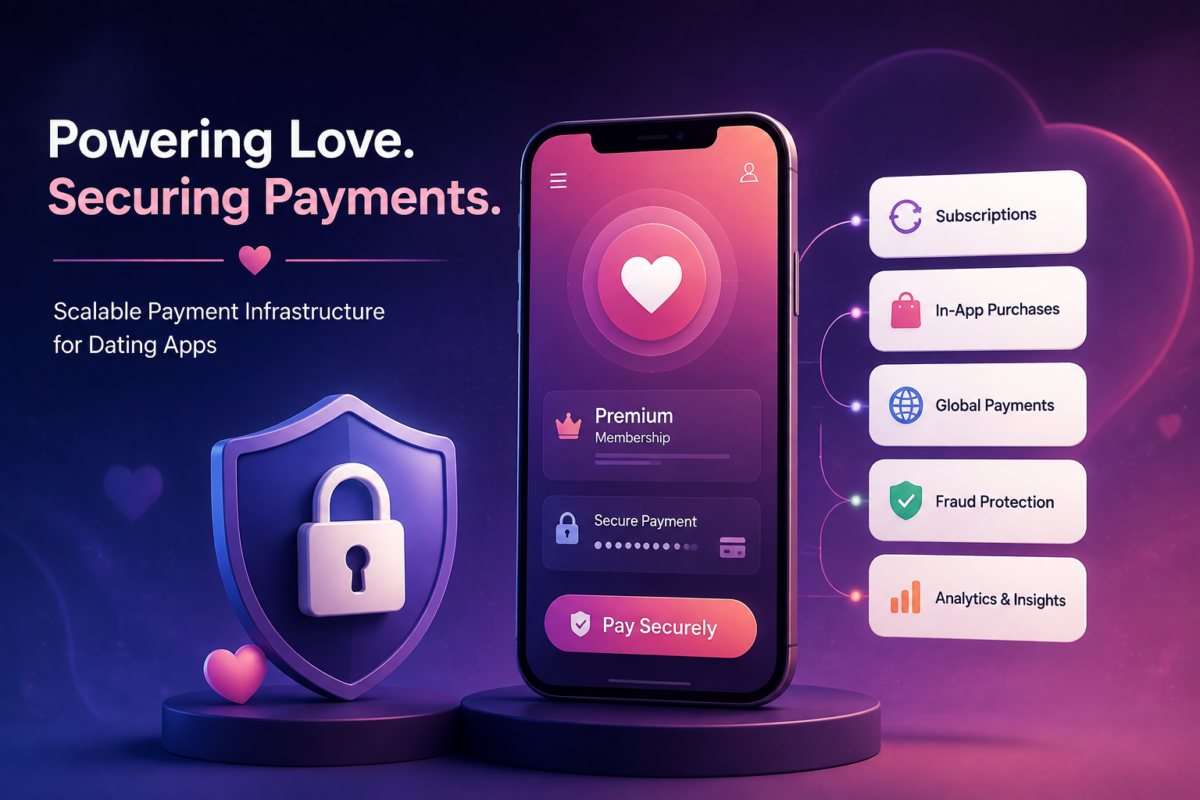
A white label payment platform for dating apps allows businesses to use customizable payment infrastructure under their own brand while managing transactions, subscriptions, and user payments more efficiently.
As dating platforms grow, their payment requirements often become more complex. A small dating app may only need basic subscription payments, but a larger platform may need to support multiple brands, international users, different revenue models, and high transaction volumes. At that stage, relying on disconnected payment tools can create operational challenges.
A scalable payment infrastructure helps dating businesses manage the complete payment experience, from user checkout and subscription billing to reporting, transaction management, and expansion into new markets. Understanding the fundamentals of dating app payment processing helps businesses identify which payment capabilities they need as their platform grows.
Understanding how white label payment platforms work helps dating companies evaluate whether this type of infrastructure fits their long-term growth strategy.
What Is a White Label Payment Platform?
A white label payment platform is a payment system that businesses can customize and operate under their own brand identity. Instead of building every payment component from the ground up, businesses use existing payment infrastructure while adapting the experience to match their products, users, and operational needs.
For dating platforms, this can include managing:
- User payment experiences
- Subscription billing
- Premium feature purchases
- Transaction monitoring
- Payment reporting
For example, a dating marketplace operating multiple niche communities may want each brand to offer a consistent payment experience while managing payments through a centralized system.
A white label approach allows businesses to create a more connected payment environment without developing every financial technology component internally.
Why Dating Businesses Consider White Label Payment Infrastructure?
As dating platforms expand, payment operations become more difficult to manage. A growing platform may need to support:
- Multiple subscription plans
- Different pricing models
- International customers
- Various payment methods
- Higher transaction volumes
Using separate payment systems for each requirement can create fragmented operations.
For example, a dating company operating several niche dating communities may struggle to manage subscriptions, payment reporting, and customer billing when each platform uses different payment tools. A unified payment infrastructure can help businesses create consistency across their ecosystem.
Supporting Multiple Revenue Models
Modern dating platforms often generate revenue through multiple channels. A single platform may offer:
- Premium memberships
- Profile visibility boosts
- Virtual gifts
- Paid messaging features
- Digital credits
Each revenue model creates different payment requirements.
For example, a monthly membership requires recurring billing, while virtual credits require instant transaction processing. A flexible payment platform allows businesses to manage different monetization methods within one payment environment. This becomes especially important as dating companies experiment with new ways to increase user engagement and revenue.
Managing Subscription-Based Dating Businesses
Subscriptions are one of the most common revenue models in the dating industry. As subscriber numbers increase, managing recurring payments manually becomes difficult.
A scalable payment platform helps businesses handle:
- Subscription creation
- Automatic renewals
- Payment updates
- Failed transaction recovery
- Customer billing information
For example, a dating platform with hundreds of thousands of subscribers needs a reliable system to process renewal payments consistently without disrupting user access.
Efficient subscription management helps maintain revenue stability while improving the customer experience.
Supporting Dating Marketplaces and Multiple Brands
Some dating businesses operate more like marketplaces rather than single applications.
They may manage multiple communities based on:
- Interests
- Locations
- Demographics
- Relationship preferences
A white label payment platform can help these businesses manage different brands while maintaining centralized payment operations.
For example, a company running several niche dating websites may want each platform to have its own user experience while using shared payment infrastructure behind the scenes. This approach improves operational efficiency while allowing individual brands to grow independently.
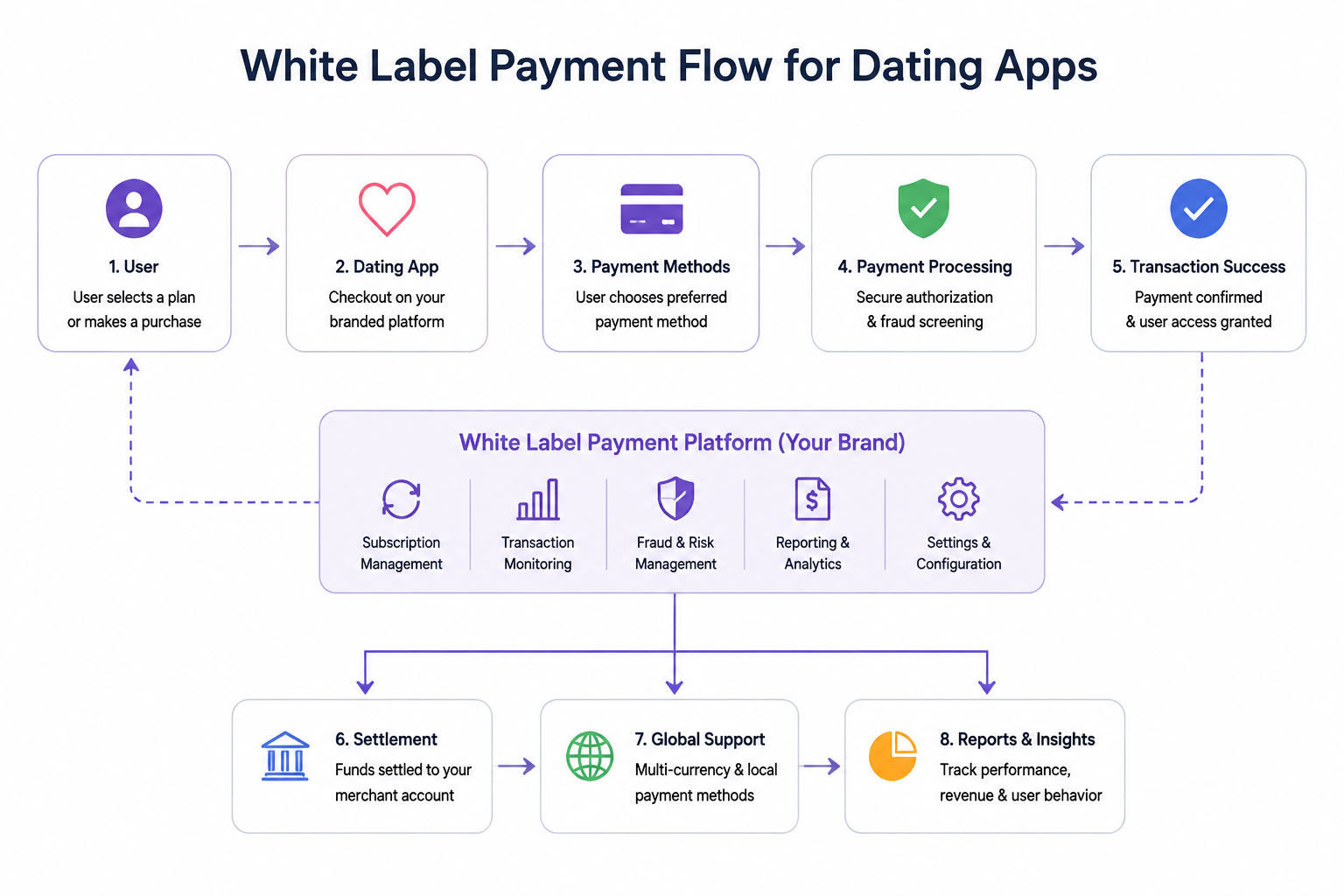
Improving Payment Management and Visibility
As transaction volumes increase, businesses need better visibility into payment activity. A scalable payment system can help dating platforms understand:
- Transaction performance
- Revenue patterns
- Subscription activity
- Payment failures
- Customer behavior
Better payment visibility helps businesses make informed decisions.
For example, if a dating platform notices higher payment failure rates in a specific region, it can investigate whether the issue is related to payment methods, customer behavior, or regional banking limitations. Payment data becomes an important tool for improving business performance.
Security and Risk Management Considerations
Payment infrastructure must protect both businesses and users. Dating platforms handle sensitive information, including personal user data and financial transactions.
A strong payment environment should consider:
- Transaction monitoring
- Fraud detection
- Account protection
- Secure payment handling
For example, if a platform experiences unusual purchasing patterns from multiple accounts, monitoring systems can help identify suspicious activity before it creates larger problems.
Security becomes increasingly important as dating businesses scale internationally and process larger payment volumes.
White Label Payment Platforms and Global Expansion
International growth creates additional payment challenges. Dating businesses entering new markets need to consider:
- Local payment preferences
- Multiple currencies
- Regional transaction behavior
- Settlement requirements
A flexible payment platform can make expansion easier by supporting different markets without forcing businesses to rebuild their payment systems every time they enter a new region.
For example, a dating platform expanding from one country into several international markets may need different payment methods while maintaining a consistent user experience.
When Dating Companies Should Consider Payment Infrastructure Solutions?
Not every dating business requires advanced payment infrastructure immediately. Smaller platforms may begin with basic payment tools when transaction volume is limited. However, as businesses grow, they may need more control over payment operations.
Signs that a dating company may need a more scalable payment approach include:
- Increasing subscription volume
- Multiple revenue streams
- International customers
- Multiple brands or platforms
- Growing payment complexity
At this stage, payment infrastructure becomes less about processing individual transactions and more about supporting the overall business ecosystem.
Frequently Asked Questions
What is a white label payment platform for dating apps?
A white label payment platform allows dating businesses to use customizable payment infrastructure under their own branding while managing payments, subscriptions, and transactions.
Why do dating apps need scalable payment infrastructure?
Growing dating platforms need scalable systems to handle increasing subscriptions, international users, multiple payment methods, and complex revenue models.
Can white label payment platforms support subscriptions?
Yes. Many payment infrastructure solutions are designed to manage recurring billing, subscription renewals, and failed payment recovery.
Are white label payment platforms only for large dating companies?
Not necessarily. The need depends on business complexity, revenue models, and growth plans rather than company size alone.
Conclusion
A white label payment platform for dating apps provides a scalable foundation for businesses that need more control over their payment operations.
As dating platforms expand, payments become more than simple transactions. They become a critical system connecting subscriptions, revenue models, customers, and global growth. By understanding how payment infrastructure works, dating businesses can build payment experiences that support long-term expansion while maintaining security, reliability, and user trust.
Categories
- ACH Payments (10)
- adult payment processing (11)
- AI (9)
- Altcoins (10)
- Banking (10)
- Bitcoin (133)
- Bitcoin ETF (11)
- Bitcoin Price (30)
- Blockchain (50)
- Brokering World Hunger Away (16)
- Business (17)
- card payment processing (10)
- CBD (11)
- CBDC (11)
- coaching business (11)
- COVID-19 (3)
- Crypto ATMs (1)
- Crypto Banking (17)
- Crypto Bill (1)
- Crypto business owner platform (31)
- Crypto Investment (3)
- Crypto Markets (5)
- Crypto Payment (35)
- Crypto Payment Processor (4)
- Crypto Prices (1)
- Crypto Trading (92)
- Cryptocurrency (402)
- Cryptocurrency Exchange (108)
- Data Visualization (2)
- dating platforms (11)
- debt collection payment processing (10)
- Decentralized Finance (7)
- DeFi Payment (9)
- DEX (3)
- Digital Currency (23)
- dropshipping payment processing (12)
- Ethereum (2)
- FAQ (7)
- file sharing payment processing (11)
- Finance (25)
- Financial Equality (4)
- Financial Freedom (8)
- Forex (35)
- hemp (1)
- ICO (2)
- Investment (11)
- IPTV (11)
- Merchant Account (10)
- Mining (3)
- News (66)
- NFTs (2)
- online gambling (11)
- P2P (1)
- Paybito (139)
- PayBitoPro (693)
- PayBitoPro Coin Listing (6)
- PayBitoPro Exchange (2)
- Payment Gateway (40)
- peptide (10)
- Post COVID Digital Transformation (1)
- Press Release (130)
- Privacy & Security (3)
- Real Estate (1)
- Stablecoin (5)
- Technology (15)
- Travel (11)
- Uncategorized (9)
- US Presidential Election (2)
- Utility Coin (1)
- Web3 business (4)
- Web3 Wallets (2)
- White Label Crypto Exchange (8)
Recent Posts
- ACH vs Wire Transfer: Which Payment Method Is Better for Businesses?
- ACH Fraud Prevention: How Businesses Can Secure Bank Account Payments?
- ACH Credit vs ACH Debit: What’s the Difference? With Real Examples
- ACH vs Credit Card: Which Payment Method Is Better for Businesses?
- How Long Do ACH Payments Take? Processing Times, Settlement, and Same Day ACH