Why Are Travel Businesses Considered High Risk by Payment Processors?
- July 29, 2026
- Soham Guchait

Many travel businesses are surprised when they learn that the travel industry is often classified as a high-risk industry by payment processors. A travel agency, tour operator, vacation rental company, or online booking platform may operate successfully while still receiving additional payment reviews.
Being considered high risk does not mean a travel business is unreliable or unsafe. It simply means payment providers identify certain characteristics that can increase the possibility of payment disputes, refunds, fraud, or financial losses.
Understanding why travel businesses are considered high risk can help companies prepare better, improve payment approval chances, and build more reliable payment operations.
What Does High-Risk Mean in Payment Processing?
In payment processing, a high-risk business is one that has a higher possibility of experiencing issues such as:
- Customer disputes
- Chargebacks
- Fraudulent transactions
- Refund obligations
- Regulatory concerns
- Financial instability
Payment providers evaluate industries based on historical transaction patterns and potential risks.
A business being classified as high risk does not prevent it from accepting payments. However, it may involve additional reviews, stronger documentation requirements, or specialized payment considerations.
For example, a travel company selling $5,000 international vacation packages may receive more scrutiny than a business selling low-cost digital products because the financial impact of disputes can be much higher.
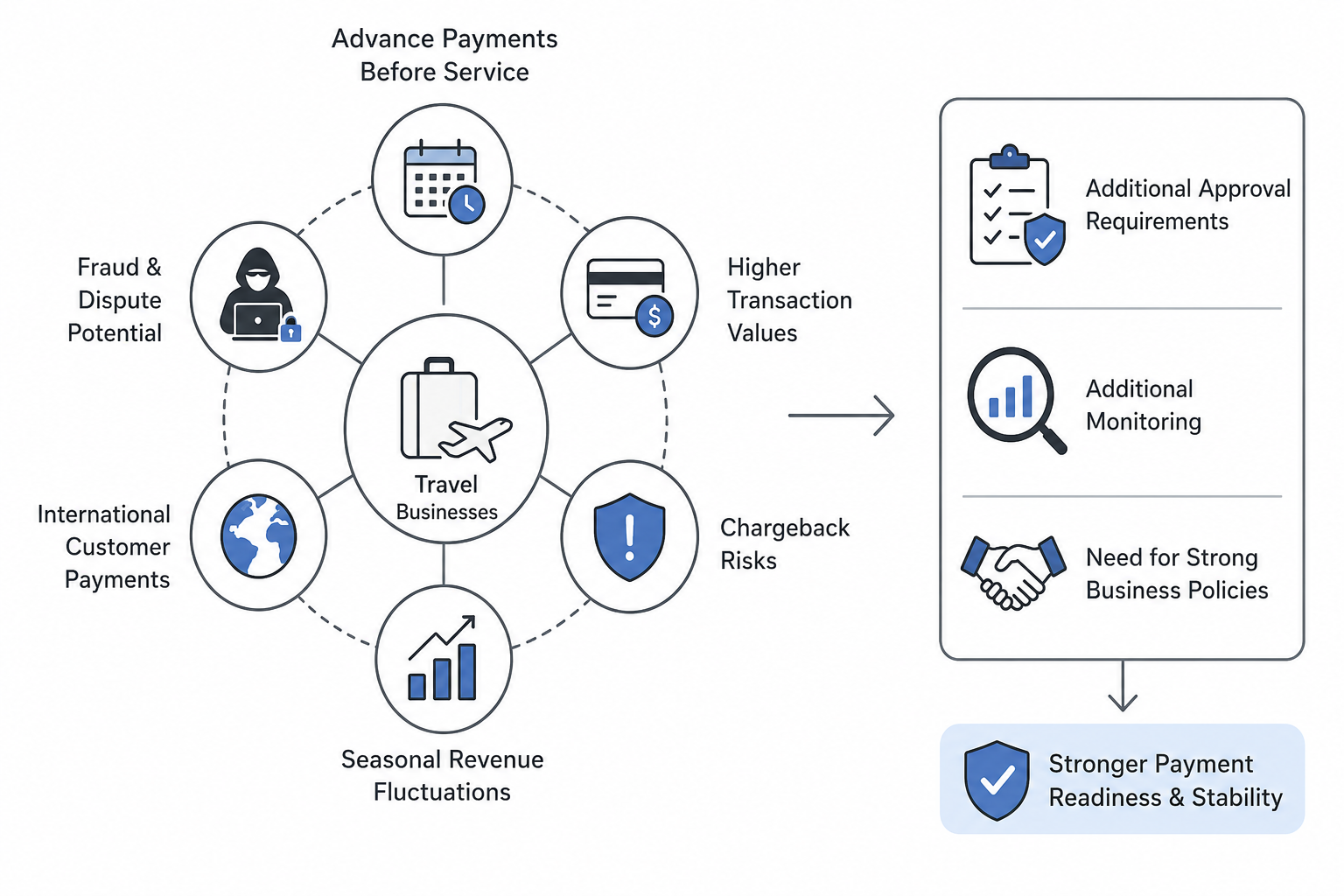
Why Are Travel Businesses Considered High Risk?
Travel businesses face several unique challenges that make payment providers evaluate them differently from many other industries.
1. Advance Payments Before Service Delivery
One of the biggest reasons travel businesses are considered high risk is the time gap between payment and service delivery. Unlike traditional retail purchases where customers receive products immediately, travel services are often booked weeks or months in advance.
For example:
A customer books a $4,000 international tour package in January for a trip scheduled in July. The travel company receives payment months before the customer actually uses the service.
During this period, unexpected situations can occur, including:
- Travel cancellations
- Personal emergencies
- Schedule changes
- Service disruptions
Because businesses may need to manage refunds or disputes long after receiving payment, payment providers consider this a higher-risk factor.
2. Higher Transaction Values
Travel transactions are often significantly larger than everyday online purchases.
A single booking may include:
- Flights
- Accommodation
- Transportation
- Activities
- Multiple travelers
A high-value transaction creates greater financial exposure if the payment is fraudulent or disputed.
For example, a customer disputing a $6,000 family vacation package creates a much larger financial impact compared to a dispute involving a small retail purchase. Because of this, travel companies may require stronger transaction monitoring and payment controls.
3. Chargeback Risks
Chargebacks are another major reason travel businesses receive additional payment scrutiny. A chargeback occurs when a customer disputes a transaction through their bank or card provider.
Travel businesses may experience disputes because of:
- Confusion about cancellation policies
- Customers changing travel plans
- Delayed refunds
- Service expectations not matching reality
- Customers not recognizing transactions
For example, a customer may cancel a vacation package but misunderstand the refund terms. If communication is unclear, the customer may file a dispute instead of resolving the issue directly with the company.
Understanding travel chargebacks and implementing proper dispute prevention practices is important for maintaining a stable payment operation.
4. Seasonal Revenue Fluctuations
Many travel businesses experience seasonal demand patterns. A beach holiday operator may receive most bookings during summer, while a ski tour company may see higher revenue during winter. This creates uneven transaction patterns throughout the year.
Payment providers may review:
- Sudden increases in transaction volume
- Seasonal sales spikes
- Revenue consistency
- Business forecasting
For example, a small travel agency processing $10,000 per month may suddenly process $100,000 during peak booking season. Payment providers may evaluate whether the business has the operational capacity to handle that increase.
5. International Customer Payments
Travel businesses frequently serve customers from different countries, which introduces additional payment complexity.
International transactions may involve:
- Different currencies
- Foreign bank approvals
- Cross-border payment rules
- Higher fraud monitoring requirements
For example, a travel company based in the United States may receive a booking from a customer in Europe using a foreign-issued card. The transaction may require additional verification because international payments generally carry different risk considerations.
Businesses expanding globally should understand international payment processing for travel businesses to manage cross-border transactions effectively.
How Does High-Risk Classification Affect Travel Businesses?
A high-risk classification may influence several parts of payment operations.
Businesses may experience:
Additional Approval Requirements
Payment providers may request:
- Business registration documents
- Website information
- Refund policies
- Cancellation terms
- Transaction history
- Expected processing volume
Having organized business information can make the review process smoother.
Additional Monitoring
High-risk industries often require closer transaction monitoring to identify unusual activity.
Payment providers may analyze:
- Transaction patterns
- Chargeback levels
- Customer behavior
- Fraud indicators
Need for Strong Business Policies
Clear customer policies can reduce payment-related problems.
Travel businesses should maintain:
- Transparent cancellation policies
- Clear refund conditions
- Detailed service descriptions
- Customer support channels
These practices help reduce misunderstandings and improve customer confidence.
Examples of Travel Businesses Facing High-Risk Challenges
Example 1: New Tour Operator
A new adventure travel company launches online and begins accepting payments for international trips.
Because the company has no previous processing history and collects payments before trips occur, payment providers may require additional business information before approval.
Example 2: Luxury Travel Agency
A luxury travel agency handles large-value bookings for international vacations.
Although the business has legitimate customers, the high transaction amounts create greater financial exposure if disputes occur.
Example 3: Vacation Rental Platform
A vacation rental business accepts payments months before guests arrive.
The company must manage cancellations, refunds, and customer expectations carefully to reduce payment disputes.
How Can Travel Businesses Prepare for Payment Approval?
Travel companies can improve their payment readiness by maintaining:
- A professional business website
- Clear service descriptions
- Visible refund and cancellation policies
- Accurate business information
- Proper transaction records
- Effective customer communication
Payment providers evaluate the overall business operation, not just the industry category. A well-prepared travel business can demonstrate lower operational risk and create a stronger foundation for payment acceptance.
Conclusion
Travel businesses are often considered high risk because of factors such as advance bookings, high transaction values, international customers, seasonal revenue patterns, and potential chargebacks.
This classification does not prevent businesses from accepting payments. Instead, it highlights the importance of having proper payment processes, clear policies, and strong transaction management. By understanding why travel businesses are considered high risk, companies can better prepare for payment requirements and build more reliable operations.
For businesses looking to understand the complete payment journey, learning about travel payment processing provides a strong foundation for managing transactions, customer payments, and future growth.

Categories
- ACH Payments (10)
- adult payment processing (11)
- AI (9)
- Altcoins (10)
- Banking (10)
- Bitcoin (133)
- Bitcoin ETF (11)
- Bitcoin Price (30)
- Blockchain (50)
- Brokering World Hunger Away (16)
- Business (17)
- card payment processing (10)
- CBD (11)
- CBDC (11)
- coaching business (11)
- COVID-19 (3)
- Crypto ATMs (1)
- Crypto Banking (17)
- Crypto Bill (1)
- Crypto business owner platform (31)
- Crypto Investment (3)
- Crypto Markets (5)
- Crypto Payment (35)
- Crypto Payment Processor (4)
- Crypto Prices (1)
- Crypto Trading (92)
- Cryptocurrency (402)
- Cryptocurrency Exchange (108)
- Data Visualization (2)
- dating platforms (11)
- debt collection payment processing (10)
- Decentralized Finance (7)
- DeFi Payment (9)
- DEX (3)
- Digital Currency (23)
- dropshipping payment processing (12)
- Ethereum (2)
- FAQ (7)
- file sharing payment processing (11)
- Finance (25)
- Financial Equality (4)
- Financial Freedom (8)
- Forex (35)
- hemp (1)
- ICO (2)
- Investment (11)
- IPTV (11)
- Merchant Account (10)
- Mining (3)
- News (66)
- NFTs (2)
- online gambling (11)
- P2P (1)
- Paybito (139)
- PayBitoPro (693)
- PayBitoPro Coin Listing (6)
- PayBitoPro Exchange (2)
- Payment Gateway (40)
- peptide (10)
- Post COVID Digital Transformation (1)
- Press Release (130)
- Privacy & Security (3)
- Real Estate (1)
- Stablecoin (5)
- Technology (15)
- Travel (11)
- Uncategorized (9)
- US Presidential Election (2)
- Utility Coin (1)
- Web3 business (4)
- Web3 Wallets (2)
- White Label Crypto Exchange (8)
Recent Posts
- ACH vs Wire Transfer: Which Payment Method Is Better for Businesses?
- ACH Fraud Prevention: How Businesses Can Secure Bank Account Payments?
- ACH Credit vs ACH Debit: What’s the Difference? With Real Examples
- ACH vs Credit Card: Which Payment Method Is Better for Businesses?
- How Long Do ACH Payments Take? Processing Times, Settlement, and Same Day ACH