Payment Declines for Travel Businesses: Common Causes and How to Prevent Them
- July 29, 2026
- Soham Guchait
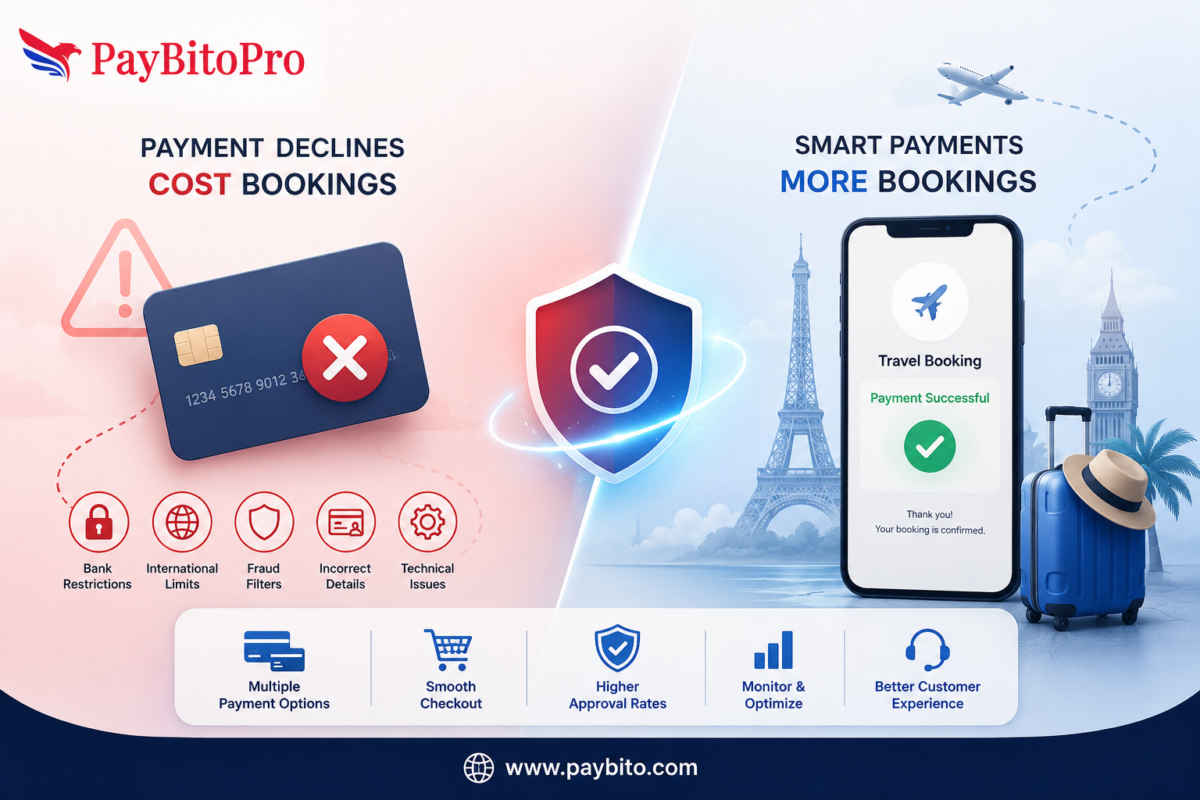
A failed payment can interrupt an otherwise successful booking journey. For travel businesses, this can be especially damaging because customers often make high-value purchases for flights, vacation packages, tours, and accommodation.
A customer who experiences repeated payment failures may abandon the booking, delay the purchase, or choose another travel provider.
Payment declines for travel businesses can happen for many reasons, including bank restrictions, fraud detection systems, incorrect customer information, technical issues, and international payment limitations. Understanding why payments fail and how to reduce unnecessary declines can help travel companies improve booking completion rates and create a smoother customer experience.
What Is a Payment Decline?
A payment decline occurs when a transaction cannot be approved during the authorization process.
The payment request may be rejected by:
- The customer’s bank
- Payment networks
- Fraud prevention systems
- Payment processing systems
A declined transaction does not always mean the customer cannot pay.
For example, a customer may have sufficient funds available, but their bank may block a $4,000 international vacation payment because it appears unusual compared to their normal spending behavior.
Why Do Travel Businesses Experience Payment Declines?
Travel payments often involve unique challenges because the industry commonly deals with:
- Higher transaction amounts
- International customers
- Advance bookings
- Different payment preferences
- Seasonal booking patterns
These factors can increase the chances of legitimate payments being declined.
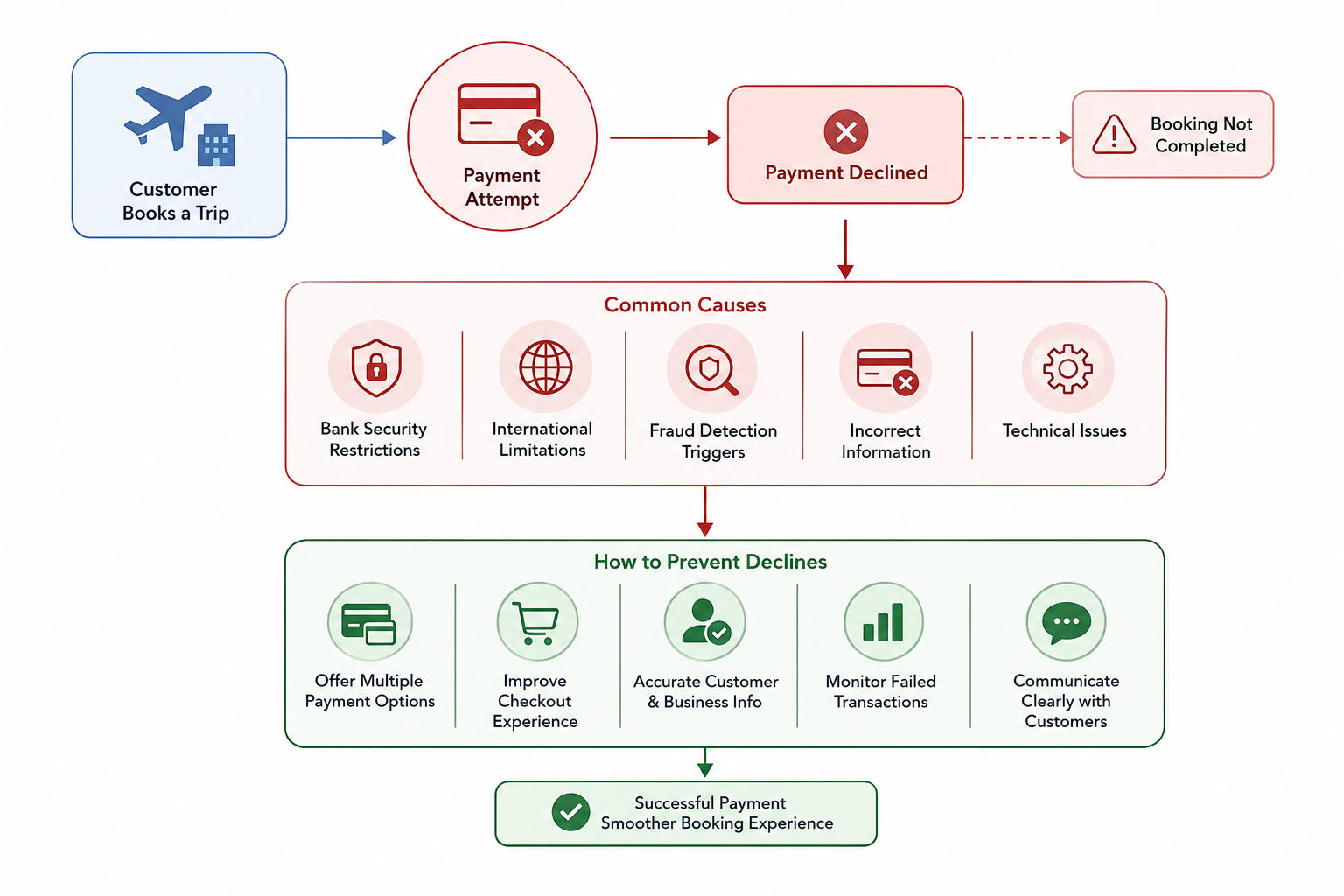
Common Causes of Payment Declines for Travel Businesses
1. Bank Security Restrictions
Banks use security systems to identify unusual transactions and prevent fraud.
A payment may be declined when:
- The purchase amount is higher than normal
- The transaction occurs in another country
- The customer rarely makes online payments
- The card issuer requires additional verification
Example:
A customer usually spends $200 per month online but suddenly attempts to purchase a $5,000 international tour package. The bank may temporarily decline the transaction until the customer confirms the payment.
2. International Payment Limitations
Many travel businesses serve customers from different countries, making international transactions a common challenge.
Payments may fail because of:
- Foreign transaction restrictions
- Currency differences
- Card issuer limitations
- Regional payment rules
For example, a traveler from Europe booking a tour company based in the United States may experience a decline if their card issuer blocks international transactions.
For businesses accepting payments globally, understanding international payment processing for travel businesses is important for reducing unnecessary payment failures.
3. Fraud Detection Systems Blocking Legitimate Payments
Fraud prevention tools are designed to protect businesses and customers, but sometimes they can incorrectly identify genuine transactions as risky.
Common triggers include:
- Large booking amounts
- Multiple payment attempts
- Different billing and travel locations
- Unusual customer behavior
Example:
A customer living in one country books a vacation package for another country using a foreign-issued card. The transaction may appear unusual even though it is completely legitimate.
4. Incorrect Customer Payment Information
Some payment failures happen because of simple customer errors.
Common issues include:
- Incorrect card numbers
- Expired cards
- Wrong billing addresses
- Incorrect security codes
- Insufficient funds
Travel businesses can reduce these problems by creating a clear checkout process and allowing customers to easily review their payment information before submission.
5. Payment Gateway or Technical Issues
Not every decline is caused by customers or banks. Technical problems can also prevent successful transactions.
Possible causes include:
- Checkout errors
- Connection problems
- Payment gateway interruptions
- Website integration issues
A reliable payment gateway for travel businesses should help companies process transactions smoothly while providing visibility into failed payments.
How Payment Declines Affect Travel Businesses?
Payment failures can impact travel companies in several ways.
Lost Revenue Opportunities: Travel purchases are often time-sensitive. A customer searching for a holiday package may not return if the payment process fails.
Poor Customer Experience: A complicated or unreliable checkout process can reduce customer confidence.
Increased Support Requests: Customers often contact businesses when they cannot complete payments, creating additional workload for support teams.
For example, a tour operator launching a seasonal travel package may lose multiple bookings if customers repeatedly encounter payment failures during checkout.
How Travel Businesses Can Reduce Payment Declines?
Offer Multiple Payment Options
Different customers prefer different ways to pay. Supporting multiple payment methods can help businesses serve:
- International travelers
- Local customers
- Corporate clients
- Mobile users
A customer unable to complete payment with one method may successfully complete the booking using another option.
Improve Checkout Experience
A simple checkout process reduces unnecessary payment problems. Businesses should focus on:
- Clear payment instructions
- Mobile-friendly booking pages
- Easy correction of errors
- Transparent pricing
A complicated checkout process can increase abandoned bookings even when customers are ready to purchase.
Keep Customer and Business Information Accurate
Accurate information improves payment approval chances. Businesses should ensure:
- Customer billing details are collected correctly
- Business information is consistent
- Booking details are clearly recorded
Monitor Failed Transactions
Tracking declined payments helps businesses identify patterns. Useful information includes:
- Decline reasons
- Customer location
- Payment method
- Transaction value
- Time of failure
For example, if most declined transactions come from international customers using specific payment methods, the business can investigate whether additional payment options are needed.
Payment Declines vs Chargebacks
Payment declines and chargebacks are different issues.
A payment decline happens before the transaction is completed. A chargeback occurs after payment has already been processed and a customer disputes the transaction.
Travel businesses need to manage both challenges because disputes can affect revenue and payment operations. Understanding travel chargebacks can help businesses create stronger refund policies, customer communication processes, and dispute management practices.
Examples of Reducing Payment Declines
Example 1: International Tour Operator
A travel company notices many overseas customers experience failed payments.
After reviewing transactions, the company identifies that some customers cannot complete purchases because their banks block international payments.
Solution:
The company improves payment options and provides clearer instructions for international customers.
Example 2: Luxury Travel Agency
A luxury travel company receives frequent declines on high-value bookings.
Solution:
The business improves customer verification and provides better communication when additional payment confirmation is required.
Example 3: Online Booking Platform
A booking platform notices customers abandon reservations after failed payments.
Solution:
The company improves the checkout process and allows customers to retry payments more easily.
Conclusion
Payment declines are a common challenge for travel businesses because the industry involves high-value bookings, international customers, and complex transaction patterns.
By understanding the causes behind failed payments and improving areas such as checkout experience, payment options, transaction monitoring, and customer communication, travel companies can reduce unnecessary declines.
A reliable approach to managing payments helps businesses protect revenue, improve customer satisfaction, and create a smoother booking experience.

Categories
- ACH Payments (10)
- adult payment processing (11)
- AI (9)
- Altcoins (10)
- Banking (10)
- Bitcoin (133)
- Bitcoin ETF (11)
- Bitcoin Price (30)
- Blockchain (50)
- Brokering World Hunger Away (16)
- Business (17)
- card payment processing (10)
- CBD (11)
- CBDC (11)
- Chargeback (8)
- coaching business (11)
- COVID-19 (3)
- Crypto ATMs (1)
- Crypto Banking (17)
- Crypto Bill (1)
- Crypto business owner platform (31)
- Crypto Investment (3)
- Crypto Markets (5)
- Crypto Payment (35)
- Crypto Payment Processor (4)
- Crypto Prices (1)
- Crypto Trading (92)
- Cryptocurrency (402)
- Cryptocurrency Exchange (108)
- Data Visualization (2)
- dating platforms (11)
- debt collection payment processing (10)
- Decentralized Finance (7)
- DeFi Payment (9)
- DEX (3)
- Digital Currency (23)
- dropshipping payment processing (12)
- Ethereum (2)
- FAQ (7)
- file sharing payment processing (11)
- Finance (25)
- Financial Equality (4)
- Financial Freedom (8)
- Forex (35)
- hemp (1)
- ICO (2)
- Investment (11)
- IPTV (11)
- Merchant Account (10)
- Mining (3)
- News (66)
- NFTs (2)
- online gambling (11)
- P2P (1)
- Paybito (147)
- PayBitoPro (693)
- PayBitoPro Coin Listing (6)
- PayBitoPro Exchange (2)
- Payment Gateway (48)
- peptide (10)
- Post COVID Digital Transformation (1)
- Press Release (130)
- Privacy & Security (3)
- Real Estate (1)
- Stablecoin (5)
- Technology (15)
- Travel (11)
- Uncategorized (10)
- US Presidential Election (2)
- Utility Coin (1)
- Web3 business (4)
- Web3 Wallets (2)
- White Label Crypto Exchange (8)
Recent Posts
- Payment Gateway vs. Payment Orchestration: What’s the Difference?
- What Is Smart Payment Routing? Strategies to Optimize Payment Performance
- How to Improve Payment Approval Rates for High-Risk Businesses?
- Why Are Online Payments Failing? Common Causes and How to Fix Them
- How to Use Multiple Payment Processors to Reduce Business Disruptions?