International Payment Processing for Travel Businesses: A Complete Guide to Accepting Global Payments
- July 30, 2026
- Soham Guchait
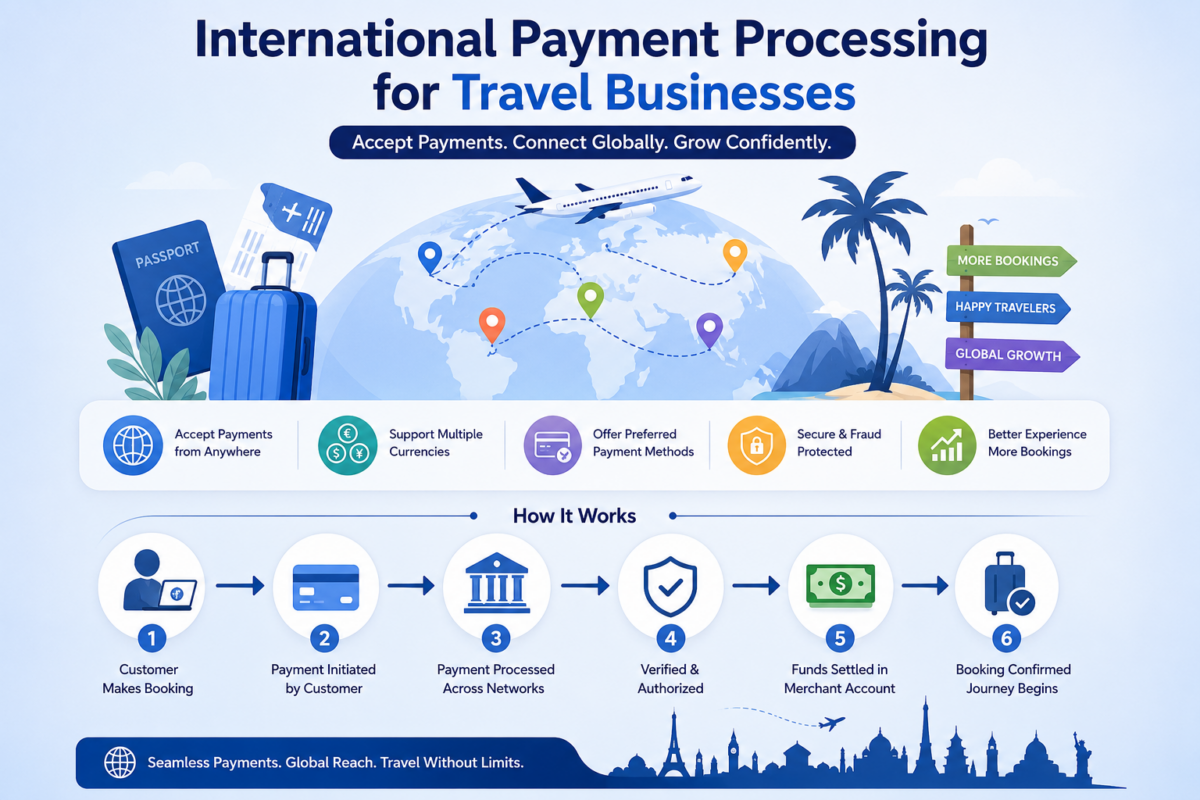
The travel industry is inherently global. A tour operator in Thailand may receive bookings from customers in Canada, while a vacation rental business in Italy may welcome guests from Australia, Japan, or Brazil. As travel businesses expand beyond their local markets, accepting payments from international customers becomes an essential part of day-to-day operations.
However, processing international payments is more complex than accepting domestic transactions. Differences in currencies, banking systems, payment preferences, and fraud prevention measures can all affect whether a booking is completed successfully.
Understanding international payment processing for travel businesses helps companies create a smoother payment experience for customers while preparing for the challenges that come with serving a global audience.
What Is International Payment Processing?
International payment processing refers to the systems and technologies that allow businesses to accept payments from customers located in different countries.
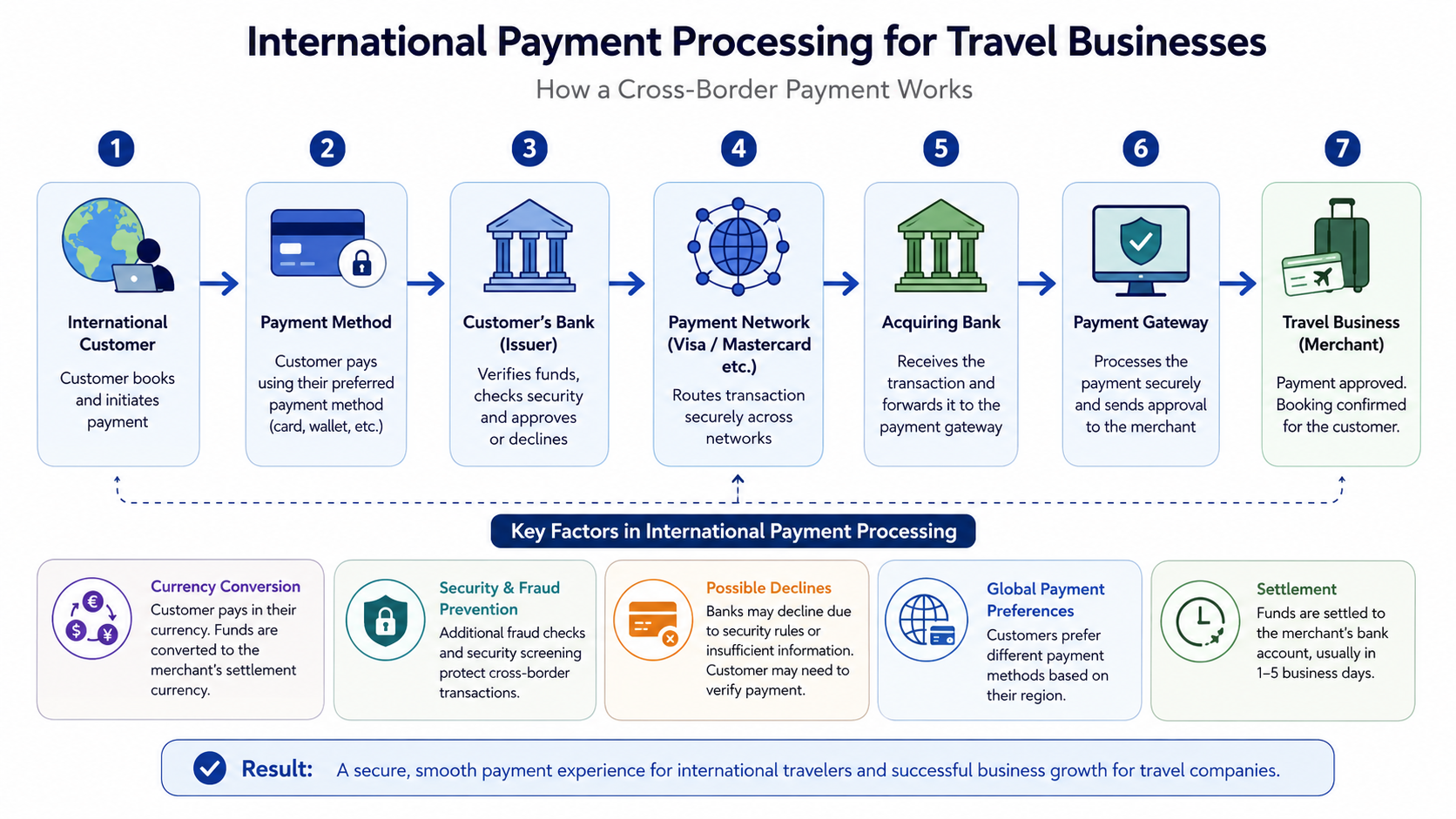
Unlike domestic transactions, international payments often involve multiple financial institutions, currency conversions, card networks, and additional security checks before funds are transferred to the merchant.
For example, a customer in Germany booking a safari in Kenya may pay in euros using a credit card, while the travel company ultimately receives the funds in its local currency after the payment passes through several payment systems.
Although this entire process usually takes only a few seconds for the customer, several payment services work together behind the scenes to authorize, process, and settle the transaction.
Businesses that are new to accepting overseas bookings should first understand the fundamentals of travel payment processing, as international transactions build on the same payment workflow while introducing additional considerations.
Why Do International Payments Matter for Travel Businesses?
Many travel businesses begin by serving local customers, but growth often comes from attracting travelers from other countries.
When international customers can pay using familiar methods and currencies, they are more likely to complete their bookings. On the other hand, a complicated payment experience can create uncertainty and increase the likelihood of abandoned reservations.
Consider a boutique travel company that offers guided hiking tours. While most of its customers initially come from within the country, positive online reviews begin attracting international travelers. Without a payment system that supports overseas transactions, the business may struggle to convert this growing interest into confirmed bookings.
Providing a reliable international payment experience allows businesses to serve a wider audience without creating unnecessary barriers during checkout.
Common Challenges When Accepting International Payments
Expanding into international markets introduces several payment-related challenges that businesses should understand before accepting overseas bookings.
Some of the most common include:
- Currency conversion between the customer’s currency and the merchant’s settlement currency.
- Additional fraud checks for cross-border transactions.
- Higher rates of payment declines because of bank security measures.
- Different customer payment preferences across countries.
- Longer settlement times for certain international transactions.
For example, a customer may have sufficient funds to complete a booking, but their bank could temporarily decline the payment because the overseas transaction appears unusual. In many cases, the customer simply needs to verify the purchase with their bank before trying again.
Understanding why these situations occur can help businesses respond more effectively and reduce unnecessary payment failures.
Supporting Different Payment Preferences
Travel businesses often assume that accepting major credit cards is enough to serve international customers. While cards remain widely used, payment preferences vary significantly between countries.
Some travelers prefer paying with digital wallets, while others rely on bank transfers or regional payment methods that are common in their home markets. Rather than offering every available payment option, businesses should focus on understanding where their customers come from and which payment methods they use most frequently.
As discussed in payment methods for travel businesses, matching payment options to customer preferences can improve the booking experience and increase completed transactions.
The Importance of Currency Conversion
Currency plays a major role in international travel payments.
Imagine a customer from the United Kingdom booking a tour in Japan. If prices are displayed only in Japanese yen, the customer may struggle to estimate the final cost before completing the purchase.
Providing access to multiple currencies can improve pricing transparency and help customers make purchasing decisions with greater confidence.
Businesses planning to serve customers across several regions should also understand how multi-currency payment processing simplifies international bookings and improves the overall payment experience.
Security in Cross-Border Transactions
International transactions often receive additional scrutiny because they involve customers, merchants, and financial institutions located in different countries. As a result, payment providers frequently apply enhanced fraud detection measures before approving transactions.
Travel businesses can support secure international payments by:
- Using a secure payment gateway.
- Verifying customer information where appropriate.
- Monitoring unusual transaction activity.
- Keeping booking and payment records up to date.
These practices not only help reduce fraud but also make it easier to resolve customer questions if payment issues arise.
Example: Expanding Into International Markets
A small adventure travel company initially offers tours only to domestic travelers. As its online presence grows, customers from Europe and North America begin making enquiries and attempting to book trips.
The company soon realizes that some overseas customers cannot complete payments because their preferred payment methods are unavailable. After reviewing customer feedback, the business expands its payment capabilities by supporting additional international payment methods and multiple currencies while strengthening its fraud monitoring processes.
These changes make the booking process easier for international customers and help the company grow its global customer base.
Best Practices for International Payment Processing
Businesses accepting international bookings should focus on creating a payment experience that is both secure and convenient. This includes choosing an appropriate merchant account structure, maintaining accurate business documentation, and using payment systems that support international transactions effectively.
Some practical recommendations include:
- Support payment methods commonly used by your target customers.
- Clearly display accepted currencies before checkout.
- Use secure payment technologies to protect customer information.
- Monitor international transactions for unusual activity.
- Regularly review payment performance as your business expands into new markets.
Small improvements to the payment experience can have a significant impact on booking completion rates and customer satisfaction.
Conclusion
International payment processing allows travel businesses to accept bookings from customers around the world while supporting secure and reliable transactions. Although cross-border payments involve additional considerations such as currency conversion, fraud prevention, and regional payment preferences, understanding these challenges helps businesses prepare for international growth.
By offering familiar payment options, maintaining strong security practices, and providing a seamless checkout experience, travel businesses can build trust with international customers and create a payment strategy that supports long-term expansion.

Categories
- ACH Payments (10)
- adult payment processing (11)
- AI (9)
- Altcoins (10)
- Banking (10)
- Bitcoin (133)
- Bitcoin ETF (11)
- Bitcoin Price (30)
- Blockchain (50)
- Brokering World Hunger Away (16)
- Business (17)
- card payment processing (10)
- CBD (11)
- CBDC (11)
- coaching business (11)
- COVID-19 (3)
- Crypto ATMs (1)
- Crypto Banking (17)
- Crypto Bill (1)
- Crypto business owner platform (31)
- Crypto Investment (3)
- Crypto Markets (5)
- Crypto Payment (35)
- Crypto Payment Processor (4)
- Crypto Prices (1)
- Crypto Trading (92)
- Cryptocurrency (402)
- Cryptocurrency Exchange (108)
- Data Visualization (2)
- dating platforms (11)
- debt collection payment processing (10)
- Decentralized Finance (7)
- DeFi Payment (9)
- DEX (3)
- Digital Currency (23)
- dropshipping payment processing (12)
- Ethereum (2)
- FAQ (7)
- file sharing payment processing (11)
- Finance (25)
- Financial Equality (4)
- Financial Freedom (8)
- Forex (35)
- hemp (1)
- ICO (2)
- Investment (11)
- IPTV (11)
- Merchant Account (10)
- Mining (3)
- News (66)
- NFTs (2)
- online gambling (11)
- P2P (1)
- Paybito (139)
- PayBitoPro (693)
- PayBitoPro Coin Listing (6)
- PayBitoPro Exchange (2)
- Payment Gateway (40)
- peptide (10)
- Post COVID Digital Transformation (1)
- Press Release (130)
- Privacy & Security (3)
- Real Estate (1)
- Stablecoin (5)
- Technology (15)
- Travel (11)
- Uncategorized (9)
- US Presidential Election (2)
- Utility Coin (1)
- Web3 business (4)
- Web3 Wallets (2)
- White Label Crypto Exchange (8)
Recent Posts
- ACH vs Wire Transfer: Which Payment Method Is Better for Businesses?
- ACH Fraud Prevention: How Businesses Can Secure Bank Account Payments?
- ACH Credit vs ACH Debit: What’s the Difference? With Real Examples
- ACH vs Credit Card: Which Payment Method Is Better for Businesses?
- How Long Do ACH Payments Take? Processing Times, Settlement, and Same Day ACH