How to Get a Merchant Account for a Travel Business?
- July 29, 2026
- Soham Guchait
For many travel businesses, setting up payment acceptance is not as simple as connecting a checkout page and starting transactions. Because travel services are often booked in advance, involve larger transaction values, and may include international customers, payment providers usually evaluate these businesses more carefully.
A travel merchant account allows travel companies to accept card payments while managing the unique requirements of the industry. However, new agencies, tour operators, and booking platforms often face questions about approval, documentation, risk evaluation, and choosing the right payment setup.
Understanding how travel merchant accounts work and what providers look for can help businesses prepare better and avoid common approval challenges.
What Is a Travel Merchant Account?
A travel merchant account is a specialized business account that allows travel companies to accept payments through credit cards, debit cards, and other electronic payment methods.
Unlike a regular bank account, a merchant account is designed specifically for processing customer transactions.
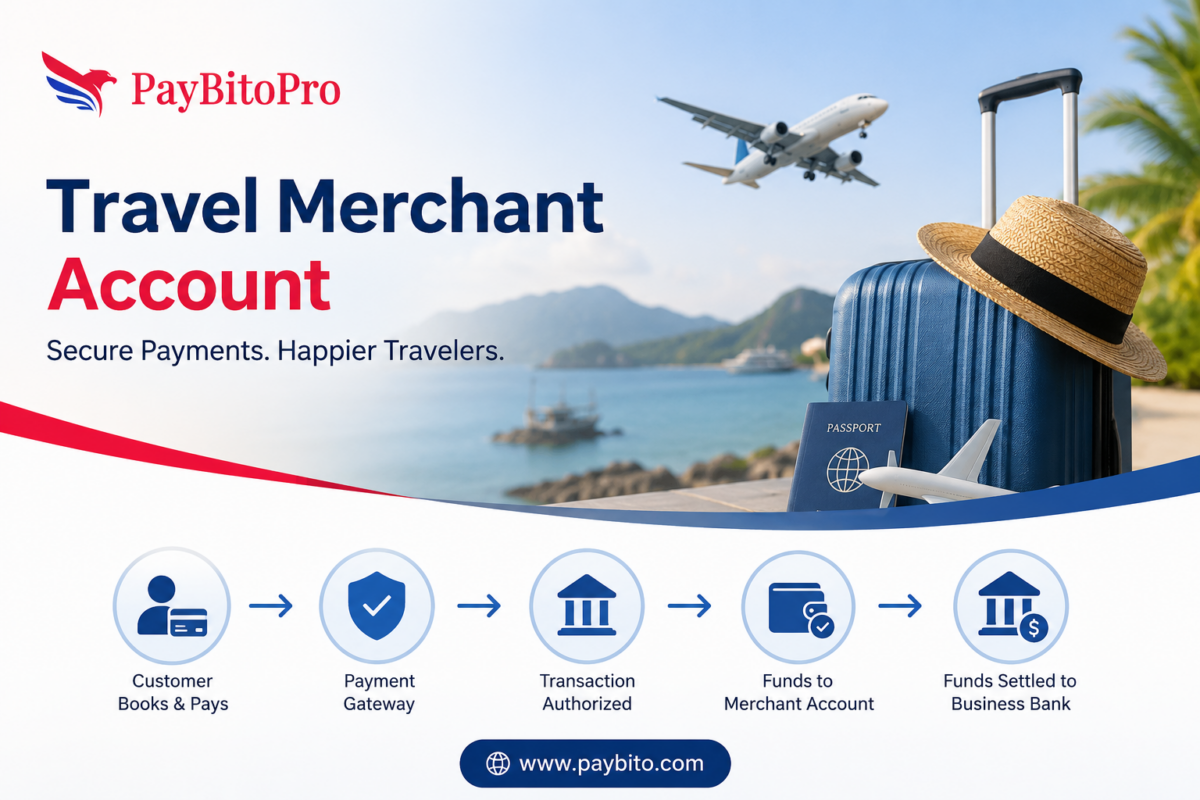
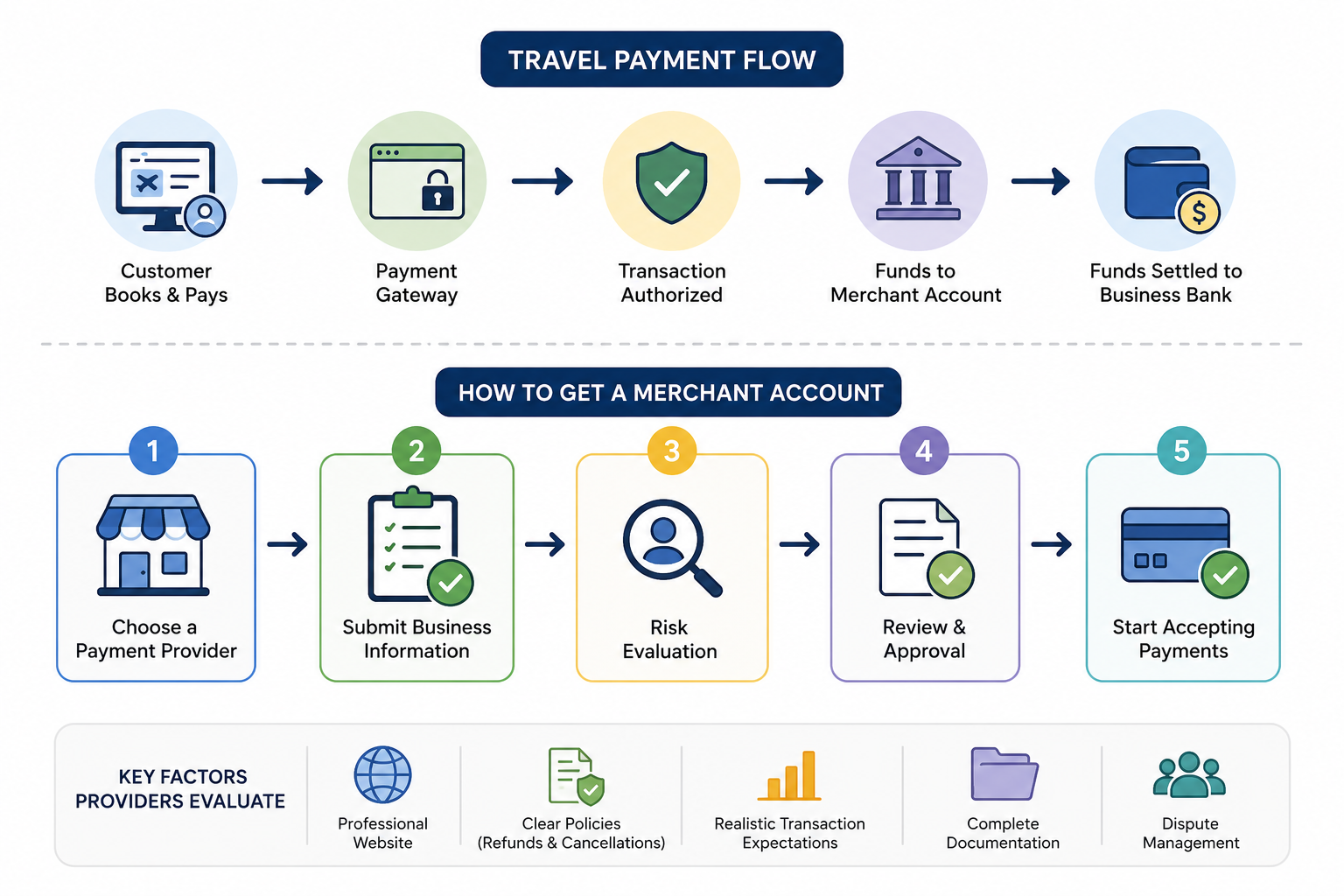
When a traveler books a service, the payment process usually involves:
- Customer completes a booking and submits payment details
- Payment information is sent through a payment gateway
- The transaction is reviewed and authorized
- Approved funds are transferred to the merchant account
- Funds are settled into the business bank account
For example, when a customer purchases a $2,500 international vacation package online, the merchant account helps the travel company receive the payment after the transaction is approved.
A merchant account works together with other payment components, making it an important part of complete travel payment processing.
Why Do Travel Businesses Need a Merchant Account?
Many travel businesses rely on advance payments to operate. Customers often pay before receiving the actual service, whether they are booking:
- Flight packages
- Hotels
- Guided tours
- Cruises
- Vacation rentals
- Corporate travel services
A merchant account allows businesses to securely collect these payments while providing customers with convenient payment options.
Without proper payment infrastructure, travel companies may face problems such as:
- Limited payment options
- Failed transactions
- Poor customer checkout experiences
- Difficulty managing larger booking volumes
Why Is Getting a Merchant Account Different for Travel Businesses?
Travel businesses often receive additional evaluation during the approval process because the industry has unique payment risks.
Some reasons include:
Advance Booking Periods
Travel customers often book weeks or months before their trip. For example, a customer may pay for a holiday package in January for travel in July. During this period, circumstances may change, leading to cancellations or refund requests.
High Transaction Amounts
Travel bookings can involve large payments. A single transaction may include multiple services, increasing the financial impact if a dispute occurs.
For example, a luxury travel company processing a $10,000 vacation package may receive more review than a business selling low-cost products.
Chargeback Possibilities
Travel companies may experience disputes related to:
- Cancellation policies
- Refund expectations
- Schedule changes
- Service misunderstandings
Because of this, businesses should understand travel chargebacks and maintain clear customer policies.
How to Apply for a Travel Merchant Account?
The application process generally involves several steps.
1. Choose a Payment Provider
Travel businesses should evaluate providers based on their business model, transaction volume, customer locations, and payment requirements.
Important considerations include:
- Supported payment methods
- International transaction support
- Security features
- Reporting capabilities
- Industry experience
2. Submit Business Information
During the application process, businesses usually provide information about their operations.
This may include:
- Business registration details
- Website information
- Products and services offered
- Expected transaction volume
- Customer locations
- Banking information
Clear and accurate information helps providers understand the business model.
3. Complete Risk Evaluation
Because travel is often considered a higher-risk industry, payment providers may review additional factors.
They may evaluate:
- Average transaction size
- Booking timelines
- Refund policies
- Cancellation procedures
- Previous processing history
- Expected chargeback levels
Understanding why travel businesses are considered high risk can help companies prepare for this review process.
What Do Payment Providers Look for in a Travel Business?
Before approving a merchant account, providers typically evaluate the overall reliability of the business.
Important factors include:
Professional Website
A business website should clearly explain:
- Services offered
- Pricing information
- Contact details
- Booking process
Clear Refund and Cancellation Policies
Travel customers need to understand what happens if plans change, especially when bookings involve expensive packages, advance payments, or non-refundable services. Clear cancellation, refund, and rescheduling policies help customers know their options before making a purchase decision.
Transparent policies can reduce confusion, set realistic expectations, and lower the chances of payment disputes or chargebacks. They also demonstrate that the business has a structured approach to handling unexpected situations such as trip cancellations, date changes, or service modifications.
Realistic Transaction Expectations
Businesses should provide accurate information about:
- Expected monthly sales
- Average booking value
- Customer locations
- Seasonal changes
For example, a tour operator expecting $100,000 in summer bookings should explain seasonal demand patterns rather than showing inconsistent transaction estimates.
Common Reasons Travel Merchant Account Applications Are Delayed
Some common issues include:
Incomplete Documentation: Missing business information can slow down the approval process.
Unclear Business Model: Payment providers need to understand exactly what services are being sold.
For example, a website selling custom travel packages should clearly explain whether it provides tours, accommodation, transportation, or a combination of services.
Weak Customer Policies: Missing refund or cancellation information can create concerns about future disputes. Businesses should prepare their travel merchant account requirements carefully before applying.
How Travel Businesses Can Improve Approval Chances?
Travel companies can create a stronger application by:
- Maintaining a professional website
- Providing detailed service information
- Publishing clear refund policies
- Keeping accurate financial records
- Explaining seasonal revenue patterns
- Monitoring customer disputes
Payment providers generally evaluate the complete business operation rather than only the industry category.
Conclusion
A travel merchant account is an important part of building a reliable payment system for travel businesses. Because travel involves advance bookings, international customers, and higher-value transactions, the approval process may require additional preparation compared to other industries.
By understanding merchant account requirements, preparing accurate business information, and maintaining clear customer policies, travel companies can create a stronger foundation for accepting payments.
A well-structured merchant account helps businesses deliver smoother booking experiences while managing transactions more effectively as they grow.

Categories
- ACH Payments (10)
- adult payment processing (11)
- AI (9)
- Altcoins (10)
- Banking (10)
- Bitcoin (133)
- Bitcoin ETF (11)
- Bitcoin Price (30)
- Blockchain (50)
- Brokering World Hunger Away (16)
- Business (17)
- card payment processing (10)
- CBD (11)
- CBDC (11)
- Chargeback (8)
- coaching business (11)
- COVID-19 (3)
- Crypto ATMs (1)
- Crypto Banking (17)
- Crypto Bill (1)
- Crypto business owner platform (31)
- Crypto Investment (3)
- Crypto Markets (5)
- Crypto Payment (35)
- Crypto Payment Processor (4)
- Crypto Prices (1)
- Crypto Trading (92)
- Cryptocurrency (402)
- Cryptocurrency Exchange (108)
- Data Visualization (2)
- dating platforms (11)
- debt collection payment processing (10)
- Decentralized Finance (7)
- DeFi Payment (9)
- DEX (3)
- Digital Currency (23)
- dropshipping payment processing (12)
- Ethereum (2)
- FAQ (7)
- file sharing payment processing (11)
- Finance (25)
- Financial Equality (4)
- Financial Freedom (8)
- Forex (35)
- hemp (1)
- ICO (2)
- Investment (11)
- IPTV (11)
- Merchant Account (10)
- Mining (3)
- News (66)
- NFTs (2)
- online gambling (11)
- P2P (1)
- Paybito (147)
- PayBitoPro (693)
- PayBitoPro Coin Listing (6)
- PayBitoPro Exchange (2)
- Payment Gateway (48)
- peptide (10)
- Post COVID Digital Transformation (1)
- Press Release (130)
- Privacy & Security (3)
- Real Estate (1)
- Stablecoin (5)
- Technology (15)
- Travel (11)
- Uncategorized (10)
- US Presidential Election (2)
- Utility Coin (1)
- Web3 business (4)
- Web3 Wallets (2)
- White Label Crypto Exchange (8)
Recent Posts
- Payment Gateway vs. Payment Orchestration: What’s the Difference?
- What Is Smart Payment Routing? Strategies to Optimize Payment Performance
- How to Improve Payment Approval Rates for High-Risk Businesses?
- Why Are Online Payments Failing? Common Causes and How to Fix Them
- How to Use Multiple Payment Processors to Reduce Business Disruptions?