Dating App Payment Processing: Complete Guide to Accepting Payments for Dating Platforms
- August 4, 2026
- Soham Guchait
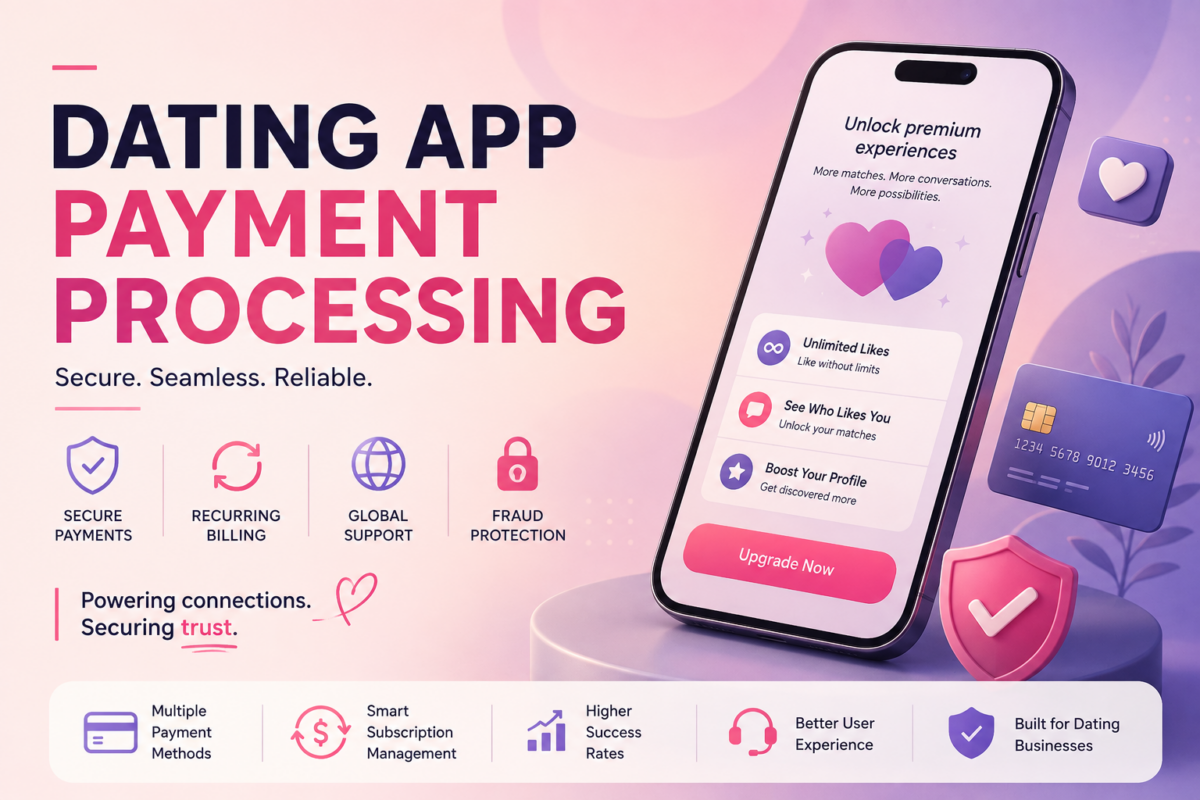
Dating app payment processing allows dating platforms to accept, manage, and optimize payments from users purchasing subscriptions, premium memberships, virtual credits, and paid features. Unlike traditional ecommerce businesses, dating platforms require payment systems designed around recurring billing, user trust, fraud prevention, and global transactions.
As dating apps continue to move beyond simple matchmaking features, their revenue models have become more sophisticated. Modern dating platforms generate income through premium memberships, profile visibility upgrades, virtual gifts, paid interactions, and other subscription-based features.
However, accepting payments for a dating platform involves more than adding a checkout option. Businesses must manage payment approvals, recurring billing, failed transactions, customer disputes, security requirements, and international payment challenges.
Understanding how dating app payment processing works helps dating businesses build reliable payment systems that support growth while creating a smooth experience for users.
What Is Dating App Payment Processing?
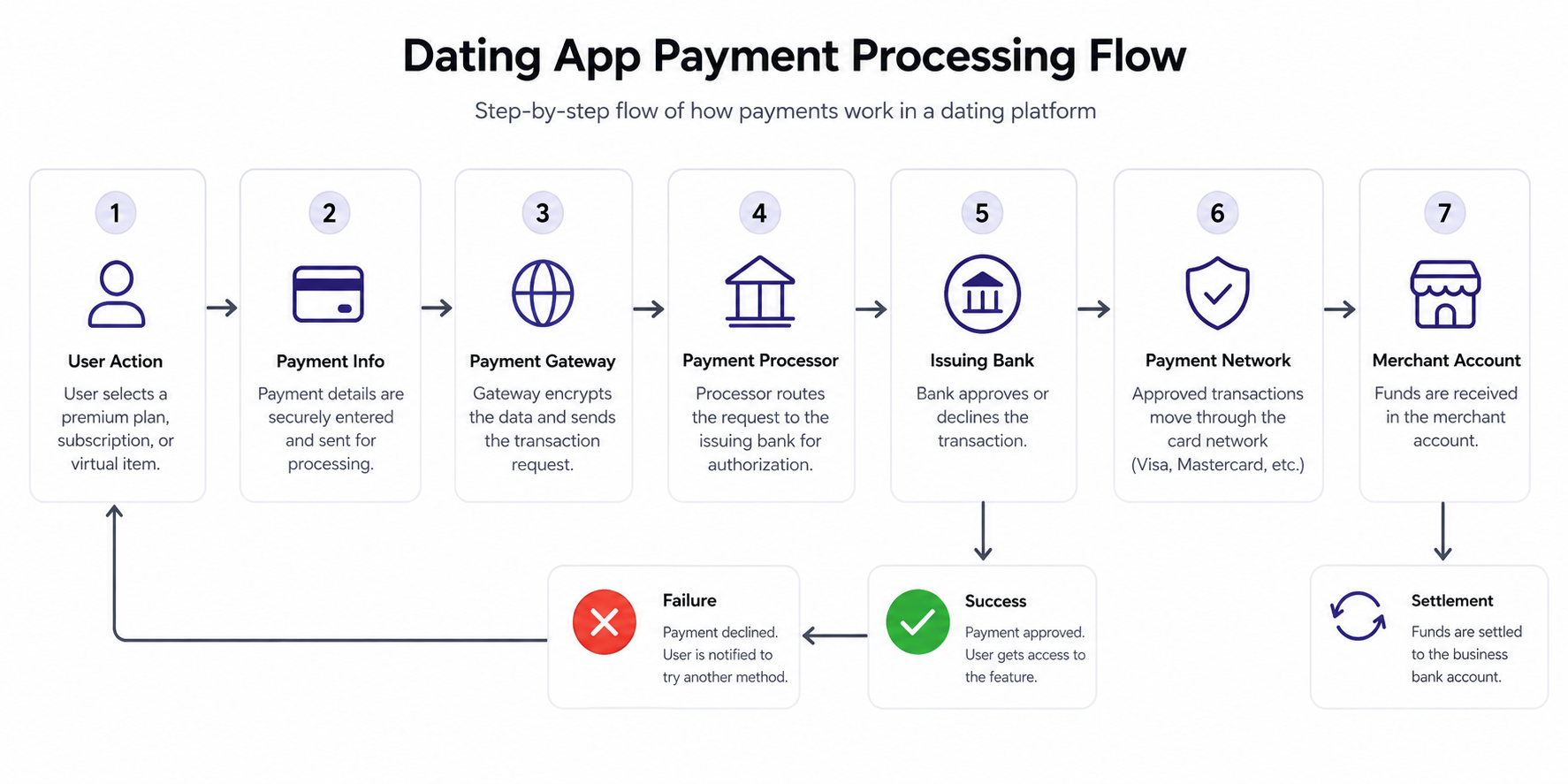
Dating app payment processing refers to the complete system that allows dating platforms to collect, authorize, and settle payments from users. When a user purchases a premium membership or unlocks a paid feature, several financial systems work together behind the scenes.
The typical payment process includes:
- A user selects a paid feature, subscription, or virtual item.
- Payment information is securely collected through a checkout system.
- The payment gateway sends the transaction request for authorization.
- The issuing bank approves or declines the payment.
- Funds are processed and transferred through the payment network.
For example, a dating platform may allow users to create free profiles but charge for premium features such as unlimited messaging, advanced matching filters, or increased profile visibility. When a user upgrades, the payment system must complete the transaction instantly while protecting sensitive payment information.
For international dating platforms, the process becomes more complex because customers may use different currencies, payment methods, and banking systems.
How Dating Apps Accept Payments?
Dating platforms use different payment models depending on how they monetize users. Unlike standard ecommerce websites that usually process one-time purchases, dating apps often depend on recurring revenue and ongoing user engagement.
Subscription Payments
Subscription payments are one of the most common models used by dating apps. Users typically pay monthly, quarterly, or annually to access premium features.
Examples include:
- Premium memberships
- Unlimited communication features
- Advanced search filters
- Increased profile visibility
- Additional matching capabilities
A subscription system must handle more than the first payment. It also manages future billing cycles, renewals, expired cards, failed transactions, cancellations, and customer notifications.
For example, if a user purchases a monthly premium plan, the payment system must automatically process future renewals unless the user cancels. If the payment fails because of an expired card or bank decline, the platform needs a recovery process to prevent unnecessary revenue loss. This makes recurring billing a core part of dating app payment processing.
Dating Credits and Virtual Purchases
Many dating platforms use credit-based systems where users purchase virtual currency and spend it on specific features.
Examples include:
- Sending virtual gifts
- Boosting profile visibility
- Unlocking additional interactions
- Purchasing special recommendations
This model allows platforms to create flexible purchasing options while generating additional revenue opportunities.
For example, a niche matchmaking platform may allow users to purchase credits that can be used for premium introductions or additional communication options.
Premium Features and One-Time Payments
Some dating platforms allow users to pay for individual features without subscribing.
Examples include:
- Profile boosts
- Temporary visibility upgrades
- Special discovery options
- Additional requests or interactions
A strong payment system must support both one-time transactions and recurring subscriptions because dating platforms often combine multiple monetization methods.
Payment Methods Used by Dating Apps
Dating platforms may support different payment methods depending on their target audience and geographic reach.
Common payment options include:
- Credit and debit cards
- Digital wallets
- Mobile payment options
- Local payment methods
- Alternative payment methods for international users
The payment methods a dating platform supports can directly affect user conversion rates. A customer who cannot complete a payment using their preferred method may abandon the purchase entirely.
For example, a global dating app serving users across multiple regions may need to support different currencies and local payment preferences to reduce payment friction.
Why Dating App Payments Are Different From Regular Online Payments?
Dating businesses have payment requirements that are different from many traditional ecommerce companies. In ecommerce, the payment journey often ends after a customer purchases a product. Dating platforms have a continuous relationship with users after payment.
A typical dating payment journey may look like:
User creates an account → explores features → purchases premium access → renews subscription → upgrades again → interacts with additional paid features.
Because of this ongoing relationship, dating platforms need payment systems that can manage:
- Recurring transactions
- Subscription changes
- User disputes
- Payment recovery
- Fraud monitoring
- Account security
A failed payment does not only affect a single transaction. It can interrupt a subscription relationship and impact long-term revenue.
The Role of Merchant Accounts in Dating Payments
A merchant account allows a dating business to accept card payments and receive processed funds. When applying for payment processing, businesses are generally evaluated based on factors such as:
- Business model
- Revenue structure
- Website functionality
- Customer policies
- Security practices
- Transaction history
Dating platforms may receive additional review because payment providers consider factors such as subscription disputes, fraud exposure, and customer complaints. A properly structured payment setup helps businesses create more predictable transaction processing and better manage financial operations.
Choosing a Payment Gateway for a Dating App
A payment gateway connects the dating platform with payment networks and allows transactions to be securely processed. For dating apps, a suitable payment gateway should support the needs of subscription-based digital platforms.
Important capabilities include:
Recurring Billing Support
The system should support:
- Automated subscription renewals
- Billing schedules
- Failed payment recovery
- Subscription management
Security and Fraud Protection
Dating platforms must protect both users and revenue.
Payment security systems may include:
- Transaction monitoring
- Authentication processes
- Risk analysis
- Suspicious activity detection
International Payment Support
Dating apps often serve users across different countries.
A scalable payment system should support:
- Multiple currencies
- International cards
- Regional payment methods
- Cross-border transactions
Fraud Prevention and Chargeback Management for Dating Apps
Fraud prevention is one of the most important parts of dating app payment processing.
Dating platforms face unique challenges because they deal with both payment risks and user-related abuse.
Common risks include:
- Stolen payment cards
- Fake accounts
- Automated bots
- Account takeover attempts
- Unauthorized transactions
Chargebacks can also impact dating businesses when users dispute payments related to subscriptions or premium features.
Reducing these risks requires clear pricing information, transparent subscription terms, strong account security, and effective monitoring processes.
Identity Verification, KYC, and Compliance Considerations
Trust is one of the biggest factors in the dating industry. Many platforms use identity verification and KYC processes to improve user safety and reduce fraudulent activity.
These processes can help dating companies:
- Verify legitimate users
- Reduce fake accounts
- Improve platform trust
- Support payment security requirements
Some businesses may also consider AML-related monitoring practices where appropriate, especially when payment activity requires additional risk assessment. The goal is not only regulatory alignment but creating a safer environment for users and reducing payment-related abuse.
International Payment Processing for Dating Platforms
Many dating businesses operate globally, making international payment processing an important consideration. Global dating platforms need to consider:
- Multiple currencies
- Regional payment preferences
- Cross-border transactions
- Settlement processes
For example, users in different countries may prefer different payment methods. Supporting local payment preferences can improve successful transactions and create a better customer experience.
Frequently Asked Questions
How do dating apps process payments?
Dating apps process payments through a combination of payment gateways, payment processors, financial networks, and merchant accounts. These systems authorize transactions, handle subscriptions, and transfer funds.
Are dating apps considered high risk businesses?
Some dating businesses may receive additional payment reviews because of factors such as subscription models, disputes, and fraud concerns. Payment providers evaluate each business individually.
What payment methods can dating apps accept?
Dating apps can support payment methods such as cards, digital wallets, mobile payments, and regional payment options depending on their users and markets.
How do dating apps handle recurring payments?
Dating apps use subscription billing systems to manage automatic renewals, payment schedules, failed transactions, and membership changes.
Why do dating app payments fail?
Payments may fail because of bank restrictions, expired cards, fraud filters, authentication issues, or international payment limitations.
Building a Reliable Payment System for a Dating Business
Dating app payment processing is not only about accepting transactions. A successful payment system must support recurring revenue, premium features, global users, fraud prevention, and long-term customer trust.
As dating platforms continue to grow, payment infrastructure becomes a critical part of delivering a reliable user experience and building a scalable digital business. Understanding how payments work allows dating businesses to make better decisions around monetization, security, and future expansion.
Categories
- ACH Payments (10)
- adult payment processing (11)
- AI (9)
- Altcoins (10)
- Banking (10)
- Bitcoin (133)
- Bitcoin ETF (11)
- Bitcoin Price (30)
- Blockchain (50)
- Brokering World Hunger Away (16)
- Business (17)
- card payment processing (10)
- CBD (11)
- CBDC (11)
- coaching business (11)
- COVID-19 (3)
- Crypto ATMs (1)
- Crypto Banking (17)
- Crypto Bill (1)
- Crypto business owner platform (31)
- Crypto Investment (3)
- Crypto Markets (5)
- Crypto Payment (35)
- Crypto Payment Processor (4)
- Crypto Prices (1)
- Crypto Trading (92)
- Cryptocurrency (402)
- Cryptocurrency Exchange (108)
- Data Visualization (2)
- dating platforms (11)
- debt collection payment processing (10)
- Decentralized Finance (7)
- DeFi Payment (9)
- DEX (3)
- Digital Currency (23)
- dropshipping payment processing (12)
- Ethereum (2)
- FAQ (7)
- file sharing payment processing (11)
- Finance (25)
- Financial Equality (4)
- Financial Freedom (8)
- Forex (35)
- hemp (1)
- ICO (2)
- Investment (11)
- IPTV (11)
- Merchant Account (10)
- Mining (3)
- News (66)
- NFTs (2)
- online gambling (11)
- P2P (1)
- Paybito (139)
- PayBitoPro (693)
- PayBitoPro Coin Listing (6)
- PayBitoPro Exchange (2)
- Payment Gateway (40)
- peptide (10)
- Post COVID Digital Transformation (1)
- Press Release (130)
- Privacy & Security (3)
- Real Estate (1)
- Stablecoin (5)
- Technology (15)
- Travel (11)
- Uncategorized (9)
- US Presidential Election (2)
- Utility Coin (1)
- Web3 business (4)
- Web3 Wallets (2)
- White Label Crypto Exchange (8)
Recent Posts
- ACH vs Wire Transfer: Which Payment Method Is Better for Businesses?
- ACH Fraud Prevention: How Businesses Can Secure Bank Account Payments?
- ACH Credit vs ACH Debit: What’s the Difference? With Real Examples
- ACH vs Credit Card: Which Payment Method Is Better for Businesses?
- How Long Do ACH Payments Take? Processing Times, Settlement, and Same Day ACH