KYC and AML Compliance for Dating Apps: How Dating Platforms Manage Identity, Fraud, and Payment Risks
- August 5, 2026
- Soham Guchait
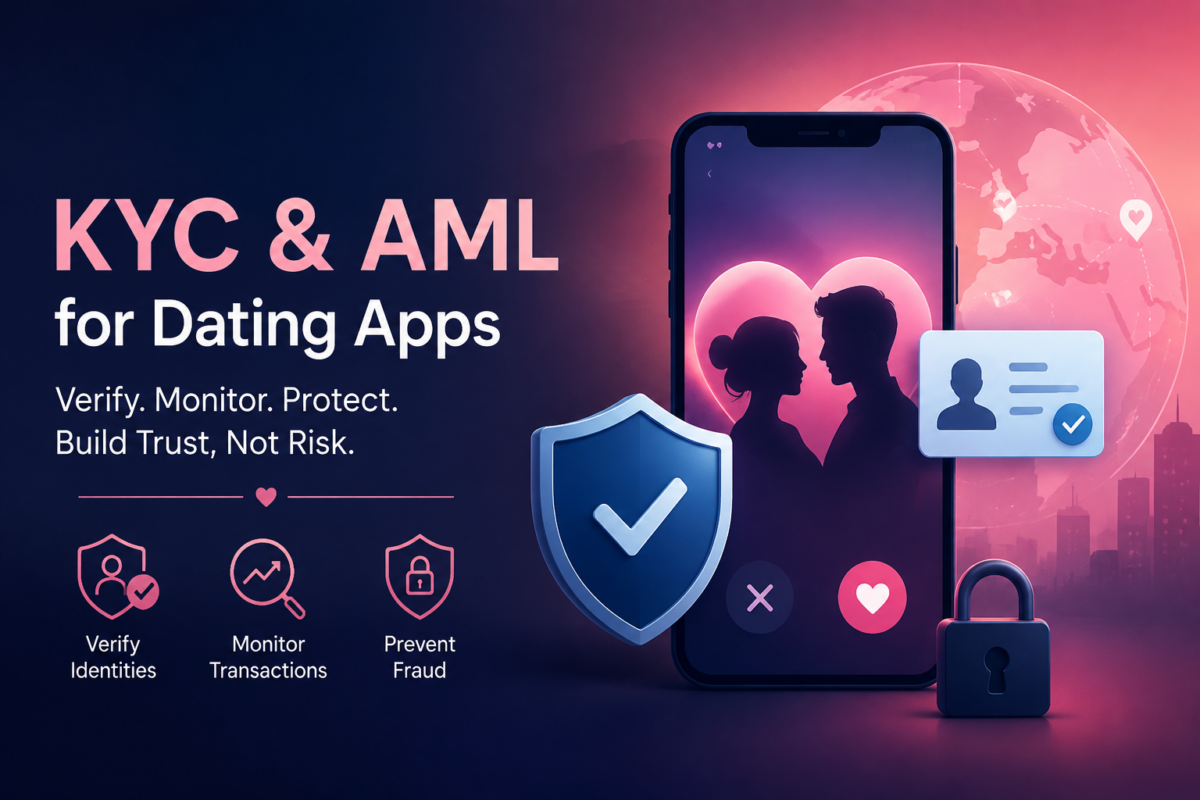
KYC and AML compliance for dating apps has become an important consideration as dating platforms grow, introduce premium features, and process more financial transactions.
While dating applications are primarily designed around social connections and relationships, they also operate digital ecosystems where users create accounts, exchange information, purchase subscriptions, and interact with other members. This creates the need for stronger identity verification, fraud prevention, and payment monitoring processes.
KYC (Know Your Customer) helps businesses understand who their users are, while AML (Anti-Money Laundering) practices help identify and prevent suspicious financial activity. These processes are an important part of dating app payment processing, especially for platforms managing subscriptions, premium features, and digital transactions.
For dating platforms, these processes are not only about regulatory expectations. They also help create safer communities, reduce fraud, protect payments, and improve trust among users.
Why KYC and AML Matter for Dating Platforms?
Dating apps handle a combination of personal information and financial transactions.
A user may create a profile, verify their identity, purchase premium memberships, send virtual gifts, or access paid features. Each activity creates opportunities for misuse if proper controls are not in place.
For example, a fraudulent user may create multiple fake accounts, use stolen payment information to purchase premium features, and exploit other users on the platform.
Without proper verification and monitoring, businesses may struggle to identify suspicious behavior before it causes financial or reputational damage. KYC and AML processes help dating platforms understand user activity, detect unusual patterns, and maintain a safer environment.
Understanding KYC for Dating Apps
KYC refers to the process businesses use to verify the identity of their customers.
The purpose is to confirm that users are genuine and reduce risks associated with fake identities, fraudulent accounts, and unauthorized activities. The level of verification required depends on the platform’s business model.
A casual dating application may use basic account verification methods, while a premium matchmaking platform may require stronger identity checks because users expect a higher level of trust.
Common KYC Practices Used by Dating Platforms
Dating businesses may use different verification methods depending on their requirements.
Common approaches include:
- Email and phone verification
- Profile verification
- Identity document checks
- Age verification
- Account activity monitoring
For example, a dating platform focused on serious relationships may introduce identity verification badges to help users feel more confident about interacting with other members.
KYC does not necessarily mean creating a complicated signup process. The goal is to apply appropriate verification while maintaining a smooth user experience.
How KYC Helps Reduce Dating Platform Fraud?
Identity verification plays an important role in reducing fraudulent activity. Fake profiles are one of the biggest challenges for dating platforms because they can damage user trust and create security risks.
A fraudulent account may be used for:
- Scamming other users
- Creating fake engagement
- Misusing payment features
- Conducting unauthorized activities
For example, if a platform identifies multiple accounts using similar identity information or suspicious behavior patterns, it can investigate the activity before it affects more users. KYC creates accountability by making it more difficult for bad actors to operate anonymously.
Understanding AML Compliance for Dating Companies
AML compliance focuses on preventing illegal financial activity by monitoring transactions and identifying suspicious patterns. Although dating platforms are not traditional financial institutions, payment activity within digital platforms can still require attention to unusual behavior.
For example, suspicious payment activity may include:
- Unusual transaction patterns
- Multiple accounts linked to similar payment methods
- Rapid purchasing behavior
- Transactions inconsistent with normal user activity
AML monitoring helps businesses identify potential risks before they become larger problems.
How AML Connects With Dating App Payments?
Payment activity provides important signals about user behavior. A normal user may purchase a premium membership and continue using the platform regularly. However, unusual payment patterns may indicate possible misuse.
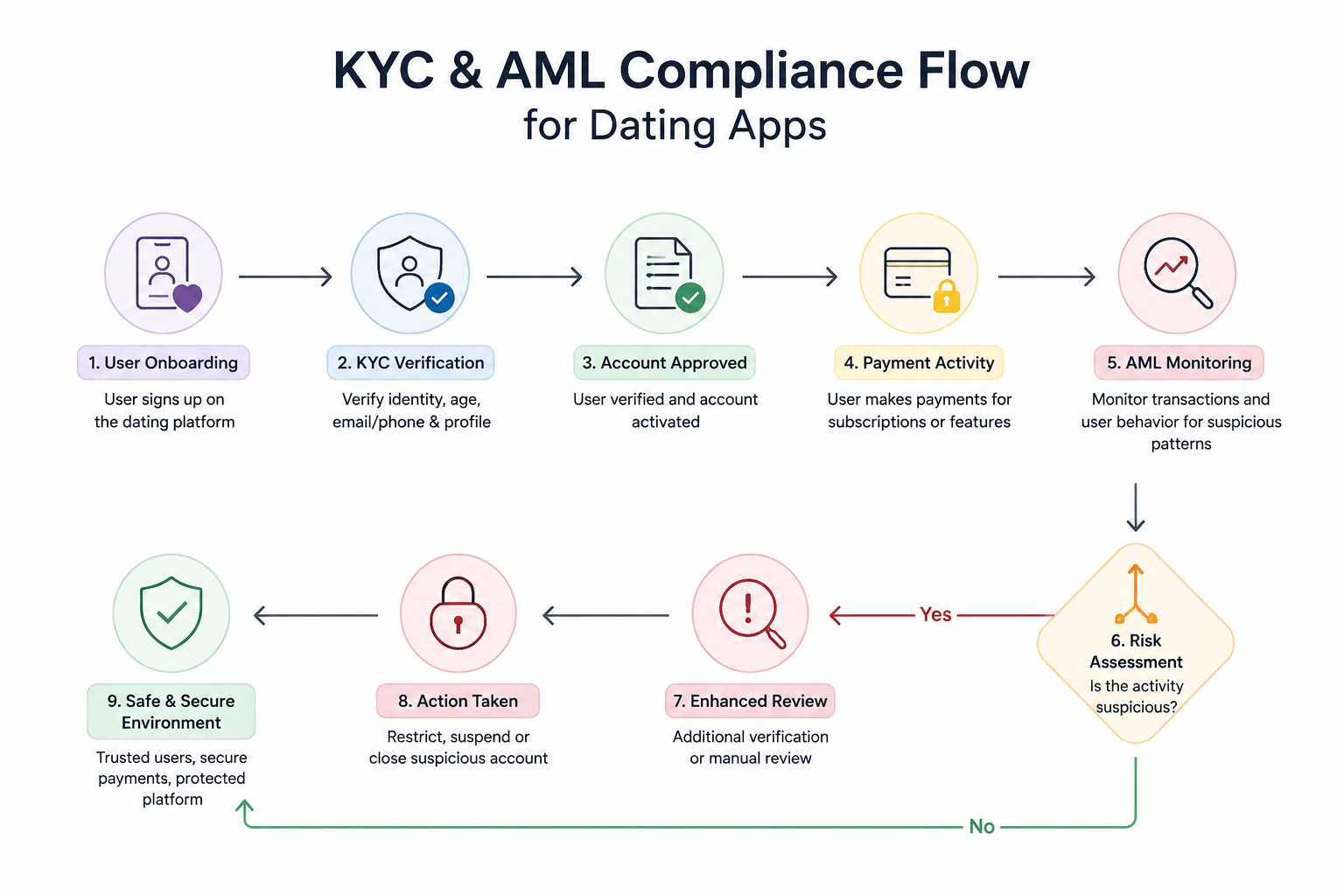
For example, if multiple newly created accounts purchase expensive premium features using connected payment methods within a short period, the activity may require additional review.
AML practices help businesses understand these patterns and determine whether additional action is necessary. The goal is not to block normal users. It is to identify activity that does not match expected behavior.
Balancing Compliance With User Experience
One of the biggest challenges for dating platforms is maintaining security without creating unnecessary friction. Users expect dating apps to be quick and simple. Long verification processes can discourage signups and reduce conversions.
Successful platforms usually apply a risk-based approach. This means additional verification may be required when certain activities appear unusual, while normal users experience a simpler journey.
For example, a new user creating a basic account may only complete standard verification, while an account showing suspicious payment behavior may require additional checks.
This approach helps businesses maintain both security and usability.
KYC, AML, and Payment Provider Requirements
Payment providers often consider a company’s verification and fraud prevention processes when evaluating payment relationships. Businesses that demonstrate strong operational controls can better manage payment risks.
Important areas may include:
- Clear user verification processes
- Transparent business information
- Transaction monitoring practices
- Customer support procedures
- Fraud response processes
For example, a dating company processing subscription payments internationally may need stronger controls because it serves users across different regions and payment environments.
Building a Safer Payment Environment for Dating Platforms
KYC and AML compliance are not only regulatory concepts. They are important parts of building trust. A secure dating platform protects:
- Users from fake identities
- Businesses from payment fraud
- Customers from unauthorized activity
- The platform’s reputation
As dating businesses expand into premium subscriptions, international markets, and digital payment models, compliance becomes a key part of sustainable growth.
The strongest platforms combine identity verification, payment monitoring, and user protection into a single security approach supported by reliable payment infrastructure.
Frequently Asked Questions
Why do dating apps need KYC?
Dating apps use KYC processes to verify users, reduce fake accounts, prevent fraud, and create safer communities.
What is AML compliance for dating companies?
AML compliance involves monitoring payment activity and identifying suspicious transactions that may indicate misuse or financial fraud.
Does every dating app require identity verification?
The level of identity verification depends on the platform’s business model, user base, and risk management approach.
How does KYC help payment security?
KYC helps connect user identities with platform activity, making it easier to identify suspicious accounts and reduce payment-related fraud.
Conclusion
KYC and AML compliance for dating apps plays an important role in creating secure and trustworthy platforms. As dating businesses process more subscriptions, premium features, and international payments, identity verification and transaction monitoring become essential parts of payment risk management.
By implementing effective verification and monitoring practices, dating platforms can protect users, reduce fraud, and build stronger foundations for long-term growth.

Categories
- ACH Payments (10)
- adult payment processing (11)
- AI (9)
- Altcoins (10)
- Banking (10)
- Bitcoin (133)
- Bitcoin ETF (11)
- Bitcoin Price (30)
- Blockchain (50)
- Brokering World Hunger Away (16)
- Business (17)
- card payment processing (10)
- CBD (11)
- CBDC (11)
- coaching business (11)
- COVID-19 (3)
- Crypto ATMs (1)
- Crypto Banking (17)
- Crypto Bill (1)
- Crypto business owner platform (31)
- Crypto Investment (3)
- Crypto Markets (5)
- Crypto Payment (35)
- Crypto Payment Processor (4)
- Crypto Prices (1)
- Crypto Trading (92)
- Cryptocurrency (402)
- Cryptocurrency Exchange (108)
- Data Visualization (2)
- dating platforms (11)
- debt collection payment processing (10)
- Decentralized Finance (7)
- DeFi Payment (9)
- DEX (3)
- Digital Currency (23)
- dropshipping payment processing (12)
- Ethereum (2)
- FAQ (7)
- file sharing payment processing (11)
- Finance (25)
- Financial Equality (4)
- Financial Freedom (8)
- Forex (35)
- hemp (1)
- ICO (2)
- Investment (11)
- IPTV (11)
- Merchant Account (10)
- Mining (3)
- News (66)
- NFTs (2)
- online gambling (11)
- P2P (1)
- Paybito (139)
- PayBitoPro (693)
- PayBitoPro Coin Listing (6)
- PayBitoPro Exchange (2)
- Payment Gateway (40)
- peptide (10)
- Post COVID Digital Transformation (1)
- Press Release (130)
- Privacy & Security (3)
- Real Estate (1)
- Stablecoin (5)
- Technology (15)
- Travel (11)
- Uncategorized (9)
- US Presidential Election (2)
- Utility Coin (1)
- Web3 business (4)
- Web3 Wallets (2)
- White Label Crypto Exchange (8)
Recent Posts
- ACH vs Wire Transfer: Which Payment Method Is Better for Businesses?
- ACH Fraud Prevention: How Businesses Can Secure Bank Account Payments?
- ACH Credit vs ACH Debit: What’s the Difference? With Real Examples
- ACH vs Credit Card: Which Payment Method Is Better for Businesses?
- How Long Do ACH Payments Take? Processing Times, Settlement, and Same Day ACH