White Label Payment Platform for Coaching Businesses: How Coaching Platforms Scale Payments Under Their Own Brand?
- August 6, 2026
- Soham Guchait
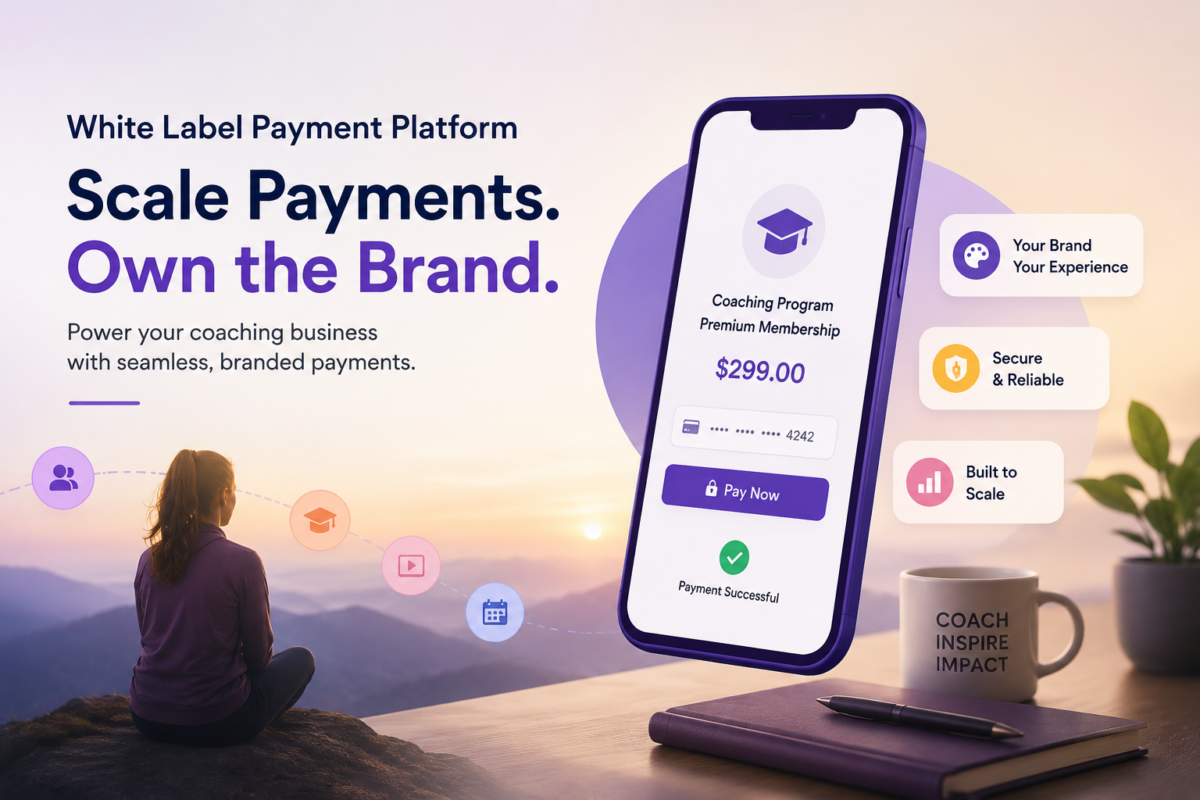
The coaching industry has evolved far beyond independent coaches selling one-on-one sessions. Today, many businesses operate coaching marketplaces, membership communities, wellness platforms, leadership academies, and creator ecosystems where multiple coaches deliver services under a single brand.
As these businesses grow, managing payments becomes increasingly complex. They are no longer processing payments for a single coach but coordinating transactions across numerous programs, subscription plans, digital products, and coaching professionals.
A white label payment platform allows coaching businesses to offer a branded payment experience while managing payments at scale. Rather than directing customers through disconnected third-party experiences, businesses can integrate payment infrastructure into their own platform and maintain a consistent customer journey.
For coaching companies building long-term digital ecosystems, understanding white label payment platforms is an important step toward creating scalable payment operations.
What Is a White Label Payment Platform?
A white label payment platform is a payment infrastructure that businesses integrate and customize under their own brand. From the customer’s perspective, the payment experience appears to belong entirely to the coaching platform, even though the underlying payment technology is provided by specialized payment infrastructure.
For example, imagine an online coaching marketplace connecting executive coaches, career mentors, and business consultants.
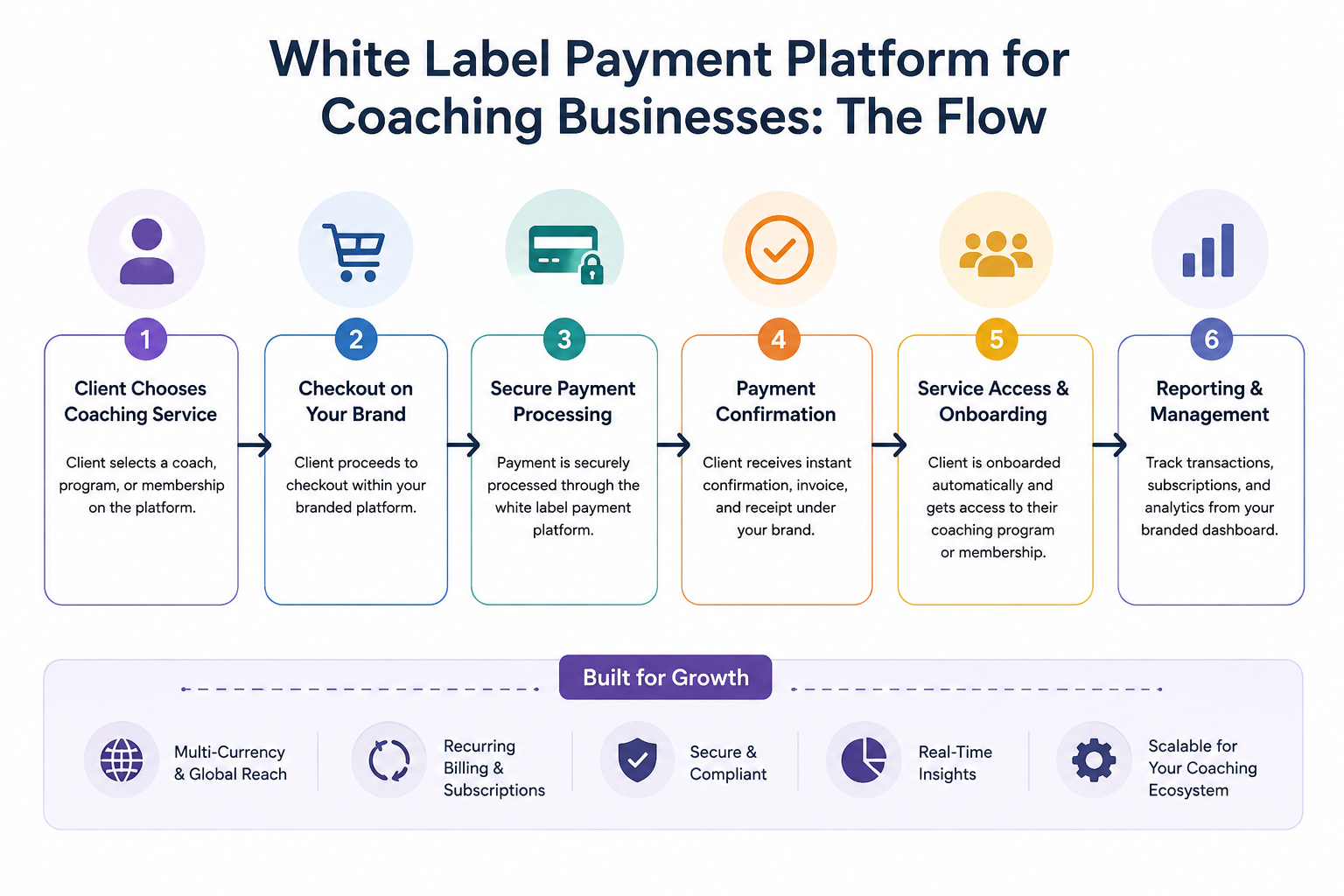
A client purchases a coaching package through the platform. Instead of being redirected to several unrelated payment pages, the customer completes the transaction within the marketplace’s branded environment. Payment confirmations, invoices, subscription management, and customer communication all remain consistent with the platform’s identity.
The objective is to create a seamless experience while supporting increasingly complex payment operations.
Why Coaching Platforms Need More Than Basic Payment Tools?
Basic payment solutions often work well for independent coaches managing a small number of transactions. However, businesses operating larger coaching ecosystems have different operational requirements.
Consider a coaching marketplace that hosts hundreds of coaches offering:
- Individual coaching sessions
- Group programs
- Digital courses
- Monthly memberships
- Corporate coaching packages
Managing these services requires more than accepting payments. The platform must organize customer purchases, subscription billing, reporting, payment tracking, and operational workflows across multiple offerings. As businesses expand, payment infrastructure becomes part of the overall platform architecture rather than a standalone checkout solution.
Businesses That Benefit From White Label Payment Platforms
White label payment infrastructure is particularly useful for coaching businesses operating at scale.
Examples include:
- Coaching marketplaces connecting multiple coaches and clients
- Membership communities with recurring subscriptions
- Business coaching networks serving organizations
- Online coaching academies offering certifications
- Creator platforms combining coaching with digital education
- Wellness platforms providing multiple coaching programs
For example, a career development platform may allow dozens of career coaches to sell mentoring sessions while also offering resume reviews, interview preparation programs, and subscription-based learning resources.
Managing these payment flows through a unified branded system creates a more consistent customer experience.
How White Label Payment Platforms Support Growth?
As coaching businesses grow, payment operations become more sophisticated. Instead of managing isolated transactions, businesses often need payment infrastructure capable of supporting multiple business functions simultaneously.
These may include:
- Customer onboarding after payment
- Subscription management
- Payment reporting
- Transaction monitoring
- Billing automation
- Business analytics
For example, a wellness coaching platform may automatically enroll a customer into a membership, grant access to digital resources, schedule coaching sessions, and generate invoices immediately after payment is completed. Connecting payment processes with operational workflows reduces manual work and improves efficiency.
Supporting Multiple Revenue Models
Many coaching businesses no longer rely on a single pricing structure. A platform may simultaneously offer:
- One-time coaching packages
- Monthly memberships
- Annual subscription plans
- Group coaching programs
- Digital resource libraries
- Installment payment plans
Managing these different revenue models requires flexible payment infrastructure.
For example, a leadership coaching academy may sell a self-paced online course while also offering monthly mentoring memberships and premium executive coaching packages. A scalable payment platform allows businesses to manage these payment structures within one integrated environment rather than using disconnected systems for each offering.
Improving the Client Payment Experience
Clients generally judge a coaching business by the entire purchasing experience, not just the coaching itself. A fragmented payment journey can reduce confidence before services even begin. A consistent payment experience should provide:
- Clear pricing
- Simple checkout
- Immediate payment confirmation
- Transparent subscription management
- Easy access to invoices
- Straightforward billing information
For example, a client purchasing a business coaching membership should be able to manage future renewals, update payment information, and review billing history without leaving the coaching platform.
This level of consistency improves both customer satisfaction and long-term retention.
Payment Infrastructure for Growing Coaching Ecosystems
As platforms expand internationally, payment operations become increasingly complex. Businesses may need to support:
- Customers from multiple countries
- Various currencies
- Different payment methods
- Subscription renewals
- High transaction volumes
- Growing numbers of coaches
Rather than adding separate payment tools for each new requirement, many businesses build centralized payment infrastructure that grows alongside the platform.
This approach allows operational processes to remain consistent even as transaction volumes increase.
Security and Operational Management
A growing coaching platform also needs visibility into payment performance. Monitoring payment operations helps businesses identify trends, improve customer experiences, and reduce operational issues.
Examples include reviewing:
- Transaction success rates
- Subscription renewals
- Failed payments
- Customer payment activity
- Payment disputes
- Fraud indicators
Operational reporting enables businesses to make informed decisions as the platform scales. Payment infrastructure therefore supports both financial operations and overall business management.
Choosing the Right Time to Upgrade Payment Infrastructure
Not every coaching business requires a white label payment platform immediately. A solo coach offering individual sessions may have relatively simple payment needs. However, businesses should evaluate more advanced payment infrastructure when they begin managing:
- Multiple coaches
- Membership communities
- Large subscriber bases
- Digital coaching ecosystems
- International clients
- High monthly transaction volumes
Recognizing these growth stages helps businesses invest in payment systems that match their operational complexity.
Final Thoughts
A white label payment platform allows coaching businesses to create a seamless, branded payment experience while supporting increasingly sophisticated payment operations. As coaching companies expand into marketplaces, memberships, digital education, and multi-coach ecosystems, payment infrastructure becomes an essential part of business growth rather than simply a way to collect customer payments.
By integrating payments with subscriptions, customer management, reporting, and operational workflows, coaching platforms can deliver a more consistent client experience while building systems capable of supporting long-term expansion.
The strongest coaching businesses view payment infrastructure not as a background process but as a core component of their digital platform, enabling them to scale confidently while maintaining a professional and reliable customer journey.

Categories
- ACH Payments (10)
- adult payment processing (11)
- AI (9)
- Altcoins (10)
- Banking (10)
- Bitcoin (133)
- Bitcoin ETF (11)
- Bitcoin Price (30)
- Blockchain (50)
- Brokering World Hunger Away (16)
- Business (17)
- card payment processing (10)
- CBD (11)
- CBDC (11)
- coaching business (11)
- COVID-19 (3)
- Crypto ATMs (1)
- Crypto Banking (17)
- Crypto Bill (1)
- Crypto business owner platform (31)
- Crypto Investment (3)
- Crypto Markets (5)
- Crypto Payment (35)
- Crypto Payment Processor (4)
- Crypto Prices (1)
- Crypto Trading (92)
- Cryptocurrency (402)
- Cryptocurrency Exchange (108)
- Data Visualization (2)
- dating platforms (11)
- debt collection payment processing (10)
- Decentralized Finance (7)
- DeFi Payment (9)
- DEX (3)
- Digital Currency (23)
- dropshipping payment processing (12)
- Ethereum (2)
- FAQ (7)
- file sharing payment processing (11)
- Finance (25)
- Financial Equality (4)
- Financial Freedom (8)
- Forex (35)
- hemp (1)
- ICO (2)
- Investment (11)
- IPTV (11)
- Merchant Account (10)
- Mining (3)
- News (66)
- NFTs (2)
- online gambling (11)
- P2P (1)
- Paybito (139)
- PayBitoPro (693)
- PayBitoPro Coin Listing (6)
- PayBitoPro Exchange (2)
- Payment Gateway (40)
- peptide (10)
- Post COVID Digital Transformation (1)
- Press Release (130)
- Privacy & Security (3)
- Real Estate (1)
- Stablecoin (5)
- Technology (15)
- Travel (11)
- Uncategorized (9)
- US Presidential Election (2)
- Utility Coin (1)
- Web3 business (4)
- Web3 Wallets (2)
- White Label Crypto Exchange (8)
Recent Posts
- ACH vs Wire Transfer: Which Payment Method Is Better for Businesses?
- ACH Fraud Prevention: How Businesses Can Secure Bank Account Payments?
- ACH Credit vs ACH Debit: What’s the Difference? With Real Examples
- ACH vs Credit Card: Which Payment Method Is Better for Businesses?
- How Long Do ACH Payments Take? Processing Times, Settlement, and Same Day ACH