Why Are Dropshipping Businesses Considered High Risk? Understanding Payment Processing Risks
- August 6, 2026
- Soham Guchait
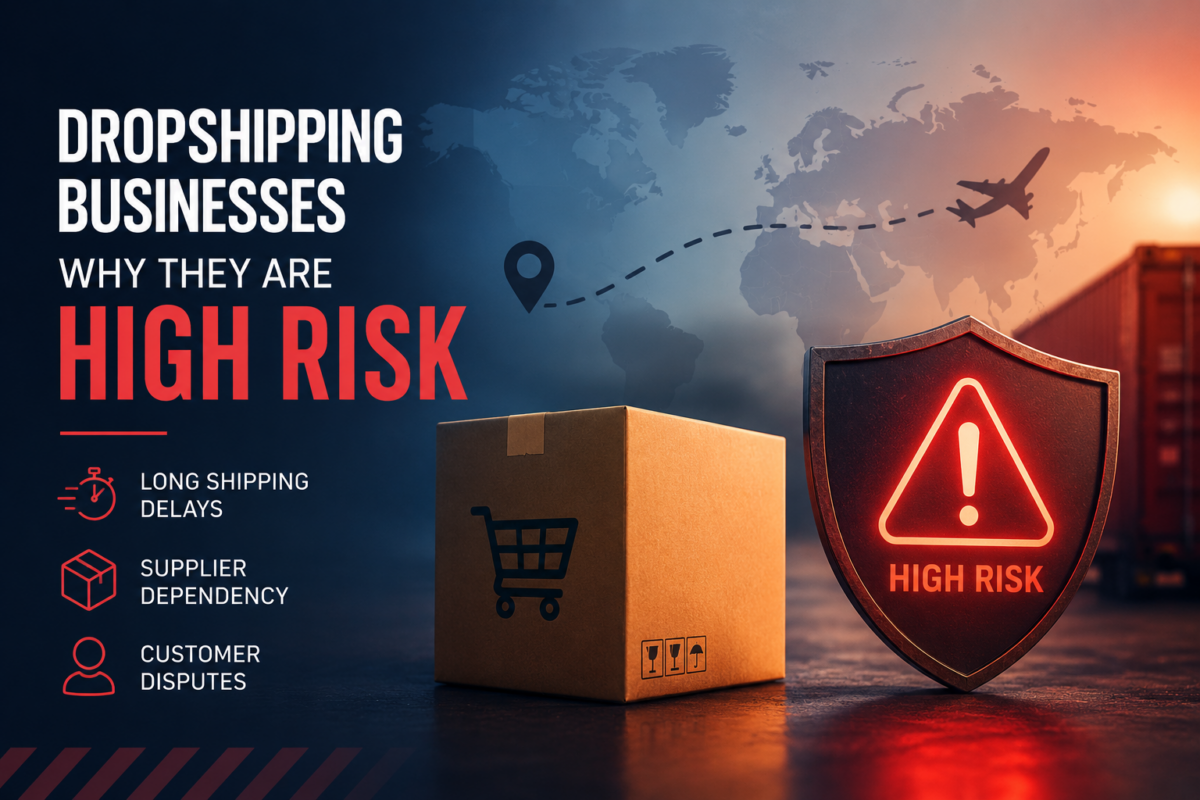
Launching a dropshipping business has become one of the most accessible ways to enter ecommerce. Entrepreneurs can sell products without maintaining inventory, rent expensive warehouse space, or manage complex fulfillment operations. While this business model lowers operational barriers, it also introduces unique challenges that payment providers carefully evaluate before approving merchant accounts and payment processing services.
Many business owners are surprised when they hear that their dropshipping store is considered a “higher-risk” merchant. This doesn’t mean the business is fraudulent or unreliable. Instead, it reflects how payment providers assess financial and operational risks associated with processing customer transactions.
Understanding why dropshipping businesses are considered high risk helps merchants prepare their businesses for payment approval, improve customer satisfaction, and reduce payment-related issues as they grow.
What Does “High Risk” Mean in Payment Processing?
In payment processing, the term high risk refers to the likelihood that a business may experience higher-than-average payment disputes, refunds, fraud attempts, or financial losses. Payment providers evaluate this risk because they are responsible for processing transactions, managing disputes, and protecting the integrity of the payment ecosystem.
A high-risk classification is not based solely on the products being sold. It also depends on how the business operates, how customers interact with it, and how payments are managed after a purchase.
For example, a dropshipping business selling home décor products may receive additional review, while another ecommerce business selling similar products from its own warehouse may not. The difference lies in fulfillment, supplier dependency, shipping timelines, and customer expectations rather than the products themselves.
Understanding this distinction helps merchants focus on improving business operations instead of assuming the classification is permanent.
Why Dropshipping Businesses Receive Additional Risk Assessment?
Unlike traditional retailers, dropshipping businesses rely on third-party suppliers to store inventory and fulfill customer orders. This separation between the merchant and the fulfillment process creates additional variables that payment providers cannot directly control.
If a supplier experiences delays, stock shortages, or quality issues, the customer usually contacts the merchant – not the supplier. From a payment provider’s perspective, these situations increase the possibility of refunds and payment disputes.
Imagine an entrepreneur launches a dropshipping store selling ergonomic office chairs sourced from overseas manufacturers. The website promises delivery within seven days, but unexpected supplier delays extend shipping to three weeks. Although the merchant did not manufacture or ship the product, customers may still request refunds or dispute their card transactions because their expectations were not met. This illustrates why payment providers evaluate fulfillment reliability alongside payment processing history.
Long Shipping Timelines Increase Customer Disputes
Shipping time is one of the most significant reasons some dropshipping businesses receive additional payment scrutiny.
Modern ecommerce customers expect regular shipping updates and fast delivery. When products travel internationally or depend on multiple logistics providers, delays become more likely. Customers who receive little communication during this period may assume something has gone wrong with their order. Instead of contacting the merchant first, they may dispute the transaction through their bank.
For example, a customer purchases a custom phone accessory from an online store. After two weeks without tracking updates, they believe the order will never arrive and request a chargeback. The product eventually reaches them a few days later, but the payment dispute has already been initiated.
Clear delivery estimates, proactive communication, and reliable order tracking significantly reduce this type of customer frustration.
Supplier Dependency Creates Operational Risk
A traditional retailer controls inventory, packaging, shipping, and product inspection. Dropshipping businesses depend on external suppliers for each of these activities.
If a supplier changes product specifications, ships incorrect items, or temporarily runs out of stock, the merchant must manage the customer experience despite having limited operational control.
Payment providers understand that supplier performance directly affects refund requests and customer satisfaction. Businesses working with multiple verified suppliers and maintaining transparent product information often demonstrate stronger operational stability than merchants relying on a single unknown supplier. Choosing suppliers should therefore be viewed as both an operational decision and a payment risk management strategy.
Product Quality and Customer Expectations
One of the most common reasons customers dispute online purchases is that the delivered product differs from what they expected. This problem is particularly relevant in dropshipping because merchants often rely on supplier images and descriptions. If marketing materials exaggerate product quality or omit important details, customer dissatisfaction becomes more likely.
For instance, a clothing store advertises premium fabric using heavily edited images, but customers receive products with noticeably different materials or sizing. Even though the supplier fulfilled the order correctly, customers may request refunds or dispute the payment because the purchase did not match their expectations.
Accurate product descriptions, realistic images, and transparent sizing information reduce misunderstandings and help build long-term customer trust.
Chargebacks Are a Major Payment Risk
Chargebacks are one of the primary reasons payment providers classify certain businesses as higher risk. A chargeback occurs when a customer asks their card issuer to reverse a payment instead of requesting a refund directly from the merchant. Common causes include:
- Products arriving significantly later than expected.
- Items differing from website descriptions.
- Customers not recognizing transactions.
- Refund requests that remain unresolved.
- Unauthorized card use.
For payment providers, consistently high chargeback rates indicate operational issues that require attention. This is why reducing disputes through better communication and customer service is often more effective than simply responding after chargebacks occur.
Merchants should also understand that chargeback prevention begins long before a dispute is filed. Clear policies, order tracking, and responsive customer support all contribute to lower dispute rates.
Cross-Border Transactions Add Complexity
Many dropshipping businesses sell internationally from their very first day of operation. While this creates opportunities for growth, it also introduces additional payment challenges.
Cross-border transactions may involve:
- Currency conversion.
- Different banking regulations.
- Regional payment preferences.
- Longer settlement timelines.
- Additional fraud screening.
Consider a customer in Australia purchasing from a US-based dropshipping store using a local payment method. Currency conversion, international authorization checks, and overseas fulfillment all become part of the transaction. Each additional step introduces complexity that payment providers must monitor. Businesses planning to expand internationally should understand these payment considerations before entering new markets.
How Merchants Can Reduce Payment Risk?
Although some factors are inherent to the dropshipping model, many payment risks can be managed through better business practices. Merchants can strengthen their payment profile by:
- Setting realistic delivery expectations.
- Choosing reliable suppliers.
- Publishing clear refund and shipping policies.
- Providing accurate product descriptions.
- Offering responsive customer support.
- Monitoring payment disputes and refund trends.
These actions improve customer confidence while demonstrating responsible business operations to payment providers.
Over time, businesses with consistent transaction patterns, low dispute rates, and transparent operations often build stronger payment relationships and experience fewer processing challenges.
High Risk Does Not Mean High Failure
Being classified as a higher-risk business should not discourage entrepreneurs from starting or growing a dropshipping business. Payment providers assess risk so they can allocate appropriate monitoring, fraud controls, and underwriting processes – not to prevent legitimate businesses from accepting payments.
Many successful ecommerce businesses initially undergo enhanced review before establishing stable payment histories. As businesses improve fulfillment processes, maintain customer satisfaction, and reduce disputes, they often develop stronger long-term payment relationships.
Rather than viewing high-risk classification as a disadvantage, merchants should treat it as an opportunity to strengthen every stage of their customer experience.
Final Thoughts
The reasons dropshipping businesses are considered high risk extend far beyond the products they sell. Payment providers evaluate fulfillment reliability, supplier dependency, shipping performance, customer disputes, chargeback exposure, and international transaction complexity when reviewing merchants.
Understanding these factors allows entrepreneurs to build more resilient businesses from the beginning. By improving operational transparency, communicating clearly with customers, working with dependable suppliers, and monitoring payment performance, dropshipping businesses can reduce risk while creating a smoother payment experience. High-risk classification is not a permanent label. It is a reflection of how payment providers evaluate business operations today – and many of those factors are within a merchant’s control to improve over time.

Categories
- ACH Payments (10)
- adult payment processing (11)
- AI (9)
- Altcoins (10)
- Banking (10)
- Bitcoin (133)
- Bitcoin ETF (11)
- Bitcoin Price (30)
- Blockchain (50)
- Brokering World Hunger Away (16)
- Business (17)
- card payment processing (10)
- CBD (11)
- CBDC (11)
- coaching business (11)
- COVID-19 (3)
- Crypto ATMs (1)
- Crypto Banking (17)
- Crypto Bill (1)
- Crypto business owner platform (31)
- Crypto Investment (3)
- Crypto Markets (5)
- Crypto Payment (35)
- Crypto Payment Processor (4)
- Crypto Prices (1)
- Crypto Trading (92)
- Cryptocurrency (402)
- Cryptocurrency Exchange (108)
- Data Visualization (2)
- dating platforms (11)
- debt collection payment processing (10)
- Decentralized Finance (7)
- DeFi Payment (9)
- DEX (3)
- Digital Currency (23)
- dropshipping payment processing (12)
- Ethereum (2)
- FAQ (7)
- file sharing payment processing (11)
- Finance (25)
- Financial Equality (4)
- Financial Freedom (8)
- Forex (35)
- hemp (1)
- ICO (2)
- Investment (11)
- IPTV (11)
- Merchant Account (10)
- Mining (3)
- News (66)
- NFTs (2)
- online gambling (11)
- P2P (1)
- Paybito (139)
- PayBitoPro (693)
- PayBitoPro Coin Listing (6)
- PayBitoPro Exchange (2)
- Payment Gateway (40)
- peptide (10)
- Post COVID Digital Transformation (1)
- Press Release (130)
- Privacy & Security (3)
- Real Estate (1)
- Stablecoin (5)
- Technology (15)
- Travel (11)
- Uncategorized (9)
- US Presidential Election (2)
- Utility Coin (1)
- Web3 business (4)
- Web3 Wallets (2)
- White Label Crypto Exchange (8)
Recent Posts
- ACH vs Wire Transfer: Which Payment Method Is Better for Businesses?
- ACH Fraud Prevention: How Businesses Can Secure Bank Account Payments?
- ACH Credit vs ACH Debit: What’s the Difference? With Real Examples
- ACH vs Credit Card: Which Payment Method Is Better for Businesses?
- How Long Do ACH Payments Take? Processing Times, Settlement, and Same Day ACH