Common Payment Processing Challenges for Debt Collection Companies and How to Solve Them
- August 10, 2026
- Soham Guchait

Debt collection companies depend on successful payment processing to recover outstanding balances efficiently. However, managing payments is not always as simple as allowing consumers to submit transactions.
A collection agency may have a strong recovery process, experienced staff, and willing consumers, but payment-related challenges can still interrupt operations. Failed transactions, disputes, compliance requirements, fraud risks, and difficulties managing growing payment volumes can affect how effectively a business collects repayments.
As collection operations become more digital, payment processing has become a core part of business performance. Agencies need reliable systems and processes that support consumer payments while maintaining security, accuracy, and operational efficiency. Understanding the most common payment processing challenges allows collection businesses to identify problems, improve payment success rates, and build stronger repayment workflows.
Why Debt Collection Payment Processing Creates Unique Challenges?
Debt collection payments are different from traditional business transactions. In ecommerce, a customer usually chooses to complete a purchase. In debt recovery, consumers are making payments toward existing financial obligations. This creates additional considerations around payment authorization, consumer communication, disputes, and compliance.
For example, a medical debt collection agency may manage thousands of repayment accounts. Some consumers may pay their balance immediately, while others may use long-term installment plans. The agency needs payment processes that support different situations while maintaining accurate transaction records.
Because of these complexities, collection agencies often face several payment challenges.
Common Payment Processing Challenges Faced by Debt Collection Companies
Difficulty Getting Payment Processing Approval
One of the first challenges collection agencies face is obtaining approval for payment processing. Because debt collection is considered a higher-risk industry, payment providers often review businesses carefully before accepting them.
Factors that may influence approval include:
- Business operations
- Transaction volume
- Compliance procedures
- Consumer payment processes
- Risk management practices
For example, a newly established loan recovery company applying for payment processing may need to demonstrate how it verifies consumers, handles disputes, and manages repayment transactions.
Businesses that prepare proper documentation and establish clear payment procedures are better positioned during the approval process. Understanding merchant account requirements and approval factors can help collection agencies prepare more effectively.
High Payment Failure Rates
A consumer may agree to repay a debt, but the transaction can still fail. Payment failures can happen because of:
- Expired cards
- Incorrect payment information
- Insufficient funds
- Bank restrictions
- Technical issues
For example, a consumer enrolled in a monthly repayment plan successfully completes five payments. The next scheduled payment fails because the linked card has expired.
For collection agencies, repeated payment failures create additional follow-up work and may delay recovery timelines. Improving payment success requires monitoring failed transactions, offering alternative payment options, and maintaining effective repayment processes.
Managing Payment Disputes and Chargebacks
Payment disputes are another significant challenge for collection businesses. Consumers may dispute transactions because they:
- Do not recognize the payment
- Question the payment amount
- Claim the transaction was unauthorized
- Misunderstand repayment terms
For example, a credit recovery company processes a scheduled repayment payment, but the consumer later disputes the transaction because they do not recognize the payment description on their bank statement.
Clear communication, accurate transaction records, and proper payment documentation can help agencies manage disputes more effectively. Collection businesses should also understand chargeback prevention strategies to reduce unnecessary payment reversals.
Preventing Fraud Without Blocking Legitimate Payments
Digital payments create new opportunities for fraud risks. Collection agencies may encounter:
- Identity fraud
- Stolen payment information
- Unauthorized account access
- Suspicious transaction patterns
For example, a fraudster attempts to access a consumer repayment account and changes the stored payment method. Without proper monitoring, unauthorized transactions may occur.
However, fraud prevention must be balanced carefully. Excessive security restrictions can also prevent legitimate consumers from completing payments. Effective fraud management requires verification processes, transaction monitoring, and secure payment channels.
Maintaining Compliance While Scaling Operations
As collection businesses grow, managing compliance becomes more complex. Agencies must handle:
- Consumer financial information
- Payment records
- Transaction monitoring
- Data protection requirements
A small collection agency may manage payment records manually, but a larger company processing thousands of transactions requires more structured processes.
For example, an accounts receivable management company working with multiple clients needs consistent payment tracking, reporting, and compliance procedures across different portfolios. Strong compliance practices help businesses maintain reliable payment operations as they expand.
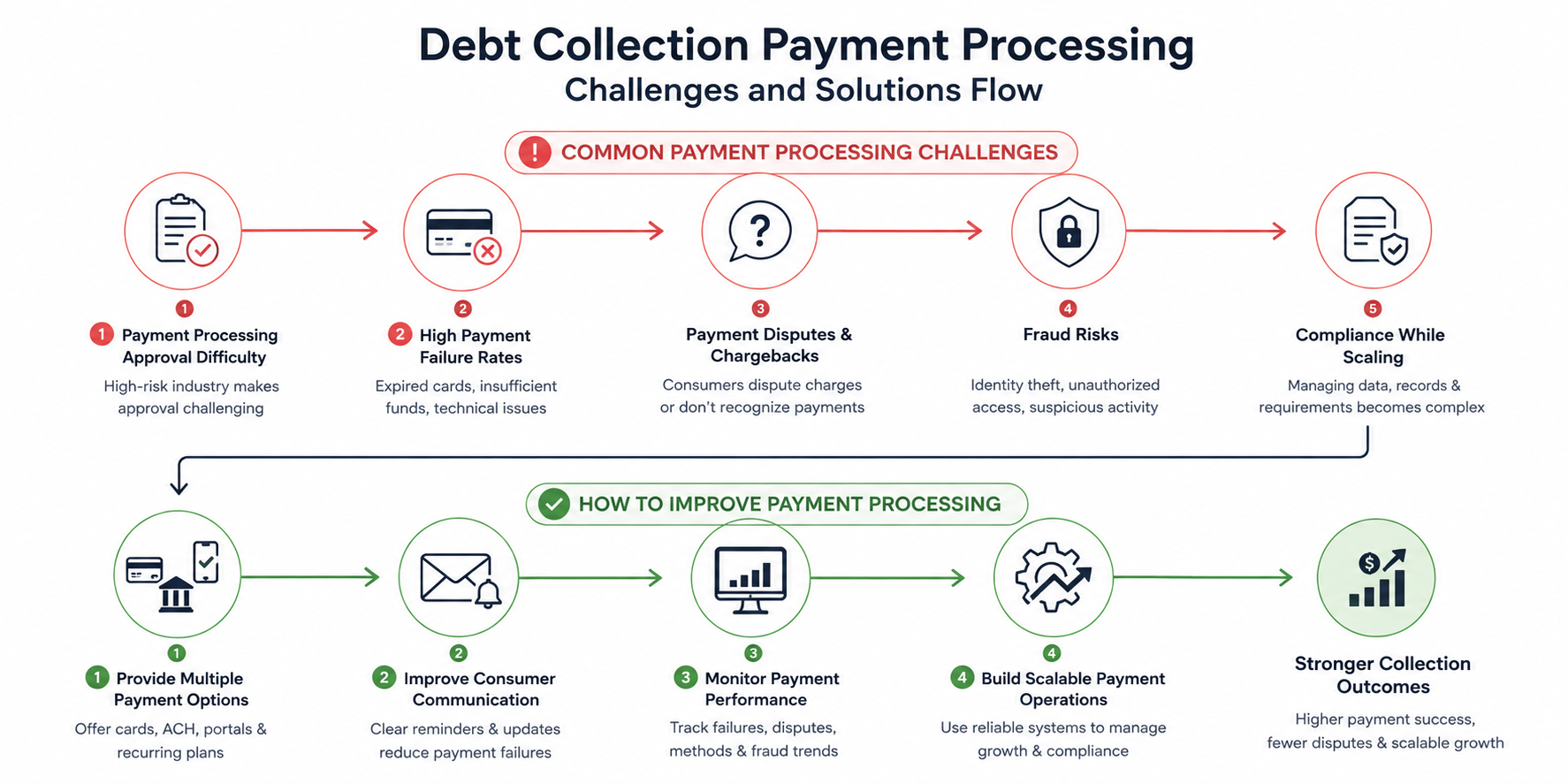
How Debt Collection Companies Can Improve Payment Processing?
Solving payment challenges requires improving the entire payment process rather than addressing individual problems separately.
Provide Multiple Payment Options
Consumers have different financial situations and payment preferences. Offering options such as:
- Card payments
- ACH payments
- Digital Assests
- Online payment portals
- Recurring payment plans
can improve payment accessibility.
For example, a consumer who cannot complete a card payment may still be able to complete repayment through a bank transfer. Multiple payment methods reduce situations where consumers are willing to pay but cannot complete the transaction.
Improve Consumer Payment Communication
Clear communication plays an important role in reducing payment problems. Consumers should understand:
- Payment schedules
- Available payment methods
- Transaction details
- Repayment expectations
For example, sending payment reminders before scheduled installments can help consumers update expired payment information and avoid unnecessary failures.
Monitor Payment Performance
Collection agencies should regularly review payment activity to identify trends. Important areas to monitor include:
- Failed transactions
- Dispute rates
- Payment method performance
- Fraud indicators
Understanding these patterns allows businesses to improve their processes and address recurring issues.
Building Scalable Payment Operations for Growing Collection Businesses
As collection agencies increase transaction volumes, manual payment management becomes more difficult. Growing businesses may need stronger systems for:
- Managing multiple payment channels
- Tracking repayment activity
- Generating reports
- Monitoring transaction risks
- Supporting different client accounts
For example, a collection technology company serving multiple recovery agencies may need centralized payment management tools that allow different businesses to operate efficiently while maintaining proper controls. Scalable payment operations help businesses handle growth without increasing unnecessary complexity.
Conclusion
Debt collection companies face several payment processing challenges, from merchant account approval and failed transactions to disputes, fraud risks, and compliance requirements. These challenges are interconnected. A failed payment can create a follow-up issue, a confusing transaction can lead to a dispute, and weak verification processes can increase fraud risks.
By improving payment options, strengthening communication, monitoring transactions, and maintaining strong operational processes, collection agencies can create more reliable payment environments.
As debt recovery continues moving toward digital payment solutions, businesses that focus on payment reliability and operational efficiency will be better positioned to manage consumer repayments at scale.

Categories
- ACH Payments (10)
- adult payment processing (11)
- AI (9)
- Altcoins (10)
- Banking (10)
- Bitcoin (133)
- Bitcoin ETF (11)
- Bitcoin Price (30)
- Blockchain (50)
- Brokering World Hunger Away (16)
- Business (17)
- card payment processing (10)
- CBD (11)
- CBDC (11)
- Chargeback (8)
- coaching business (11)
- COVID-19 (3)
- Crypto ATMs (1)
- Crypto Banking (17)
- Crypto Bill (1)
- Crypto business owner platform (31)
- Crypto Investment (3)
- Crypto Markets (5)
- Crypto Payment (35)
- Crypto Payment Processor (4)
- Crypto Prices (1)
- Crypto Trading (92)
- Cryptocurrency (402)
- Cryptocurrency Exchange (108)
- Data Visualization (2)
- dating platforms (11)
- debt collection payment processing (10)
- Decentralized Finance (7)
- DeFi Payment (9)
- DEX (3)
- Digital Currency (23)
- dropshipping payment processing (12)
- Ethereum (2)
- FAQ (7)
- file sharing payment processing (11)
- Finance (25)
- Financial Equality (4)
- Financial Freedom (8)
- Forex (35)
- hemp (1)
- ICO (2)
- Investment (11)
- IPTV (11)
- Merchant Account (10)
- Mining (3)
- News (66)
- NFTs (2)
- online gambling (11)
- P2P (1)
- Paybito (147)
- PayBitoPro (693)
- PayBitoPro Coin Listing (6)
- PayBitoPro Exchange (2)
- Payment Gateway (48)
- peptide (10)
- Post COVID Digital Transformation (1)
- Press Release (130)
- Privacy & Security (3)
- Real Estate (1)
- Stablecoin (5)
- Technology (15)
- Travel (11)
- Uncategorized (10)
- US Presidential Election (2)
- Utility Coin (1)
- Web3 business (4)
- Web3 Wallets (2)
- White Label Crypto Exchange (8)
Recent Posts
- Payment Gateway vs. Payment Orchestration: What’s the Difference?
- What Is Smart Payment Routing? Strategies to Optimize Payment Performance
- How to Improve Payment Approval Rates for High-Risk Businesses?
- Why Are Online Payments Failing? Common Causes and How to Fix Them
- How to Use Multiple Payment Processors to Reduce Business Disruptions?