How Debt Collection Agencies Can Reduce Payment Disputes and Chargebacks?
- August 10, 2026
- Soham Guchait
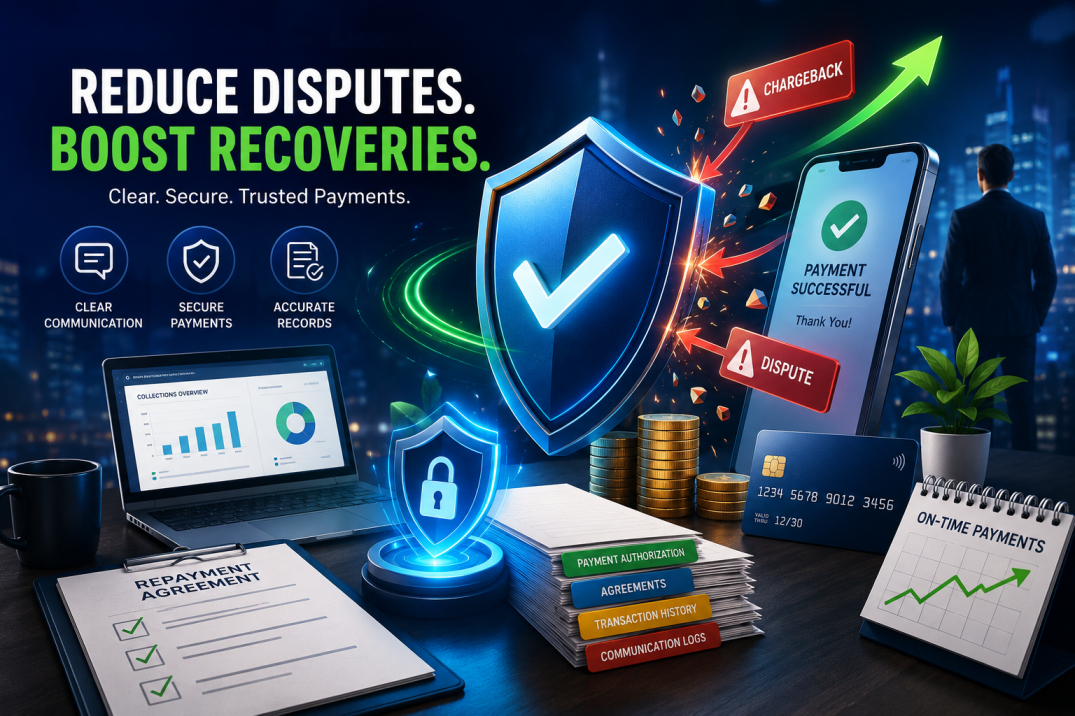
A consumer completes a repayment transaction, but weeks later the payment is challenged. A payment is marked as unauthorized, a transaction is disputed, or a chargeback is filed against the collection agency. For debt collection businesses, payment disputes create more than a financial impact. They require time, documentation, investigation, and operational resources to resolve.
Unlike many industries where disputes usually involve dissatisfaction with a purchased product or service, debt collection is a higher risk industry where disputes often involve questions about payment authorization, account information, repayment agreements, or consumer understanding of the transaction.
For collection agencies processing large volumes of repayment transactions, reducing payment disputes requires clear communication, accurate records, secure payment processes, and effective transaction management.
Why Payment Disputes and Chargebacks Happen in Debt Collection?
A chargeback occurs when a consumer challenges a payment through their financial institution and requests that the transaction be reversed.
While chargebacks are designed to protect consumers from unauthorized or incorrect transactions, they can create challenges for businesses that rely on successful payment processing. Debt collection agencies may experience disputes for several reasons:
- The consumer does not recognize the payment
- Payment terms were unclear
- The consumer believes the transaction was unauthorized
- The consumer disputes the amount charged
- Payment records are incomplete
For example, a medical debt collection agency establishes a monthly repayment plan with a consumer. After several successful payments, the consumer sees a transaction on their bank statement and does not recognize the merchant name associated with the payment. The consumer disputes the transaction, even though a repayment agreement exists. In this situation, clear communication and accurate documentation become important in resolving the dispute.
Common Causes of Chargebacks for Collection Agencies
Lack of Payment Transparency
One of the most common reasons for payment disputes is confusion about the transaction. Consumers may not recognize:
- The company name appearing on their statement
- The payment amount
- The scheduled payment date
- The purpose of the transaction
For example, a consumer agrees to repay a credit account balance through a collection agency. However, when the payment appears on their bank statement under an unfamiliar descriptor, they assume it is an unauthorized charge. Clear payment descriptions and consumer communication can reduce confusion.
Insufficient Payment Records
When a dispute occurs, collection agencies need evidence showing that the transaction was properly authorized. Important records may include:
- Payment authorization details
- Repayment agreements
- Transaction history
- Communication records
- Payment confirmations
For example, a loan recovery company receives a dispute regarding a recurring payment. If the business can provide documentation showing that the consumer agreed to the repayment schedule and authorized the transactions, it has stronger evidence for reviewing the dispute.
Maintaining accurate records is an essential part of effective dispute management.
Unauthorized Payment Claims
Unauthorized transaction claims are another common reason for disputes. A consumer may claim that:
- They did not approve the payment
- Someone else used their payment information
- They were unaware of recurring charges
These situations may involve genuine fraud or simple misunderstandings.
Collection agencies need processes that verify payment authorization and monitor unusual transaction activity. Understanding fraud prevention strategies can help businesses identify suspicious activity while protecting legitimate payments.
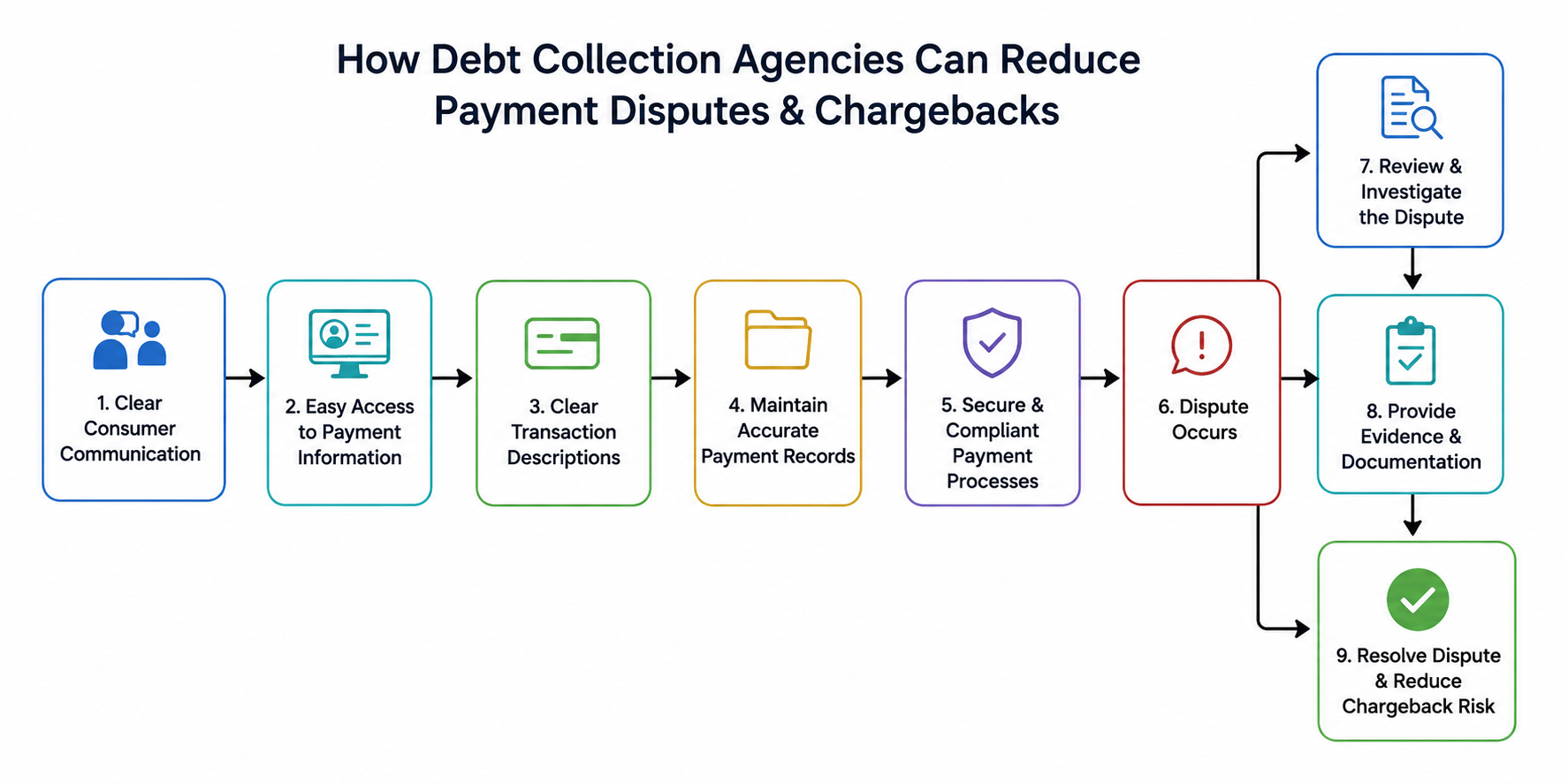
How Debt Collection Agencies Can Prevent Payment Disputes?
Reducing chargebacks requires a proactive approach. Waiting until disputes occur often creates unnecessary operational challenges.
Maintain Clear Consumer Communication
Clear communication helps consumers understand their repayment obligations. Before processing payments, agencies should ensure consumers understand:
- Payment amounts
- Payment schedules
- Available payment options
- Recurring payment arrangements
For example, a collection agency managing a six-month repayment plan can provide confirmation details after enrollment, including the scheduled payment dates and amounts.
This reduces the possibility of confusion later.
Provide Easy Payment Information Access
Consumers should have access to accurate payment information throughout the repayment process. Online payment portals can help consumers:
- Review payment history
- Confirm transaction details
- View repayment schedules
- Update payment information
For collection businesses managing multiple payment channels, a white-label payment platform can provide a branded payment environment where consumers can access repayment information and complete transactions through a consistent interface. This can make it easier for agencies to organize payment activity while giving consumers a clearer view of their repayment history and scheduled payments.
A consumer who can easily verify their payment activity is less likely to dispute a transaction due to uncertainty.
Use Clear Transaction Descriptions
Payment descriptions play an important role in helping consumers identify transactions. A recognizable payment description can prevent situations where consumers mistake legitimate payments for unauthorized charges.
For example, a payment appearing with a clear reference to the collection agency or repayment arrangement is easier for consumers to recognize than an unclear transaction label.
Managing Disputes When They Occur
Even with strong prevention processes, disputes can still happen. When a dispute occurs, collection agencies should have organized procedures for reviewing and responding.
Important steps include:
- Reviewing transaction details
- Checking authorization records
- Confirming repayment agreements
- Collecting supporting documentation
- Identifying the reason behind the dispute
For example, a collection agency receives a chargeback request from a consumer claiming they never authorized a payment. During review, the agency identifies the original repayment agreement, payment confirmation, and communication history showing consumer approval.
Having complete records allows the business to better evaluate the situation.
Reducing Chargeback Risk Through Better Payment Operations
Chargeback prevention is connected to several areas of payment management, including payment methods, transaction reliability, and compliance. Offering appropriate payment options can reduce situations where consumers struggle to complete payments.
For example, a consumer whose card payment fails may attempt multiple transactions, increasing confusion and the possibility of disputes. Providing alternative payment options such as bank payments or scheduled repayment methods can create a smoother experience.
Collection agencies should also monitor failed transactions because repeated payment issues may increase consumer frustration and dispute activity.
The Role of Compliance in Dispute Prevention
Payment disputes are easier to manage when collection agencies maintain strong compliance processes. Businesses should focus on:
- Protecting consumer payment information
- Maintaining accurate transaction records
- Following proper authorization procedures
- Monitoring payment activity
Strong compliance practices help create reliable payment operations and provide better documentation when disputes occur. Collection agencies should also understand how payment compliance requirements affect transaction management and consumer payment handling.
Conclusion
Payment disputes and chargebacks are significant challenges for debt collection agencies because they can interrupt repayment processes and increase operational workload.
Reducing disputes requires more than responding after a chargeback occurs. Agencies need clear consumer communication, accurate payment records, secure transaction processes, and effective monitoring systems.
By creating transparent payment experiences and maintaining strong operational controls, collection agencies can reduce unnecessary disputes, improve payment reliability, and build more efficient recovery processes.

Categories
- ACH Payments (10)
- adult payment processing (11)
- AI (9)
- Altcoins (10)
- Banking (10)
- Bitcoin (133)
- Bitcoin ETF (11)
- Bitcoin Price (30)
- Blockchain (50)
- Brokering World Hunger Away (16)
- Business (17)
- card payment processing (10)
- CBD (11)
- CBDC (11)
- Chargeback (8)
- coaching business (11)
- COVID-19 (3)
- Crypto ATMs (1)
- Crypto Banking (17)
- Crypto Bill (1)
- Crypto business owner platform (31)
- Crypto Investment (3)
- Crypto Markets (5)
- Crypto Payment (35)
- Crypto Payment Processor (4)
- Crypto Prices (1)
- Crypto Trading (92)
- Cryptocurrency (402)
- Cryptocurrency Exchange (108)
- Data Visualization (2)
- dating platforms (11)
- debt collection payment processing (10)
- Decentralized Finance (7)
- DeFi Payment (9)
- DEX (3)
- Digital Currency (23)
- dropshipping payment processing (12)
- Ethereum (2)
- FAQ (7)
- file sharing payment processing (11)
- Finance (25)
- Financial Equality (4)
- Financial Freedom (8)
- Forex (35)
- hemp (1)
- ICO (2)
- Investment (11)
- IPTV (11)
- Merchant Account (10)
- Mining (3)
- News (66)
- NFTs (2)
- online gambling (11)
- P2P (1)
- Paybito (147)
- PayBitoPro (693)
- PayBitoPro Coin Listing (6)
- PayBitoPro Exchange (2)
- Payment Gateway (48)
- peptide (10)
- Post COVID Digital Transformation (1)
- Press Release (130)
- Privacy & Security (3)
- Real Estate (1)
- Stablecoin (5)
- Technology (15)
- Travel (11)
- Uncategorized (10)
- US Presidential Election (2)
- Utility Coin (1)
- Web3 business (4)
- Web3 Wallets (2)
- White Label Crypto Exchange (8)
Recent Posts
- Payment Gateway vs. Payment Orchestration: What’s the Difference?
- What Is Smart Payment Routing? Strategies to Optimize Payment Performance
- How to Improve Payment Approval Rates for High-Risk Businesses?
- Why Are Online Payments Failing? Common Causes and How to Fix Them
- How to Use Multiple Payment Processors to Reduce Business Disruptions?