Fraud Prevention for Dating Apps: How Dating Platforms Protect Payments and Users?
- August 5, 2026
- Soham Guchait
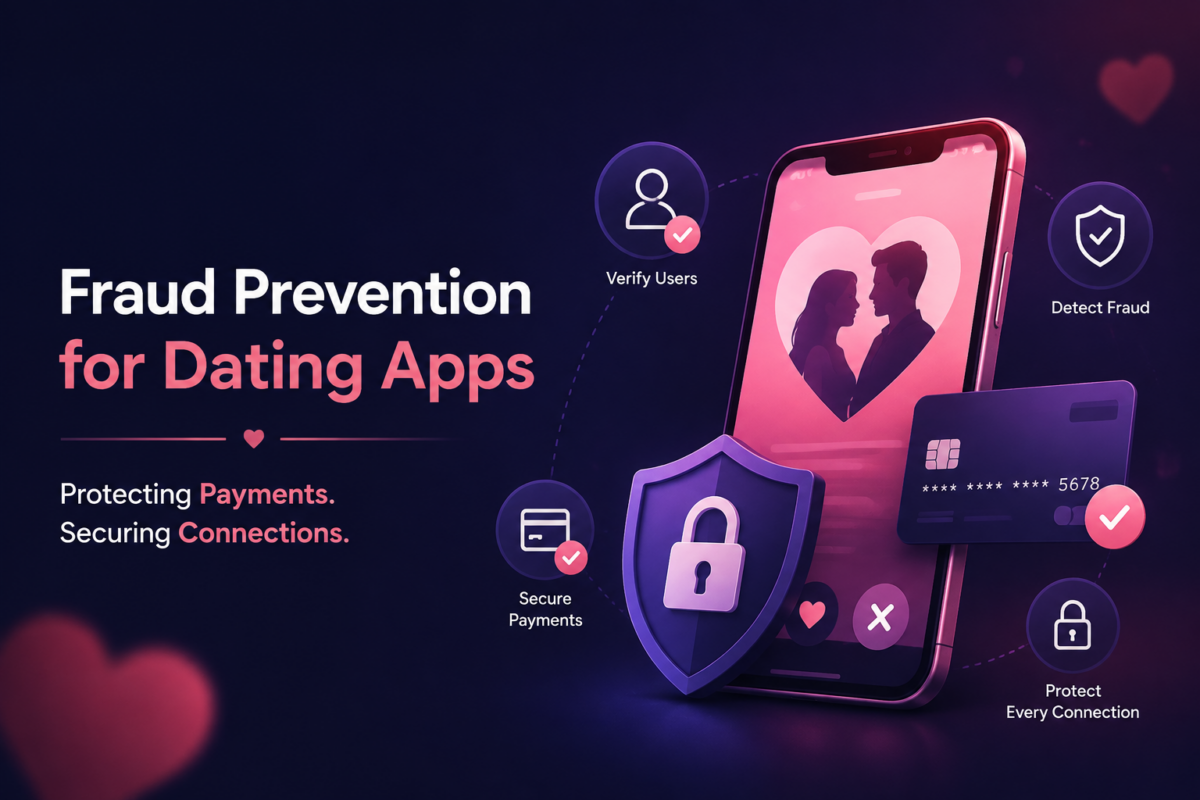
Fraud prevention for dating apps has become a critical part of operating a secure and trustworthy platform. As dating businesses grow and introduce premium memberships, paid features, and subscription models, they become responsible for protecting both user accounts and payment transactions.
Unlike many online businesses, dating platforms face a unique combination of risks. They manage financial transactions while also operating communities where users interact, communicate, and build relationships. A fraudulent activity on a dating platform can create multiple problems at the same time. It can result in financial losses, payment disputes, damaged user trust, and a poor customer experience.
Effective fraud prevention requires more than blocking suspicious payments. Dating platforms need systems and processes that identify unusual behavior, protect user accounts, and allow legitimate customers to complete transactions smoothly.
Why Fraud Prevention Is More Complex for Dating Platforms?
Dating apps operate differently from traditional ecommerce businesses. An online store mainly needs to protect payment transactions. Dating platforms must protect both payments and user interactions.
A typical dating app journey involves:
A user creates an account → interacts with other members → purchases premium features → continues using paid services.
Every step creates opportunities for fraudulent activity.
For example, a fake account may be created to manipulate other users, while stolen payment information may be used to purchase premium features. These problems are connected because fraud on the user side can eventually become a payment problem. This makes fraud prevention an important part of both security operations and payment management.
Common Fraud Risks Faced by Dating Apps
Fake Accounts and Identity Abuse
Fake accounts are one of the biggest challenges for dating platforms.
Fraudsters may create fake profiles to deceive users, manipulate interactions, or conduct unauthorized activities. While fake accounts are primarily a user safety concern, they can also affect payments.
For example, a fraudulent user may create multiple accounts, use stolen payment details to purchase premium features, and disappear before detection. Reducing fake account activity helps protect both the community and the payment system.
Stolen Payment Information and Unauthorized Transactions
Payment fraud occurs when criminals use stolen financial information to complete transactions. On dating platforms, this may happen when someone uses a stolen card to purchase:
- Premium memberships
- Profile boosts
- Virtual credits
- Paid interactions
The business may initially receive payment approval, but later face disputes when the legitimate cardholder reports the unauthorized transaction. For dating platforms, preventing unauthorized payments is important because chargebacks can create financial losses and affect payment reliability.
Account Takeover Attempts
Account takeover occurs when criminals gain access to legitimate user accounts.
This can happen through:
- Stolen passwords
- Credential reuse
- Phishing attempts
- Suspicious login activity
A compromised account can lead to unauthorized purchases, stolen personal information, or misuse of premium features.
For example, if a user with an active premium subscription loses access to their account, a fraudster may attempt to change account details or use stored payment information.
Bots and Automated Fraud Activity
Automation is another challenge for dating platforms. Bots can create large numbers of fake profiles, send automated messages, or attempt repeated payment actions.
This activity can affect:
- User experience
- Platform reputation
- Payment security
- Operational costs
Identifying automated behavior helps dating businesses maintain a more trustworthy environment.
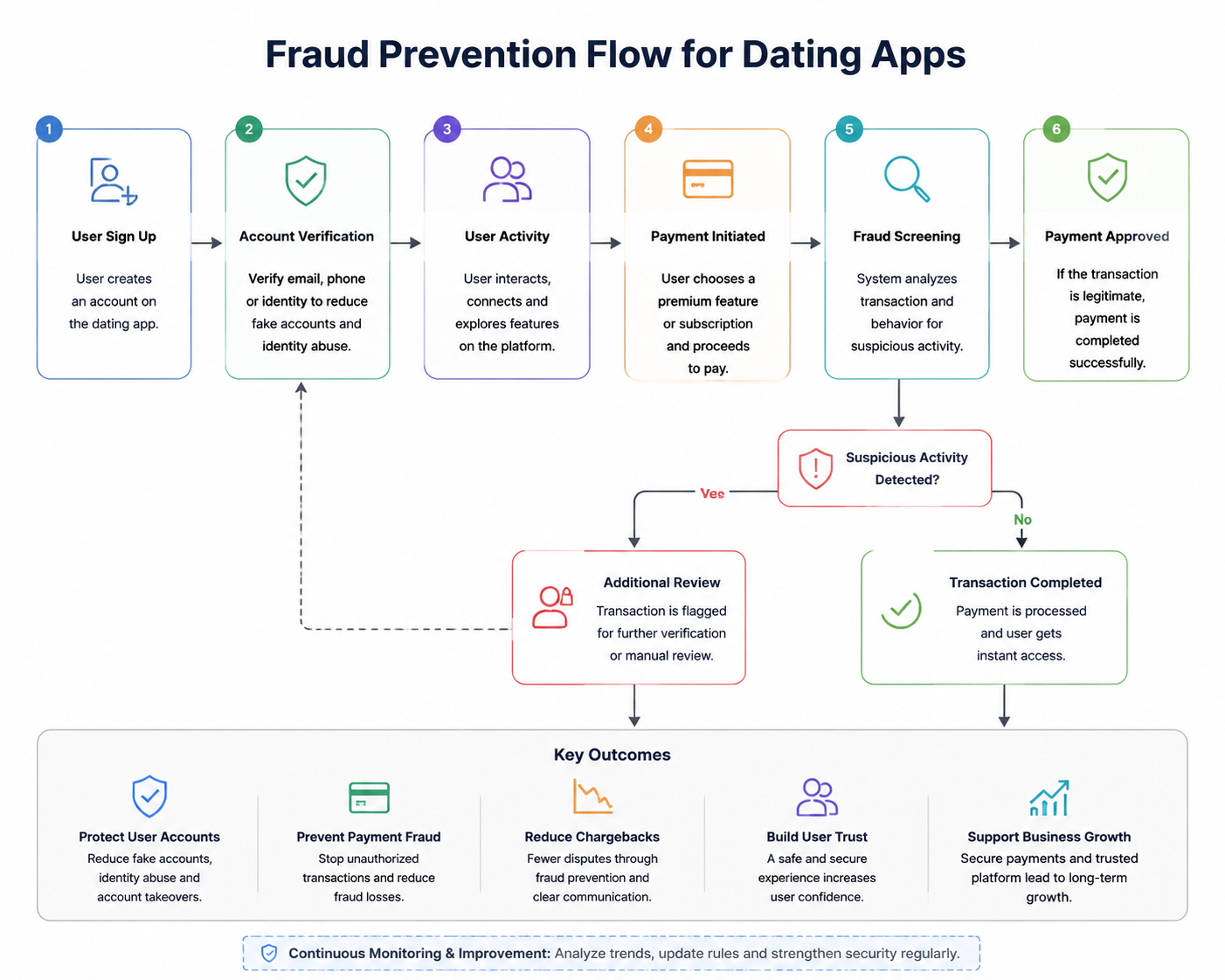
How Dating Apps Prevent Payment Fraud?
Fraud prevention requires multiple layers working together. No single security measure can identify every type of fraudulent activity.
Monitoring Transaction Behavior
Payment systems can analyze transaction patterns to identify unusual activity.
Examples include:
- Multiple purchases from the same payment source
- Sudden high-value transactions
- Unusual geographic locations
- Repeated failed payment attempts
For example, if several new accounts purchase premium memberships using the same payment method within a short period, the activity may require additional review. The goal is not to block every unusual transaction but to identify patterns that indicate higher risk.
Using Account Verification and Identity Checks
Identity verification can help dating platforms reduce fake accounts and improve trust.
Verification processes may include:
- Email verification
- Phone verification
- Profile checks
- Identity verification methods
The level of verification depends on the platform’s business model and user requirements.
For example, a professional matchmaking platform may require stronger identity checks compared to a casual social discovery app.
Improving Payment Security
Payment security practices help protect users and businesses from unauthorized transactions. Dating platforms should focus on:
- Secure payment handling
- Protecting user information
- Monitoring suspicious transactions
- Managing access to sensitive data
Security should be built into the payment experience without creating unnecessary friction for legitimate users.
Reducing Fraud Without Hurting User Experience
One of the biggest challenges for dating platforms is finding the right balance between security and convenience. Too many security barriers can frustrate genuine users, while weak protection can increase fraud.
For example, requiring excessive verification steps during every purchase may cause users to abandon payments. However, ignoring suspicious activity can result in financial losses and reduced trust.
Successful fraud prevention focuses on applying appropriate security measures based on risk levels. A trusted user making a normal subscription purchase should have a simple experience, while unusual activity should receive additional scrutiny.
The Connection Between Fraud Prevention and Chargeback Reduction
Fraud prevention directly affects chargebacks.
When fraudulent transactions are prevented before completion, businesses reduce the chances of disputes later. However, fraud prevention is not only about stopping criminals. Clear subscription information, transparent billing, and good customer communication also reduce disputes from genuine users.
For example, a customer who understands their subscription renewal date is less likely to report a legitimate charge as unauthorized.
Building a Secure Future for Dating Platforms
As dating businesses continue expanding their premium features and payment options, fraud prevention becomes a fundamental part of growth.
A secure dating platform needs to protect:
- User identities
- Payment transactions
- Account access
- Platform reputation
Fraud prevention for dating apps is not about creating barriers for users. It is about building an environment where genuine customers can interact, subscribe, and make payments with confidence. By combining transaction monitoring, account protection, and strong security practices, dating businesses can reduce risks while creating a safer experience for their communities.
Frequently Asked Questions
Why do dating apps need fraud prevention?
Dating apps need fraud prevention because they handle payments, personal information, and user interactions, creating risks such as fake accounts, payment fraud, and account abuse.
What types of fraud affect dating platforms?
Dating platforms commonly face fake accounts, stolen payment information, account takeover attempts, automated activity, and unauthorized transactions.
How can dating apps reduce payment fraud?
Dating apps can reduce payment fraud through transaction monitoring, account verification, secure payment practices, and suspicious activity detection.
Does fraud prevention affect user experience?
Effective fraud prevention should protect users without creating unnecessary friction. The goal is to apply stronger checks only when activity appears suspicious.
Conclusion
Fraud prevention for dating apps is essential for protecting both revenue and user trust. Because dating platforms combine digital payments with personal interactions, they face challenges that require a broader approach than traditional payment security.
By understanding fraud risks and implementing the right protection measures, dating businesses can create safer platforms, reduce payment problems, and support long-term growth.
Categories
- ACH Payments (10)
- adult payment processing (11)
- AI (9)
- Altcoins (10)
- Banking (10)
- Bitcoin (133)
- Bitcoin ETF (11)
- Bitcoin Price (30)
- Blockchain (50)
- Brokering World Hunger Away (16)
- Business (17)
- card payment processing (10)
- CBD (11)
- CBDC (11)
- coaching business (11)
- COVID-19 (3)
- Crypto ATMs (1)
- Crypto Banking (17)
- Crypto Bill (1)
- Crypto business owner platform (31)
- Crypto Investment (3)
- Crypto Markets (5)
- Crypto Payment (35)
- Crypto Payment Processor (4)
- Crypto Prices (1)
- Crypto Trading (92)
- Cryptocurrency (402)
- Cryptocurrency Exchange (108)
- Data Visualization (2)
- dating platforms (11)
- debt collection payment processing (10)
- Decentralized Finance (7)
- DeFi Payment (9)
- DEX (3)
- Digital Currency (23)
- dropshipping payment processing (12)
- Ethereum (2)
- FAQ (7)
- file sharing payment processing (11)
- Finance (25)
- Financial Equality (4)
- Financial Freedom (8)
- Forex (35)
- hemp (1)
- ICO (2)
- Investment (11)
- IPTV (11)
- Merchant Account (10)
- Mining (3)
- News (66)
- NFTs (2)
- online gambling (11)
- P2P (1)
- Paybito (139)
- PayBitoPro (693)
- PayBitoPro Coin Listing (6)
- PayBitoPro Exchange (2)
- Payment Gateway (40)
- peptide (10)
- Post COVID Digital Transformation (1)
- Press Release (130)
- Privacy & Security (3)
- Real Estate (1)
- Stablecoin (5)
- Technology (15)
- Travel (11)
- Uncategorized (9)
- US Presidential Election (2)
- Utility Coin (1)
- Web3 business (4)
- Web3 Wallets (2)
- White Label Crypto Exchange (8)
Recent Posts
- ACH vs Wire Transfer: Which Payment Method Is Better for Businesses?
- ACH Fraud Prevention: How Businesses Can Secure Bank Account Payments?
- ACH Credit vs ACH Debit: What’s the Difference? With Real Examples
- ACH vs Credit Card: Which Payment Method Is Better for Businesses?
- How Long Do ACH Payments Take? Processing Times, Settlement, and Same Day ACH