Payment Methods Debt Collection Agencies Should Accept
- August 10, 2026
- Soham Guchait
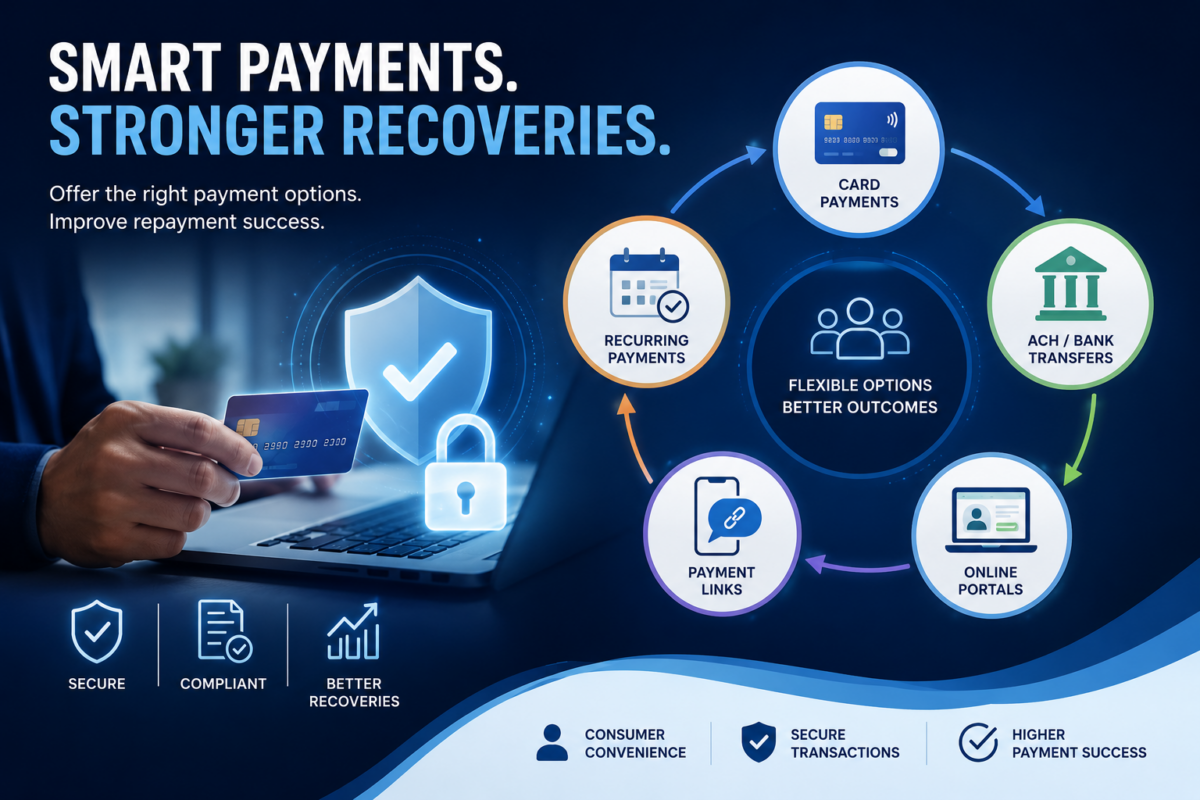
For many debt collection agencies, recovering outstanding balances depends not only on reaching consumers but also on making the repayment process simple and accessible. A consumer who is ready to make a payment may abandon the process if the available payment options do not match their preferences. Someone may prefer paying through a bank account, while another consumer may want to use a card or set up an installment plan.
This is why choosing the right payment methods is an important part of debt collection payment processing. Agencies need to balance consumer convenience with transaction reliability, security requirements, and operational efficiency.
The best payment strategy is not about offering every possible payment option. It is about providing the methods that allow consumers to complete repayments successfully while helping collection agencies manage transactions effectively.
Why Payment Methods Matter for Debt Collection Agencies?
Debt collection payments are different from standard ecommerce transactions. Consumers are not purchasing a product or service; they are completing payments toward an existing financial obligation. Because of this, payment accessibility can directly influence repayment success.
For example, a medical debt collection agency contacts a consumer regarding an unpaid healthcare balance. The consumer agrees to resolve the balance but prefers making smaller monthly payments from a bank account rather than using a credit card. If the agency only supports one payment method, the consumer may delay payment or fail to complete the repayment arrangement.
Offering appropriate payment options helps agencies:
- Make payments easier for consumers
- Support different repayment situations
- Reduce unnecessary payment delays
- Improve overall payment completion rates
A well-designed payment process allows consumers to choose a method that fits their financial circumstances while giving agencies better control over payment operations.
Common Payment Methods Used by Debt Collection Agencies
Different payment methods serve different purposes depending on the type of debt, consumer preference, and repayment structure.
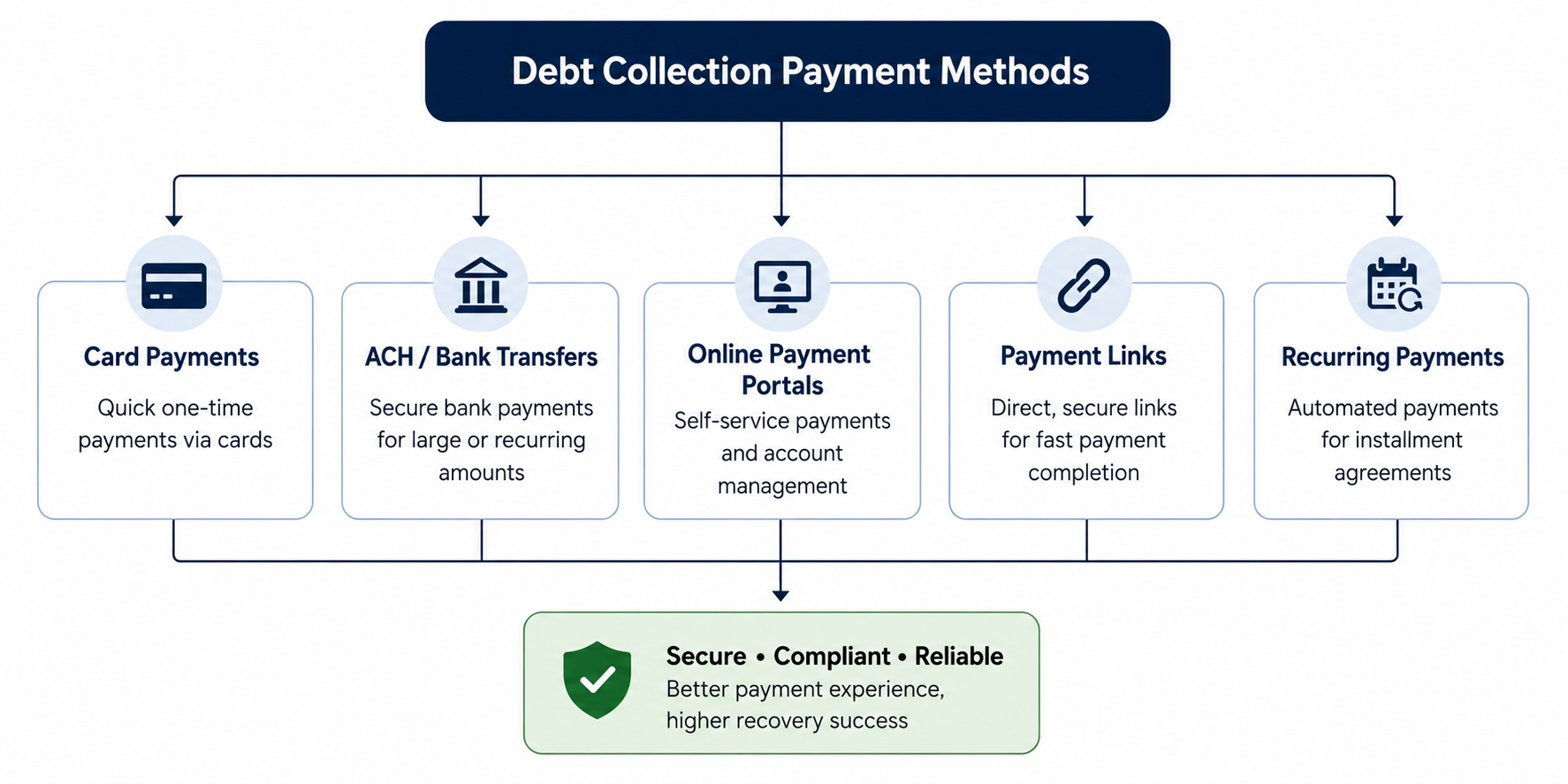
Credit and Debit Card Payments
Card payments are one of the most common methods used by collection agencies because they allow consumers to complete transactions quickly. Consumers can often make payments through:
- Online payment portals
- Payment links
- Phone-based payment systems
- Assisted payment channels
For example, a loan recovery company may allow consumers to make a one-time payment using a debit card through an online portal after receiving a repayment notification. Card payments are useful for immediate transactions, but agencies must also consider factors such as expired cards, transaction declines, and dispute management.
ACH Payments and Bank Transfers
ACH payments allow consumers to make payments directly from their bank accounts. This method is commonly used for:
- Larger repayment amounts
- Recurring payment plans
- Long-term settlement agreements
For example, a consumer with a significant outstanding balance may prefer an ACH-based monthly repayment plan because it automatically transfers funds from their bank account without requiring repeated card payments. ACH payments can be especially useful for agencies managing installment-based repayment arrangements.
Online Payment Portals
Online payment portals provide consumers with a self-service option to review payment details and complete transactions without speaking directly with an agent. A digital payment portal may allow consumers to:
- View outstanding balances
- Select payment methods
- Make one-time payments
- Set up repayment plans
- Access payment confirmations
For example, an accounts receivable management company handling multiple client accounts may use online payment portals to allow consumers to manage repayments independently while reducing call-center workload.
Payment Links
Payment links allow collection agencies to provide consumers with a direct path to complete a payment.
A consumer may receive a payment request through email, text message, or another communication channel and access a secure payment page. This method can be useful when agencies want to make payment completion faster without requiring consumers to navigate through multiple steps.
Recurring Payment Options
Many debt recovery situations involve installment agreements rather than single payments. Recurring payment methods allow consumers to authorize scheduled transactions according to an agreed repayment plan.
For example, a credit recovery company may establish a twelve-month repayment schedule where payments are automatically processed each month.
However, recurring payments require proper management because failed transactions, outdated payment information, and disputes can interrupt repayment schedules. Collection agencies should understand how recurring payment management affects long-term payment reliability.
Choosing the Right Payment Methods for a Collection Agency
There is no single payment method that works for every collection business. The right combination depends on factors such as account volume, consumer preferences, repayment structure, and operational requirements.
Several considerations can help agencies choose appropriate payment options.
Consider Consumer Payment Behavior
Collection agencies serve consumers with different financial situations. Some consumers may prefer immediate card payments, while others may need structured repayment plans through bank transfers. Understanding consumer preferences can help agencies offer options that improve payment completion.
For example, a medical debt collection company may find that consumers managing larger balances are more likely to prefer installment payments, while consumers with smaller balances may prefer quick card transactions.
Support Different Repayment Scenarios
A collection agency managing multiple types of accounts may need different payment options for different situations.
A business recovering credit card debt may require fast online payments, while a company managing commercial receivables may rely more heavily on scheduled bank payments. Flexible payment options allow agencies to adapt to different recovery environments.
Balance Convenience and Risk Management
While making payments easier is important, agencies must also consider security, verification, and transaction monitoring. Payment methods should support:
- Secure transaction processing
- Accurate payment records
- Consumer verification
- Dispute management
Strong payment controls help businesses provide convenient payment experiences while reducing operational risks.
Improving Payment Success Through Multiple Payment Options
Offering multiple payment methods can help reduce situations where consumers are willing to pay but cannot complete the transaction.
A collection agency may experience payment failures because:
- A consumer’s card has expired
- A bank transaction is unavailable
- A preferred payment method is not supported
- A transaction is blocked by security controls
Providing alternative payment options gives consumers another way to complete repayment.
For example, if a scheduled card payment fails, a consumer may still be able to complete the payment through ACH or another available method. Understanding why debt collection payments fail and how to improve payment success rates helps agencies create more reliable repayment processes.
Compliance Considerations When Accepting Debt Payments
Because collection agencies handle sensitive financial information, payment methods must be supported by appropriate security and compliance practices. Businesses should consider:
- Protecting consumer payment information
- Maintaining accurate transaction records
- Verifying payment authorization
- Monitoring unusual payment activity
These practices help reduce fraud risks and support responsible payment operations. Collection agencies should also understand how payment compliance requirements affect the way payment information is collected, stored, and managed.
Conclusion
The payment methods a debt collection agency accepts can directly influence repayment success, consumer experience, and operational efficiency.
Cards, ACH payments, online portals, payment links, and recurring payment options each serve different purposes. The most effective approach is choosing a combination of payment methods that makes repayment convenient while maintaining secure and reliable processing. For collection businesses managing multiple payment channels or growing transaction volumes, a white-label payment platform can provide a centralized way to manage these payment options while delivering a consistent, branded payment experience.
As collection businesses continue adopting digital payment solutions, offering flexible and dependable payment options will become increasingly important for improving recovery operations and managing consumer repayments effectively.

Categories
- ACH Payments (10)
- adult payment processing (11)
- AI (9)
- Altcoins (10)
- Banking (10)
- Bitcoin (133)
- Bitcoin ETF (11)
- Bitcoin Price (30)
- Blockchain (50)
- Brokering World Hunger Away (16)
- Business (17)
- card payment processing (10)
- CBD (11)
- CBDC (11)
- Chargeback (8)
- coaching business (11)
- COVID-19 (3)
- Crypto ATMs (1)
- Crypto Banking (17)
- Crypto Bill (1)
- Crypto business owner platform (31)
- Crypto Investment (3)
- Crypto Markets (5)
- Crypto Payment (35)
- Crypto Payment Processor (4)
- Crypto Prices (1)
- Crypto Trading (92)
- Cryptocurrency (402)
- Cryptocurrency Exchange (108)
- Data Visualization (2)
- dating platforms (11)
- debt collection payment processing (10)
- Decentralized Finance (7)
- DeFi Payment (9)
- DEX (3)
- Digital Currency (23)
- dropshipping payment processing (12)
- Ethereum (2)
- FAQ (7)
- file sharing payment processing (11)
- Finance (25)
- Financial Equality (4)
- Financial Freedom (8)
- Forex (35)
- hemp (1)
- ICO (2)
- Investment (11)
- IPTV (11)
- Merchant Account (10)
- Mining (3)
- News (66)
- NFTs (2)
- online gambling (11)
- P2P (1)
- Paybito (147)
- PayBitoPro (693)
- PayBitoPro Coin Listing (6)
- PayBitoPro Exchange (2)
- Payment Gateway (48)
- peptide (10)
- Post COVID Digital Transformation (1)
- Press Release (130)
- Privacy & Security (3)
- Real Estate (1)
- Stablecoin (5)
- Technology (15)
- Travel (11)
- Uncategorized (10)
- US Presidential Election (2)
- Utility Coin (1)
- Web3 business (4)
- Web3 Wallets (2)
- White Label Crypto Exchange (8)
Recent Posts
- Payment Gateway vs. Payment Orchestration: What’s the Difference?
- What Is Smart Payment Routing? Strategies to Optimize Payment Performance
- How to Improve Payment Approval Rates for High-Risk Businesses?
- Why Are Online Payments Failing? Common Causes and How to Fix Them
- How to Use Multiple Payment Processors to Reduce Business Disruptions?