Recurring Payments for Debt Collection Agencies: How to Manage Payment Plans Successfully?
- August 10, 2026
- Soham Guchait
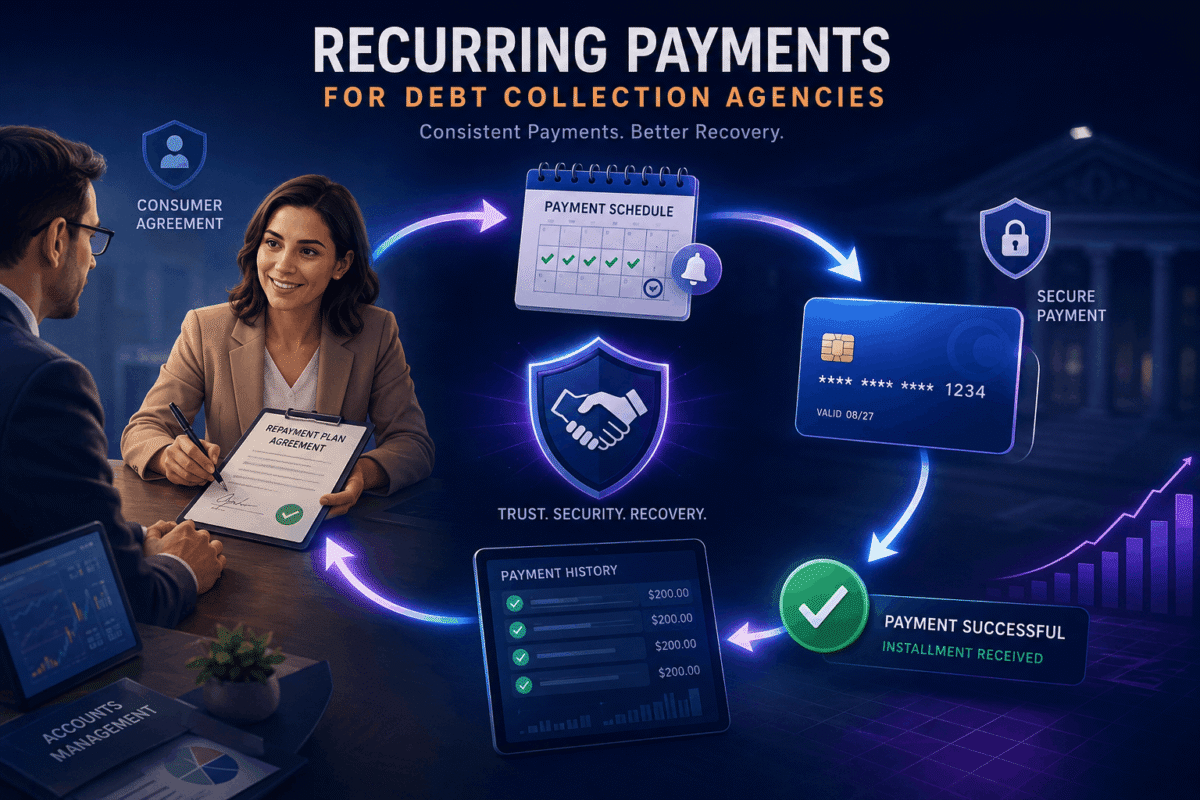
Debt recovery rarely happens through a single transaction. Many consumers who owe outstanding balances do not make full payments immediately. Instead, they often enter repayment agreements that allow them to settle balances through smaller payments over time.
For debt collection agencies, managing these payment plans efficiently can be challenging. A consumer may successfully complete the first payment but miss future installments because of an expired card, insufficient funds, outdated banking information, or other transaction issues.
This is where recurring payments become an important part of modern debt collection operations. By supporting scheduled repayments, collection agencies can create more predictable payment processes while making it easier for consumers to fulfill their financial commitments.
However, successful recurring payment management requires more than automatically charging a payment method each month. Agencies must consider payment authorization, failed transactions, consumer communication, security, and compliance throughout the repayment process.
What Are Recurring Payments in Debt Collection?
Recurring payments allow consumers to authorize scheduled transactions that occur automatically according to an agreed repayment schedule. Instead of requiring a consumer to manually submit every payment, the payment system processes installments based on the terms of the repayment agreement.
For example, a medical debt collection agency may work with a consumer who owes $2,400 in unpaid medical expenses. Rather than requesting the full amount immediately, the agency creates a twelve-month repayment plan where the consumer pays a fixed amount every month.
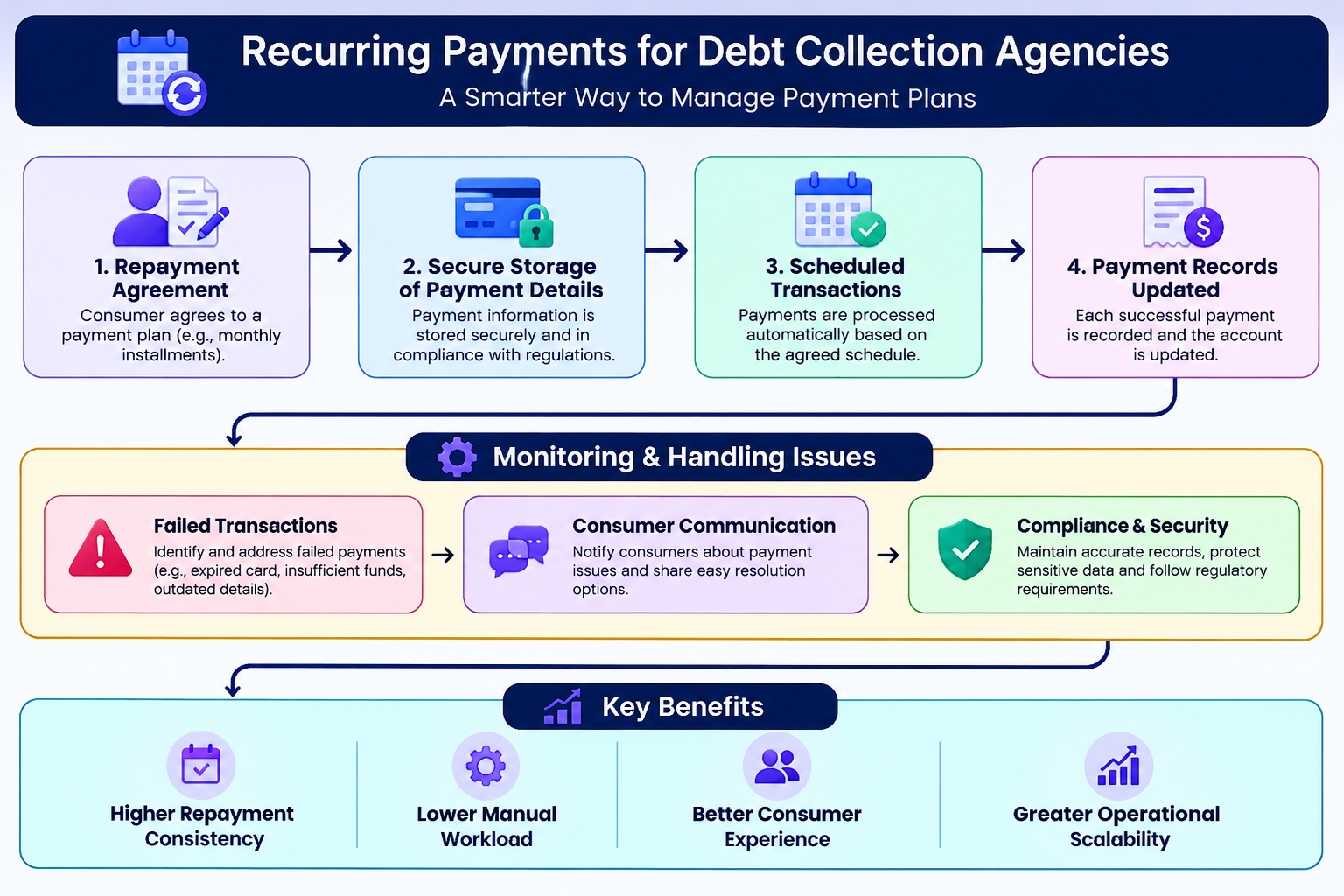
With a recurring payment setup:
- The consumer agrees to the repayment schedule.
- Payment details are securely stored according to applicable requirements.
- Scheduled transactions are processed automatically.
- Payment records are updated after each transaction.
This approach can reduce manual follow-up while helping consumers maintain consistent repayment schedules.
Why Recurring Payments Matter for Collection Agencies?
Recurring payments are valuable because many debt recovery situations involve ongoing payment arrangements rather than one-time transactions.
Collection agencies managing thousands of accounts need efficient ways to track payment commitments and reduce administrative workload.
Improving Repayment Consistency
A recurring payment system helps reduce the possibility that consumers forget scheduled payments.
For example, a loan recovery company managing hundreds of repayment agreements may spend significant time contacting consumers about missed installments. Automated payment schedules can reduce some of this manual effort by processing agreed payments automatically.
However, agencies still need processes for handling failed transactions and communicating payment issues clearly.
Reducing Manual Payment Collection Work
Without recurring payments, collection teams may need to repeatedly contact consumers to request each installment. For businesses managing large account volumes, this creates additional operational challenges.
A digital repayment system allows collection teams to focus more on account management while routine payment processing happens automatically.
For example, a credit management firm handling thousands of active repayment plans can use scheduled payments to organize collections more efficiently instead of manually tracking every installment date.
Creating Better Consumer Payment Experiences
Consumers often prefer predictable repayment options rather than making repeated payment arrangements. A structured payment plan allows consumers to understand:
- How much do they need to pay?
- When are payments scheduled?
- How long will the repayment take?
This transparency can create a smoother repayment experience and reduce confusion around payment expectations.
Challenges of Managing Recurring Payments
Although recurring payments offer operational benefits, they also create specific challenges that collection agencies need to manage.
Failed Recurring Transactions
One of the most common issues is payment failure. A recurring payment that works initially may fail later because:
- A card has expired
- A bank account has changed
- Funds are unavailable
- Payment information is outdated
- A financial institution blocks the transaction
For example, a consumer agrees to a monthly repayment plan and successfully completes the first three payments. Before the fourth payment, their debit card expires, causing the scheduled transaction to fail.
Without proper monitoring and recovery processes, repeated payment failures can reduce collection efficiency. Collection agencies should understand how payment failures occur and develop strategies to improve payment success rates.
Payment Authorization and Consumer Agreement
Recurring payments require clear authorization from consumers. Agencies should maintain accurate records showing:
- The agreed repayment terms
- Payment authorization details
- Scheduled payment amounts
- Transaction history
Clear documentation helps businesses manage questions, disputes, and payment-related concerns.
Payment Disputes
Recurring transactions can sometimes lead to disputes if consumers do not recognize scheduled charges or believe payment terms are unclear.
For example, a consumer may forget about an existing repayment agreement and dispute a monthly transaction appearing on their account. Maintaining clear communication, payment confirmations, and repayment records can help reduce these situations. Understanding chargeback prevention strategies is important for agencies managing recurring payment programs.
Best Practices for Managing Recurring Payments
Collection agencies can improve recurring payment performance by creating reliable processes around authorization, monitoring, and communication.
Keep Payment Information Updated
Payment failures often occur because stored payment information becomes outdated. Businesses should have processes that encourage consumers to update:
- Expired cards
- Changed bank accounts
- Incorrect payment details
Keeping payment information current helps reduce unnecessary interruptions.
Monitor Failed Payments
A failed recurring payment should not automatically end a repayment plan. Agencies can review:
- Why did the transaction fail?
- Whether another payment attempt should be made?
- Whether consumer communication is required?
For example, if a monthly ACH payment fails because of insufficient funds, the agency may need to notify the consumer and provide alternative payment options.
Maintain Secure Payment Practices
Recurring payments involve storing sensitive financial information, making security an important consideration. Collection agencies should implement appropriate measures for:
- Protecting payment information
- Monitoring unusual transaction activity
- Verifying consumer identity
- Maintaining secure payment records
Strong security practices help reduce fraud risks and create greater confidence in digital repayment systems.
How Recurring Payments Support Scalable Collection Operations?
As collection agencies grow, manually managing repayment schedules becomes increasingly difficult. A small agency managing a few dozen repayment plans may handle payments manually, but a larger organization managing thousands of accounts requires more structured systems. Recurring payments can support scalability by helping agencies:
- Organize repayment schedules
- Reduce manual processing
- Track payment activity
- Identify failed transactions
- Improve operational visibility
For example, a large accounts receivable management company handling multiple client portfolios may need automated payment processes to manage different repayment schedules without increasing administrative workload.
Conclusion
Recurring payments have become an important part of modern debt collection operations because many consumers repay balances through structured payment plans rather than one-time transactions.
For collection agencies, successful recurring payment management requires more than automation. Businesses must also focus on authorization, payment reliability, consumer communication, dispute prevention, and security.
By creating effective recurring payment processes, collection agencies can improve repayment consistency, reduce manual effort, and provide consumers with a more convenient way to fulfill their financial obligations.

Categories
- ACH Payments (10)
- adult payment processing (11)
- AI (9)
- Altcoins (10)
- Banking (10)
- Bitcoin (133)
- Bitcoin ETF (11)
- Bitcoin Price (30)
- Blockchain (50)
- Brokering World Hunger Away (16)
- Business (17)
- card payment processing (10)
- CBD (11)
- CBDC (11)
- Chargeback (8)
- coaching business (11)
- COVID-19 (3)
- Crypto ATMs (1)
- Crypto Banking (17)
- Crypto Bill (1)
- Crypto business owner platform (31)
- Crypto Investment (3)
- Crypto Markets (5)
- Crypto Payment (35)
- Crypto Payment Processor (4)
- Crypto Prices (1)
- Crypto Trading (92)
- Cryptocurrency (402)
- Cryptocurrency Exchange (108)
- Data Visualization (2)
- dating platforms (11)
- debt collection payment processing (10)
- Decentralized Finance (7)
- DeFi Payment (9)
- DEX (3)
- Digital Currency (23)
- dropshipping payment processing (12)
- Ethereum (2)
- FAQ (7)
- file sharing payment processing (11)
- Finance (25)
- Financial Equality (4)
- Financial Freedom (8)
- Forex (35)
- hemp (1)
- ICO (2)
- Investment (11)
- IPTV (11)
- Merchant Account (10)
- Mining (3)
- News (66)
- NFTs (2)
- online gambling (11)
- P2P (1)
- Paybito (147)
- PayBitoPro (693)
- PayBitoPro Coin Listing (6)
- PayBitoPro Exchange (2)
- Payment Gateway (48)
- peptide (10)
- Post COVID Digital Transformation (1)
- Press Release (130)
- Privacy & Security (3)
- Real Estate (1)
- Stablecoin (5)
- Technology (15)
- Travel (11)
- Uncategorized (10)
- US Presidential Election (2)
- Utility Coin (1)
- Web3 business (4)
- Web3 Wallets (2)
- White Label Crypto Exchange (8)
Recent Posts
- Payment Gateway vs. Payment Orchestration: What’s the Difference?
- What Is Smart Payment Routing? Strategies to Optimize Payment Performance
- How to Improve Payment Approval Rates for High-Risk Businesses?
- Why Are Online Payments Failing? Common Causes and How to Fix Them
- How to Use Multiple Payment Processors to Reduce Business Disruptions?