KYC and AML Requirements for Debt Collection Payment Processing
- August 10, 2026
- Soham Guchait
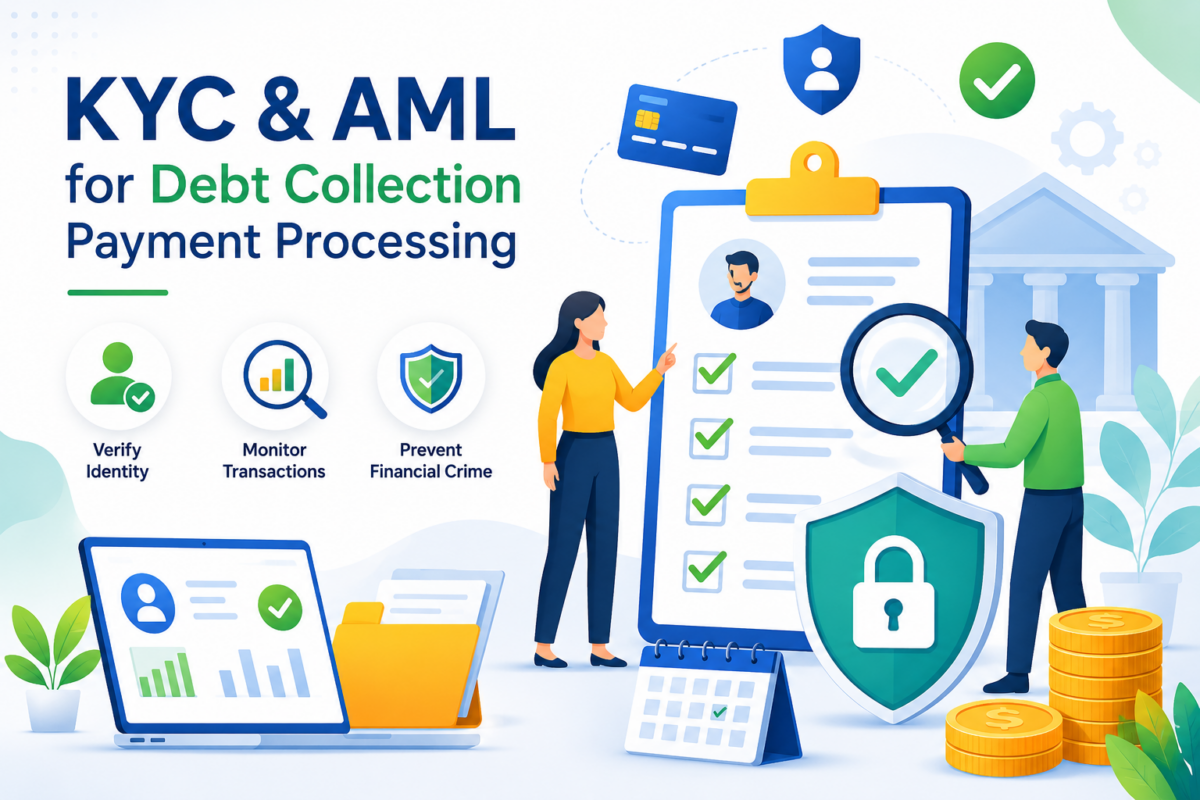
Debt collection agencies handle financial transactions that involve sensitive consumer information, repayment agreements, and ongoing payment activity. As these businesses move toward digital payment channels, maintaining proper verification and monitoring processes becomes an important part of reliable payment operations.
A collection agency may process thousands of repayment transactions every month through online portals, phone payments, bank transfers, or recurring payment arrangements. Without proper compliance processes, businesses may face increased risks related to fraud, unauthorized transactions, and payment disputes.
This is where KYC and AML requirements become important.
Know Your Customer (KYC) and Anti-Money Laundering (AML) practices help businesses verify identities, understand transaction activity, and manage financial risks. For debt collection agencies, these processes support safer payment operations while helping payment providers evaluate whether a business can handle transactions responsibly.
Why KYC and AML Matter in Debt Collection Payment Processing?
KYC and AML requirements are commonly associated with financial institutions, but they are also relevant for businesses involved in payment processing and financial transactions.
Debt collection agencies may handle payments connected to:
- Medical debt recovery
- Loan collections
- Credit account recovery
- Accounts receivable management
- Debt settlement arrangements
Because these transactions involve financial obligations, businesses need processes that help verify users, protect payment information, and identify unusual activity.
For example, a debt recovery company manages online repayment plans for thousands of consumers. A fraudster attempts to create a repayment account using false information and connect unauthorized payment details. Without verification processes, the business may unknowingly process fraudulent activity. KYC and AML procedures help reduce these risks by creating stronger controls around consumer identification and transaction monitoring.
Understanding KYC Requirements for Debt Collection Businesses
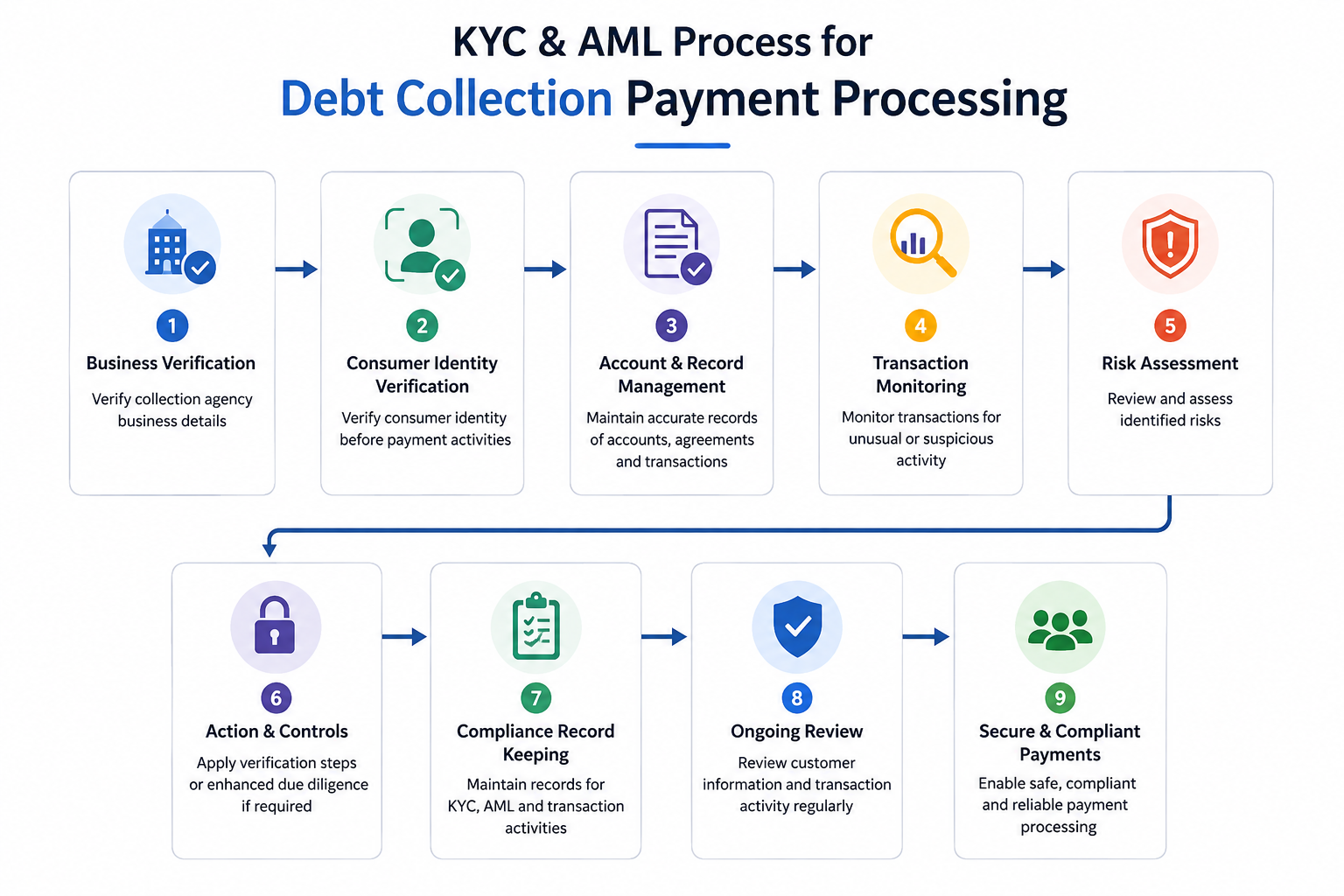
KYC refers to the process of verifying and understanding who a business or individual is before allowing certain financial activities. For debt collection agencies, KYC processes may apply when verifying business relationships, managing consumer accounts, and reviewing payment activity.
Business Verification
Before approving payment processing, businesses may need to provide information that confirms their legitimacy. This may include:
- Business registration details
- Ownership information
- Company structure
- Operating locations
- Business activities
For example, a collection agency applying for payment processing may need to explain whether it manages medical debt, consumer loans, commercial receivables, or another type of recovery service. Clear business information helps payment providers understand the nature of transactions being processed.
Consumer Identity Verification
Consumer verification helps ensure that payment activity is connected to the correct individual. This becomes especially important when consumers:
- Create online payment accounts
- Establish repayment plans
- Update payment information
- Request account changes
For example, a consumer enrolled in a monthly repayment plan attempts to change the linked bank account. Verification procedures help confirm that the request is legitimate before allowing changes.
Maintaining Accurate Records
Proper record management is an important part of KYC processes. Collection agencies should maintain records related to:
- Payment authorization
- Consumer account activity
- Repayment agreements
- Transaction history
These records can help businesses understand payment activity and respond more effectively to disputes or compliance reviews.
Understanding AML Requirements in Debt Collection Payments
AML focuses on preventing financial transactions from being used for illegal activities. While debt collection businesses are not traditional banks, payment-related businesses still need processes that identify unusual or suspicious transaction behavior.
AML-related practices may involve:
- Monitoring transaction patterns
- Reviewing unusual payment activity
- Identifying suspicious behavior
- Maintaining transaction records
For example, a collection agency normally receives regular monthly repayments from consumers. Suddenly, one account begins making multiple unusually large payments from different payment sources within a short period.
This activity may require additional review to determine whether it represents legitimate behavior or potential financial risk.
How KYC and AML Affect Payment Processing Approval?
Compliance practices can influence how payment providers evaluate debt collection businesses. Because collection agencies operate in a higher-risk environment, providers often want to understand:
- How is consumer information verified?
- How are transactions monitored?
- How are payment risks managed?
- How disputes are handled?
A business with clear compliance procedures may demonstrate stronger operational readiness during the payment approval process.
For example, a loan recovery company applying for a merchant account can improve its application by showing how it verifies consumers, manages payment records, and monitors transaction activity. Understanding merchant account approval requirements helps collection agencies prepare more effectively.
How Compliance Helps Prevent Fraud and Payment Disputes?
KYC and AML processes also support fraud prevention and dispute management. Strong verification procedures can help reduce:
- Unauthorized payments
- Identity fraud
- Suspicious account activity
- Payment misuse
For example, a medical debt collection agency verifies consumer information before allowing payment method changes. This reduces the possibility of fraudsters accessing accounts and modifying repayment details.
Compliance records can also help when handling payment disputes because businesses have documentation showing how transactions were authorized and managed. Collection agencies should also understand how fraud prevention strategies and chargeback prevention practices work together with compliance processes.
Common Compliance Challenges for Debt Collection Agencies
Implementing KYC and AML processes can create challenges, especially for smaller collection businesses. Common issues include:
Managing Large Amounts of Consumer Data
Collection agencies often handle large volumes of consumer information.
Maintaining accurate records while protecting sensitive data requires organized processes and secure systems.
Balancing Verification and Consumer Convenience
Too many verification steps can create unnecessary friction for consumers trying to make legitimate payments.
For example, a consumer making a scheduled repayment payment may experience delays if the verification process is unclear or difficult to complete. Agencies need processes that provide security without making repayment unnecessarily complicated.
Maintaining Compliance as the Business Grows
A small collection agency may manage payments manually, but larger businesses require more structured systems. As transaction volumes increase, agencies need better ways to:
- Monitor payments
- Maintain records
- Review transaction activity
- Manage multiple payment channels
For collection businesses handling growing transaction volumes, a white-label payment platform can provide a centralized environment for managing payment activity while maintaining consistent processes for transaction monitoring, reporting, and consumer payment management. This can be particularly useful for businesses that need to manage multiple payment channels or support payment operations across different client accounts.
Best Practices for Managing KYC and AML Processes
Debt collection agencies can strengthen payment operations by:
- Keeping business information updated
- Maintaining accurate consumer records
- Monitoring unusual transaction activity
- Protecting sensitive financial information
- Reviewing compliance processes regularly
For companies expanding their payment operations, strong compliance foundations become increasingly important when managing higher transaction volumes and more complex payment workflows.
Conclusion
KYC and AML requirements play an important role in debt collection payment processing by helping businesses verify identities, monitor transactions, and manage financial risks.
For collection agencies, compliance is not only a regulatory responsibility. It is also an essential part of building secure payment operations, reducing fraud risks, and maintaining reliable repayment processes.
As debt recovery continues becoming more digital, agencies that establish strong verification and monitoring practices will be better prepared to manage payments efficiently while creating a safer experience for consumers.

Categories
- ACH Payments (10)
- adult payment processing (11)
- AI (9)
- Altcoins (10)
- Banking (10)
- Bitcoin (133)
- Bitcoin ETF (11)
- Bitcoin Price (30)
- Blockchain (50)
- Brokering World Hunger Away (16)
- Business (17)
- card payment processing (10)
- CBD (11)
- CBDC (11)
- Chargeback (8)
- coaching business (11)
- COVID-19 (3)
- Crypto ATMs (1)
- Crypto Banking (17)
- Crypto Bill (1)
- Crypto business owner platform (31)
- Crypto Investment (3)
- Crypto Markets (5)
- Crypto Payment (35)
- Crypto Payment Processor (4)
- Crypto Prices (1)
- Crypto Trading (92)
- Cryptocurrency (402)
- Cryptocurrency Exchange (108)
- Data Visualization (2)
- dating platforms (11)
- debt collection payment processing (10)
- Decentralized Finance (7)
- DeFi Payment (9)
- DEX (3)
- Digital Currency (23)
- dropshipping payment processing (12)
- Ethereum (2)
- FAQ (7)
- file sharing payment processing (11)
- Finance (25)
- Financial Equality (4)
- Financial Freedom (8)
- Forex (35)
- hemp (1)
- ICO (2)
- Investment (11)
- IPTV (11)
- Merchant Account (10)
- Mining (3)
- News (66)
- NFTs (2)
- online gambling (11)
- P2P (1)
- Paybito (147)
- PayBitoPro (693)
- PayBitoPro Coin Listing (6)
- PayBitoPro Exchange (2)
- Payment Gateway (48)
- peptide (10)
- Post COVID Digital Transformation (1)
- Press Release (130)
- Privacy & Security (3)
- Real Estate (1)
- Stablecoin (5)
- Technology (15)
- Travel (11)
- Uncategorized (10)
- US Presidential Election (2)
- Utility Coin (1)
- Web3 business (4)
- Web3 Wallets (2)
- White Label Crypto Exchange (8)
Recent Posts
- Payment Gateway vs. Payment Orchestration: What’s the Difference?
- What Is Smart Payment Routing? Strategies to Optimize Payment Performance
- How to Improve Payment Approval Rates for High-Risk Businesses?
- Why Are Online Payments Failing? Common Causes and How to Fix Them
- How to Use Multiple Payment Processors to Reduce Business Disruptions?