International Payment Processing for Coaching Businesses: How to Accept Payments from Clients Worldwide?
- August 6, 2026
- Soham Guchait
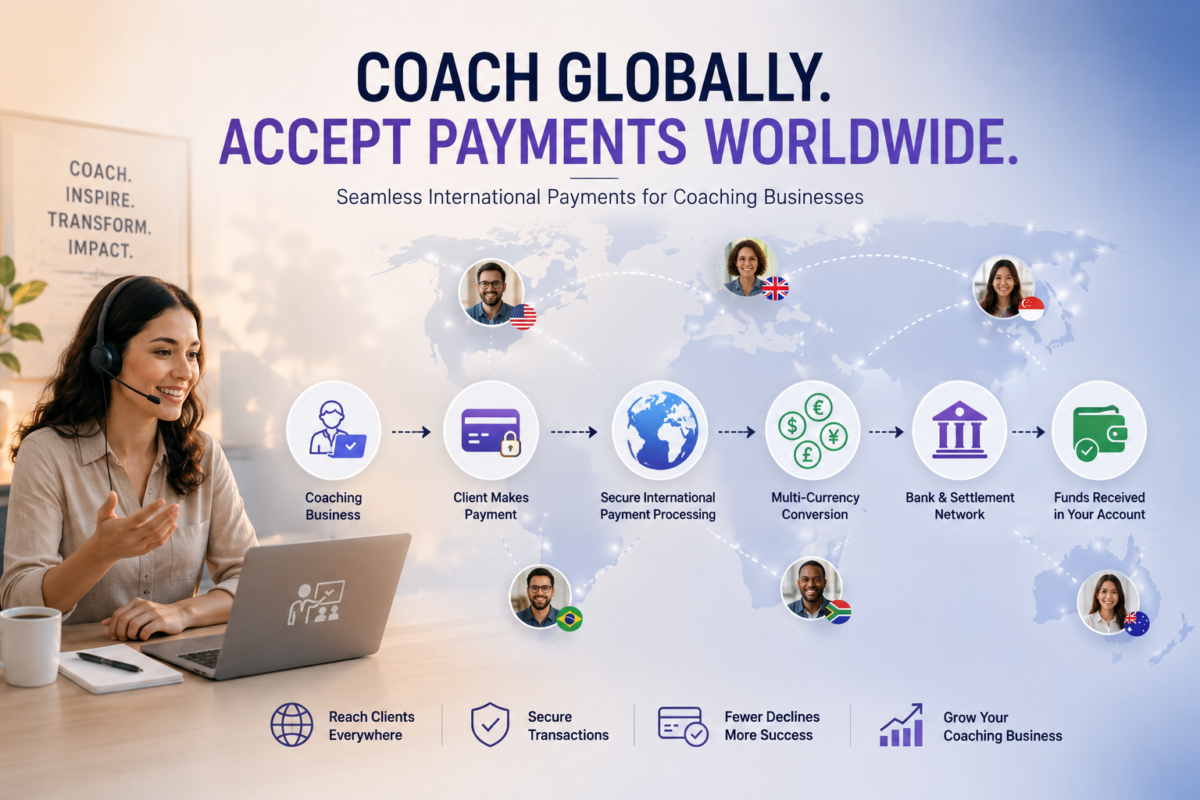
The coaching industry is no longer limited by geography. A life coach in London can work with clients in Singapore, an executive coach in New York can advise business leaders across Europe, and a fitness coach in Australia can build a subscription community with members from dozens of countries.
While technology has made virtual coaching accessible worldwide, accepting payments from international clients introduces a new set of operational challenges. Businesses must consider currencies, payment methods, cross-border transaction approvals, settlement timelines, and customer expectations.
Without a payment system designed for international transactions, coaching businesses may experience declined payments, abandoned checkouts, delayed settlements, and unnecessary administrative work. Understanding international payment processing helps coaching businesses expand globally while creating a smoother payment experience for clients around the world.
What Is International Payment Processing?
International payment processing refers to the systems and financial networks that enable businesses to accept payments from customers located in different countries.
Unlike domestic transactions, cross-border payments involve additional participants, including international banking networks, currency conversion services, payment processors, and financial institutions operating in different jurisdictions.
For example, imagine a business coach based in Canada selling a six-month leadership coaching program to a client in Germany.
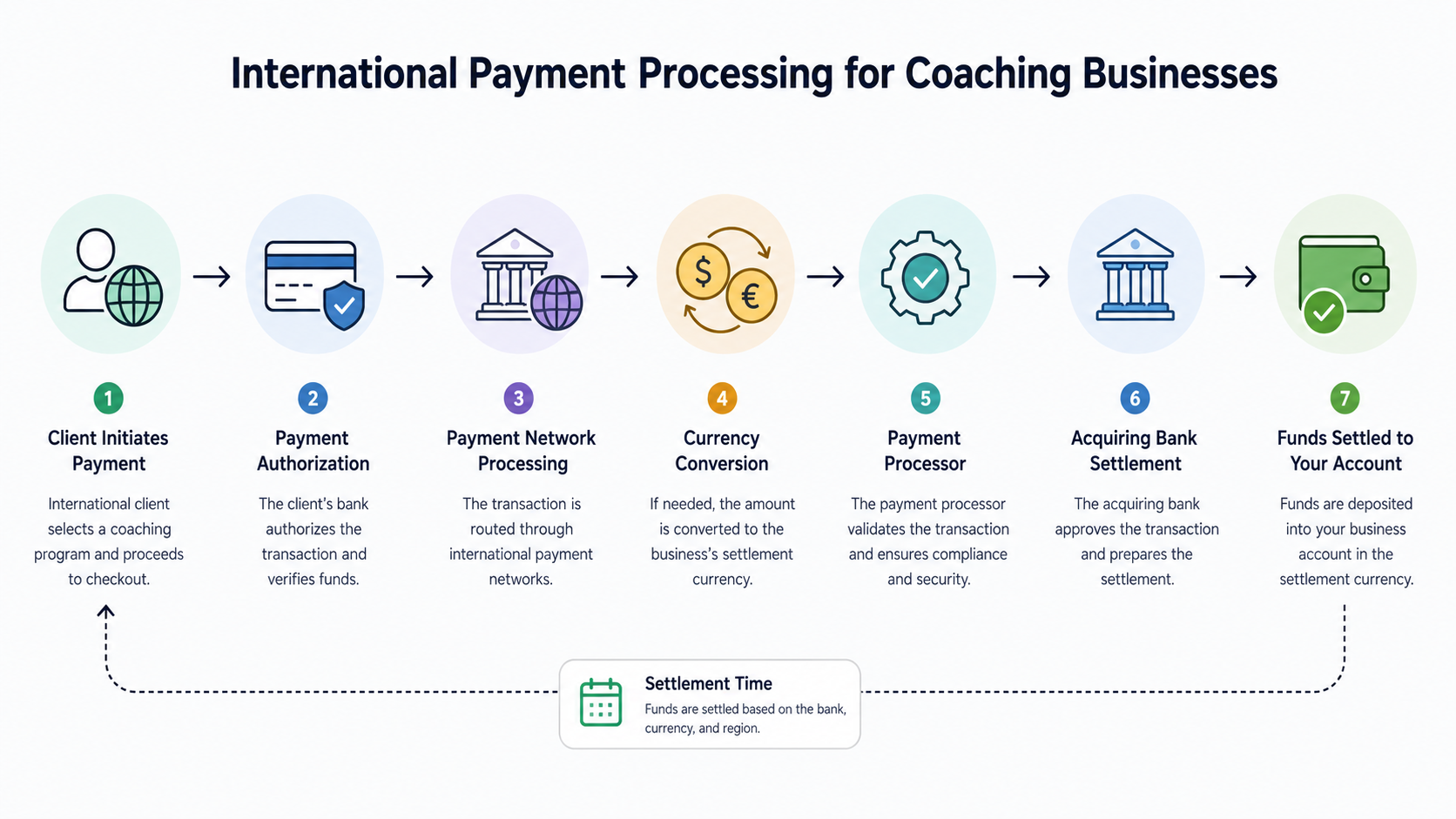
Although the purchase may appear simple from the customer’s perspective, several processes happen behind the scenes. The payment must be authorized by the client’s bank, verified through international payment networks, converted into the appropriate currency if necessary, and settled into the coach’s business account. Each of these stages can influence whether the transaction succeeds.
Why Does Global Payment Acceptance Matters for Coaching Businesses?
Coaching businesses often attract clients based on expertise rather than location.
A relationship coach with a strong online presence may receive inquiries from multiple countries within the same week. Likewise, an online coaching platform offering specialized career guidance may build an international client base through webinars, social media, or digital marketing. Restricting payment acceptance to one country can create unnecessary barriers for potential clients.
For example, a customer may be ready to purchase a coaching program but abandon the checkout because their preferred payment option is unavailable or their transaction is declined due to international restrictions.
Businesses that support international payments can serve a wider audience while improving the customer experience for overseas clients.
Common Challenges in International Coaching Payments
Accepting cross-border payments involves more than simply enabling international cards. Several operational factors affect payment success.
Currency Differences
International customers often prefer paying in their local currency. Imagine a wellness coaching platform based in the United Kingdom serving members from Japan, Brazil, and the United States.
If every customer sees pricing only in British pounds, some may hesitate because they cannot immediately understand the total cost in their own currency. Displaying familiar currencies improves pricing transparency and reduces uncertainty during checkout.
Cross-Border Payment Declines
International transactions are more likely to trigger additional security reviews than domestic payments. Banks may temporarily decline a transaction because:
- The payment originates from another country.
- The transaction value appears unusual.
- The purchase differs from the customer’s normal spending behavior.
- Additional authentication is required.
For example, an executive coaching client purchasing a high-value program while traveling internationally may experience a declined transaction even though sufficient funds are available.
Understanding these situations helps businesses recognize that payment failures are not always caused by customer intent.
Regional Payment Preferences
Payment preferences vary significantly between countries. While card payments remain popular in many regions, customers in other markets may rely on bank transfers, digital wallets, or local payment methods.
A coaching company expanding internationally should understand how preferred payment methods differ across its target markets. Providing familiar payment options often improves checkout completion rates because customers feel more comfortable using methods they already trust.
Supporting International Coaching Subscriptions
Subscription-based coaching businesses face additional considerations when serving global clients. Monthly memberships, accountability communities, and long-term mentoring programs require recurring payments that continue across borders.
For example, a leadership coaching platform may have subscribers in twenty different countries. Every renewal depends on successful authorization by the customer’s financial institution, regardless of location. Businesses should monitor recurring payments carefully because international subscriptions may experience:
- Currency conversion issues
- Card replacements
- Authentication requests
- Regional banking restrictions
Managing these situations effectively helps reduce failed renewals and supports predictable recurring revenue.
Creating a Better Payment Experience for International Clients
International clients expect the same smooth purchasing experience as domestic customers. Businesses can improve the checkout experience by focusing on clarity rather than complexity.
Important considerations include:
- Displaying accurate pricing before checkout.
- Clearly explaining taxes or additional charges where applicable.
- Providing payment confirmations immediately after purchase.
- Offering transparent billing information for subscriptions.
- Making customer support accessible if payment issues arise.
For example, a career coaching business working with international professionals should ensure clients understand when payments will be processed, how recurring billing works, and what currency will appear on their statements.
Clear communication reduces confusion and builds trust before the coaching relationship begins.
Managing International Payment Operations
As coaching businesses grow internationally, payment management becomes an ongoing operational responsibility. Businesses should regularly review transaction performance to identify patterns that may affect global customers.
Areas worth monitoring include:
- Cross-border payment approval rates
- Frequently declined regions
- Preferred payment methods by country
- Currency-related customer questions
- Subscription renewal performance for international clients
For example, if customers from one region consistently experience payment failures, the business can investigate whether local banking practices or payment availability are affecting transaction success. Operational insights like these help improve the payment experience over time.
Building Payment Infrastructure for Global Growth
International expansion requires payment systems that can support increasing complexity. A coaching business serving clients in two countries has different operational needs than a coaching marketplace working across fifty markets.
For coaching platforms managing multiple coaches, memberships, and international customers, scaling payments often requires more than basic transaction processing. A white label payment platform for coaching businesses can help companies create a more unified payment experience while managing global transactions, customer payments, and platform-level payment operations under their own brand.
As businesses scale, they should evaluate whether their payment infrastructure supports:
- Multiple currencies
- Cross-border payment acceptance
- Recurring international billing
- Transaction reporting
- Payment reliability
- Business growth into new regions
Understanding the broader payment ecosystem helps coaching businesses prepare for international expansion without creating unnecessary friction for clients.
Final Thoughts
International payment processing enables coaching businesses to serve clients wherever they are located.
However, accepting cross-border payments successfully requires more than simply allowing international card transactions. Businesses must understand currency preferences, regional payment behaviors, recurring subscription management, and the operational factors that influence global payment success.
By building payment processes that accommodate international customers, coaching businesses can expand into new markets, improve the client experience, and create a stronger foundation for sustainable global growth.

Categories
- ACH Payments (10)
- adult payment processing (11)
- AI (9)
- Altcoins (10)
- Banking (10)
- Bitcoin (133)
- Bitcoin ETF (11)
- Bitcoin Price (30)
- Blockchain (50)
- Brokering World Hunger Away (16)
- Business (17)
- card payment processing (10)
- CBD (11)
- CBDC (11)
- Chargeback (8)
- coaching business (11)
- COVID-19 (3)
- Crypto ATMs (1)
- Crypto Banking (17)
- Crypto Bill (1)
- Crypto business owner platform (31)
- Crypto Investment (3)
- Crypto Markets (5)
- Crypto Payment (35)
- Crypto Payment Processor (4)
- Crypto Prices (1)
- Crypto Trading (92)
- Cryptocurrency (402)
- Cryptocurrency Exchange (108)
- Data Visualization (2)
- dating platforms (11)
- debt collection payment processing (10)
- Decentralized Finance (7)
- DeFi Payment (9)
- DEX (3)
- Digital Currency (23)
- dropshipping payment processing (12)
- Ethereum (2)
- FAQ (7)
- file sharing payment processing (11)
- Finance (25)
- Financial Equality (4)
- Financial Freedom (8)
- Forex (35)
- hemp (1)
- ICO (2)
- Investment (11)
- IPTV (11)
- Merchant Account (10)
- Mining (3)
- News (66)
- NFTs (2)
- online gambling (11)
- P2P (1)
- Paybito (147)
- PayBitoPro (693)
- PayBitoPro Coin Listing (6)
- PayBitoPro Exchange (2)
- Payment Gateway (48)
- peptide (10)
- Post COVID Digital Transformation (1)
- Press Release (130)
- Privacy & Security (3)
- Real Estate (1)
- Stablecoin (5)
- Technology (15)
- Travel (11)
- Uncategorized (10)
- US Presidential Election (2)
- Utility Coin (1)
- Web3 business (4)
- Web3 Wallets (2)
- White Label Crypto Exchange (8)
Recent Posts
- Payment Gateway vs. Payment Orchestration: What’s the Difference?
- What Is Smart Payment Routing? Strategies to Optimize Payment Performance
- How to Improve Payment Approval Rates for High-Risk Businesses?
- Why Are Online Payments Failing? Common Causes and How to Fix Them
- How to Use Multiple Payment Processors to Reduce Business Disruptions?