Payment Methods for Coaching Businesses: Choosing the Right Ways for Clients to Pay Online
- August 6, 2026
- Soham Guchait
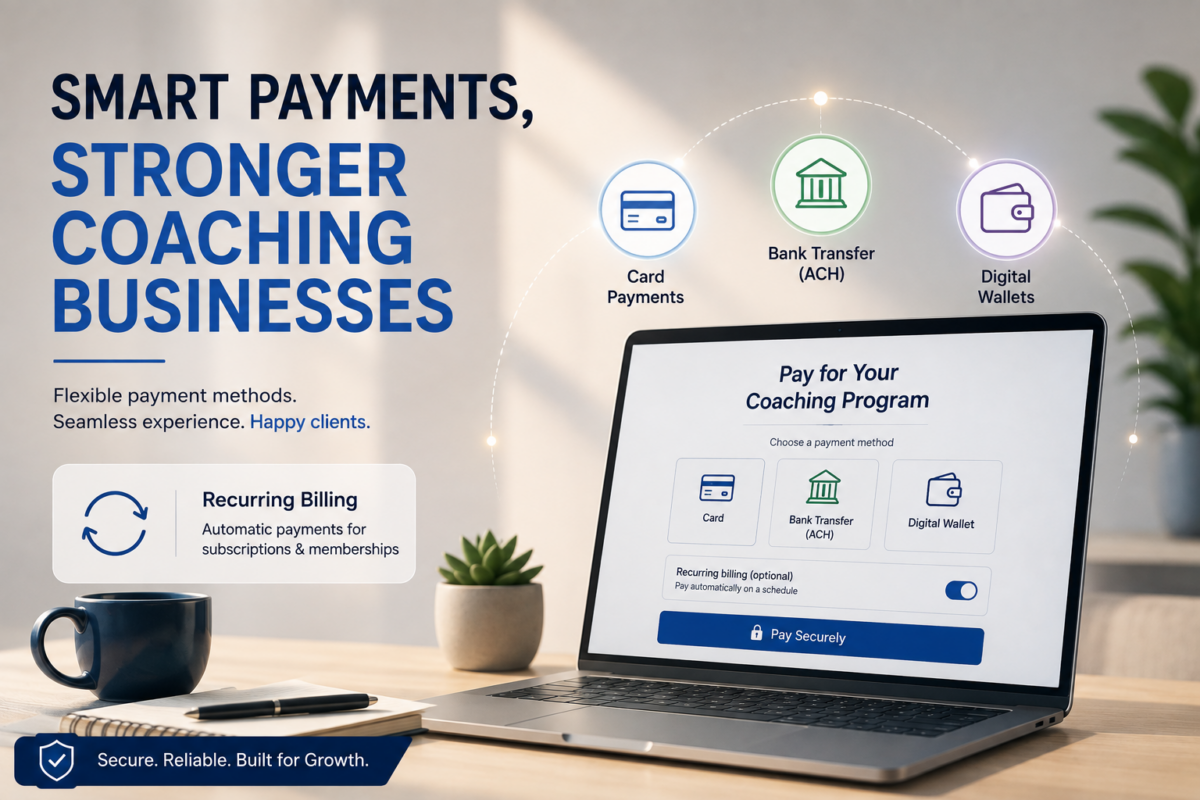
A coaching business can have a valuable program, strong customer relationships, and an effective sales process, but the payment experience can influence whether a potential client completes a purchase.
Modern coaching businesses serve different types of customers. A life coach may work with individual clients paying for personal development sessions, an executive coach may serve corporate professionals, and an online coaching platform may manage thousands of members paying through subscriptions. Because of these differences, there is no single payment method that works for every coaching business.
Choosing the right payment methods for coaching businesses requires understanding customer expectations, program pricing, business location, and the way services are delivered. The right payment options make it easier for clients to purchase coaching programs while helping businesses create smoother revenue collection processes.
Why Payment Methods Matter for Coaching Businesses?
Payment methods directly affect the customer buying experience.
When a client decides to purchase a coaching program, the payment stage is often the final step before revenue is generated. If the available payment options do not match customer preferences, the business may lose conversions even when the client is interested.
For example, an executive coach selling a $5,000 leadership program may work with international professionals who prefer different payment methods depending on their location. Some clients may prefer card payments for convenience, while others may require business bank transfers. Similarly, a wellness coach offering a monthly membership may need payment options that support automatic recurring billing.
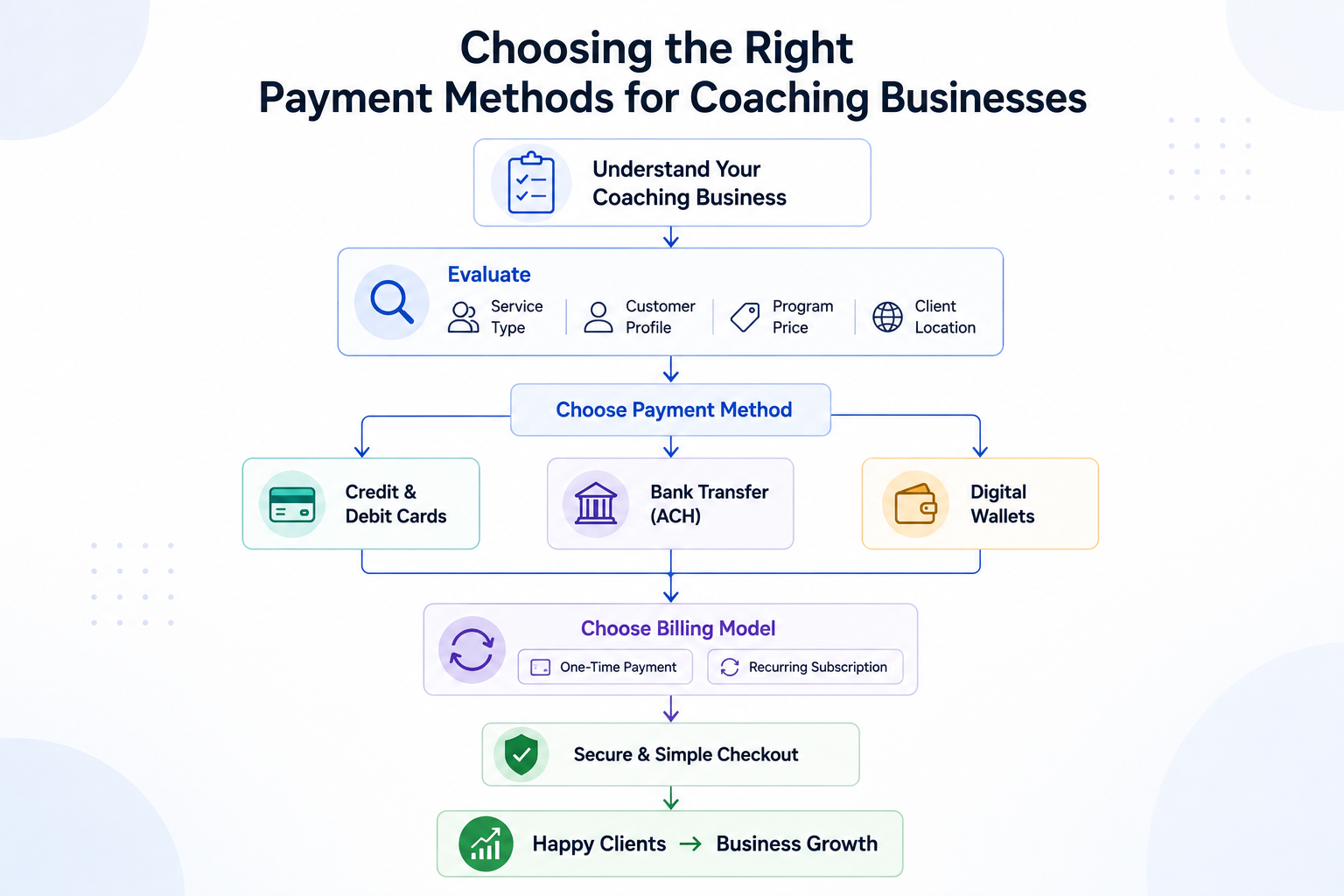
The payment method should match:
- The type of coaching service being sold
- The customer profile
- The program price
- The location of clients
- Whether payments are one-time or recurring
Understanding these factors helps businesses create payment experiences that support growth.
Common Payment Methods Used by Coaching Businesses
Different coaching models use different payment options depending on their needs.
Credit and Debit Card Payments
Card payments are one of the most common methods used by online coaching businesses because they provide a simple checkout experience.
They are often used for:
- One-on-one coaching packages
- Online coaching programs
- Membership subscriptions
- Digital coaching bundles
For example, a career coach selling a six-week interview preparation program can allow clients to purchase the program immediately through an online checkout page using a credit or debit card.
Card payments are especially useful when businesses want a quick and familiar payment experience for customers. However, businesses offering recurring programs need to consider how card payments are managed over time, including situations where cards expire or transactions fail during renewal.
Bank Transfers and ACH Payments
Bank-based payments are commonly used for higher-value coaching services. They are particularly relevant for:
- Executive coaching
- Corporate coaching programs
- Business consulting packages
- Premium mentorship programs
For example, a company purchasing a leadership development program for employees may prefer paying through a business bank transfer rather than using a personal card.
Bank payments can work well for larger transactions because they are often associated with business-to-business payments. However, they may involve more manual processes compared to automated online payment methods, especially when managing multiple clients.
Digital Wallets and Alternative Payment Options
Digital wallets have become increasingly common because many customers prefer faster checkout experiences. These payment methods allow customers to complete transactions without manually entering card details every time. They can be useful for:
- Mobile-focused coaching businesses
- Lower-cost coaching memberships
- International customers familiar with digital payment options
For example, a fitness coaching platform with hundreds of monthly members may offer multiple payment choices to reduce friction during signup. The availability of different payment options can improve customer convenience, especially when serving a diverse audience.
Recurring Payment Methods for Coaching Memberships
Many coaching businesses are moving toward recurring revenue models. Examples include:
- Monthly accountability programs
- Wellness communities
- Business coaching memberships
- Ongoing mentorship programs
Recurring payment methods allow customers to continue accessing services without manually paying each month.
For example, a personal growth coach may create a membership community where clients receive weekly sessions, resources, and group discussions for a monthly fee. However, recurring payments require reliable systems because failed renewals can interrupt customer access and reduce predictable revenue.
Businesses using subscriptions should understand how recurring payments are managed, including handling expired cards, unsuccessful transactions, and customer payment updates.
Choosing Payment Methods Based on Coaching Business Type
Different coaching businesses should prioritize different payment options.
A new life coach offering individual sessions may only need basic online payment acceptance. A premium executive coach may require payment options suitable for larger transactions and corporate clients. A coaching platform supporting multiple coaches may need more advanced payment capabilities because it manages payments at a larger scale.
Some examples:
A fitness coach selling a $99 monthly membership may prioritize fast online checkout and recurring payments.
A business coach selling a $10,000 transformation program may focus on payment flexibility, installment options, and reliable transaction processing.
A coaching marketplace may require systems that support multiple coaches, customer payments, and platform operations.
The payment method should support the business model rather than create unnecessary complexity.
Payment Methods and Client Trust
Payment options are not only a technical decision. They also influence customer confidence.
Clients making a significant investment in coaching want to feel that the payment process is secure, professional, and easy to understand. A confusing payment process can create uncertainty.
For example, a customer purchasing an expensive leadership coaching package may hesitate if they receive unclear payment instructions or have limited payment options. A structured payment experience helps build trust before the coaching relationship even begins.
How Payment Methods Connect With Coaching Payment Infrastructure?
Selecting payment methods is only one part of building a complete payment system.
Growing coaching businesses also need to consider how payments connect with checkout processes, client onboarding, recurring billing, and revenue management. A business choosing payment methods should also understand how to build an effective online coaching payment system that supports the entire customer journey.
As coaching businesses expand, payment infrastructure becomes increasingly important for managing larger transaction volumes, different customer types, and more complex services.
Final Thoughts
The right payment methods for coaching businesses depend on how the business operates, who the customers are, and how services are delivered.
There is no universal payment option that fits every coaching company. A successful approach combines customer convenience with reliable payment management.
Whether a business sells individual coaching sessions, premium programs, memberships, or global coaching services, choosing suitable payment methods helps create a smoother buying experience and supports long-term growth.

Categories
- ACH Payments (10)
- adult payment processing (11)
- AI (9)
- Altcoins (10)
- Banking (10)
- Bitcoin (133)
- Bitcoin ETF (11)
- Bitcoin Price (30)
- Blockchain (50)
- Brokering World Hunger Away (16)
- Business (17)
- card payment processing (10)
- CBD (11)
- CBDC (11)
- Chargeback (8)
- coaching business (11)
- COVID-19 (3)
- Crypto ATMs (1)
- Crypto Banking (17)
- Crypto Bill (1)
- Crypto business owner platform (31)
- Crypto Investment (3)
- Crypto Markets (5)
- Crypto Payment (35)
- Crypto Payment Processor (4)
- Crypto Prices (1)
- Crypto Trading (92)
- Cryptocurrency (402)
- Cryptocurrency Exchange (108)
- Data Visualization (2)
- dating platforms (11)
- debt collection payment processing (10)
- Decentralized Finance (7)
- DeFi Payment (9)
- DEX (3)
- Digital Currency (23)
- dropshipping payment processing (12)
- Ethereum (2)
- FAQ (7)
- file sharing payment processing (11)
- Finance (25)
- Financial Equality (4)
- Financial Freedom (8)
- Forex (35)
- hemp (1)
- ICO (2)
- Investment (11)
- IPTV (11)
- Merchant Account (10)
- Mining (3)
- News (66)
- NFTs (2)
- online gambling (11)
- P2P (1)
- Paybito (147)
- PayBitoPro (693)
- PayBitoPro Coin Listing (6)
- PayBitoPro Exchange (2)
- Payment Gateway (48)
- peptide (10)
- Post COVID Digital Transformation (1)
- Press Release (130)
- Privacy & Security (3)
- Real Estate (1)
- Stablecoin (5)
- Technology (15)
- Travel (11)
- Uncategorized (10)
- US Presidential Election (2)
- Utility Coin (1)
- Web3 business (4)
- Web3 Wallets (2)
- White Label Crypto Exchange (8)
Recent Posts
- Payment Gateway vs. Payment Orchestration: What’s the Difference?
- What Is Smart Payment Routing? Strategies to Optimize Payment Performance
- How to Improve Payment Approval Rates for High-Risk Businesses?
- Why Are Online Payments Failing? Common Causes and How to Fix Them
- How to Use Multiple Payment Processors to Reduce Business Disruptions?