Why Coaching Business Payments Fail (And How to Recover Lost Revenue) ?
- August 6, 2026
- Soham Guchait
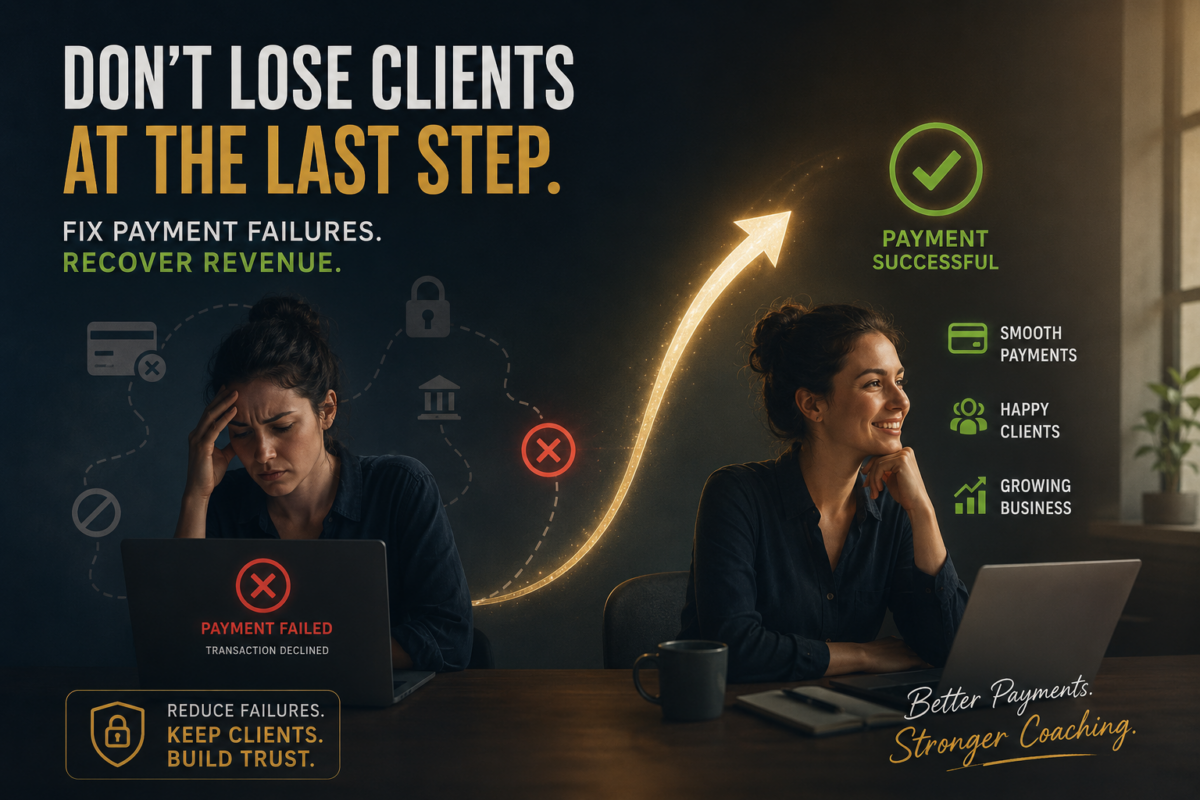
A coaching business can successfully convert a potential customer into a paying client and still lose revenue at the final step: Payment Completion. A client may be ready to purchase a coaching program, subscribe to a membership, or continue an existing service, but the transaction fails before the business receives payment.
Payment failures are not always caused by customers refusing to pay. In many cases, transactions fail because of technical issues, bank restrictions, outdated payment information, security checks, or problems within the payment process itself. Understanding why coaching payments fail helps businesses reduce lost revenue, improve customer experience, and create more reliable payment operations.
Why Payment Failures Are a Major Challenge for Coaching Businesses?
Coaching businesses often rely on digital payments because services are delivered online and customers may come from different locations. A failed payment can affect different types of coaching models.
For example, a business coach selling a $3,000 leadership program may lose a new customer if the payment fails during checkout. A wellness coaching company with monthly subscriptions may lose recurring revenue if existing members cannot complete renewal payments.
Unlike physical products, coaching services depend heavily on trust and customer relationships. A payment problem at the wrong moment can create unnecessary friction between the business and the client. The first step to solving payment failures is understanding that different problems can happen at different stages of the payment process.
Common Reasons Coaching Payments Fail
Card Declines and Bank Restrictions
One of the most common reasons online coaching payments fail is a card decline from the customer’s bank. Banks may decline transactions for several reasons, including:
- Unusual spending patterns
- International transaction restrictions
- Security concerns
- Insufficient available funds
- Customer account restrictions
For example, an executive coach based in the United States may sell a premium coaching program to a client in another country. The customer has enough funds, but the bank blocks the transaction because it appears unusual. In this situation, the customer is willing to pay, but the payment process creates a barrier.
Businesses should understand that a declined transaction does not always mean a lost customer. Clear communication and alternative payment options can help recover these situations.
Expired or Updated Payment Information
Recurring coaching programs are especially affected by outdated payment details. A customer may successfully subscribe to a coaching membership, but future payments fail because:
- A card expires
- A customer receives a replacement card
- Billing information changes
For example, a personal development community with hundreds of monthly members may experience several failed renewals each month simply because customers have updated their payment details. Without a process to identify and recover these failed payments, businesses can lose recurring revenue from clients who still want the service.
Incorrect Payment Information
Simple mistakes during checkout can also cause payment failures. Customers may enter:
- Incorrect card numbers
- Wrong expiration dates
- Incorrect billing information
These issues are common when customers are completing payments quickly or using unfamiliar checkout experiences. A clear and user-friendly payment process can reduce unnecessary transaction failures.
Fraud Detection and Security Checks
Payment systems use security measures to identify suspicious transactions. Sometimes legitimate customers may experience declines because a transaction triggers additional security checks.
For example, a customer purchasing an expensive coaching package from another country may appear unusual because of the transaction value, location, or payment behavior.
Security systems are important for protecting businesses, but businesses also need to understand how these checks affect genuine customers.
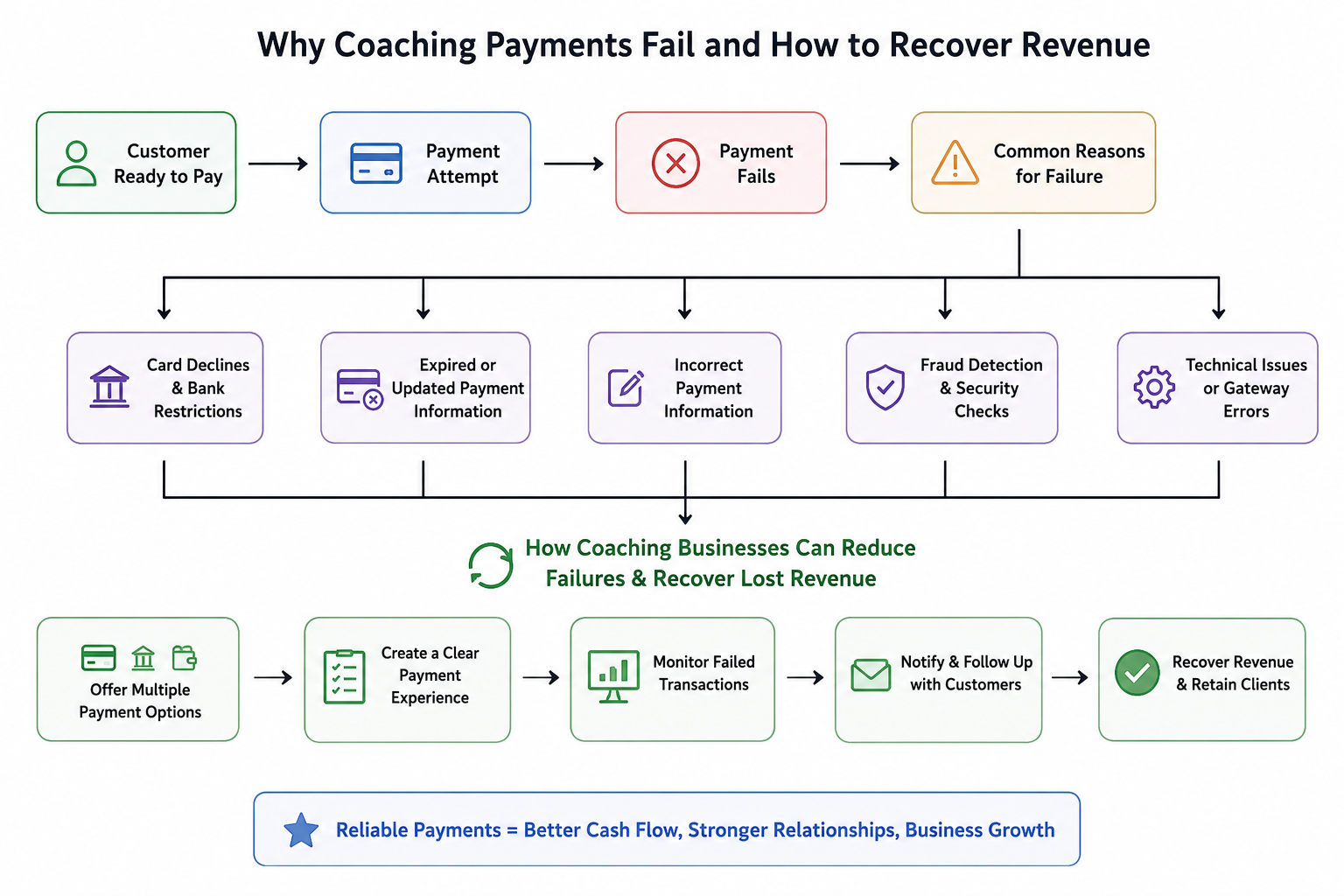
How Coaching Businesses Can Reduce Failed Payments?
Reducing payment failures requires improving both the customer experience and the underlying payment process.
Offer Multiple Payment Options
Different customers prefer different ways to pay.
A corporate client purchasing executive coaching may prefer bank payments, while an individual customer joining a monthly coaching membership may prefer card payments. Providing suitable payment options can reduce dependence on one payment method. However, businesses should choose payment options that align with their customer base rather than adding unnecessary complexity.
Create a Clear Payment Experience
Payment issues often happen because customers are uncertain about what they are purchasing.
A clear checkout process should explain:
- Program details
- Payment amount
- Billing frequency
- Renewal terms
- Refund expectations
For example, a coaching membership should clearly communicate that customers will be charged monthly rather than making them discover recurring billing after payment.
Clear expectations reduce confusion and improve customer confidence.
Monitor Failed Transactions
Businesses cannot solve payment problems they do not know about. Growing coaching companies should track:
- Failed transactions
- Decline reasons
- Subscription renewal failures
- Customer payment updates
This allows businesses to identify patterns. For example, if international customers frequently experience failed payments, the business may need to review payment availability in different regions.
Recovering Revenue From Failed Coaching Payments
A failed payment does not always represent a lost customer. Many failures happen because of temporary issues. A recovery process may include:
- Notifying customers about unsuccessful payments
- Allowing customers to update payment details
- Providing alternative payment methods
- Following up before access is interrupted
While recovering failed payments helps businesses protect revenue before a transaction is completed, coaching companies must also prepare for situations where payments are successfully processed but later disputed by customers. This makes understanding chargeback prevention for coaching businesses essential, especially for high-value coaching programs, memberships, and long-term coaching relationships.
For example, a fitness coaching platform may allow a customer several days to update payment information before removing access to a membership. This approach protects customer relationships while improving revenue recovery.
How Failed Payments Affect Subscription Coaching Businesses?
Recurring coaching programs are especially sensitive to payment failures because revenue depends on successful renewals.
A business with 1,000 subscribers may lose significant monthly revenue if even a small percentage of renewals fail. This makes payment reliability an important part of subscription management.
Businesses offering memberships should understand how recurring payments work and how failed renewals can be managed effectively.
Building Better Payment Infrastructure as Coaching Businesses Grow
As coaching companies expand, payment failures become more than individual transaction problems. They become operational challenges. A growing business may need better payment infrastructure, including a reliable merchant account for coaching businesses, to support higher transaction volumes, recurring billing, and more consistent payment acceptance.
- Managing different payment methods
- Supporting international customers
- Monitoring transaction performance
- Improving recurring billing success
- Maintaining accurate payment records
Understanding the broader payment processing system helps businesses identify where failures happen and how to improve reliability.
Final Thoughts
Coaching payments fail for many reasons, and not every failed transaction means a customer has changed their mind.
Bank restrictions, outdated payment information, security checks, and technical issues can all prevent successful payments. By understanding these causes, improving payment experiences, and creating recovery processes, coaching businesses can protect revenue while providing a better experience for clients.
Reliable payment operations allow coaching companies to focus on delivering value instead of losing revenue to avoidable payment problems.

Categories
- ACH Payments (10)
- adult payment processing (11)
- AI (9)
- Altcoins (10)
- Banking (10)
- Bitcoin (133)
- Bitcoin ETF (11)
- Bitcoin Price (30)
- Blockchain (50)
- Brokering World Hunger Away (16)
- Business (17)
- card payment processing (10)
- CBD (11)
- CBDC (11)
- coaching business (11)
- COVID-19 (3)
- Crypto ATMs (1)
- Crypto Banking (17)
- Crypto Bill (1)
- Crypto business owner platform (31)
- Crypto Investment (3)
- Crypto Markets (5)
- Crypto Payment (35)
- Crypto Payment Processor (4)
- Crypto Prices (1)
- Crypto Trading (92)
- Cryptocurrency (402)
- Cryptocurrency Exchange (108)
- Data Visualization (2)
- dating platforms (11)
- debt collection payment processing (10)
- Decentralized Finance (7)
- DeFi Payment (9)
- DEX (3)
- Digital Currency (23)
- dropshipping payment processing (12)
- Ethereum (2)
- FAQ (7)
- file sharing payment processing (11)
- Finance (25)
- Financial Equality (4)
- Financial Freedom (8)
- Forex (35)
- hemp (1)
- ICO (2)
- Investment (11)
- IPTV (11)
- Merchant Account (10)
- Mining (3)
- News (66)
- NFTs (2)
- online gambling (11)
- P2P (1)
- Paybito (139)
- PayBitoPro (693)
- PayBitoPro Coin Listing (6)
- PayBitoPro Exchange (2)
- Payment Gateway (40)
- peptide (10)
- Post COVID Digital Transformation (1)
- Press Release (130)
- Privacy & Security (3)
- Real Estate (1)
- Stablecoin (5)
- Technology (15)
- Travel (11)
- Uncategorized (9)
- US Presidential Election (2)
- Utility Coin (1)
- Web3 business (4)
- Web3 Wallets (2)
- White Label Crypto Exchange (8)
Recent Posts
- ACH vs Wire Transfer: Which Payment Method Is Better for Businesses?
- ACH Fraud Prevention: How Businesses Can Secure Bank Account Payments?
- ACH Credit vs ACH Debit: What’s the Difference? With Real Examples
- ACH vs Credit Card: Which Payment Method Is Better for Businesses?
- How Long Do ACH Payments Take? Processing Times, Settlement, and Same Day ACH