Why Are Debt Collection Businesses Considered High Risk for Payment Processing?
- August 10, 2026
- Soham Guchait
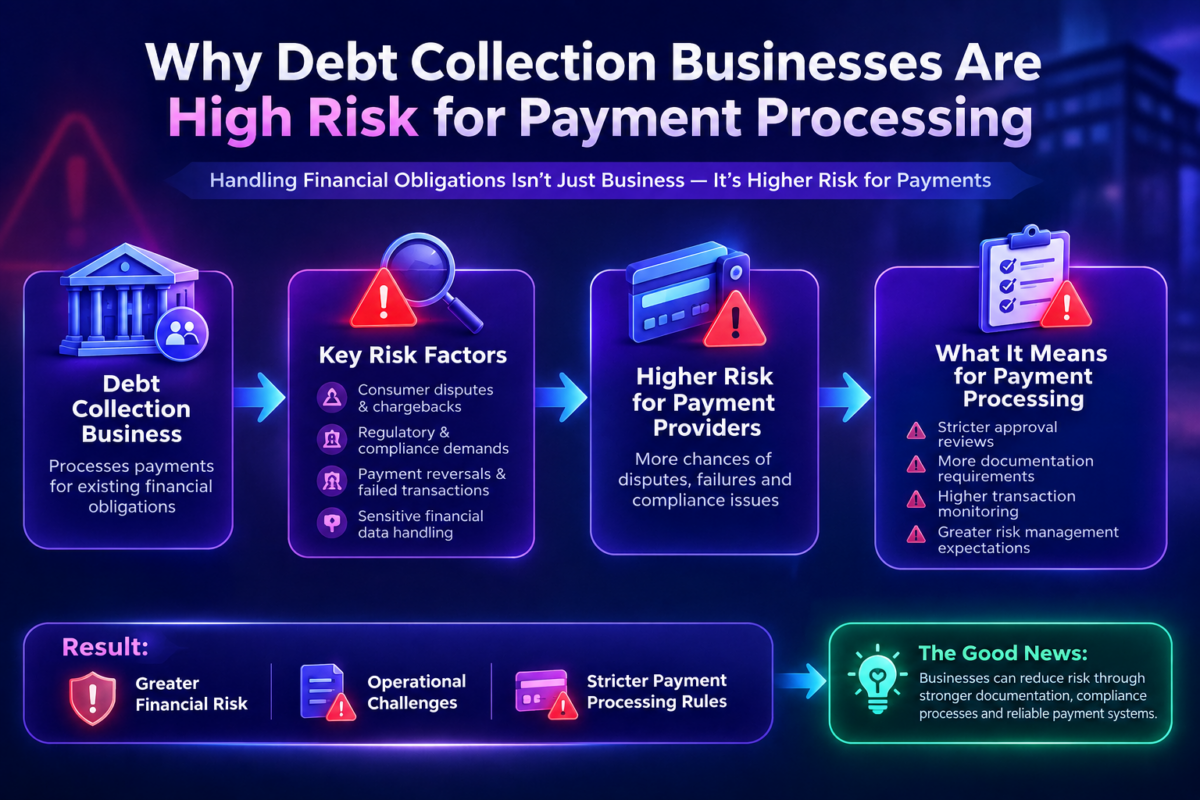
A debt collection agency may have legitimate operations, established clients, and a consistent repayment process, yet still face additional scrutiny when applying for payment processing services. Unlike traditional businesses where customers willingly purchase products or services, collection agencies process payments connected to existing financial obligations.
This difference changes how payment risk is evaluated.
Payment providers analyze industries based on factors such as transaction disputes, regulatory requirements, consumer behavior, and the likelihood of payment reversals. Because debt collection businesses handle sensitive financial interactions and often process large volumes of repayment transactions, they are commonly categorized as high-risk businesses.
Understanding why debt collection is considered high risk can help agencies prepare better documentation, improve payment operations, and create stronger processes for accepting consumer repayments.
What Makes Debt Collection a High-Risk Industry for Payment Processing?
A high-risk classification does not necessarily mean a business is unreliable or operating improperly. It generally means payment providers consider the industry to have a higher possibility of financial disputes, compliance challenges, or transaction-related risks.
Debt collection businesses face unique conditions that influence this assessment.
Unlike ecommerce businesses where a customer chooses to buy a product, debt collection transactions are connected to previous financial obligations. Consumers may have different levels of awareness, agreement, or willingness regarding payments, which can increase the possibility of disputes.
For example, a medical debt collection agency may contact consumers regarding outstanding healthcare balances. Even when a consumer agrees to a repayment plan, disagreements about account information, payment amounts, or previous communications may later result in disputes. Because of these factors, payment providers often evaluate collection businesses more carefully before approving payment processing.
Why Payment Providers Consider Debt Collection Businesses Higher Risk?
Several factors contribute to the higher risk classification of debt collection agencies.
Consumer Disputes and Chargeback Risk
One of the biggest concerns in debt collection payment processing is the possibility of payment disputes. A consumer may dispute a transaction for several reasons:
- They do not recognize the payment
- They believe the payment amount is incorrect
- They claim the transaction was unauthorized
- They misunderstand the repayment arrangement
For example, a collection agency may establish a monthly repayment plan with a consumer. The first few payments are completed successfully, but later the consumer disputes a transaction because they no longer recognize the agreement details.
A high number of disputes can create financial losses, additional administrative work, and increased scrutiny from payment providers. Collection agencies should understand how dispute management and chargeback prevention practices can help reduce these risks.
Regulatory and Compliance Expectations
Debt collection operates within a highly regulated environment because businesses handle personal and financial information. Payment providers consider whether a collection agency has appropriate processes for:
- Consumer verification
- Payment authorization
- Data protection
- Transaction monitoring
- Record keeping
A business that cannot demonstrate clear operational procedures may face difficulties during payment processing approval.
For example, a loan recovery company processing online repayments may need to show how it verifies consumer information, manages payment records, and protects sensitive financial details. Strong compliance practices help demonstrate that payment operations are structured and responsible.
Payment Reversal and Transaction Reliability Risks
Debt collection payments often involve repayment plans that continue over weeks, months, or even longer periods. This creates additional transaction risks. A consumer may successfully complete an initial payment but fail to complete future installments due to:
- Expired cards
- Insufficient funds
- Closed bank accounts
- Updated payment information
For example, a credit recovery company managing thousands of repayment accounts may experience hundreds of failed recurring payments each month if payment information is not properly maintained.
These failures can affect expected recovery timelines and increase operational workload. Understanding how to improve payment success rates is an important part of managing payment reliability.
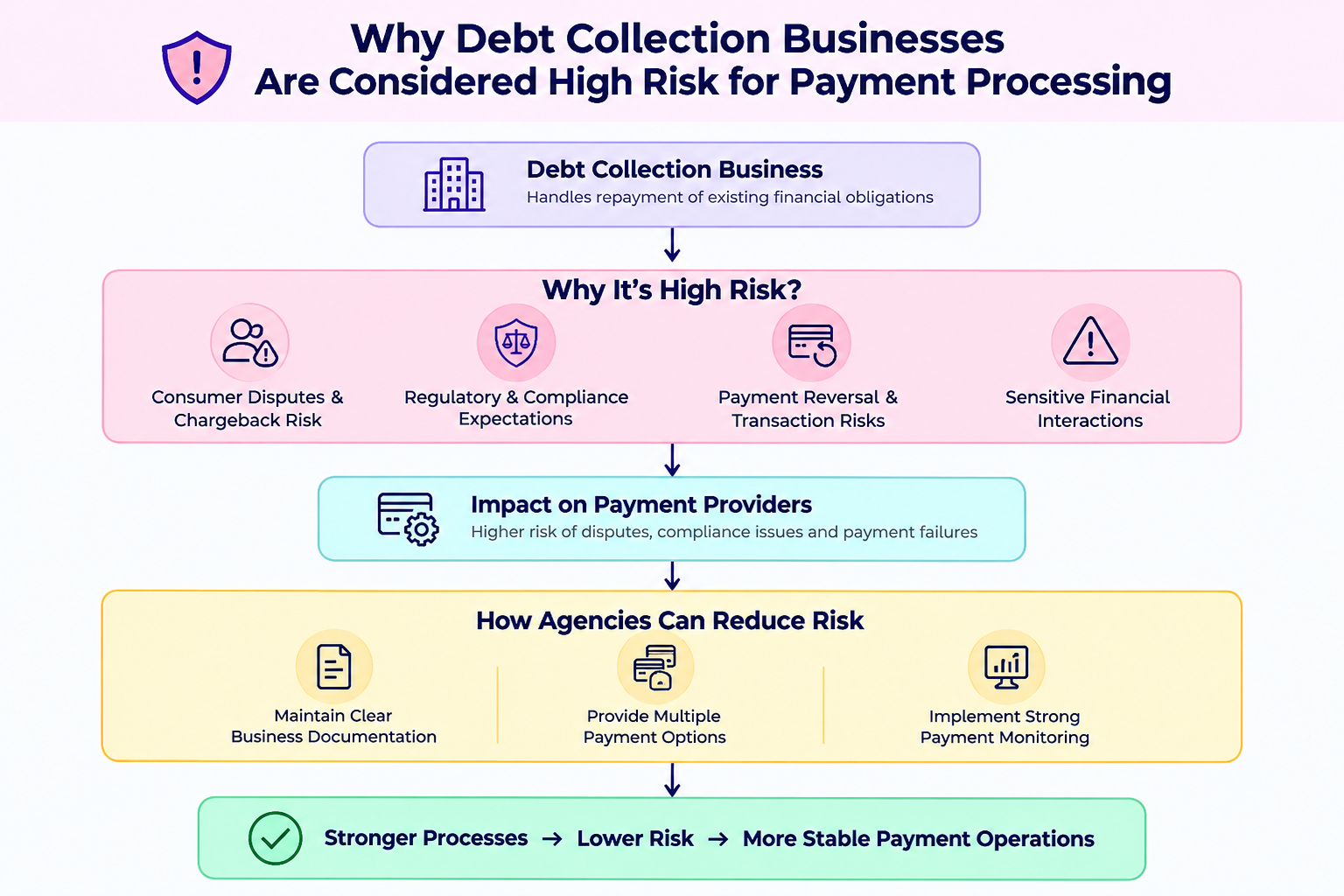
How Debt Collection Agencies Can Reduce Payment Processing Risk?
Although debt collection is considered high risk, businesses can improve their payment operations by creating transparent processes and maintaining strong operational controls.
Maintain Clear Business Documentation
Payment providers typically review business information before approving payment services. Collection agencies should maintain accurate documentation related to:
- Business registration
- Client relationships
- Payment processes
- Consumer communication procedures
- Transaction history
A well-organized application process helps payment providers better understand how the business operates.
Provide Multiple Payment Options
Offering different payment methods can improve consumer payment success and reduce dependency on a single transaction channel.
Common options include:
- Credit and debit card payments
- ACH payments
- Online payment portals
- Scheduled repayment options
For example, a medical debt collection company may allow consumers to choose between paying a balance immediately through a card payment or setting up a recurring ACH repayment plan. Providing flexibility can improve payment completion rates while creating a better consumer experience.
Implement Strong Payment Monitoring
High-risk industries require greater attention to transaction activity. Collection agencies can monitor:
- Failed payments
- Unusual transaction patterns
- Repeated payment attempts
- Suspicious account activity
Early detection allows businesses to address problems before they become larger operational issues.
How High-Risk Classification Affects Debt Collection Businesses?
Being classified as high risk can affect several aspects of payment processing.
Collection agencies may experience:
- More detailed approval reviews
- Additional documentation requirements
- Increased focus on transaction monitoring
- Stricter risk management expectations
However, understanding these requirements allows businesses to prepare effectively.
A debt collection agency that demonstrates clear payment procedures, responsible consumer interactions, and reliable transaction management is better positioned to build stable payment operations.
Conclusion
Debt collection businesses are considered high risk for payment processing because they operate in an environment involving financial obligations, consumer disputes, regulatory expectations, and recurring payment challenges.
The classification is based on industry risk factors rather than the legitimacy of individual businesses. By improving documentation, strengthening compliance processes, offering reliable payment options, and monitoring transactions effectively, collection agencies can create more stable payment operations.
Understanding these risks is the first step toward building a reliable payment environment and preparing for the requirements involved in obtaining payment processing approval.

Categories
- ACH Payments (10)
- adult payment processing (11)
- AI (9)
- Altcoins (10)
- Banking (10)
- Bitcoin (133)
- Bitcoin ETF (11)
- Bitcoin Price (30)
- Blockchain (50)
- Brokering World Hunger Away (16)
- Business (17)
- card payment processing (10)
- CBD (11)
- CBDC (11)
- Chargeback (8)
- coaching business (11)
- COVID-19 (3)
- Crypto ATMs (1)
- Crypto Banking (17)
- Crypto Bill (1)
- Crypto business owner platform (31)
- Crypto Investment (3)
- Crypto Markets (5)
- Crypto Payment (35)
- Crypto Payment Processor (4)
- Crypto Prices (1)
- Crypto Trading (92)
- Cryptocurrency (402)
- Cryptocurrency Exchange (108)
- Data Visualization (2)
- dating platforms (11)
- debt collection payment processing (10)
- Decentralized Finance (7)
- DeFi Payment (9)
- DEX (3)
- Digital Currency (23)
- dropshipping payment processing (12)
- Ethereum (2)
- FAQ (7)
- file sharing payment processing (11)
- Finance (25)
- Financial Equality (4)
- Financial Freedom (8)
- Forex (35)
- hemp (1)
- ICO (2)
- Investment (11)
- IPTV (11)
- Merchant Account (10)
- Mining (3)
- News (66)
- NFTs (2)
- online gambling (11)
- P2P (1)
- Paybito (147)
- PayBitoPro (693)
- PayBitoPro Coin Listing (6)
- PayBitoPro Exchange (2)
- Payment Gateway (48)
- peptide (10)
- Post COVID Digital Transformation (1)
- Press Release (130)
- Privacy & Security (3)
- Real Estate (1)
- Stablecoin (5)
- Technology (15)
- Travel (11)
- Uncategorized (10)
- US Presidential Election (2)
- Utility Coin (1)
- Web3 business (4)
- Web3 Wallets (2)
- White Label Crypto Exchange (8)
Recent Posts
- Payment Gateway vs. Payment Orchestration: What’s the Difference?
- What Is Smart Payment Routing? Strategies to Optimize Payment Performance
- How to Improve Payment Approval Rates for High-Risk Businesses?
- Why Are Online Payments Failing? Common Causes and How to Fix Them
- How to Use Multiple Payment Processors to Reduce Business Disruptions?