How to Get a Merchant Account for a Debt Collection Agency? : Requirements and Approval Process
- August 10, 2026
- Soham Guchait
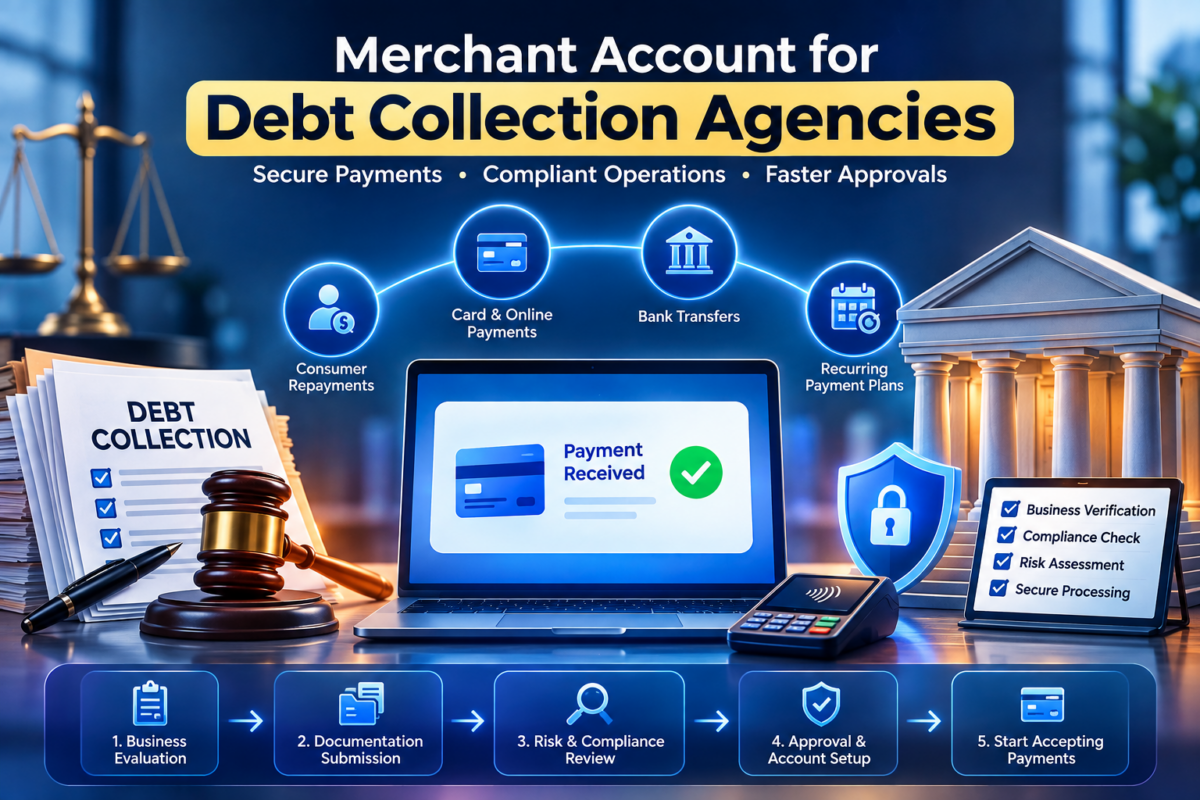
For a debt collection agency, accepting payments is a critical part of daily operations. However, obtaining payment processing approval is often more complex than it is for traditional businesses.
A collection agency may have established clients, experienced staff, and a proven recovery process, but payment providers still need to evaluate the business carefully before approving a merchant account. This is because debt collection involves financial obligations, consumer disputes, recurring payments, and strict operational requirements.
Understanding how to get a merchant account for a debt collection agency requires more than submitting an application. Businesses need to understand what payment providers evaluate, what documentation is required, and how to prepare their operations for approval.
Why Do Debt Collection Agencies Need a Specialized Merchant Account?
A merchant account allows businesses to accept electronic payments from customers or consumers. For debt collection agencies, this means having the ability to process repayment transactions through methods such as cards, bank transfers, and online payment channels.
However, debt collection payments differ from standard commercial transactions.
A retail customer purchasing a product completes a voluntary transaction. In contrast, a consumer making a debt repayment is fulfilling an existing financial obligation. This difference creates additional considerations around transaction disputes, authorization, and compliance.
For example, a medical debt collection agency may process payments from thousands of consumers who have outstanding healthcare balances. Some consumers may make a one-time payment, while others may enter into long-term repayment plans. The payment processing system must support these different scenarios while maintaining accurate records.
Because of these factors, collection agencies are often reviewed more carefully during the merchant account approval process.
How the Merchant Account Approval Process Works for Debt Collection Agencies?
Payment providers generally evaluate several aspects of a debt collection business before approving an account. The process usually involves reviewing the company’s business model, expected transaction activity, compliance procedures, and payment handling practices.
Business Verification and Risk Assessment
The first stage involves understanding the business itself. Payment providers may review:
- Business registration information
- Ownership details
- Industry experience
- Services provided
- Expected transaction volume
- Target customers or clients
A collection agency specializing in medical debt recovery, for example, may be evaluated differently from a company managing commercial account receivables because the transaction patterns and consumer interactions may vary. The goal is to understand how the business operates and identify potential payment risks before processing begins.
Reviewing Payment Processing Practices
Payment providers also evaluate how the agency manages consumer payments. Important areas may include:
- How do consumers authorize payments?
- How payment information is collected?
- How refunds or disputes are handled?
- How are transaction records maintained?
- How failed payments are managed?
For example, a loan recovery company offering monthly repayment plans should have processes for handling recurring payments, failed transactions, and payment updates. A clear payment workflow helps demonstrate that the business can manage transactions responsibly.
Documentation Requirements
Debt collection agencies typically need to provide business documentation during the approval process. Common documents may include:
- Business registration records
- Ownership information
- Bank account details
- Processing history, if available
- Website information
- Business policies
- Compliance documentation
The exact requirements vary depending on the payment provider, business model, location, and expected transaction activity. Providing complete and accurate information can help reduce delays during review.
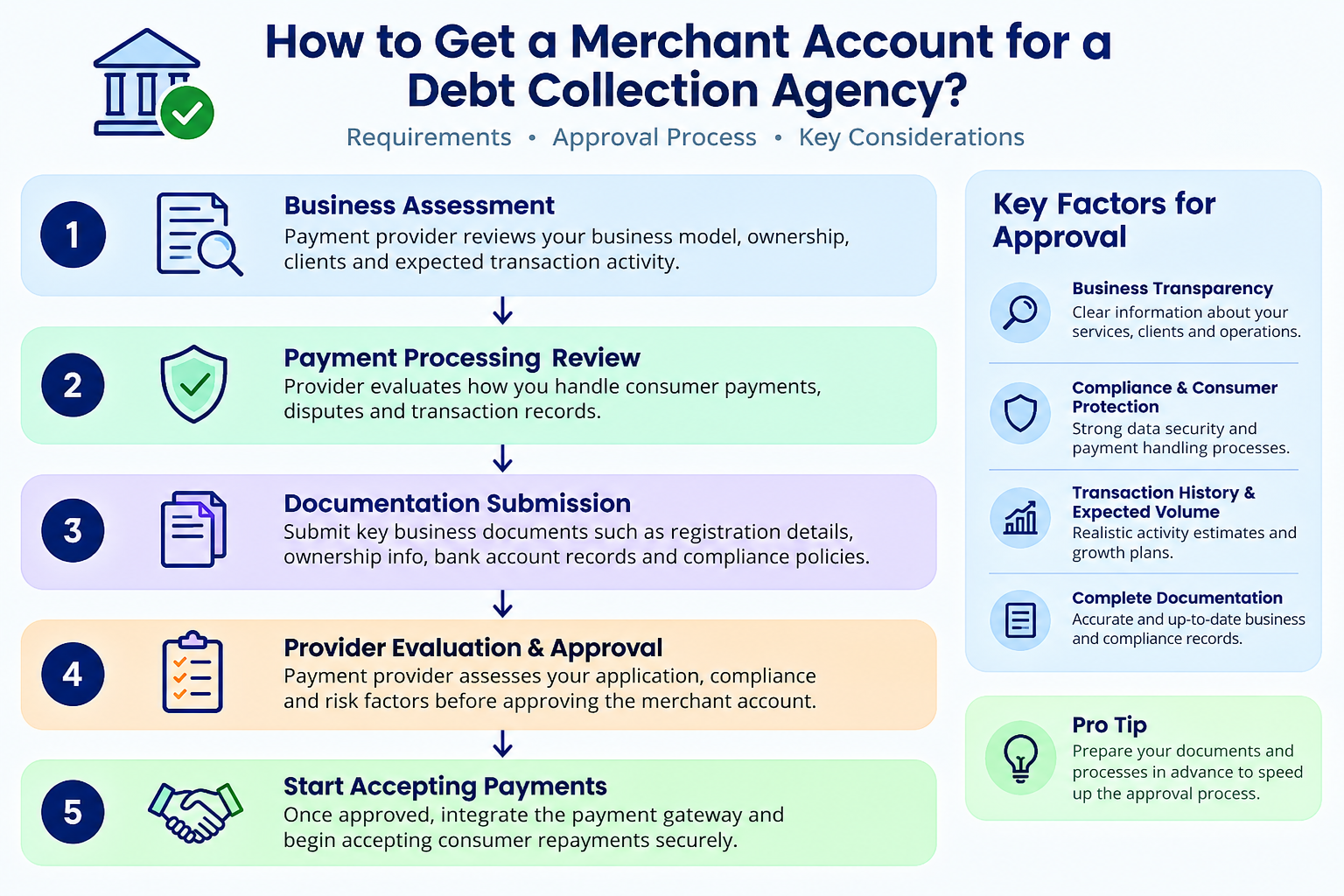
Factors That Can Affect Merchant Account Approval
Even legitimate collection agencies may face challenges during approval if important information is missing or unclear.
Several factors can influence the decision.
Business Transparency
Payment providers need a clear understanding of what the company does and how it operates. A collection agency should clearly explain:
- The type of debt it manages
- Who are its clients?
- How do consumers make payments?
- What payment channels are used?
For example, a collection software company helping agencies manage repayment portals should clearly explain whether it processes payments directly or provides technology services for other businesses.
Clear business information helps reduce uncertainty during evaluation.
Compliance and Consumer Protection Processes
Debt collection involves handling sensitive financial information, making operational controls extremely important. Businesses should have processes related to:
- Consumer verification
- Data protection
- Payment authorization
- Record management
- Transaction monitoring
Strong compliance practices demonstrate that the agency understands its responsibilities when handling consumer payments. Collection agencies should also understand the broader payment compliance requirements that influence payment processing operations.
Transaction History and Expected Volume
Payment providers often consider expected transaction activity when reviewing applications.
A small collection agency processing a limited number of payments may have different requirements compared with a national recovery company managing thousands of transactions every month.
For example, a collection business expanding from phone-based payments to digital repayment portals may need to explain expected growth in transaction volume and payment activity.
Common Reasons Debt Collection Merchant Account Applications Are Rejected
Merchant account applications may be delayed or rejected when businesses fail to provide sufficient information or demonstrate proper payment controls.
Common issues include:
- Incomplete documentation
- Unclear business operations
- Lack of payment processing history
- Poor dispute management practices
- Weak compliance procedures
- Unexpected transaction volume
For example, a newly established collection agency applying for payment processing without clear consumer payment procedures may face additional review because the provider cannot accurately evaluate potential risks. Preparation before applying can significantly improve the approval process.
Conclusion
Getting a merchant account for a debt collection agency requires careful preparation because payment providers evaluate collection businesses based on risk, compliance, transaction patterns, and operational processes.
The approval process is not only about proving that a business exists; it is about demonstrating that the agency can manage consumer payments responsibly and maintain reliable payment operations.
By preparing documentation, establishing clear payment procedures, and understanding approval requirements, debt collection agencies can create a stronger foundation for accepting digital repayments and scaling their recovery operations.

Categories
- ACH Payments (10)
- adult payment processing (11)
- AI (9)
- Altcoins (10)
- Banking (10)
- Bitcoin (133)
- Bitcoin ETF (11)
- Bitcoin Price (30)
- Blockchain (50)
- Brokering World Hunger Away (16)
- Business (17)
- card payment processing (10)
- CBD (11)
- CBDC (11)
- Chargeback (8)
- coaching business (11)
- COVID-19 (3)
- Crypto ATMs (1)
- Crypto Banking (17)
- Crypto Bill (1)
- Crypto business owner platform (31)
- Crypto Investment (3)
- Crypto Markets (5)
- Crypto Payment (35)
- Crypto Payment Processor (4)
- Crypto Prices (1)
- Crypto Trading (92)
- Cryptocurrency (402)
- Cryptocurrency Exchange (108)
- Data Visualization (2)
- dating platforms (11)
- debt collection payment processing (10)
- Decentralized Finance (7)
- DeFi Payment (9)
- DEX (3)
- Digital Currency (23)
- dropshipping payment processing (12)
- Ethereum (2)
- FAQ (7)
- file sharing payment processing (11)
- Finance (25)
- Financial Equality (4)
- Financial Freedom (8)
- Forex (35)
- hemp (1)
- ICO (2)
- Investment (11)
- IPTV (11)
- Merchant Account (10)
- Mining (3)
- News (66)
- NFTs (2)
- online gambling (11)
- P2P (1)
- Paybito (147)
- PayBitoPro (693)
- PayBitoPro Coin Listing (6)
- PayBitoPro Exchange (2)
- Payment Gateway (48)
- peptide (10)
- Post COVID Digital Transformation (1)
- Press Release (130)
- Privacy & Security (3)
- Real Estate (1)
- Stablecoin (5)
- Technology (15)
- Travel (11)
- Uncategorized (10)
- US Presidential Election (2)
- Utility Coin (1)
- Web3 business (4)
- Web3 Wallets (2)
- White Label Crypto Exchange (8)
Recent Posts
- Payment Gateway vs. Payment Orchestration: What’s the Difference?
- What Is Smart Payment Routing? Strategies to Optimize Payment Performance
- How to Improve Payment Approval Rates for High-Risk Businesses?
- Why Are Online Payments Failing? Common Causes and How to Fix Them
- How to Use Multiple Payment Processors to Reduce Business Disruptions?