Why Debt Collection Payments Fail and How Agencies Can Improve Payment Success Rates?
- August 10, 2026
- Soham Guchait
A consumer agrees to repay an outstanding balance, selects a payment method, and attempts to complete the transaction. However, instead of a successful payment confirmation, the transaction is declined or fails.
For debt collection agencies, these situations are more than simple payment interruptions. Failed transactions can delay recovery timelines, create additional follow-up work, and affect the efficiency of repayment operations.
Payment failures can happen even when a consumer is willing to make a payment. A declined card, outdated payment information, bank restrictions, security checks, or technical issues can prevent a successful transaction. Understanding why debt collection payments fail allows agencies to identify problems earlier, improve payment reliability, and create a smoother repayment experience for consumers.
Why Debt Collection Payments Fail?
Payment failures in debt collection can occur at different stages of the transaction process. Some issues are related to consumer payment information, while others involve banks, payment systems, or internal processes.
Unlike standard purchases where a failed transaction may only prevent a one-time sale, failed debt payments can interrupt repayment agreements that continue over several months.
For example, a medical debt collection agency creates a twelve-month payment plan with a consumer. The first three payments are processed successfully, but the fourth payment fails because the card on file has expired. If the issue is not identified quickly, the missed payment can delay the entire repayment schedule. Several factors contribute to payment failures in collection operations.
Common Reasons Debt Collection Payments Get Declined
Expired or Incorrect Payment Information
One of the most common causes of failed payments is outdated payment information. Consumers may change:
- Debit or credit cards
- Bank accounts
- Billing information
- Contact details
For recurring repayment plans, outdated information can create repeated payment failures.
For example, a consumer agrees to a monthly repayment arrangement using a debit card. After several successful payments, the card expires. The next scheduled payment is automatically declined because the stored payment details are no longer valid. Maintaining updated payment information and providing easy ways for consumers to update their details can reduce these interruptions.
Insufficient Funds or Bank Restrictions
Payments may also fail because the consumer’s financial institution does not approve the transaction. Common causes include:
- Insufficient account balance
- Bank security restrictions
- Account limitations
- Incorrect banking details
For example, a collection agency processing an ACH payment may receive a failed transaction because the consumer’s bank account does not have enough available funds on the scheduled payment date. In these situations, businesses need processes for handling failed payments rather than treating every failed transaction as a lost recovery opportunity.
Fraud Prevention and Security Filters
Payment systems use security checks to identify potentially suspicious transactions. While these measures help protect businesses and consumers, legitimate payments can sometimes be declined if they appear unusual.
For example, a consumer may attempt to make a larger-than-normal repayment through an online payment portal. Additional security checks may temporarily prevent the transaction from being approved.
Collection agencies need to balance transaction security with payment accessibility. Excessive restrictions can create unnecessary friction for legitimate consumers. Understanding fraud prevention strategies can help agencies reduce suspicious activity while maintaining successful payment experiences.
Technical Issues During Payment Processing
Not all payment failures are caused by consumers or banks. Technical issues may occur because of:
- Payment gateway errors
- System interruptions
- Communication failures between platforms
- Incorrect transaction data
For example, a collection agency connects its payment portal with its account management system. A technical synchronization issue prevents successful payment updates, causing confusion between completed payments and account records. Reliable payment processes require proper monitoring and accurate transaction reporting.
How Failed Payments Affect Debt Collection Operations?
Failed payments create challenges beyond the immediate loss of a transaction. For collection agencies, repeated payment failures can lead to:
- Delayed recovery timelines
- Increased manual follow-up
- Additional customer service workload
- Higher operational costs
- Interrupted repayment agreements
A collection call center managing thousands of accounts may spend significant time contacting consumers about unsuccessful payments instead of focusing on new recovery activities. Improving payment success rates allows agencies to reduce unnecessary administrative work and maintain more predictable repayment schedules.
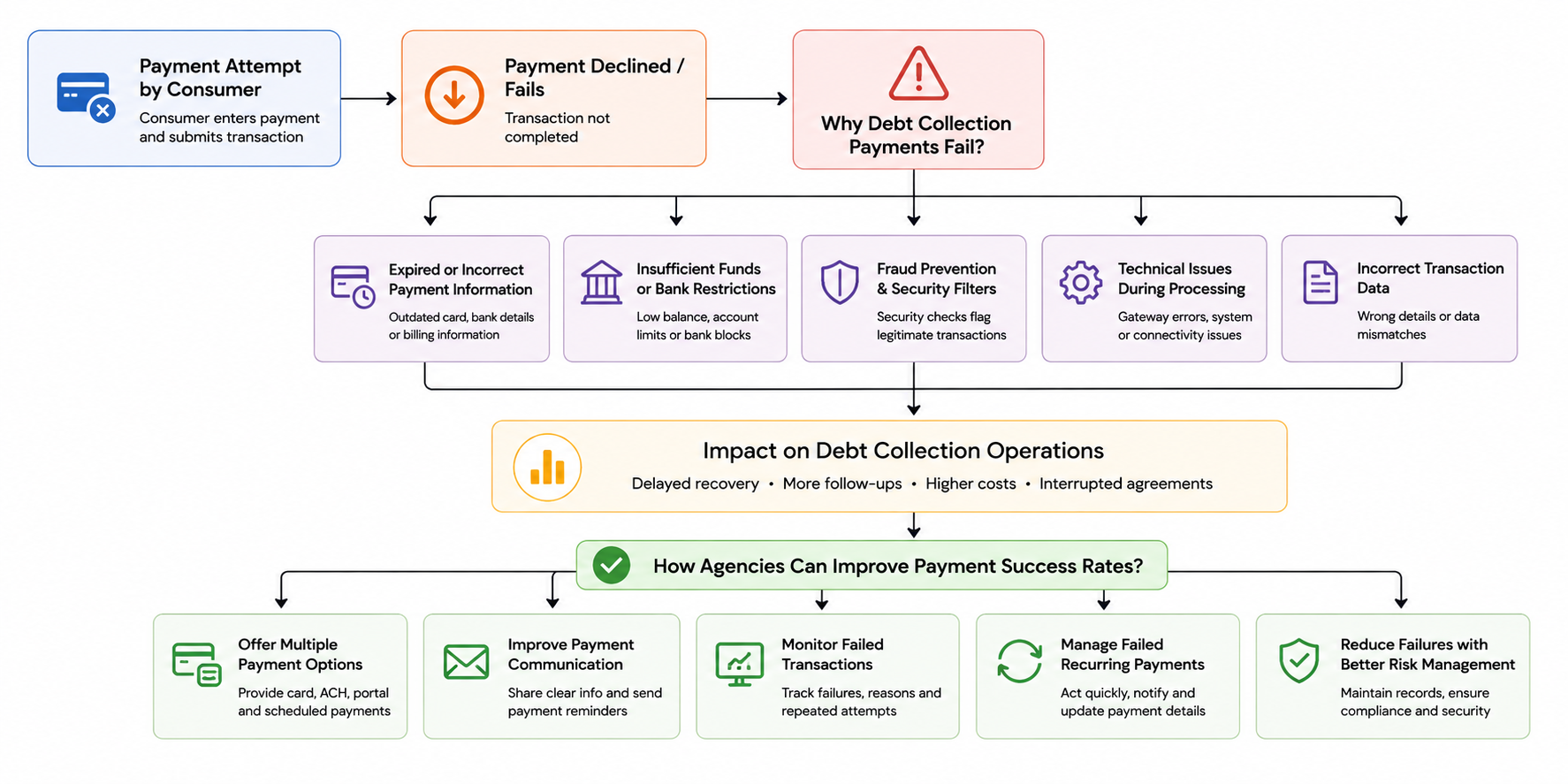
How Debt Collection Agencies Can Improve Payment Success Rates?
Reducing payment failures requires a combination of better payment processes, consumer communication, and transaction monitoring.
Offer Multiple Payment Options
Consumers have different payment preferences and financial situations. Providing multiple payment options can help prevent situations where a consumer is willing to pay but cannot complete the transaction. For example, a collection agency may allow consumers to choose between:
- Card payments
- ACH payments
- Digital Wallets (Google Pay, Apple Pay)
- Online payment portals
- Scheduled repayment options
If one payment method fails, another option may still allow the consumer to complete the repayment. Collection agencies should evaluate which payment methods best support their consumers and repayment models.
Improve Payment Communication
Clear communication can prevent many avoidable payment problems. Consumers should understand:
- Payment amounts
- Scheduled payment dates
- Accepted payment methods
- How to update payment information?
For example, sending a reminder before a scheduled installment payment can give consumers an opportunity to update expired cards or resolve account issues before the transaction fails.
Monitor Failed Transactions
Collection agencies should actively monitor unsuccessful payments rather than allowing them to remain unresolved.
Important areas to review include:
- Failure reasons
- Repeated failed attempts
- Payment method performance
- Consumer account patterns
Identifying trends can help agencies determine whether failures are caused by consumer behavior, payment methods, or technical issues.
Managing Failed Recurring Payments
Recurring payments require additional attention because a single failure can affect future installments. A consumer may agree to a six-month repayment plan, but one unsuccessful payment can disrupt the entire schedule.
Agencies should have processes for:
- Identifying failed recurring payments quickly
- Notifying consumers appropriately
- Updating payment information
- Providing alternative payment options
Effective recurring payment management helps maintain repayment continuity while reducing manual recovery efforts.
Reducing Payment Failures Through Better Risk Management
Payment reliability also depends on managing disputes, fraud risks, and compliance requirements. Collection agencies should maintain accurate records of:
- Payment authorization
- Consumer agreements
- Transaction history
- Communication records
These records help businesses understand payment issues and manage potential disputes more effectively. Strong compliance processes also support reliable payment operations by ensuring that consumer payment information is handled responsibly.
Conclusion
Debt collection payments can fail for many reasons, including outdated payment information, bank restrictions, security checks, and technical problems. These failures can slow recovery efforts and increase operational workload for collection agencies.
Improving payment success rates requires more than simply processing transactions. Agencies need effective payment options, clear communication, transaction monitoring, and reliable processes for handling failed payments.
By understanding the causes behind payment failures, debt collection businesses can create smoother repayment experiences, reduce unnecessary interruptions, and improve the efficiency of their payment operations.

Categories
- ACH Payments (10)
- adult payment processing (11)
- AI (9)
- Altcoins (10)
- Banking (10)
- Bitcoin (133)
- Bitcoin ETF (11)
- Bitcoin Price (30)
- Blockchain (50)
- Brokering World Hunger Away (16)
- Business (17)
- card payment processing (10)
- CBD (11)
- CBDC (11)
- Chargeback (8)
- coaching business (11)
- COVID-19 (3)
- Crypto ATMs (1)
- Crypto Banking (17)
- Crypto Bill (1)
- Crypto business owner platform (31)
- Crypto Investment (3)
- Crypto Markets (5)
- Crypto Payment (35)
- Crypto Payment Processor (4)
- Crypto Prices (1)
- Crypto Trading (92)
- Cryptocurrency (402)
- Cryptocurrency Exchange (108)
- Data Visualization (2)
- dating platforms (11)
- debt collection payment processing (10)
- Decentralized Finance (7)
- DeFi Payment (9)
- DEX (3)
- Digital Currency (23)
- dropshipping payment processing (12)
- Ethereum (2)
- FAQ (7)
- file sharing payment processing (11)
- Finance (25)
- Financial Equality (4)
- Financial Freedom (8)
- Forex (35)
- hemp (1)
- ICO (2)
- Investment (11)
- IPTV (11)
- Merchant Account (10)
- Mining (3)
- News (66)
- NFTs (2)
- online gambling (11)
- P2P (1)
- Paybito (147)
- PayBitoPro (693)
- PayBitoPro Coin Listing (6)
- PayBitoPro Exchange (2)
- Payment Gateway (48)
- peptide (10)
- Post COVID Digital Transformation (1)
- Press Release (130)
- Privacy & Security (3)
- Real Estate (1)
- Stablecoin (5)
- Technology (15)
- Travel (11)
- Uncategorized (10)
- US Presidential Election (2)
- Utility Coin (1)
- Web3 business (4)
- Web3 Wallets (2)
- White Label Crypto Exchange (8)
Recent Posts
- Payment Gateway vs. Payment Orchestration: What’s the Difference?
- What Is Smart Payment Routing? Strategies to Optimize Payment Performance
- How to Improve Payment Approval Rates for High-Risk Businesses?
- Why Are Online Payments Failing? Common Causes and How to Fix Them
- How to Use Multiple Payment Processors to Reduce Business Disruptions?