Chargeback Prevention for Forex Brokers and Trading Platforms
- August 13, 2026
- Soham Guchait
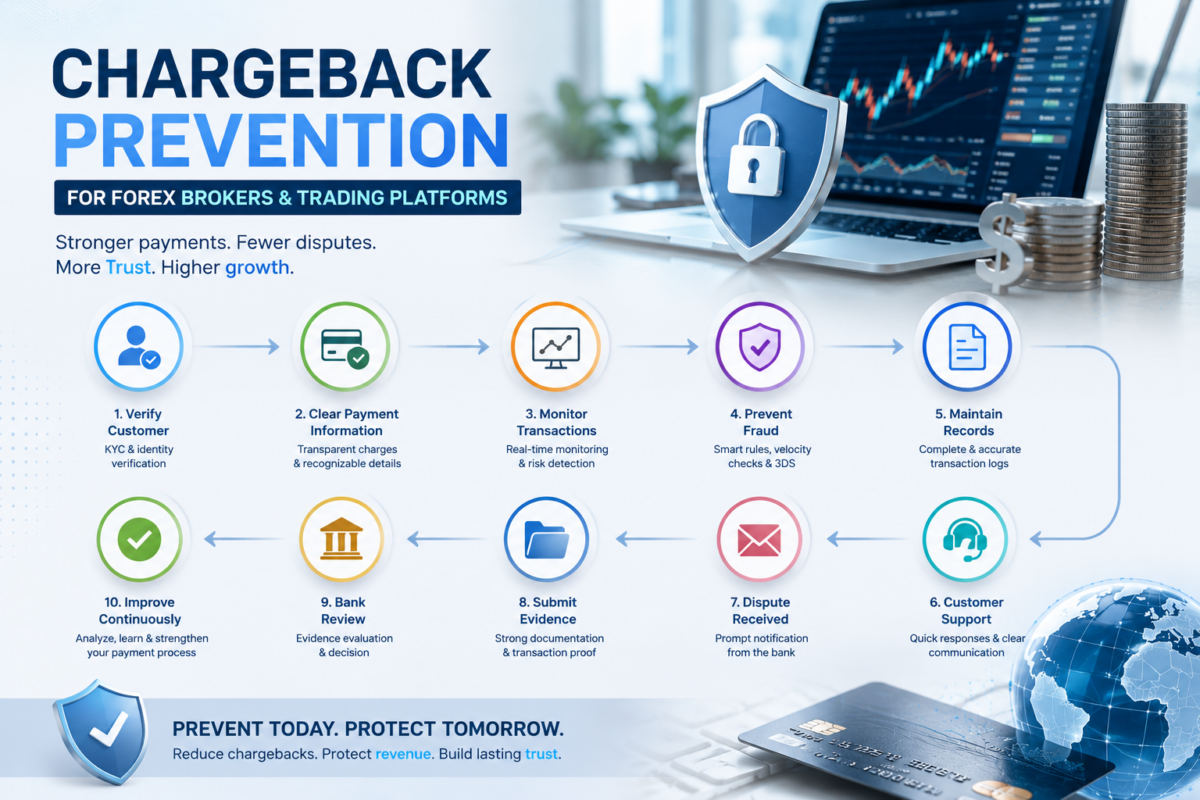
A Forex broker can successfully authorize a customer’s deposit and still face a payment problem weeks or months later when that transaction is disputed.
Trading platforms must pay close attention to chargebacks because disputed payments can involve funds deposited into trading accounts, processed through payment systems, and potentially used for trading activities. Brokers need to investigate each dispute, maintain accurate transaction records, communicate with customers, and submit proper responses through the applicable chargeback process.
Chargeback prevention for Forex brokers is therefore not simply about winning disputes after they occur. It starts much earlier – with customer verification, transparent payment information, transaction monitoring, fraud controls, and a payment operation that can produce reliable evidence when a transaction is questioned.
What Is a Chargeback?
A chargeback occurs when a cardholder disputes a transaction through their card issuer and the payment enters a formal dispute process. Depending on the circumstances and applicable card-network rules, the merchant may be required to provide supporting evidence explaining why the transaction was valid. This is different from an ordinary customer-service complaint or a voluntary refund.
For a Forex broker, a disputed transaction could involve a customer claiming that a deposit was unauthorized, not properly credited, incorrectly processed, or otherwise subject to dispute.
The broker therefore needs to distinguish between legitimate disputes, misunderstandings, and potentially fraudulent claims.
Why Do Forex Brokers Receive Chargebacks?
Forex payment disputes can arise from several different situations. The nature of trading accounts also means that the transaction history can be more complicated than a conventional online purchase.
Unauthorized Transactions
A payment may be disputed because the cardholder claims they did not authorize it.
This can happen when payment credentials are stolen or when an account is compromised. If a fraudster gains access to a customer’s trading account and funds it using stolen credentials, the resulting transaction can eventually become a chargeback.
This is why fraud prevention in Forex payment processing is closely connected to chargeback prevention. Preventing suspicious transactions before authorization is generally preferable to dealing with the dispute afterward.
Friendly Fraud and Customer Misunderstandings
Not every chargeback involves a stolen card.
A customer may recognize the transaction but dispute it because they do not recognize the merchant descriptor, misunderstand the payment, forget making the deposit, or believe the transaction should be reversed.
Visa identifies unrecognized transactions and first-party misuse as important sources of payment disputes and emphasizes the value of detailed transaction information in preventing unnecessary disputes.
For example, a trader may see an unfamiliar business name on a card statement and assume the payment was fraudulent, even though the payment was used to fund their verified brokerage account. Clear merchant identification and accessible transaction information can help reduce this type of confusion.
Trading-Related Disputes
A particularly important distinction for Forex businesses is that a payment dispute does not necessarily mean the underlying trading activity was fraudulent.
Consider a customer who deposits $5,000 into a trading account and subsequently loses $2,000 through trading. The customer later disputes the original $5,000 card transaction.
The broker may need to demonstrate what the payment was for, when it was authorized, how the account was funded, and what relevant records exist. The trading outcome itself should not be assumed to determine the validity of the original payment. This makes accurate transaction and account records particularly important.
How Can Forex Brokers Prevent Chargebacks?
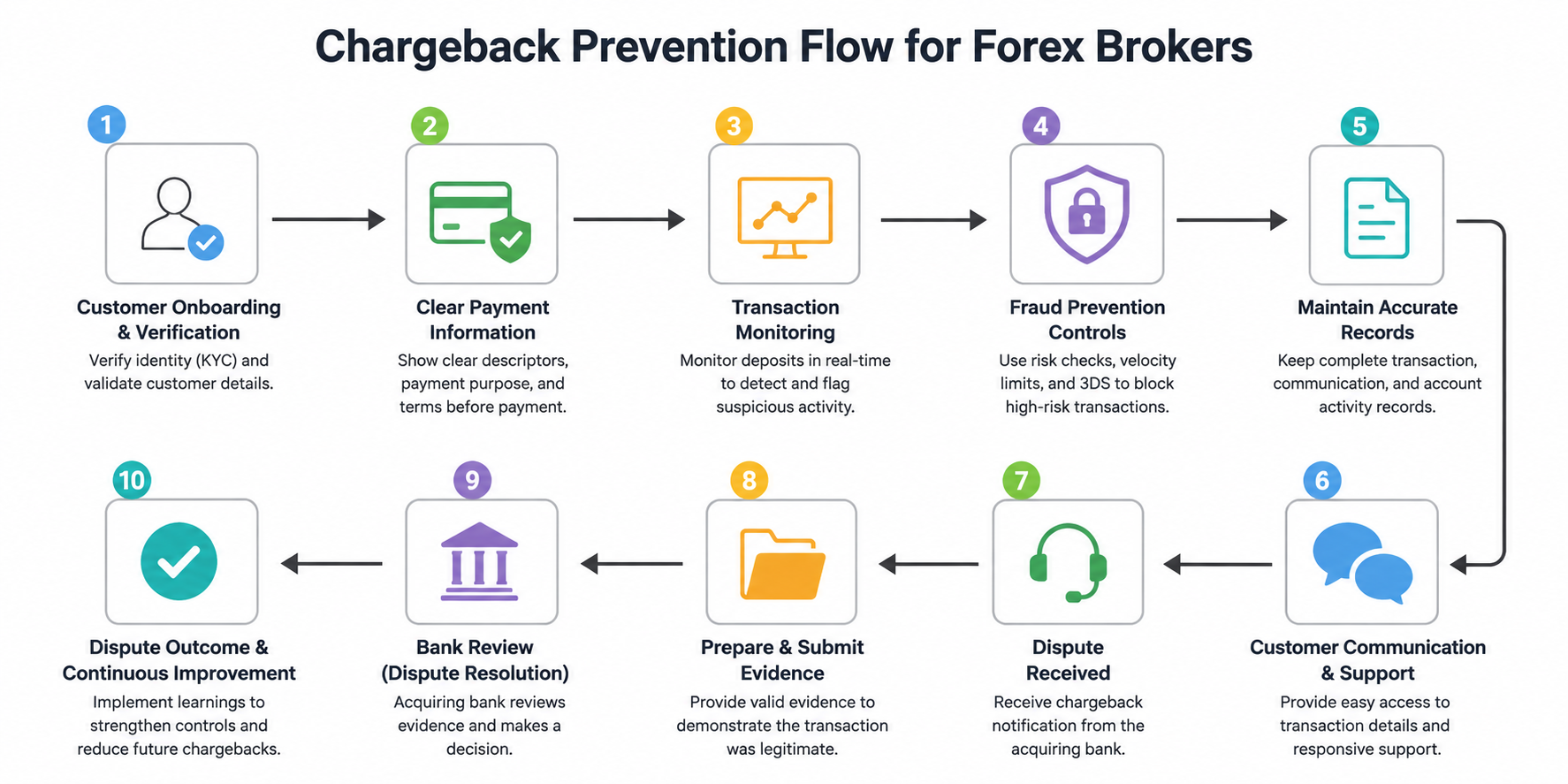
Chargeback prevention works best as a process rather than a single tool. The broker should build controls across the payment lifecycle – from account creation and verification to deposits, transaction monitoring, customer communication, and dispute management. Three areas are particularly important.
1. Verify the Customer Before Taking Payment
Customer verification can help reduce the risk of fraudulent account creation and unauthorized payment activity.
Depending on the applicable jurisdiction and business model, this may involve identity verification and other KYC controls. Payment activity should operate consistently with the broker’s broader customer-verification framework.
For example, if a newly created trading account immediately attempts multiple deposits using payment credentials that appear inconsistent with the customer profile, the transaction may warrant additional review.
The objective is not to reject legitimate customers unnecessarily. It is to identify situations where additional verification is justified.
2. Make Payment Information Clear
Customers should understand what they are paying for and be able to recognize the transaction later. A confusing merchant descriptor or unclear payment confirmation can create avoidable disputes. Visa specifically notes that providing detailed transaction information can help prevent billing confusion and unnecessary disputes.
After processing a successful deposit, brokers should provide customers with clear confirmation details, including the transaction amount, date, reference number, and credited account information where applicable. This helps both the customer and the business maintain accurate payment records.
3. Monitor Transactions for Suspicious Patterns
A single transaction may appear normal while a series of transactions reveals a problem. A broker might notice repeated deposits from different cards, unusual changes in customer geography, multiple failed attempts followed by a successful payment, or activity that differs significantly from the customer’s established behavior.
Transaction monitoring can help identify these patterns before they develop into larger fraud or dispute problems.
Keep Detailed Records of Forex Deposits
Good record keeping is one of the most important parts of chargeback management. When a payment is disputed, the broker should be able to reconstruct what happened without relying on memory or scattered systems. Depending on the payment method and applicable rules, relevant information may include:
- Transaction date, amount, currency, payment status, and transaction reference.
- Customer-account information, authentication results, and relevant verification records.
- Payment and account activity that helps establish how the transaction was processed and credited.
The exact evidence required depends on the dispute reason, payment method, card-network rules, and applicable procedures. Brokers should therefore follow the requirements associated with their particular processing arrangement rather than assuming one evidence package works for every case.
Communicate With Customers Before a Dispute Escalates
Customer support has an important role in chargeback prevention for Forex brokers. Some disputes begin because the customer cannot quickly resolve a payment question through the merchant.
Suppose a trader deposits $1,000, sees a payment descriptor they do not recognize, and cannot get a response from the broker’s support team. Contacting the card issuer may appear to be the easiest way to investigate the transaction.
A clear payment confirmation and responsive support channel can give the customer another way to resolve the issue. This does not eliminate legitimate disputes, but it can prevent misunderstandings from becoming unnecessary chargebacks.
How Should Forex Brokers Handle a Chargeback?
When a chargeback occurs, the broker must evaluate the dispute, decide whether to accept or challenge it, and follow the appropriate resolution process.
The first step is understanding the dispute reason. Different claims require different evidence. For example, evidence that demonstrates a transaction was authenticated may be relevant to an unauthorized-transaction claim, while records showing how a deposit was credited may be relevant to a different type of dispute.
The broker should then assemble the relevant evidence within the required timeframe and format. A response should therefore be factual and evidence-based rather than simply stating that the customer is wrong.
Why Deposit Records Matter in Forex Chargebacks?
Forex businesses should connect payment records with their internal account records.
Imagine a customer disputes a $3,000 deposit. The payment processor shows the transaction was completed, but the broker’s internal system cannot clearly show which customer account received the funds. That gap can make dispute management significantly more difficult.
A well-integrated payment environment should allow the broker to trace a transaction from the original payment through deposit confirmation and account crediting. This is one reason Forex payment gateways and payment-processing infrastructure need to integrate effectively with brokerage and back-office systems.
For brokers that want to improve payment operations without developing a complete infrastructure internally, a white label payment processing solution can provide ready-to-use payment capabilities while allowing businesses to manage transaction flows, integrations, and customer payment experiences more efficiently.
Chargeback Prevention Starts Before the Payment
The strongest chargeback strategy is preventative.
A broker that waits until a chargeback arrives has already reached the most expensive stage of the dispute lifecycle. Earlier controls – Customer Verification, Authentication, Transaction Monitoring, Recognizable Payment Information, and Responsive Customer Support – can address some problems before they become formal disputes.
Modern dispute-management approaches increasingly focus on resolving issues before they escalate. However, prevention does not mean attempting to block every questionable transaction. Excessive controls can also reject legitimate customers and reduce payment conversion.
The goal is balance: Protect legitimate transactions while identifying activity that genuinely warrants intervention.
Measuring Chargeback Risk
A broker should not evaluate chargebacks only by counting individual disputes. It should also look for patterns across payment methods, countries, transaction values, customer cohorts, and acquisition channels.
For example, if disputes are concentrated among first-time deposits from a specific market, the broker can investigate whether customer expectations, unclear payment descriptors, fraud risks, or a particular acquisition channel are contributing to the issue.
If disputes are concentrated around one payment method, the broker can examine the transaction flow and customer experience associated with that method. This analysis can also influence decisions about how to choose a payment processor for a Forex broker, because dispute management capabilities, reporting, fraud controls, and payment data visibility are important considerations alongside fees and geographic coverage.
Final Thoughts
Chargeback prevention for Forex brokers and trading platforms is fundamentally a payment-risk and customer-experience discipline. Businesses can reduce disputes by taking preventive measures before customers initiate chargebacks. Customer verification, fraud detection, clear payment information, transaction monitoring, accurate records, and accessible customer support can all help reduce avoidable disputes.
When a chargeback does occur, the broker needs to understand the reason, collect relevant evidence, follow the applicable dispute process, and respond within the required timeframe.
For a Forex business, the wider lesson is that chargeback management cannot operate independently from payment processing. Deposits, customer accounts, KYC, fraud controls, payment gateways, withdrawals, and transaction records all form one connected payment lifecycle.
Once a broker has established a strategy for preventing and managing disputes, the next question is how the payment infrastructure itself moves transactions securely from the trader to the brokerage – which leads naturally to how a Forex payment gateway works for brokers and trading platforms.

Categories
- ACH Payments (10)
- adult payment processing (11)
- AI (9)
- Altcoins (10)
- Banking (10)
- Bitcoin (133)
- Bitcoin ETF (11)
- Bitcoin Price (30)
- Blockchain (50)
- Brokering World Hunger Away (16)
- Business (17)
- card payment processing (10)
- CBD (11)
- CBDC (11)
- coaching business (11)
- COVID-19 (3)
- Crypto ATMs (1)
- Crypto Banking (17)
- Crypto Bill (1)
- Crypto business owner platform (31)
- Crypto Investment (3)
- Crypto Markets (5)
- Crypto Payment (35)
- Crypto Payment Processor (4)
- Crypto Prices (1)
- Crypto Trading (92)
- Cryptocurrency (402)
- Cryptocurrency Exchange (108)
- Data Visualization (2)
- dating platforms (11)
- debt collection payment processing (10)
- Decentralized Finance (7)
- DeFi Payment (9)
- DEX (3)
- Digital Currency (23)
- dropshipping payment processing (12)
- Ethereum (2)
- FAQ (7)
- file sharing payment processing (11)
- Finance (25)
- Financial Equality (4)
- Financial Freedom (8)
- Forex (35)
- hemp (1)
- ICO (2)
- Investment (11)
- IPTV (11)
- Merchant Account (10)
- Mining (3)
- News (66)
- NFTs (2)
- online gambling (11)
- P2P (1)
- Paybito (139)
- PayBitoPro (693)
- PayBitoPro Coin Listing (6)
- PayBitoPro Exchange (2)
- Payment Gateway (40)
- peptide (10)
- Post COVID Digital Transformation (1)
- Press Release (130)
- Privacy & Security (3)
- Real Estate (1)
- Stablecoin (5)
- Technology (15)
- Travel (11)
- Uncategorized (9)
- US Presidential Election (2)
- Utility Coin (1)
- Web3 business (4)
- Web3 Wallets (2)
- White Label Crypto Exchange (8)
Recent Posts
- ACH vs Wire Transfer: Which Payment Method Is Better for Businesses?
- ACH Fraud Prevention: How Businesses Can Secure Bank Account Payments?
- ACH Credit vs ACH Debit: What’s the Difference? With Real Examples
- ACH vs Credit Card: Which Payment Method Is Better for Businesses?
- How Long Do ACH Payments Take? Processing Times, Settlement, and Same Day ACH