Choosing the Right Payment Gateway for an Online Casino or Sportsbook
- July 31, 2026
- Soham Guchait
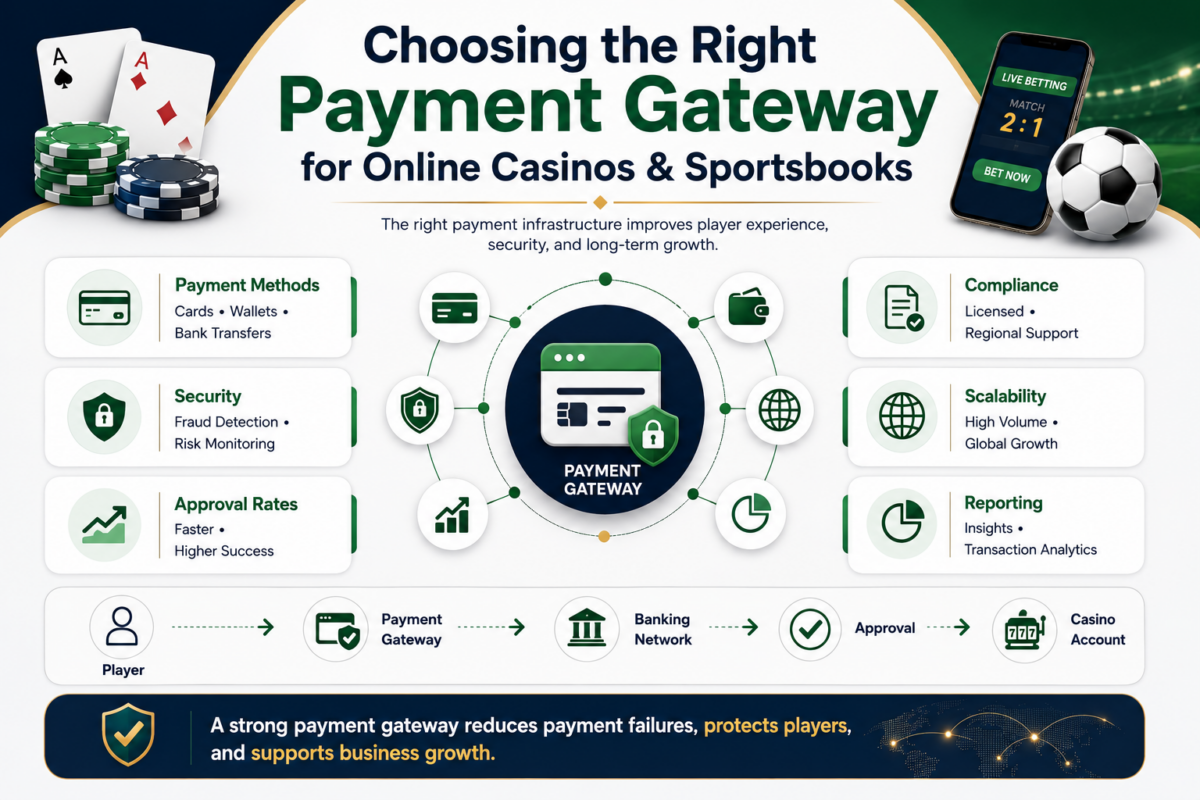
For an online casino or sportsbook, the payment gateway is one of the most important parts of the customer experience. Players expect deposits to be fast, secure, and convenient, while operators need reliable transaction processing, strong security controls, and systems that can support business growth.
However, choosing a payment gateway for an iGaming business is not the same as selecting one for a traditional online store. Online gambling operators must consider factors such as regulatory requirements, transaction risks, player locations, payment preferences, fraud prevention, and payment reliability.
The right payment gateway can help reduce payment failures, improve player satisfaction, and create a stronger foundation for long-term growth.
What Is a Payment Gateway for an Online Casino or Sportsbook?
A payment gateway is a technology layer that connects a gambling platform with financial institutions and payment networks to process player transactions.
When a player deposits funds, the payment gateway securely transfers transaction information between the gaming platform, payment provider, and banking networks before approval is given.
For example, when a player deposits $100 into a sportsbook using a digital wallet, the payment gateway helps verify the transaction, communicate with the payment network, complete security checks, and update the player’s account balance after approval. A reliable gateway is an important part of online gambling payment processing because it affects how quickly and successfully players can deposit and withdraw funds.
Why Choosing the Right Payment Gateway Matters for iGaming Businesses?
Payment problems directly affect player experience. If deposits fail frequently, withdrawals take too long, or payment options are limited, players may move to competing platforms.
For example, imagine a sportsbook receives high traffic during a major tournament. If the payment gateway cannot handle increased transaction volume, players may experience failed deposits at the exact moment they are most likely to engage.
This makes reliability, scalability, and payment performance essential considerations for gambling operators.
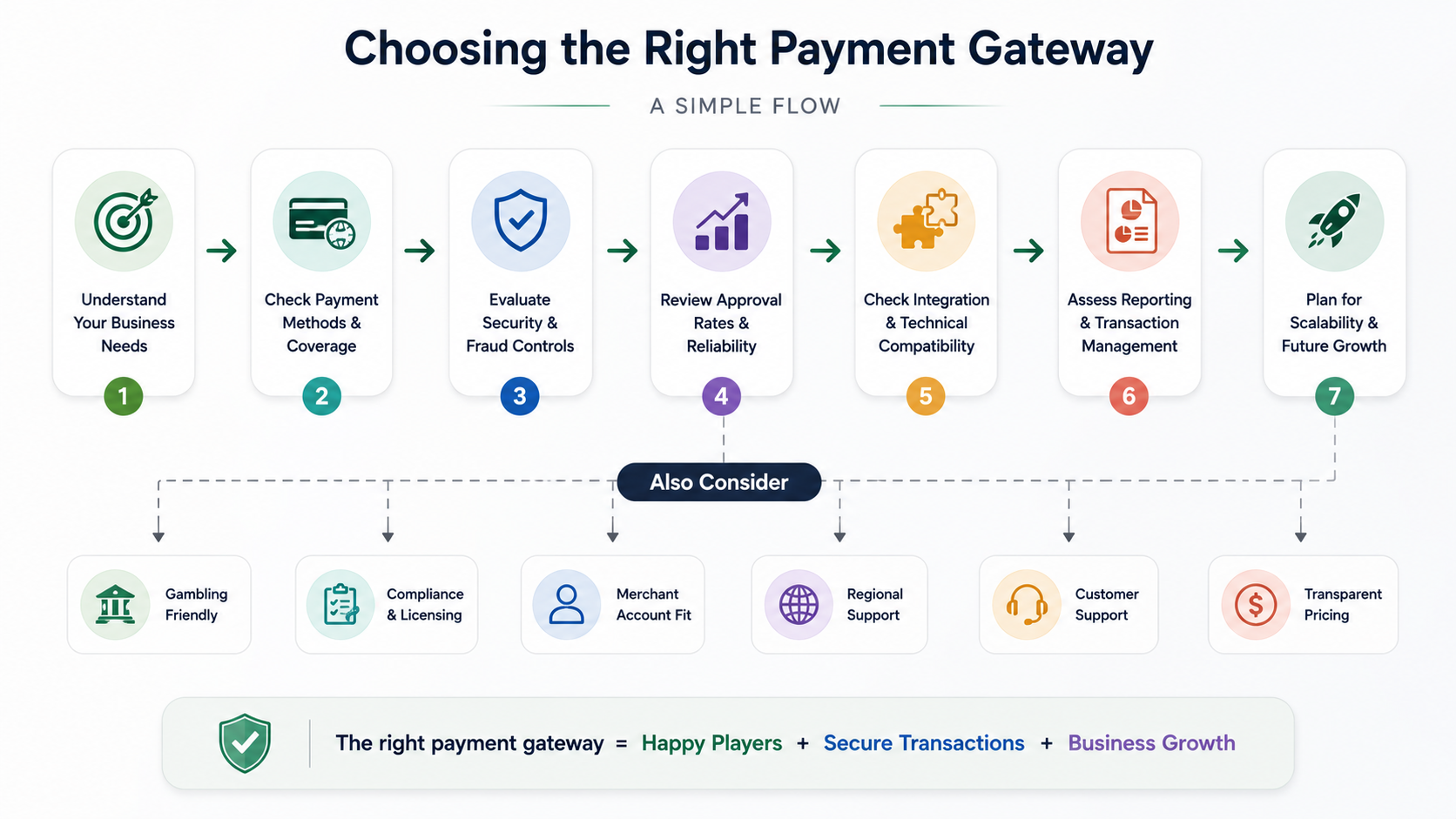
Key Factors to Consider When Choosing a Payment Gateway
Support for Gambling Businesses
Not every payment gateway supports online gambling transactions. Operators should evaluate whether a gateway understands the requirements of the iGaming industry and can support the regulatory and operational challenges involved.
Important considerations include:
- Experience supporting gambling merchants
- Supported jurisdictions
- Compliance capabilities
- Risk management processes
A provider that understands gambling transactions is more likely to have suitable systems for managing industry-specific challenges.
Payment Method Coverage
Players expect different payment options depending on their location and preferences.
A sportsbook targeting customers in multiple regions may need to support different payment methods, such as:
- Credit and debit cards
- Bank transfers
- Digital wallets
- Open Banking solutions
- Regional payment methods
Offering the right payment options can improve deposit completion rates and reduce customer frustration. Understanding the best payment methods for online gambling websites helps operators decide which options are most suitable for their target audience.
For example, a casino targeting European players may see different payment preferences compared to one targeting customers in another region.
Transaction Approval Rates
A payment gateway should help maximize successful transactions while maintaining proper security controls.
Low approval rates can result from:
- Poor payment routing
- Limited payment options
- Incorrect transaction handling
- Excessive fraud restrictions
Operators should regularly monitor payment performance and understand why online gambling payments get declined so they can identify areas for improvement.
For example, if many legitimate players experience failed card deposits, the issue may not be customer behavior but payment configuration or regional limitations.
Security and Fraud Prevention
Security is one of the most important considerations for gambling businesses because they process financial transactions and manage valuable customer accounts.
A strong payment gateway should support:
- Fraud monitoring
- Transaction analysis
- Secure payment processing
- Risk-based authentication
- Suspicious activity detection
These features help protect both operators and players from fraudulent activity. However, security systems should balance protection with customer convenience. Excessive restrictions can block legitimate players and create unnecessary payment friction.
Integration and Technical Compatibility
A payment gateway should work smoothly with the gambling platform’s existing technology.
Operators should evaluate:
- API availability
- Integration complexity
- Documentation quality
- Testing environments
- Technical support
For startups, choosing a system that is easy to integrate can reduce development time and allow the business to launch payment operations faster.
Reporting and Transaction Management
Payment data helps operators understand how their business is performing.
Useful reporting capabilities include:
- Transaction history
- Payment success rates
- Failed payment analysis
- Settlement tracking
- Regional performance data
For example, if an operator notices that deposits from a specific region have unusually high failure rates, payment reports can help identify the problem. Good reporting also helps businesses maintain better financial oversight.
Common Mistakes When Selecting a Payment Gateway
Many new gambling operators focus only on transaction fees and overlook other important factors.
Some common mistakes include:
- Choosing based only on price
- Ignoring regional payment preferences
- Not evaluating scalability
- Overlooking fraud controls
- Failing to consider future expansion
A cheaper solution that creates frequent payment failures may ultimately cost more through lost customers and reduced revenue. Operators should evaluate the complete payment experience rather than focusing on a single feature.
Payment Gateway and Merchant Account Relationship
A payment gateway does not work independently. It is usually connected with a merchant account that allows businesses to receive payment settlements.
Before selecting payment technology, operators should know how to get a merchant account for an online gambling business because merchant account availability can influence payment options and processing capabilities. The payment gateway and merchant account work together to create the complete transaction infrastructure.
Preparing for Future Growth
A payment gateway should support the business not only today but also as it expands.
Growing operators may need:
- Additional payment methods
- New geographic markets
- Higher transaction volumes
- Better reporting tools
- Stronger risk controls
Choosing scalable payment infrastructure early prevents operational challenges later.
Final Thoughts
Choosing the right payment gateway for an online casino or iGaming requires more than comparing features or pricing. Operators should consider payment reliability, security, payment methods, compliance support, integration requirements, and long-term scalability.
The best payment gateway is one that creates a smooth experience for players while giving operators the tools needed to manage transactions securely and efficiently. A strong payment foundation allows gambling businesses to focus on growth while reducing the payment challenges that often affect new operators.

Categories
- ACH Payments (10)
- adult payment processing (11)
- AI (9)
- Altcoins (10)
- Banking (10)
- Bitcoin (133)
- Bitcoin ETF (11)
- Bitcoin Price (30)
- Blockchain (50)
- Brokering World Hunger Away (16)
- Business (17)
- card payment processing (10)
- CBD (11)
- CBDC (11)
- Chargeback (8)
- coaching business (11)
- COVID-19 (3)
- Crypto ATMs (1)
- Crypto Banking (17)
- Crypto Bill (1)
- Crypto business owner platform (31)
- Crypto Investment (3)
- Crypto Markets (5)
- Crypto Payment (35)
- Crypto Payment Processor (4)
- Crypto Prices (1)
- Crypto Trading (92)
- Cryptocurrency (402)
- Cryptocurrency Exchange (108)
- Data Visualization (2)
- dating platforms (11)
- debt collection payment processing (10)
- Decentralized Finance (7)
- DeFi Payment (9)
- DEX (3)
- Digital Currency (23)
- dropshipping payment processing (12)
- Ethereum (2)
- FAQ (7)
- file sharing payment processing (11)
- Finance (25)
- Financial Equality (4)
- Financial Freedom (8)
- Forex (35)
- hemp (1)
- ICO (2)
- Investment (11)
- IPTV (11)
- Merchant Account (10)
- Mining (3)
- News (66)
- NFTs (2)
- online gambling (11)
- P2P (1)
- Paybito (147)
- PayBitoPro (693)
- PayBitoPro Coin Listing (6)
- PayBitoPro Exchange (2)
- Payment Gateway (48)
- peptide (10)
- Post COVID Digital Transformation (1)
- Press Release (130)
- Privacy & Security (3)
- Real Estate (1)
- Stablecoin (5)
- Technology (15)
- Travel (11)
- Uncategorized (10)
- US Presidential Election (2)
- Utility Coin (1)
- Web3 business (4)
- Web3 Wallets (2)
- White Label Crypto Exchange (8)
Recent Posts
- Payment Gateway vs. Payment Orchestration: What’s the Difference?
- What Is Smart Payment Routing? Strategies to Optimize Payment Performance
- How to Improve Payment Approval Rates for High-Risk Businesses?
- Why Are Online Payments Failing? Common Causes and How to Fix Them
- How to Use Multiple Payment Processors to Reduce Business Disruptions?