Gambling Merchant Account Requirements: Everything You Need Before Applying
- July 30, 2026
- Soham Guchait
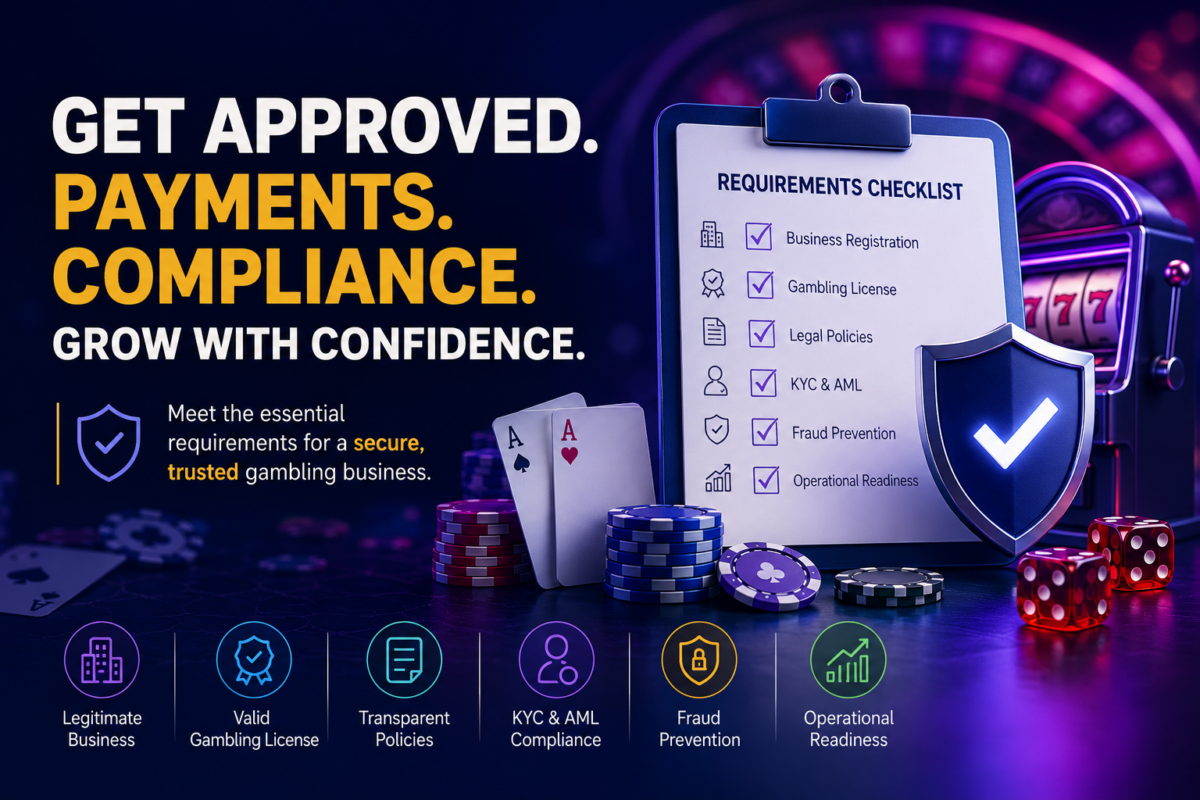
Applying for a merchant account is one of the biggest milestones for any online casino or sportsbook. Without one, it’s difficult to accept card payments and build a seamless deposit experience for players. However, many first-time operators assume that simply registering a business is enough to get approved.
In reality, payment providers look much deeper. They want to understand how your business operates, whether it complies with gambling regulations, and how you plan to manage financial and operational risks. An incomplete application or missing documentation can delay approval – or lead to rejection altogether.
This guide explains the most common gambling merchant account requirements, why payment providers ask for them, and how you can prepare before submitting an application.
Why Payment Providers Have Strict Requirements?
Online gambling is widely classified as a high-risk industry because it involves larger financial risks than many traditional online businesses. Payment providers must consider factors such as fraud, chargebacks, money laundering, and varying gambling regulations across jurisdictions.
For example, imagine two businesses applying for merchant accounts:
- Business A operates a licensed sportsbook, publishes responsible gambling policies, verifies customer identities, and clearly explains its payment procedures.
- Business B has a newly launched website with no visible licensing information, limited legal policies, and no explanation of how player funds are protected.
Even if both businesses offer similar gaming services, the first application is much more likely to inspire confidence during the review process. If you’re unfamiliar with why this industry receives additional scrutiny, it’s worth first understanding why online gambling businesses are considered high risk, as it explains many of the requirements discussed below.
The Essential Gambling Merchant Account Requirements
While specific requirements vary between payment providers and jurisdictions, most expect operators to demonstrate that they run a legitimate, transparent, and compliant business.
Business Registration and Ownership
Payment providers need to verify that the business legally exists and that its ownership structure is transparent.
Typical information includes:
- Company registration documents
- Business address
- Ownership details
- Director or shareholder identification
- Tax registration information (where applicable)
Clear ownership helps providers comply with financial regulations and reduces the risk of fraudulent business applications.
Valid Gambling License
For regulated markets, licensing is one of the most important requirements. A gambling license demonstrates that the operator has received authorization from the appropriate regulatory authority and agrees to follow applicable gaming laws.
The required license depends on where the business operates and where players are located. Payment providers often verify that the license matches the services offered and the jurisdictions being served. Launching without proper licensing can make obtaining a merchant account significantly more difficult.
Professional Website and Legal Policies
Your website is often reviewed as part of the approval process. Providers want to see that players can clearly understand how the business operates before making a deposit.
Your website should include:
- Terms and conditions
- Privacy policy
- Responsible gambling information
- Refund and withdrawal policies
- Contact information
- Licensing details, where required
For example, if a player cannot find information about withdrawals or dispute resolution, both customers and payment providers may question the platform’s transparency.
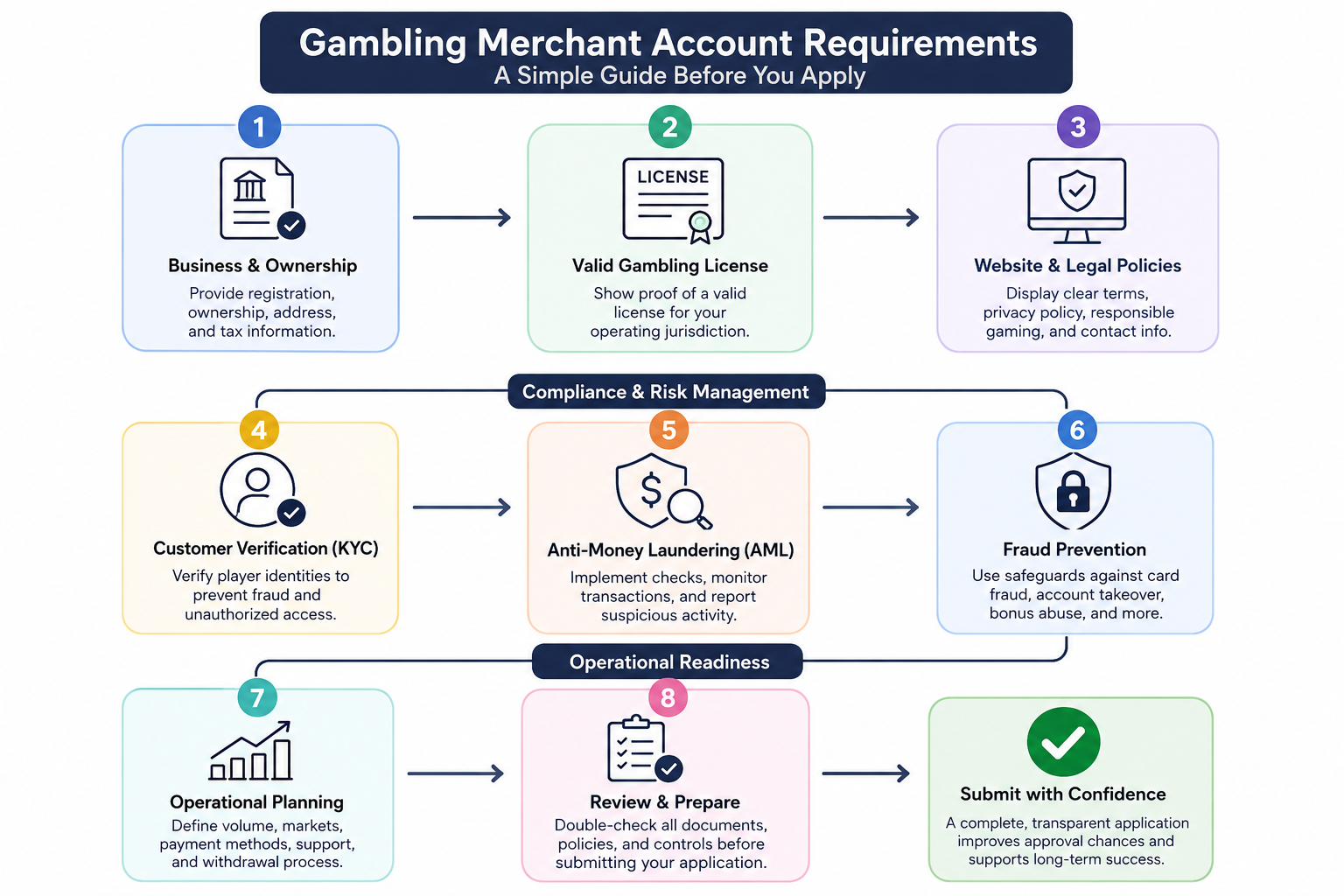
Compliance Is More Than Just Documentation
Merchant account approval is not only about submitting paperwork. Providers also evaluate how your business manages regulatory responsibilities and financial risk.
-
Customer Verification (KYC)
Most licensed gambling operators are expected to verify player identities before allowing certain transactions. Customer verification helps confirm that players are who they claim to be while reducing identity fraud and unauthorized account activity.
For example, if someone attempts to create multiple accounts using different identities to claim repeated promotional bonuses, proper verification procedures can detect suspicious behavior before financial losses occur. Learning how KYC and AML work in online gambling payment processing provides a deeper understanding of why these procedures are required during merchant account approval.
-
Anti-Money Laundering (AML) Procedures
Payment providers also want to know how operators identify suspicious financial activity. An effective AML program may include transaction monitoring, record keeping, source-of-funds verification, and reporting procedures for unusual activity.
These controls protect both the operator and the wider financial system while helping businesses meet regulatory expectations.
-
Fraud Prevention
Because gambling platforms process valuable financial transactions, they frequently attract fraud attempts.
Operators should demonstrate that they have reasonable safeguards against risks such as:
- Stolen payment cards
- Account takeover
- Identity fraud
- Bonus abuse
For example, monitoring repeated deposits from multiple accounts using the same device or payment method can help identify potentially fraudulent activity before losses increase.
Strong fraud prevention in online gambling payments is not only important for security – it also reassures payment providers that the business takes risk management seriously.
Operational Readiness Matters
Payment providers also evaluate whether your business appears ready to operate successfully after approval.
Rather than focusing solely on documents, they often assess how well the business has planned its payment operations.
Areas commonly reviewed include:
- Expected monthly transaction volume
- Average transaction values
- Target customer markets
- Payment methods offered
- Customer support availability
- Withdrawal procedures
For example, a new casino planning to accept players from several countries should understand the payment preferences in each market instead of relying on a single deposit method.
Planning these details in advance also makes it easier to choose the right payment gateway for an online casino or sportsbook as the business grows.
Common Mistakes That Delay Approval
Many merchant account applications are delayed because operators overlook small but important details.
Some of the most common mistakes include:
- Applying before obtaining the necessary gambling license
- Publishing incomplete legal policies
- Providing inconsistent business information
- Failing to explain the business model clearly
- Underestimating fraud and compliance planning
- Ignoring chargeback management
Another common mistake is assuming payment processing ends after approval. In reality, providers continue monitoring account performance after onboarding. Businesses that experience excessive disputes may face higher fees or account restrictions. Implementing effective chargeback prevention for online casinos and sports betting sites from the beginning helps maintain a healthy payment profile.
Similarly, understanding why online gambling payments get declined can help operators reduce unnecessary failed transactions and improve the player experience after launch.
Preparing Before You Apply
Submitting a complete application is often easier than correcting problems later. Before applying, ask yourself:
- Is the business properly registered?
- Are all required licenses in place?
- Does the website include complete legal information?
- Are customer verification procedures documented?
- Have fraud and AML controls been considered?
- Are payment operations clearly planned?
If the answer to these questions is yes, the application process is likely to be smoother. You should also understand how to get a merchant account for an online gambling business, since preparing the right documentation is only one part of the overall approval journey.
Final Thoughts
Meeting gambling merchant account requirements involves much more than collecting paperwork. Payment providers want evidence that a business is legally compliant, operationally prepared, and capable of managing the financial risks associated with online gambling.
Operators who invest time in preparing licenses, legal policies, customer verification procedures, fraud controls, and transparent payment operations are generally in a stronger position during the approval process.
A well-prepared application not only improves the likelihood of approval but also lays the groundwork for a secure, compliant, and scalable payment operation as the business grows.

Categories
- ACH Payments (10)
- adult payment processing (11)
- AI (9)
- Altcoins (10)
- Banking (10)
- Bitcoin (133)
- Bitcoin ETF (11)
- Bitcoin Price (30)
- Blockchain (50)
- Brokering World Hunger Away (16)
- Business (17)
- card payment processing (10)
- CBD (11)
- CBDC (11)
- Chargeback (8)
- coaching business (11)
- COVID-19 (3)
- Crypto ATMs (1)
- Crypto Banking (17)
- Crypto Bill (1)
- Crypto business owner platform (31)
- Crypto Investment (3)
- Crypto Markets (5)
- Crypto Payment (35)
- Crypto Payment Processor (4)
- Crypto Prices (1)
- Crypto Trading (92)
- Cryptocurrency (402)
- Cryptocurrency Exchange (108)
- Data Visualization (2)
- dating platforms (11)
- debt collection payment processing (10)
- Decentralized Finance (7)
- DeFi Payment (9)
- DEX (3)
- Digital Currency (23)
- dropshipping payment processing (12)
- Ethereum (2)
- FAQ (7)
- file sharing payment processing (11)
- Finance (25)
- Financial Equality (4)
- Financial Freedom (8)
- Forex (35)
- hemp (1)
- ICO (2)
- Investment (11)
- IPTV (11)
- Merchant Account (10)
- Mining (3)
- News (66)
- NFTs (2)
- online gambling (11)
- P2P (1)
- Paybito (147)
- PayBitoPro (693)
- PayBitoPro Coin Listing (6)
- PayBitoPro Exchange (2)
- Payment Gateway (48)
- peptide (10)
- Post COVID Digital Transformation (1)
- Press Release (130)
- Privacy & Security (3)
- Real Estate (1)
- Stablecoin (5)
- Technology (15)
- Travel (11)
- Uncategorized (10)
- US Presidential Election (2)
- Utility Coin (1)
- Web3 business (4)
- Web3 Wallets (2)
- White Label Crypto Exchange (8)
Recent Posts
- Payment Gateway vs. Payment Orchestration: What’s the Difference?
- What Is Smart Payment Routing? Strategies to Optimize Payment Performance
- How to Improve Payment Approval Rates for High-Risk Businesses?
- Why Are Online Payments Failing? Common Causes and How to Fix Them
- How to Use Multiple Payment Processors to Reduce Business Disruptions?