Travel Merchant Account Requirements: A Complete Guide to Getting Approved
- July 29, 2026
- Soham Guchait
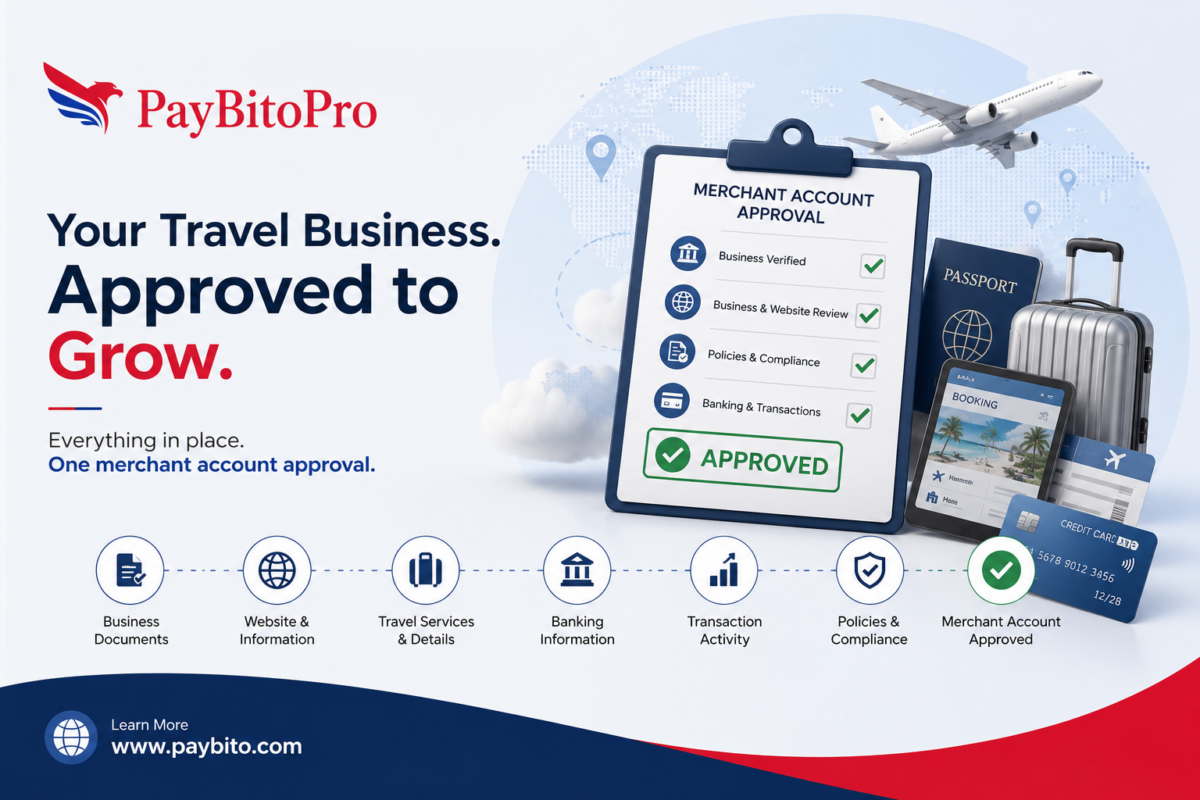
Getting a merchant account approved is an important step for any travel business that wants to accept online payments. However, travel companies often need to provide more information than businesses in many other industries because travel transactions involve advance bookings, higher-value payments, cancellations, and customer disputes.
Whether you run a travel agency, tour company, vacation rental business, or online booking platform, understanding travel merchant account requirements can help you prepare the right documents and avoid unnecessary delays during the approval process.
Payment providers typically want to understand three things:
- Is the business legitimate?
- Are the products and services clearly defined?
- Does the business have proper processes for handling payments, refunds, and customer concerns?
A well-prepared application gives providers a clearer view of the business and its payment needs. In the following section we have everything you will need to know about the merchant account requirements one after another.
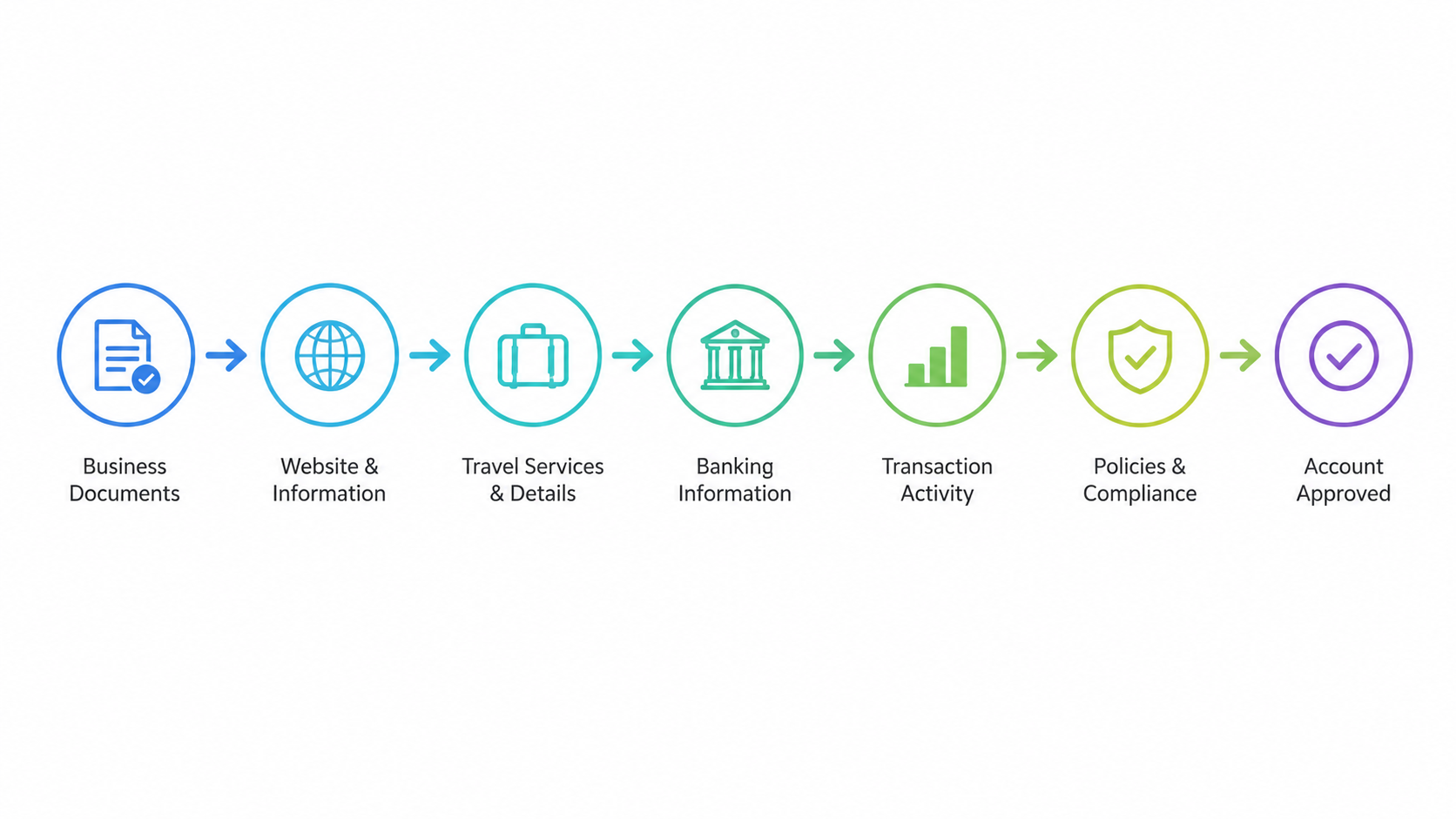
1. Business Registration and Verification Documents
The first requirement for most travel businesses is proof that the company is legally established.
Common documents include:
- Business registration certificate
- Company formation documents
- Ownership information
- Business licenses (if required)
- Tax-related documents
These documents help verify the identity and structure of the business.
For example, a newly launched tour operator offering international holiday packages may need to provide company registration details before payment processing approval can be completed. Providing accurate business information also helps prevent delays caused by mismatched details between applications, websites, and official records.
2. Professional Website and Business Information
A travel business website is often one of the first things reviewed during the approval process.
The website should clearly explain:
- What services the business provides?
- Available travel packages
- Pricing information
- Contact details
- Booking process
- Customer support options
For example, a travel agency selling customized European vacation packages should clearly explain what customers receive, such as accommodation, transportation, guided tours, or other services. A website with incomplete information can create uncertainty about the business model and may slow down the review process.
3. Travel Service Details and Business Model Information
Payment providers need to understand exactly what the business sells and how transactions work.
Businesses may need to provide details about:
- Types of travel services offered
- Average booking value
- Customer locations
- Service delivery timelines
- Booking process
For example, a local sightseeing company offering $100 city tours operates differently from a luxury travel company managing $15,000 international vacation packages. Understanding the business model helps payment providers evaluate transaction patterns and potential risks.
4. Refund and Cancellation Policies
Clear refund and cancellation policies are one of the most important requirements for travel businesses.
Since customers often book trips weeks or months before departure, businesses need clear rules about what happens when plans change.
Policies should explain:
- Cancellation conditions
- Refund eligibility
- Refund processing timelines
- Rescheduling options
- Non-refundable services
For example, if a customer cancels a vacation package two months before departure, the customer should clearly understand whether they qualify for a full refund, partial refund, or credit. Transparent policies reduce confusion and can help prevent payment disputes and travel chargebacks.
5. Banking Information and Settlement Details
Payment providers generally require business banking information to set up settlements.
Common requirements include:
- Business bank account details
- Bank verification documents
- Account ownership information
Using a dedicated business bank account helps maintain clear financial records and ensures that payment settlements are properly managed. For travel companies handling multiple bookings, organized financial records can make payment management easier as transaction volumes increase.
6. Expected Transaction Volume and Payment Activity
Businesses are usually asked to provide information about expected payment activity.
This may include:
- Estimated monthly sales volume
- Average transaction size
- Number of expected transactions
- Seasonal revenue changes
Travel businesses often have uneven sales patterns.
For example, a holiday package company may process significantly more payments during summer vacation periods compared to slower travel months. Explaining these patterns helps payment providers understand that seasonal changes are normal for the industry.
7. Previous Processing History (For Existing Businesses)
Established travel businesses may be asked to provide previous payment records.
This can include:
- Processing statements
- Transaction history
- Refund records
- Chargeback information
A business with a strong processing history can demonstrate how it manages customer payments over time. For newer travel businesses without previous records, providers may focus more on business documentation, website quality, service details, and operational readiness.
8. Customer Policies and Compliance Information
Travel businesses should maintain clear customer-facing policies before applying.
Important policies include:
- Terms and conditions
- Privacy policy
- Refund policy
- Cancellation policy
- Shipping or service delivery information (where applicable)
These policies help customers understand their purchase and demonstrate that the business has structured procedures in place.
Clear policies also support better management of payment issues such as disputes and failed transactions.
Common Reasons Travel Merchant Account Applications Are Delayed
Even businesses with legitimate operations may experience delays if important information is missing.
Common issues include:
Incomplete Documentation: Missing registration details, banking information, or business records can slow down approval.
Unclear Services: Payment providers need to understand exactly what customers are purchasing.
A website that only says “travel services” without explaining packages, pricing, or booking details may require additional review.
Missing Refund Policies: Without clear cancellation and refund terms, businesses may appear less prepared to manage customer disputes.
Inconsistent Information: Differences between application details, website information, and official documents can create unnecessary questions.
Travel Merchant Account Requirements Checklist
Before applying, travel businesses should prepare:
✅ Business registration documents
✅ Business bank account information
✅ Professional website
✅ Service descriptions
✅ Pricing details
✅ Refund policy
✅ Cancellation policy
✅ Terms and conditions
✅ Expected transaction volume
✅ Previous processing history (if available)
Having these details ready can make the approval process more organized.
Example: Preparing a Merchant Account Application
A small adventure travel company wants to accept online payments for international hiking tours.
Before applying, the business prepares:
- Company registration documents
- A website explaining tour packages
- Customer cancellation policies
- Business banking information
- Expected seasonal sales details
- Information about average booking values
By preparing these details in advance, the company creates a clearer picture of its operations and payment requirements.
Conclusion
Understanding travel merchant account requirements helps travel businesses prepare for payment approval with fewer challenges.
Because travel involves advance bookings, customer disputes, international payments, and changing travel plans, payment providers often require detailed business information before approving accounts. By maintaining proper documentation, transparent customer policies, and accurate transaction information, travel companies can create a stronger foundation for reliable payment processing.
A prepared application not only improves the approval process but also supports better payment management as the business grows.

Categories
- ACH Payments (10)
- adult payment processing (11)
- AI (9)
- Altcoins (10)
- Banking (10)
- Bitcoin (133)
- Bitcoin ETF (11)
- Bitcoin Price (30)
- Blockchain (50)
- Brokering World Hunger Away (16)
- Business (17)
- card payment processing (10)
- CBD (11)
- CBDC (11)
- Chargeback (8)
- coaching business (11)
- COVID-19 (3)
- Crypto ATMs (1)
- Crypto Banking (17)
- Crypto Bill (1)
- Crypto business owner platform (31)
- Crypto Investment (3)
- Crypto Markets (5)
- Crypto Payment (35)
- Crypto Payment Processor (4)
- Crypto Prices (1)
- Crypto Trading (92)
- Cryptocurrency (402)
- Cryptocurrency Exchange (108)
- Data Visualization (2)
- dating platforms (11)
- debt collection payment processing (10)
- Decentralized Finance (7)
- DeFi Payment (9)
- DEX (3)
- Digital Currency (23)
- dropshipping payment processing (12)
- Ethereum (2)
- FAQ (7)
- file sharing payment processing (11)
- Finance (25)
- Financial Equality (4)
- Financial Freedom (8)
- Forex (35)
- hemp (1)
- ICO (2)
- Investment (11)
- IPTV (11)
- Merchant Account (10)
- Mining (3)
- News (66)
- NFTs (2)
- online gambling (11)
- P2P (1)
- Paybito (147)
- PayBitoPro (693)
- PayBitoPro Coin Listing (6)
- PayBitoPro Exchange (2)
- Payment Gateway (48)
- peptide (10)
- Post COVID Digital Transformation (1)
- Press Release (130)
- Privacy & Security (3)
- Real Estate (1)
- Stablecoin (5)
- Technology (15)
- Travel (11)
- Uncategorized (10)
- US Presidential Election (2)
- Utility Coin (1)
- Web3 business (4)
- Web3 Wallets (2)
- White Label Crypto Exchange (8)
Recent Posts
- Payment Gateway vs. Payment Orchestration: What’s the Difference?
- What Is Smart Payment Routing? Strategies to Optimize Payment Performance
- How to Improve Payment Approval Rates for High-Risk Businesses?
- Why Are Online Payments Failing? Common Causes and How to Fix Them
- How to Use Multiple Payment Processors to Reduce Business Disruptions?