Debt Collection Payment Processing: A Complete Guide for Collection Agencies
- August 10, 2026
- Soham Guchait
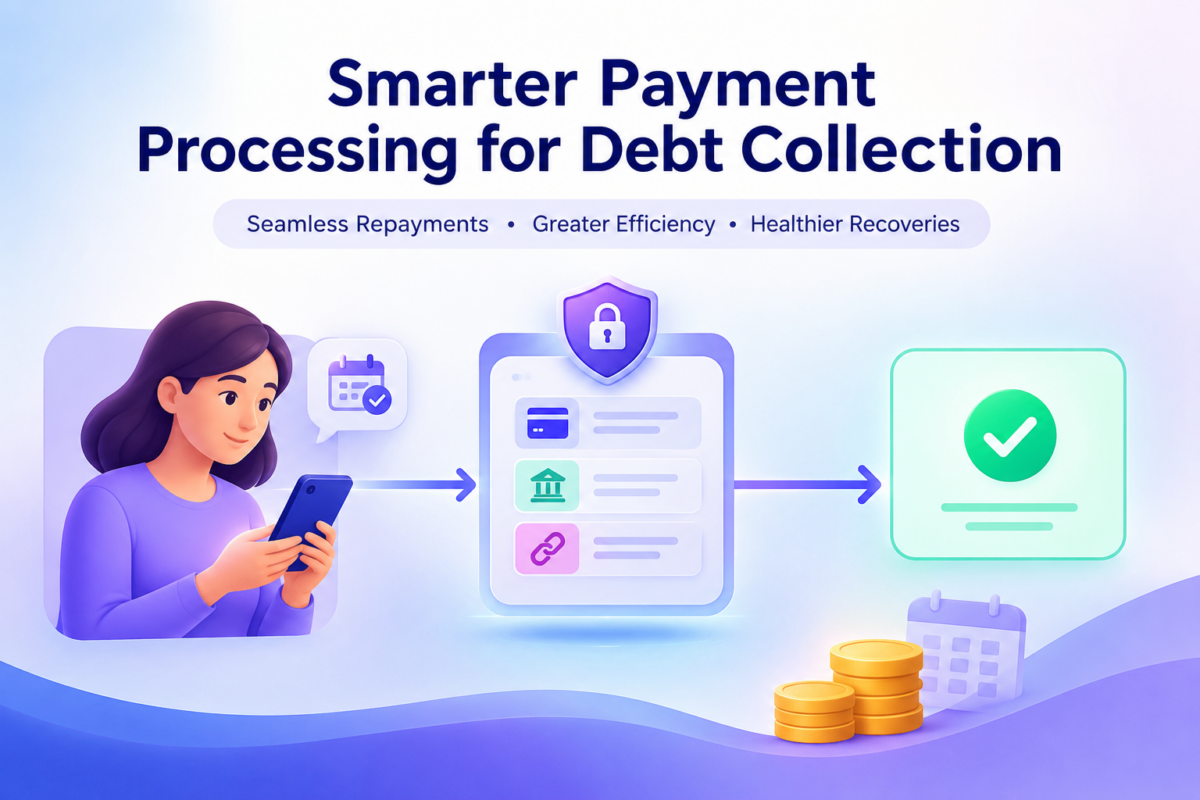
Debt collection has traditionally depended on communication, negotiation, and account management. However, as more consumers expect convenient digital payment options, the ability to process repayments efficiently has become a critical part of modern collection operations.
A collection agency may successfully reach a consumer, establish a repayment agreement, and create a payment plan, but the recovery process can still face challenges if the payment experience is unreliable. A failed card transaction, an unsuccessful bank transfer, or an interrupted recurring payment can delay repayment and create additional work for collection teams.
For debt collection agencies, payment processing is not simply a method of accepting funds. It influences how easily consumers can complete repayments, how effectively businesses manage payment plans, and how much operational effort is required to maintain successful recovery processes.
As debt recovery becomes increasingly digital, collection agencies need payment processing systems that support multiple payment methods, improve transaction reliability, and address the risk and compliance considerations associated with handling debt-related payments.
What Is Debt Collection Payment Processing?
Debt collection payment processing refers to the systems and processes that allow collection agencies to accept, authorize, and manage consumer repayment transactions.
Unlike traditional retail payments where a customer purchases a product or service, debt collection payments are connected to existing financial obligations. Consumers may make one-time payments, establish installment agreements, or enroll in recurring repayment plans.
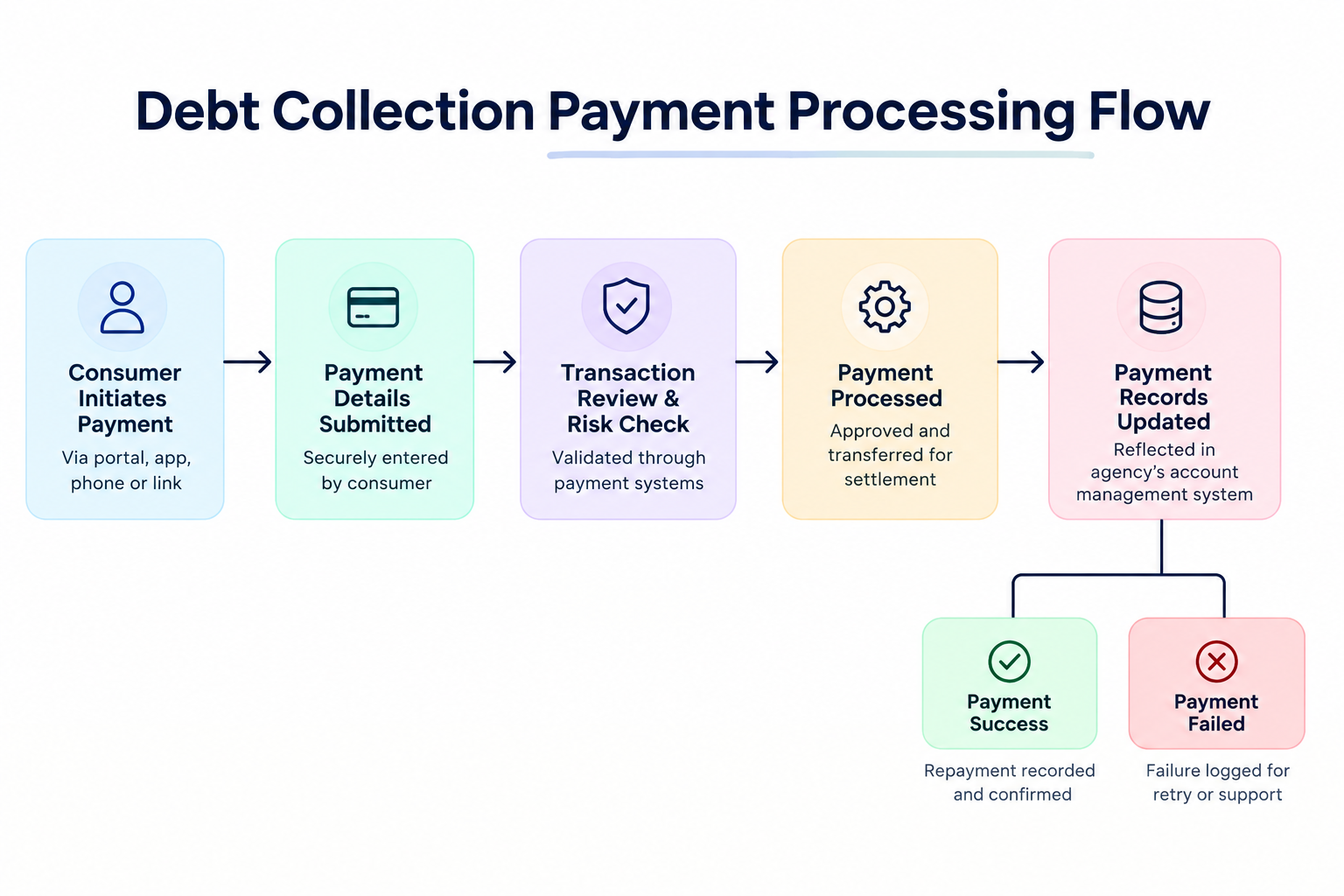
A typical debt collection payment process involves several stages:
- A consumer selects a payment option through a collection agency’s payment portal, phone system, or payment link.
- Payment details are securely submitted for authorization.
- The transaction is reviewed through payment systems for approval and risk checks.
- Approved payments are processed and transferred according to settlement procedures.
- Payment records are updated within the agency’s account management system.
For example, a medical debt collection agency may manage thousands of outstanding healthcare accounts. One consumer may choose to immediately pay the full balance, while another may arrange a twelve-month repayment plan. The payment system must support both scenarios while maintaining accurate transaction records.
Because collection agencies handle sensitive financial interactions, payment processing requires careful consideration of security, reliability, and compliance.
Why Payment Processing Is Important for Debt Collection Agencies?
Payment processing directly affects how efficiently collection agencies recover outstanding balances and how easily consumers can complete their repayment obligations.
Many agencies historically depended on phone-based payments handled by collection representatives. While assisted payments remain useful, digital payment options have become increasingly important as consumers look for faster and more convenient ways to manage financial commitments. A reliable payment process helps collection agencies improve operations in several ways, some of which are as follows:
Improving Consumer Payment Experience
Consumers are more likely to complete repayments when payment options are simple, accessible, and convenient.
For example, a consumer contacted by a loan recovery company may prefer making a payment through an online portal rather than calling during business hours. Providing multiple payment options allows consumers to select the method that works best for their situation.
Collection agencies may offer options such as:
- Online card payments
- Bank account payments
- Payment links
- Scheduled repayment plans
- Mobile-friendly payment pages
A smoother payment experience can reduce unnecessary delays and make repayment management easier for both consumers and collection teams.
Reducing Manual Payment Management
Collection agencies often manage large account volumes, making manual payment tracking difficult and time-consuming. Automated payment systems can help businesses:
- Monitor completed transactions
- Track failed payments
- Maintain repayment records
- Manage scheduled payments
For example, a collection call center processing thousands of monthly payments may reduce administrative workload by allowing consumers to complete payments independently while staff focus on account management.
Supporting Long-Term Repayment Plans
Many debt recovery situations involve installment payments rather than a single transaction.
A consumer may agree to repay a balance over several months. In these cases, collection agencies need payment systems that can support recurring transactions and help maintain payment schedules. A credit recovery company offering monthly repayment plans must monitor issues such as expired cards, failed bank transfers, and outdated payment information to prevent interruptions in repayment.
Common Payment Challenges Faced by Collection Agencies
Debt collection businesses face unique payment challenges because transactions involve sensitive financial circumstances, consumer repayment behavior, and increased risk considerations.
Merchant Account Approval and Payment Risk
Debt collection is often considered a high-risk industry because payment providers evaluate factors such as dispute levels, regulatory requirements, transaction patterns, and business practices.
Collection agencies may face additional review before receiving approval for payment processing services. Payment providers typically assess documentation, operational processes, compliance procedures, and expected transaction activity. Understanding the factors involved in merchant account approval is an important step for collection agencies preparing to accept digital payments.
Payment Declines and Failed Transactions
A successful repayment agreement does not always result in a successful payment. Transactions may fail due to:
- Expired cards
- Incorrect payment details
- Insufficient account funds
- Bank restrictions
- Security filters
- Technical issues
For example, a consumer may successfully complete the first payment of a repayment plan, but the next scheduled payment fails because the stored card has expired. Without proper payment recovery processes, the agency may experience delays in receiving future installments.
Understanding why debt collection payments fail and how to improve payment success rates is essential for maintaining consistent recovery operations.
Payment Disputes and Chargebacks
Payment disputes can create additional operational challenges for collection agencies because they may interrupt expected revenue and require supporting documentation. A consumer may dispute a transaction because they do not recognize the payment, believe an error occurred, or claim that a payment was unauthorized. Maintaining accurate records of:
- Payment authorization
- Repayment agreements
- Transaction history
- Consumer communication
can help businesses manage disputes more effectively. Collection agencies should also understand how dispute prevention strategies can reduce unnecessary chargebacks and payment interruptions.
Fraud and Identity Risks
Debt collection payment processing also requires attention to fraud prevention. Potential risks include:
- Unauthorized payments
- Stolen payment information
- Account takeover attempts
- Identity-related fraud
A collection agency processing a large volume of online payments needs systems that can identify suspicious activity while allowing legitimate consumers to complete repayments without unnecessary friction. Fraud monitoring, consumer verification, and transaction analysis help create safer payment environments.
Payment Methods Used by Debt Collection Agencies
Collection agencies typically use multiple payment methods to support different consumer preferences and repayment situations.
Card Payments
Credit and debit card payments allow consumers to complete transactions quickly through online portals, payment links, or assisted payment channels.
ACH Payments
Bank account payments are commonly used for larger balances and recurring repayment plans because they allow direct transfers from consumer accounts.
Online Payment Portals
Digital payment portals allow consumers to review payment information and complete transactions without speaking directly with an agent.
Recurring Payments
Recurring payment options support installment agreements where consumers repay balances over scheduled periods.
The right combination of payment methods depends on the agency’s business model, consumer preferences, and operational requirements.
Compliance Considerations in Debt Collection Payments
Payment processing for collection agencies requires responsible handling of financial information and transaction data.
Businesses need to consider areas such as:
- Consumer information protection
- Transaction monitoring
- Identity verification
- Payment record management
- Data security practices
For example, a debt settlement company managing repayment plans must ensure that payment details are securely handled and transaction records remain accurate throughout the repayment process.
Compliance practices help create a more reliable payment environment while reducing operational and risk-related issues.
How Debt Collection Agencies Can Improve Payment Operations?
Effective payment processing requires more than accepting transactions. Collection agencies must create a reliable process that supports consumers from the first payment attempt through final repayment completion.
Important practices include:
- Offering multiple payment options
- Providing secure payment channels
- Monitoring failed transactions
- Maintaining accurate records
- Communicating payment information clearly
- Reviewing fraud and dispute trends
As collection businesses grow, payment operations often become more complex. Agencies managing higher transaction volumes may require more advanced systems to support reporting, payment management, and operational efficiency.
Conclusion
Debt collection payment processing has become an essential part of modern recovery operations. Collection agencies must manage more than transaction acceptance; they need payment systems that support consumer repayment behavior, improve reliability, reduce disputes, and maintain compliance.
Whether managing medical debt, loan recovery, or account receivables, collection businesses that understand payment processing challenges can create smoother repayment experiences and operate more efficiently.
As the industry continues adopting digital payment solutions, understanding payment acceptance, risk management, and transaction reliability will become increasingly important for collection agencies of all sizes.

Categories
- ACH Payments (10)
- adult payment processing (11)
- AI (9)
- Altcoins (10)
- Banking (10)
- Bitcoin (133)
- Bitcoin ETF (11)
- Bitcoin Price (30)
- Blockchain (50)
- Brokering World Hunger Away (16)
- Business (17)
- card payment processing (10)
- CBD (11)
- CBDC (11)
- Chargeback (8)
- coaching business (11)
- COVID-19 (3)
- Crypto ATMs (1)
- Crypto Banking (17)
- Crypto Bill (1)
- Crypto business owner platform (31)
- Crypto Investment (3)
- Crypto Markets (5)
- Crypto Payment (35)
- Crypto Payment Processor (4)
- Crypto Prices (1)
- Crypto Trading (92)
- Cryptocurrency (402)
- Cryptocurrency Exchange (108)
- Data Visualization (2)
- dating platforms (11)
- debt collection payment processing (10)
- Decentralized Finance (7)
- DeFi Payment (9)
- DEX (3)
- Digital Currency (23)
- dropshipping payment processing (12)
- Ethereum (2)
- FAQ (7)
- file sharing payment processing (11)
- Finance (25)
- Financial Equality (4)
- Financial Freedom (8)
- Forex (35)
- hemp (1)
- ICO (2)
- Investment (11)
- IPTV (11)
- Merchant Account (10)
- Mining (3)
- News (66)
- NFTs (2)
- online gambling (11)
- P2P (1)
- Paybito (147)
- PayBitoPro (693)
- PayBitoPro Coin Listing (6)
- PayBitoPro Exchange (2)
- Payment Gateway (48)
- peptide (10)
- Post COVID Digital Transformation (1)
- Press Release (130)
- Privacy & Security (3)
- Real Estate (1)
- Stablecoin (5)
- Technology (15)
- Travel (11)
- Uncategorized (10)
- US Presidential Election (2)
- Utility Coin (1)
- Web3 business (4)
- Web3 Wallets (2)
- White Label Crypto Exchange (8)
Recent Posts
- Payment Gateway vs. Payment Orchestration: What’s the Difference?
- What Is Smart Payment Routing? Strategies to Optimize Payment Performance
- How to Improve Payment Approval Rates for High-Risk Businesses?
- Why Are Online Payments Failing? Common Causes and How to Fix Them
- How to Use Multiple Payment Processors to Reduce Business Disruptions?