Chargeback Prevention for Peptide Businesses: How to Reduce Payment Disputes?
- July 29, 2026
- Soham Guchait
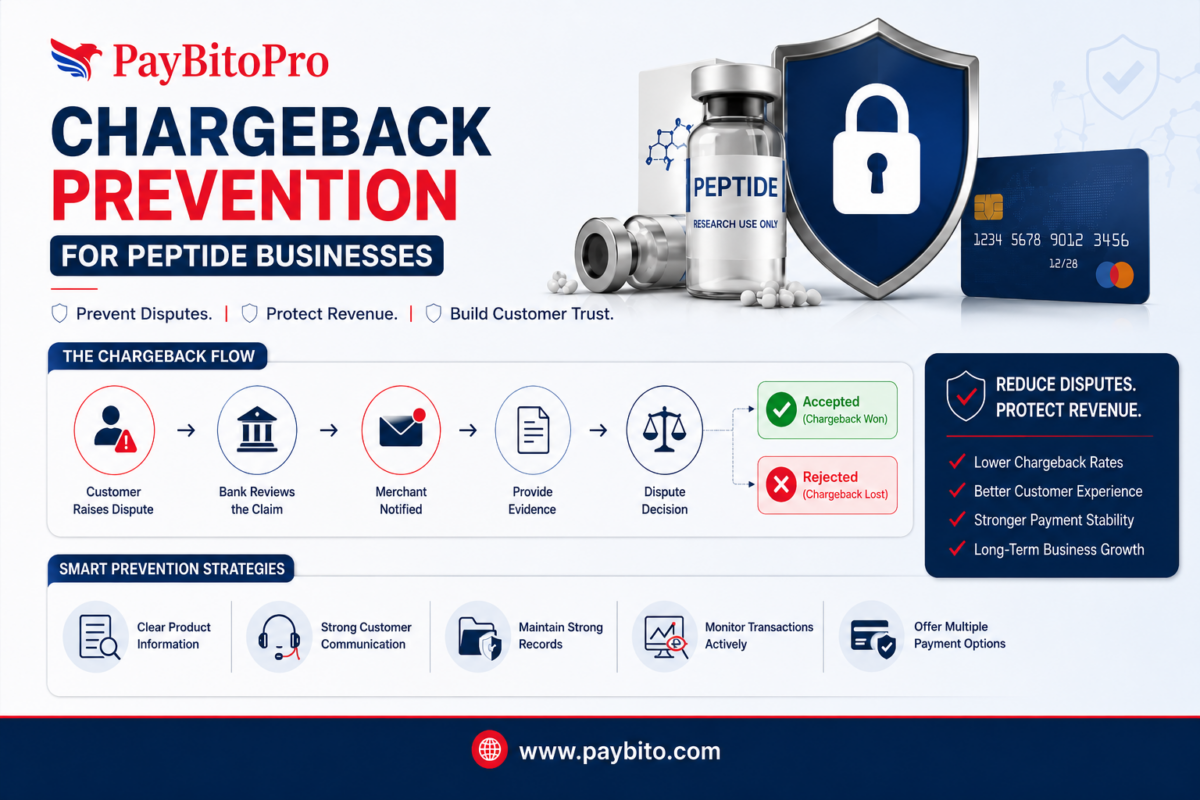
Chargebacks are one of the biggest challenges faced by online businesses, especially companies operating in high-risk industries. For peptide businesses, payment disputes can create revenue losses, increase operational costs, and make maintaining stable payment processing more difficult.
Effective chargeback prevention is not only about responding to disputes after they happen. It involves creating a transparent customer experience, improving transaction security, and building processes that reduce the chances of payment disputes from the beginning.
Understanding why chargebacks happen and how to prevent them can help peptide businesses protect revenue and maintain healthier payment operations.
What Is a Chargeback?
A chargeback happens when a customer disputes a payment with their bank or card issuer and asks for the money to be returned. However, unlike a regular refund, a chargeback involves banks or financial institutions reviewing the transaction before making a decision.
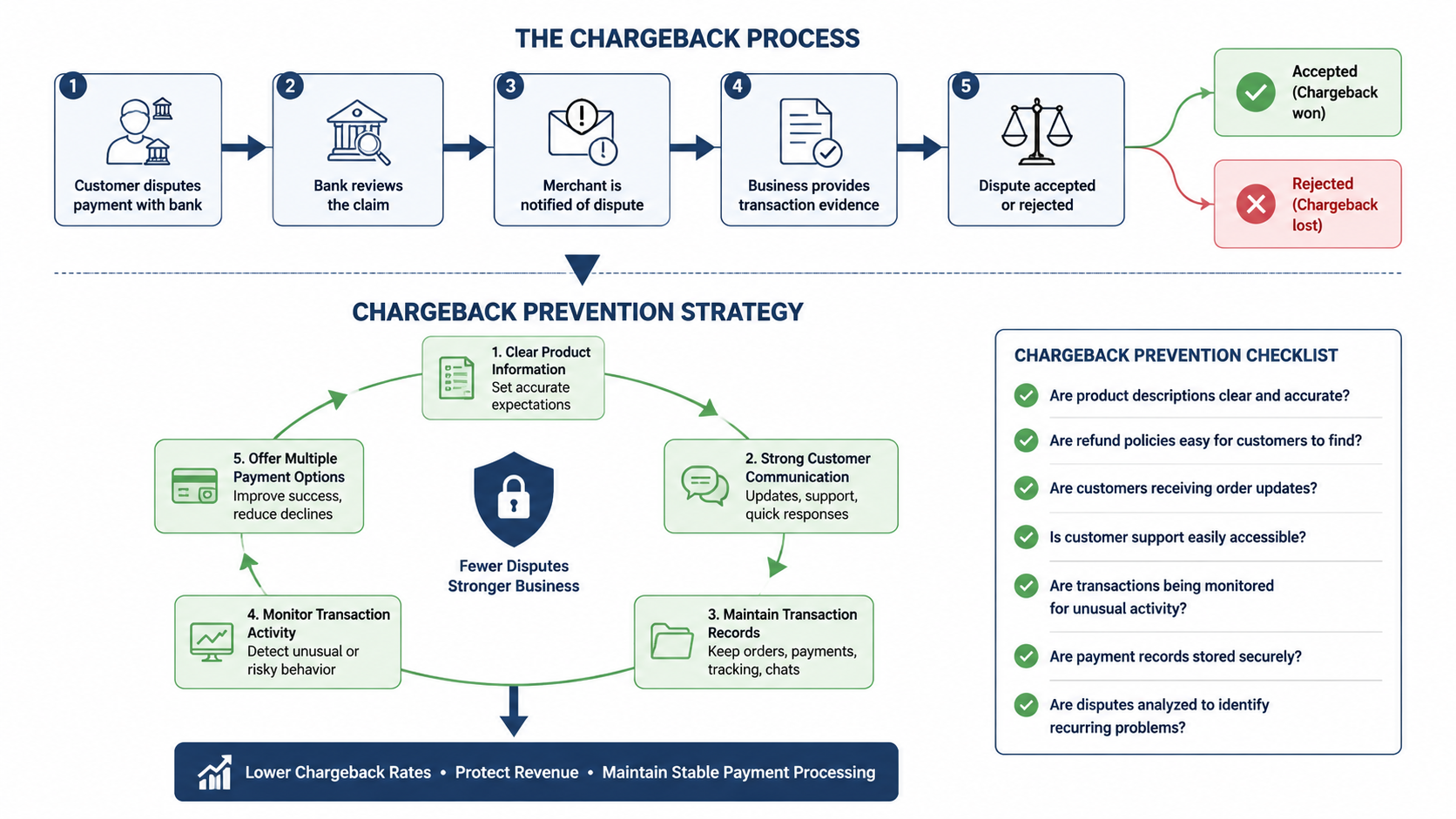
The typical process includes:
- Customer contacts their bank to dispute a payment
- Bank reviews the customer’s claim
- Merchant is notified of the dispute
- Business provides transaction evidence
- The dispute is either accepted or rejected
For example:
A customer purchases a peptide product online and later claims they did not authorize the transaction. The bank opens a dispute, and the business must provide evidence such as order details, payment records, and customer communication.
Why Do Peptide Businesses Face Payment Disputes?
Peptide companies may experience higher payment dispute risks because they operate in an industry that requires careful customer communication and transaction management.
Common reasons for disputes include:
- Customer misunderstanding about products
- Unclear product information
- Delivery issues
- Fraudulent transactions
- Customer dissatisfaction
- Difficulty reaching customer support
While every business can experience chargebacks, high-risk industries often receive additional attention from payment providers because dispute rates can affect overall payment stability.
Common Causes of Chargebacks for Peptide Businesses
1. Customer Misunderstanding About Products
One of the most common causes of payment disputes is a difference between customer expectations and the actual purchase experience.
Customers may dispute transactions when:
- Product descriptions are unclear
- Information provided before purchase is incomplete
- Customers misunderstand product details
Example:
A customer purchases a peptide product expecting a specific outcome that was never promised. If expectations were not clearly communicated, the customer may request a refund or file a dispute.
Businesses can reduce this risk by providing clear and accurate product information.
2. Lack of Clear Refund and Return Policies
Customers are more likely to initiate chargebacks when they do not know how to resolve an issue directly with the business.
A clear refund policy should explain:
- Refund eligibility
- Request procedures
- Processing timelines
- Customer responsibilities
Example:
A customer receives an order later than expected. If the website clearly explains shipping timelines and provides an easy support process, the customer may contact the business instead of immediately filing a dispute.
3. Delivery and Shipping Problems
Shipping-related issues are another major source of payment disputes.
Common problems include:
- Delayed deliveries
- Incorrect shipping information
- Missing tracking updates
- Customers claiming they never received an order
Businesses can reduce these disputes by:
- Providing tracking information
- Sending order updates
- Maintaining delivery records
4. Fraudulent Transactions
Not every chargeback comes from a genuine customer complaint. Some disputes result from unauthorized transactions.
Fraud risks may include:
- Stolen payment information
- Account takeover
- Suspicious purchasing patterns
- Multiple failed payment attempts
Example:
A new customer attempts several high-value purchases using different cards within a short period. This unusual activity may indicate potential fraud.
Monitoring transaction behavior can help identify suspicious activity before losses occur.
How to Prevent Chargebacks for Peptide Businesses?
1. Provide Detailed Product Information
Clear communication is one of the most effective chargeback prevention strategies.
Businesses should ensure customers can easily understand:
- Product details
- Purchase terms
- Shipping expectations
- Available support options
The more informed customers are before purchasing, the fewer misunderstandings are likely to occur.
2. Improve Customer Communication
Strong communication helps prevent disputes before they become chargebacks. For businesses using subscription models, customers should receive clear notifications about upcoming renewals, billing cycles, and payment confirmations through a reliable recurring payments system.
Businesses should provide:
- Order confirmation emails
- Shipping updates
- Delivery notifications
- Quick customer support responses
Example:
A customer contacts support because an order is delayed. A fast response explaining the shipping status may resolve the issue without requiring a payment dispute.
3. Maintain Strong Transaction Records
When a dispute occurs, businesses need evidence to demonstrate that a transaction was legitimate.
Useful records include:
- Order confirmation
- Payment information
- Customer communication
- Shipping confirmation
- Delivery tracking
Proper documentation improves the ability to respond to chargeback claims.
4. Monitor Transaction Activity
Transaction monitoring can help identify potentially risky activity.
Businesses should review:
- Unusually large orders
- Multiple payment attempts
- Suspicious locations
- Sudden changes in sales volume
Example:
A peptide company that normally processes $20,000 per month suddenly receives $200,000 in transactions within a few days. This unusual activity may require additional review.
5. Offer Multiple Payment Options
Providing different payment methods can improve customer payment success and reduce unnecessary disputes.
Examples include:
- Credit cards
- Debit cards
- ACH payments
- Alternative payment methods
If one payment method fails, customers may have another way to complete their purchase.
Chargeback Prevention Checklist for Peptide Businesses
Businesses should regularly review the following:
✓ Are your product descriptions clear and accurate?
✓ Can customers easily find your refund policies?
✓ Are order updates being shared with customers regularly?
✓ Is your customer support easy to access?
✓ Are you monitoring transactions for unusual activity?
✓ Are payment records being stored securely?
✓ Are you analyzing disputes to identify recurring problems?
A proactive approach is more effective than waiting until chargebacks become a serious issue.
Example: Two Peptide Businesses Managing Chargebacks
Consider two peptide businesses operating online.
Business A:
- Provides detailed product information
- Has clear policies
- Responds quickly to customers
- Sends tracking updates
- Maintains transaction records
Business B:
- Provides limited product information
- Has unclear refund policies
- Offers slow customer support
- Does not monitor disputes
Both businesses may receive similar orders, but Business A is likely to experience fewer payment disputes because it focuses on preventing problems before they occur.
How Chargebacks Affect Payment Processing?
High chargeback rates can create challenges for businesses, especially when companies rely on payment systems that are not optimized for high-risk industries. Choosing the right payment gateway can help businesses improve transaction reliability, manage payment flows efficiently, and create a smoother customer checkout experience.
Potential impacts include:
- Additional payment reviews
- Increased operational requirements
- Higher processing costs
- Difficulty maintaining stable payment operations
This is why chargeback management should be part of every peptide business’s payment strategy.
Conclusion
Effective chargeback prevention is essential for peptide businesses that want reliable payment processing and long-term growth.
By improving customer communication, providing transparent product information, maintaining strong transaction records, and monitoring payment activity, businesses can significantly reduce payment disputes.
A proactive approach to chargeback management helps peptide companies protect revenue, improve customer trust, and build stronger payment operations.

Categories
- ACH Payments (10)
- adult payment processing (11)
- AI (9)
- Altcoins (10)
- Banking (10)
- Bitcoin (133)
- Bitcoin ETF (11)
- Bitcoin Price (30)
- Blockchain (50)
- Brokering World Hunger Away (16)
- Business (17)
- card payment processing (10)
- CBD (11)
- CBDC (11)
- Chargeback (8)
- coaching business (11)
- COVID-19 (3)
- Crypto ATMs (1)
- Crypto Banking (17)
- Crypto Bill (1)
- Crypto business owner platform (31)
- Crypto Investment (3)
- Crypto Markets (5)
- Crypto Payment (35)
- Crypto Payment Processor (4)
- Crypto Prices (1)
- Crypto Trading (92)
- Cryptocurrency (402)
- Cryptocurrency Exchange (108)
- Data Visualization (2)
- dating platforms (11)
- debt collection payment processing (10)
- Decentralized Finance (7)
- DeFi Payment (9)
- DEX (3)
- Digital Currency (23)
- dropshipping payment processing (12)
- Ethereum (2)
- FAQ (7)
- file sharing payment processing (11)
- Finance (25)
- Financial Equality (4)
- Financial Freedom (8)
- Forex (35)
- hemp (1)
- ICO (2)
- Investment (11)
- IPTV (11)
- Merchant Account (10)
- Mining (3)
- News (66)
- NFTs (2)
- online gambling (11)
- P2P (1)
- Paybito (147)
- PayBitoPro (693)
- PayBitoPro Coin Listing (6)
- PayBitoPro Exchange (2)
- Payment Gateway (48)
- peptide (10)
- Post COVID Digital Transformation (1)
- Press Release (130)
- Privacy & Security (3)
- Real Estate (1)
- Stablecoin (5)
- Technology (15)
- Travel (11)
- Uncategorized (10)
- US Presidential Election (2)
- Utility Coin (1)
- Web3 business (4)
- Web3 Wallets (2)
- White Label Crypto Exchange (8)
Recent Posts
- Payment Gateway vs. Payment Orchestration: What’s the Difference?
- What Is Smart Payment Routing? Strategies to Optimize Payment Performance
- How to Improve Payment Approval Rates for High-Risk Businesses?
- Why Are Online Payments Failing? Common Causes and How to Fix Them
- How to Use Multiple Payment Processors to Reduce Business Disruptions?