How to Get Approved for a CBD Merchant Account?
- August 3, 2026
- Soham Guchait
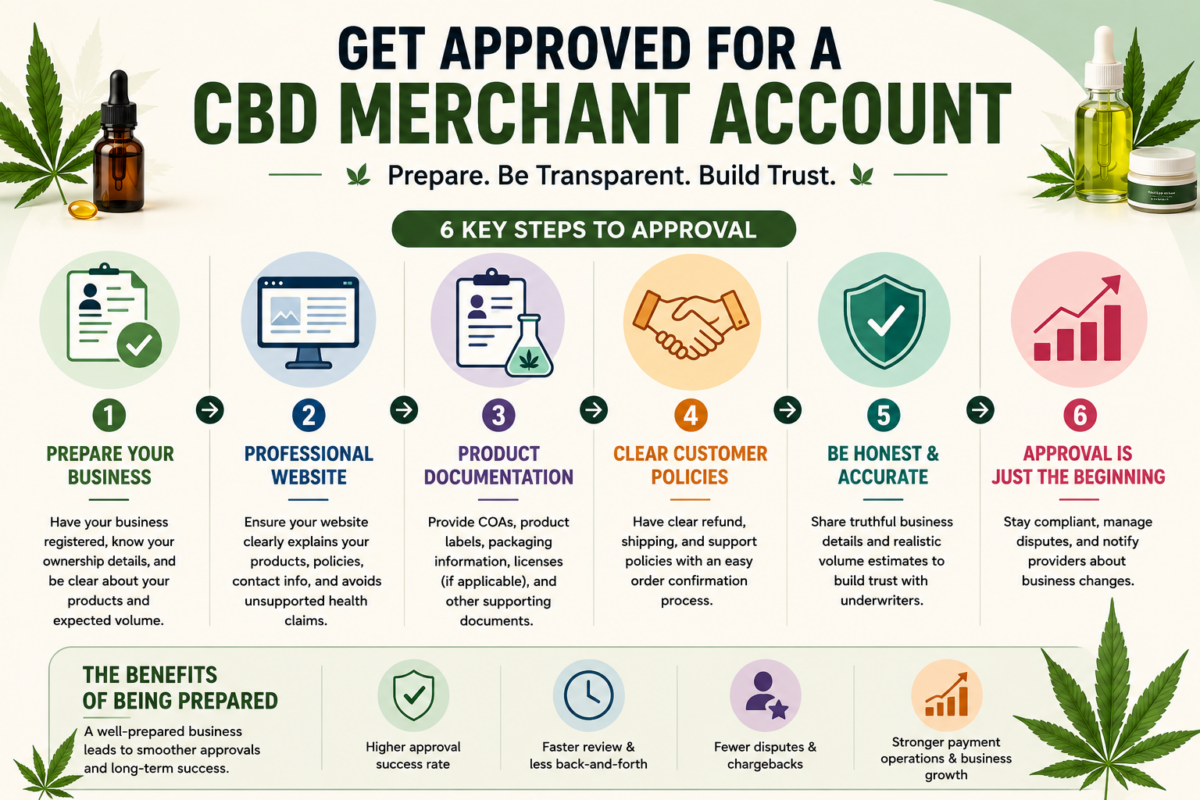
For many CBD, hemp, and cannabis businesses, getting a merchant account isn’t as simple as filling out an application and waiting for approval. Unlike businesses in lower-risk industries, payment providers typically conduct a more detailed review before allowing these merchants to accept card payments.
While the additional scrutiny can seem frustrating, it’s designed to help providers understand the business they’re working with and the level of risk involved. The good news is that many application delays and rejections are avoidable with proper preparation.
Whether you’re launching a CBD eCommerce store, selling hemp-derived wellness products, or operating a licensed cannabis business where regulations permit, understanding what payment providers expect can significantly improve your chances of approval.
Why CBD Merchant Accounts Require Additional Review?
A merchant account is a specialized account that allows businesses to accept electronic payments. Before approving one, payment providers evaluate whether the business can safely process transactions while meeting their compliance and risk requirements.
CBD, hemp, and cannabis businesses often receive extra attention because of evolving regulations, banking policies, chargeback risk, and fraud concerns. That doesn’t mean every business is viewed negatively—it simply means providers need more information before making a decision.
If you’re wondering why the industry is reviewed differently, understanding why CBD, hemp, and cannabis businesses are considered high risk provides useful background before beginning the application process.
Prepare Your Business Before Applying
One of the biggest mistakes business owners make is applying before their business is fully prepared. Underwriters don’t just review your application—they also examine how your business operates.
Some of the first things they’ll typically look at include:
- Business registration and ownership details
- Website content and professionalism
- Product information
- Customer support details
- Refund and shipping policies
- Expected transaction volume
For example, imagine an online CBD retailer with an attractive website but no refund policy or business contact information. Even if the products themselves are legitimate, the missing information can raise unnecessary questions and slow the approval process.
A complete and transparent business creates far more confidence than an incomplete application.
Your Website Matters More Than You Think
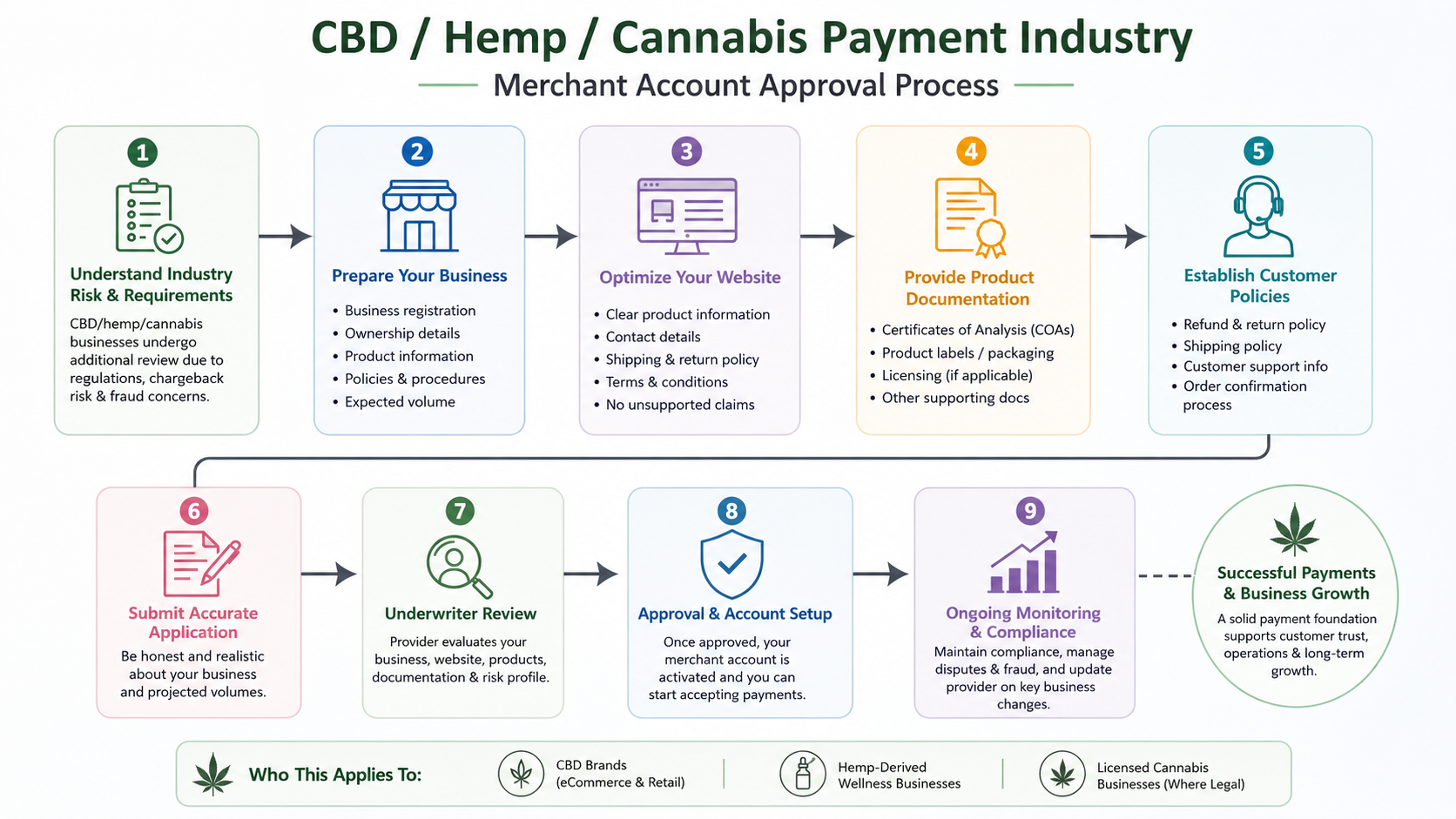
Your website is often one of the most important parts of your merchant account application. Payment providers want to understand exactly what customers are purchasing and how your business communicates with them. A professional website demonstrates that your business is established and transparent.
A strong website should clearly explain:
- The products you sell
- Your business contact information
- Shipping and return policies
- Terms and conditions
- Privacy policy
Just as importantly, avoid making unrealistic health or medical claims about CBD products. Unsupported claims can create compliance concerns and complicate the underwriting process.
For instance, a CBD skincare company that provides accurate product descriptions, ingredient information, and clear customer policies is generally easier for an underwriter to evaluate than a website with vague marketing claims and limited business information.
Keep Your Product Documentation Ready
Many payment providers request documentation that helps verify the products you sell.
For CBD businesses, Certificates of Analysis (COAs) are among the most commonly requested documents. These reports confirm important details about the product and help demonstrate quality and transparency. Depending on your business, providers may also review product labels, packaging, licensing information where applicable, or other supporting documentation.
Keeping these records organized before applying can speed up the review process and reduce requests for additional information.
Customer Policies Can Influence Approval
Payment providers don’t just assess your products – they also evaluate how you handle customer transactions. Businesses that communicate clearly with customers generally experience fewer disputes, making them more attractive from a payment risk perspective.
Important policies include:
- Refund and return policy
- Shipping policy
- Customer support information
- Order confirmation process
Imagine a customer purchasing a CBD tincture that arrives later than expected. If they can easily find shipping information and contact customer support, they’re much more likely to request assistance than file a payment dispute with their bank. Clear communication benefits both your customers and your payment provider.
Be Honest About Your Business
Some businesses believe that reporting higher projected sales or hiding certain details will improve their chances of approval. In reality, inaccurate information often creates delays.
If your application states that you expect thousands of monthly transactions but your website has only recently launched, the underwriter may request additional clarification before proceeding. Providing realistic sales estimates, accurate product information, and truthful business details helps establish credibility from the beginning.
Approval Is Only the Beginning
Receiving a merchant account doesn’t mean the review process ends.
Payment providers continue monitoring accounts to ensure businesses remain compliant and maintain healthy processing activity. Significant changes – such as launching subscriptions, expanding into new markets, or introducing new product categories – may trigger another review.
As your business grows, you’ll also need to manage operational issues such as payment declines, disputes, and fraud. Understanding why CBD payments get declined, how to prevent chargebacks for CBD businesses, and common payment processing challenges for CBD businesses can help you avoid problems before they begin.
Final Thoughts
Getting approved for a CBD merchant account is less about finding the “right” application and more about presenting a well-prepared business.
Payment providers want to see transparency, accurate documentation, clear customer policies, and realistic business information. Businesses that invest time in these areas are generally better positioned for a smoother approval process and fewer payment interruptions later.
Merchant account approval should be viewed as the foundation of your payment strategy. Once you have that foundation in place, you can focus on improving customer experience, expanding payment options, and building payment operations that support long-term business growth.

Categories
- ACH Payments (10)
- adult payment processing (11)
- AI (9)
- Altcoins (10)
- Banking (10)
- Bitcoin (133)
- Bitcoin ETF (11)
- Bitcoin Price (30)
- Blockchain (50)
- Brokering World Hunger Away (16)
- Business (17)
- card payment processing (10)
- CBD (11)
- CBDC (11)
- Chargeback (8)
- coaching business (11)
- COVID-19 (3)
- Crypto ATMs (1)
- Crypto Banking (17)
- Crypto Bill (1)
- Crypto business owner platform (31)
- Crypto Investment (3)
- Crypto Markets (5)
- Crypto Payment (35)
- Crypto Payment Processor (4)
- Crypto Prices (1)
- Crypto Trading (92)
- Cryptocurrency (402)
- Cryptocurrency Exchange (108)
- Data Visualization (2)
- dating platforms (11)
- debt collection payment processing (10)
- Decentralized Finance (7)
- DeFi Payment (9)
- DEX (3)
- Digital Currency (23)
- dropshipping payment processing (12)
- Ethereum (2)
- FAQ (7)
- file sharing payment processing (11)
- Finance (25)
- Financial Equality (4)
- Financial Freedom (8)
- Forex (35)
- hemp (1)
- ICO (2)
- Investment (11)
- IPTV (11)
- Merchant Account (10)
- Mining (3)
- News (66)
- NFTs (2)
- online gambling (11)
- P2P (1)
- Paybito (147)
- PayBitoPro (693)
- PayBitoPro Coin Listing (6)
- PayBitoPro Exchange (2)
- Payment Gateway (48)
- peptide (10)
- Post COVID Digital Transformation (1)
- Press Release (130)
- Privacy & Security (3)
- Real Estate (1)
- Stablecoin (5)
- Technology (15)
- Travel (11)
- Uncategorized (10)
- US Presidential Election (2)
- Utility Coin (1)
- Web3 business (4)
- Web3 Wallets (2)
- White Label Crypto Exchange (8)
Recent Posts
- Payment Gateway vs. Payment Orchestration: What’s the Difference?
- What Is Smart Payment Routing? Strategies to Optimize Payment Performance
- How to Improve Payment Approval Rates for High-Risk Businesses?
- Why Are Online Payments Failing? Common Causes and How to Fix Them
- How to Use Multiple Payment Processors to Reduce Business Disruptions?