How to Prevent Chargebacks for CBD Businesses?
- August 3, 2026
- Soham Guchait
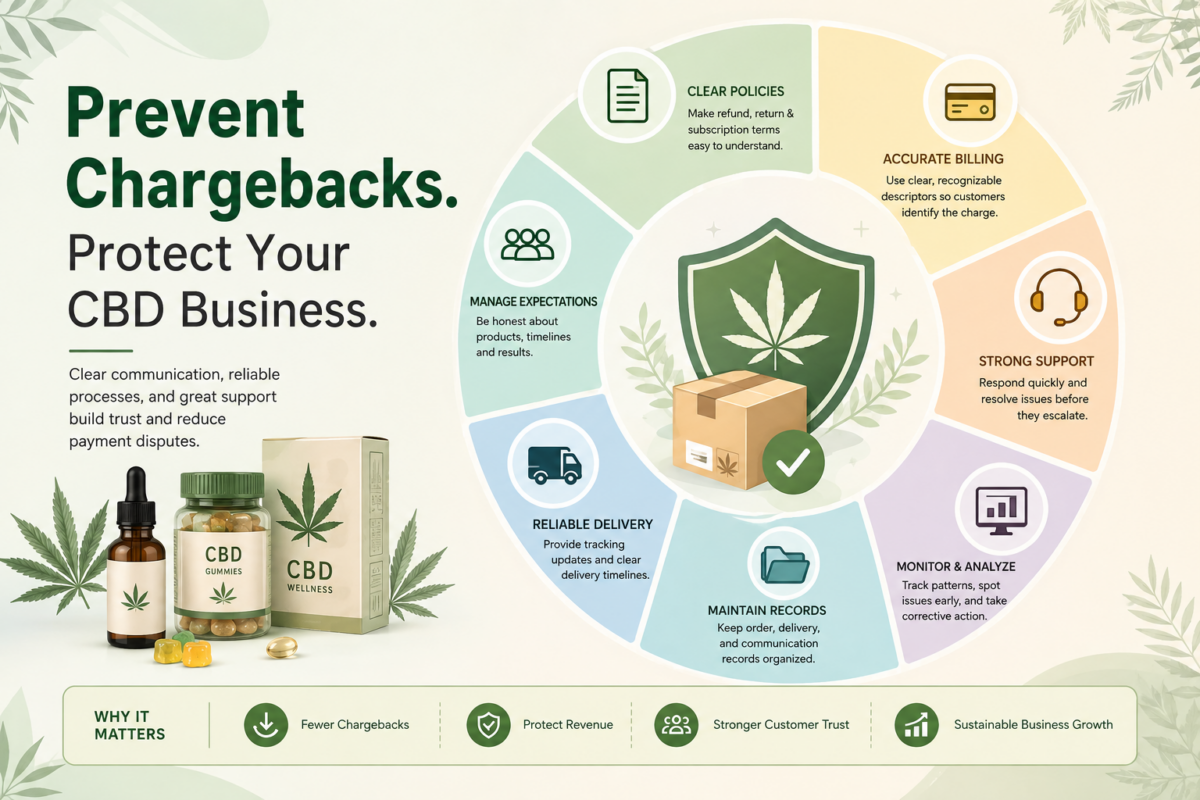
A customer orders a CBD wellness product online, receives the package, and later contacts their bank to dispute the transaction instead of reaching out to the business.
For the merchant, the product has already been shipped, payment has already been processed, and the customer may still have the item. Yet the business now faces a chargeback – a payment reversal process that can result in lost revenue, additional fees, and increased operational challenges. Chargebacks are a common concern for CBD, hemp, and cannabis-related businesses because the industry often deals with online sales, subscription models, customer expectations, and products that require clear communication.
Preventing chargebacks is not about eliminating disputes completely. Every business experiences occasional payment disagreements. The goal is to reduce avoidable disputes by improving customer communication, strengthening payment processes, and creating a trustworthy buying experience.
What Is a Chargeback?
A chargeback occurs when a customer asks their bank or card issuer to reverse a transaction instead of resolving the issue directly with the merchant. The process exists to protect consumers from unauthorized transactions, fraud, or situations where products or services were not delivered as expected.
However, not every chargeback involves criminal activity.
For example, a customer may purchase a monthly CBD subscription box and forget they signed up for recurring billing. When they see the renewal charge on their statement, they may assume it is unauthorized and request a chargeback.
In another case, a customer may receive their CBD order but believe the product description was unclear. Instead of requesting a refund, they dispute the payment with their bank. These situations are often referred to as friendly fraud because the customer may not intentionally be trying to harm the business.
Why CBD Businesses Experience Chargebacks?
CBD, hemp, and cannabis-related businesses can face higher dispute risks because many sales happen online, where customers cannot physically examine products before purchase.
Several factors can contribute to chargebacks.
Subscription Billing Confusion
Recurring CBD subscriptions are convenient for customers, but they can also create disputes if renewal terms are not clearly communicated.
Imagine a customer signs up for a monthly CBD supplement delivery after receiving a discount on their first order. Thirty days later, they notice a new charge but forgot that the subscription renews automatically.
If the business clearly explained the subscription terms during checkout and sent renewal reminders, the customer is more likely to contact support instead of filing a dispute.
Product Expectations and Communication
Customer expectations play a major role in preventing disputes. CBD products often require customers to understand ingredients, usage instructions, shipping timelines, and product details before purchasing.
For example, a customer buying a CBD topical product may expect immediate results because of unclear marketing language. If the website does not provide accurate product information, the customer may feel misled and request a chargeback. Clear descriptions and realistic expectations help reduce misunderstandings.
Delivery Issues
Shipping problems are another common reason customers dispute transactions.
A customer may file a chargeback if:
- Their order never arrives
- Tracking information is unavailable
- Delivery takes longer than expected
- The package is delivered to the wrong address
For example, a CBD business ships an order but fails to provide tracking information. When the customer does not receive updates, they may assume the purchase was fraudulent. Keeping customers informed throughout the delivery process can prevent unnecessary disputes.
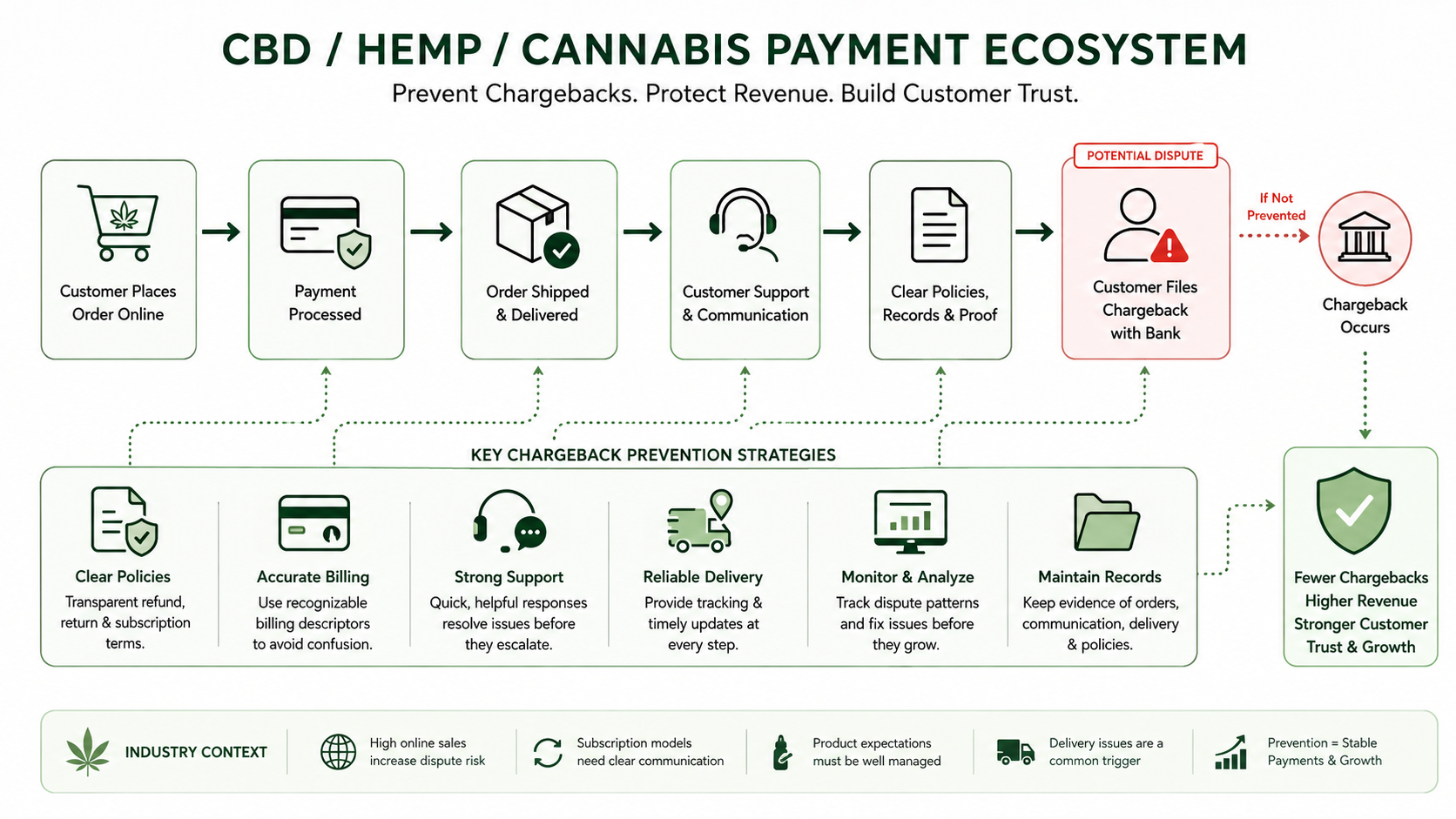
Strategies to Reduce Chargebacks
Preventing chargebacks requires attention to every stage of the customer journey – from checkout to post-purchase support.
Create Clear Refund and Return Policies
Customers should easily understand what happens if they are unhappy with a purchase.
A clear refund policy should explain:
- Eligibility requirements
- Return timelines
- Refund processing times
- How customers can request assistance
A customer who knows how to resolve an issue directly with the business is less likely to immediately contact their bank.
Use Accurate Billing Information
Many customers dispute transactions because they do not recognize charges on their statements. Businesses can reduce confusion by ensuring billing descriptors are clear and recognizable.
For example, if a customer purchases CBD products from a brand called “Green Wellness,” but the payment statement shows an unrelated company name, the customer may assume the charge is unauthorized. A recognizable billing name helps customers connect the transaction to their purchase.
Provide Strong Customer Support
Customer service is one of the most effective tools for preventing chargebacks. A customer who receives a quick response is more likely to resolve an issue directly rather than escalate it through their bank.
Businesses should provide accessible support channels and respond quickly to concerns involving:
- Missing deliveries
- Incorrect orders
- Subscription questions
- Refund requests
A simple conversation can often prevent a costly dispute.
Monitor Transactions and Customer Behavior
Chargeback prevention is not only about responding after disputes happen. Businesses should also monitor patterns that indicate potential problems.
For example, a sudden increase in disputes from subscription customers may indicate unclear renewal communication. A rise in delivery-related disputes may suggest shipping problems.
Tracking these patterns helps businesses identify issues before they become larger operational problems. Fraud-related chargebacks require additional attention because they may involve stolen cards or unauthorized transactions. Understanding fraud prevention for CBD payment processing can help businesses build stronger protection against these risks.
Maintain Proper Transaction Records
When a chargeback occurs, businesses may have the opportunity to challenge the dispute by providing evidence.
Useful records may include:
- Order confirmations
- Customer communication
- Delivery tracking
- Product descriptions
- Refund policies
- Transaction details
For example, if a customer claims they never received a CBD order, delivery confirmation and tracking information can help demonstrate that the product was successfully delivered. Maintaining organized records makes the dispute process easier and supports better decision-making.
Chargeback Prevention Is Part of Payment Management
Reducing chargebacks is not about making the checkout process restrictive or difficult for customers. The goal is to create a transparent purchasing experience where customers understand what they are buying and know how to receive support if problems occur.
This becomes especially important as CBD businesses grow and handle larger transaction volumes. Businesses should also understand broader operational issues, including common payment processing challenges for CBD businesses, because payment problems often become more complex as sales increase.
Final Thoughts
Chargebacks are one of the biggest payment challenges faced by CBD, hemp, and cannabis businesses, but many disputes can be prevented through better communication, clear policies, reliable delivery practices, and responsive customer support.
The most effective approach is to build trust throughout the entire customer journey. When customers understand their purchase, receive timely updates, and have an easy way to resolve problems, they are far less likely to turn to chargebacks. A strong chargeback prevention strategy protects revenue, improves customer relationships, and creates a more stable payment environment for long-term business growth.

Categories
- ACH Payments (10)
- adult payment processing (11)
- AI (9)
- Altcoins (10)
- Banking (10)
- Bitcoin (133)
- Bitcoin ETF (11)
- Bitcoin Price (30)
- Blockchain (50)
- Brokering World Hunger Away (16)
- Business (17)
- card payment processing (10)
- CBD (11)
- CBDC (11)
- Chargeback (8)
- coaching business (11)
- COVID-19 (3)
- Crypto ATMs (1)
- Crypto Banking (17)
- Crypto Bill (1)
- Crypto business owner platform (31)
- Crypto Investment (3)
- Crypto Markets (5)
- Crypto Payment (35)
- Crypto Payment Processor (4)
- Crypto Prices (1)
- Crypto Trading (92)
- Cryptocurrency (402)
- Cryptocurrency Exchange (108)
- Data Visualization (2)
- dating platforms (11)
- debt collection payment processing (10)
- Decentralized Finance (7)
- DeFi Payment (9)
- DEX (3)
- Digital Currency (23)
- dropshipping payment processing (12)
- Ethereum (2)
- FAQ (7)
- file sharing payment processing (11)
- Finance (25)
- Financial Equality (4)
- Financial Freedom (8)
- Forex (35)
- hemp (1)
- ICO (2)
- Investment (11)
- IPTV (11)
- Merchant Account (10)
- Mining (3)
- News (66)
- NFTs (2)
- online gambling (11)
- P2P (1)
- Paybito (147)
- PayBitoPro (693)
- PayBitoPro Coin Listing (6)
- PayBitoPro Exchange (2)
- Payment Gateway (48)
- peptide (10)
- Post COVID Digital Transformation (1)
- Press Release (130)
- Privacy & Security (3)
- Real Estate (1)
- Stablecoin (5)
- Technology (15)
- Travel (11)
- Uncategorized (10)
- US Presidential Election (2)
- Utility Coin (1)
- Web3 business (4)
- Web3 Wallets (2)
- White Label Crypto Exchange (8)
Recent Posts
- Payment Gateway vs. Payment Orchestration: What’s the Difference?
- What Is Smart Payment Routing? Strategies to Optimize Payment Performance
- How to Improve Payment Approval Rates for High-Risk Businesses?
- Why Are Online Payments Failing? Common Causes and How to Fix Them
- How to Use Multiple Payment Processors to Reduce Business Disruptions?